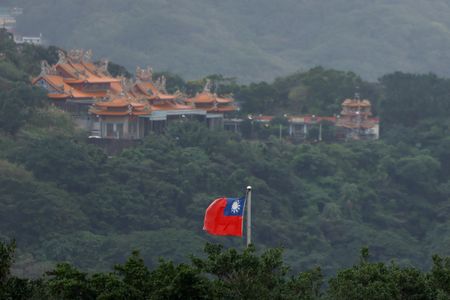

The political status of Taiwan remains one of the most complex international issues, with the island functioning as an independent democracy while facing claims from mainland China.
Taiwan’s complicated history began thousands of years ago with indigenous peoples, followed by brief Dutch and Spanish control in the 1600s. The Qing dynasty made Taiwan part of Fujian province in 1684, later designating it as a separate Chinese province in 1885. Japan controlled the island from 1895 until 1945, when it was transferred to the Republic of China government after World War Two ended.
The current situation developed in 1949 when Mao Zedong’s Communist forces defeated the Republic of China government, forcing them to relocate their capital to Taiwan. The Republic of China remains Taiwan’s official name today. Meanwhile, Mao established the People’s Republic of China on the mainland, declaring it the sole legitimate Chinese government over all of China, including Taiwan.
Taiwan’s international recognition is limited. Only 12 nations maintain official diplomatic relations with Taipei, primarily smaller developing countries like Belize and Tuvalu. In 1971, Beijing replaced Taipei in China’s United Nations seat.
Despite limited formal recognition, most major Western nations and U.S. allies maintain unofficial relationships with Taiwan, recognizing Republic of China passports and operating de facto embassies. Taiwanese citizens travel freely worldwide using their passports.
The United States ended official diplomatic ties with Taipei in 1979 but remains legally obligated to help Taiwan defend itself. Washington maintains a “One China” policy, taking no official stance on Taiwan’s sovereignty.
Beijing refuses to rule out military force to bring Taiwan under its control and has proposed a “one country, two systems” arrangement similar to Hong Kong’s model. However, no major Taiwanese political party supports this approach, and polling consistently shows most Taiwanese prefer maintaining current relations with China.
China argues that 1971’s United Nations Resolution 2758 legally establishes Taiwan as part of China, since it recognizes the People’s Republic of China as the only legitimate Chinese government. Taiwan’s government disputes this interpretation, noting the resolution never mentioned Taiwan or its status. Last year, the U.S. State Department accused China of misrepresenting the resolution as part of “coercive attempts to isolate Taiwan from the international community.”
Taiwan functions with de facto independence, despite lacking formal recognition from most countries. Its people elect their own leaders, and the government controls defined territory with its own military, passport, and currency. Taiwan’s government maintains that the Republic of China is a sovereign state and Beijing has no authority to represent it, since the People’s Republic of China has never governed Taiwan and has no role in choosing its leaders.
Formally declaring a “Republic of Taiwan” would require significant legal hurdles, including parliamentary approval of constitutional amendments and a referendum. At least 75% of lawmakers would need to approve such changes, but the ruling Democratic Progressive Party and opposition Kuomintang currently hold equal seats in parliament. The DPP, in power since 2016, hasn’t attempted constitutional changes, while the KMT strongly opposes altering the Republic of China name.
Taiwan’s President Lai Ching-te faces criticism from China, which labels him a “separatist.” Before his election, Lai described himself as a “practical worker for Taiwan independence,” though he maintains this simply means Taiwan is already an independent country. Since taking office in 2024, Lai has repeatedly stated that the Republic of China and People’s Republic of China are “not subordinate to each other,” which Beijing interprets as promoting independence.
China established legal grounds for potential military action through its 2005 Anti-Secession Law, passed by the country’s parliament. The law authorizes military force against Taiwan if it declares independence or if “possibilities for a peaceful reunification should be completely exhausted,” though the legislation remains deliberately vague about specific triggers.