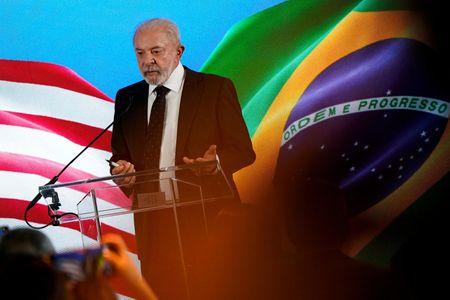

BUENOS AIRES – Argentine President Javier Milei has intensified his public stance regarding the disputed Falkland Islands, marking a departure from his earlier diplomatic approach as he navigates complex international relationships.
The libertarian president, who previously admired former British Prime Minister Margaret Thatcher and favored bilateral talks with Britain, faced domestic criticism for not being forceful enough about Argentina’s territorial claims to the South Atlantic archipelago, which Argentines call Las Malvinas.
That changed dramatically on Friday when Milei posted a strong message on social media platform X, declaring that Las Malvinas “were, are and will always be Argentine.” His statement came just hours after Reuters reported on an internal Pentagon email suggesting the U.S. might reassess its position on the islands in response to Britain’s stance regarding Iran.
The territorial dispute dates back to Argentina’s claim that it inherited the islands from Spain following independence in 1816, while Britain assumed control in 1833 in what Argentina considers an illegal colonial seizure. The conflict escalated into a 74-day war in 1982 under Thatcher’s leadership, resulting in 649 Argentine and 255 British military deaths after Argentina’s unsuccessful invasion attempt.
More than four decades later, the islands remain an emotionally charged issue for Argentines. Memorial portraits of war casualties cover Buenos Aires walls, some athletic organizations prohibit British flag imagery, and the nation observes an annual commemoration of the conflict.
Current tensions between Washington and London may provide Milei with a political opportunity as his approval numbers decline due to increasing inflation and corruption allegations, according to policy analysts.
“The fight for the Falklands is a national obsession in Argentina, and there is no upside to downplaying it,” explained Benjamin Gedan, who heads the Latin America program at Washington’s Stimson Center. “Though Milei is not known for pandering to his opponents, he might find the Falklands to be an irresistible opportunity for a rally-around-the-flag boost in his popularity.”
Milei’s office did not respond to requests for comment.
During his presidential campaign, Milei had praised Thatcher as among the world’s “greatest leaders,” drawing sharp criticism from war veterans who accused him of disrespecting fallen soldiers. In a 2024 BBC interview, he criticized politicians who “beat their chests” about sovereignty without achieving results.
He previously suggested Argentina wanted islanders “to one day decide to vote for us,” mirroring Britain’s position on residents’ self-determination rights. In 2013, islanders voted decisively in a referendum to remain under British governance.
However, Milei recently claimed in a streaming platform interview that Argentina was “making progress like never before” on the islands question.
Guillermo Carmona, who formerly served as secretary for Argentina’s foreign ministry’s Malvinas, Antarctica and South Atlantic office under the previous center-left administration, believes Argentina should “take advantage of the fissures that are being produced.”
The United States has historically maintained neutrality on the islands’ sovereignty while acknowledging British administration. President Donald Trump, who has called Milei his “favorite president,” could potentially mediate future Argentina-Britain negotiations, though Gedan suggests the leaked Pentagon correspondence reduces that likelihood by revealing potential U.S. bias toward Argentina.
Despite current political developments, experts believe the territorial status quo will likely persist.
“It’s difficult for me to think that the United States can force Britain to modify its position if it changes its own, since Britain is a strategic ally of the U.S.,” noted Argentine historian Federico Lorenz.