
Diplomatic negotiations between Iran and the United States to resolve their ongoing conflict hit a roadblock on Wednesday, even after President Donald Trump previously stated that Iran had told his administration it was experiencing a “State of Collapse.”
“They want us to ‘Open the Hormuz Strait,’ as soon as possible, as they try to figure out their leadership situation,” Trump wrote on social media. The White House has not yet responded to inquiries about how this communication occurred.
At the same time, Pakistan announced that its weekly petroleum import costs have skyrocketed by approximately 167% because of climbing worldwide energy prices. During a Wednesday cabinet meeting, Prime Minister Shehbaz Sharif revealed the weekly petroleum import expenses had jumped from $300 million prior to the Middle East crisis to $800 million.
European Commission President Ursula von der Leyen delivered a comparable assessment, stating that the U.S.-Israel conflict, along with Iranian countermeasures like blocking the Strait of Hormuz, is draining nearly 500 million euros ($600 million) daily from the European Union, driving up fuel costs and creating concerns about potential jet fuel shortages in the coming weeks.
The United Arab Emirates declared on Tuesday its intention to exit OPEC starting May 1, removing one of the oil organization’s major producers. Although this decision won’t immediately affect global oil supplies already limited by the Iranian war and Hormuz Strait blockade, it might help reduce petroleum prices once the conflict ends.
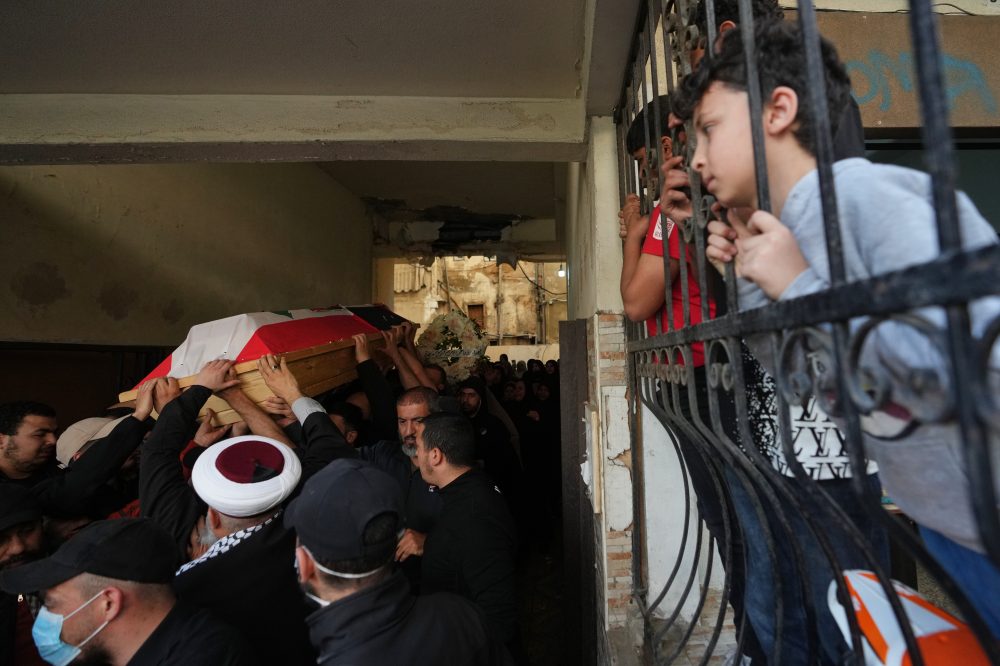
In Lebanon, an army serviceman and his brother died Wednesday when Israeli forces struck the motorcycle they were riding as the soldier traveled from his duty station to his residence in al-Souaneh village, according to military officials.
The Lebanese military has remained neutral during the current Israel-Hezbollah conflict, which started March 2 when the militant organization fired missiles into Israel, two days following U.S.-Israeli attacks on Iran. However, troops have repeatedly been caught in combat zones.
Israeli strikes have claimed the lives of 20 Lebanese army personnel since March 2, primarily while traveling to or from their assignments, military sources reported. Overall casualties in Lebanon have exceeded 2,500 during the war and a fragile ceasefire implemented this month that has decreased but not eliminated hostilities.
According to the United Nations nuclear agency director, most of Iran’s weapons-grade uranium likely remains at the Isfahan nuclear facility, which suffered bombing last year and experienced additional attacks during this year’s U.S.-Israeli campaign.
In a Tuesday interview with The Associated Press, Rafael Grossi explained that the International Atomic Energy Agency possesses satellite imagery documenting the impact of recent U.S.-Israeli airstrikes on Iran and continues gathering intelligence.
IAEA monitoring ceased at Isfahan when Israel initiated a 12-day conflict last June that included U.S. bombing of three Iranian nuclear installations.
The UN nuclear oversight body estimates that most of Iran’s weapons-grade uranium “was stored there in June 2025 when the 12-day war broke out, and it has been there ever since,” Grossi explained.
Pakistan’s petroleum import expenses have increased roughly 167% due to escalating global costs, putting additional pressure on the financially struggling nation’s vulnerable economy, Prime Minister Shehbaz Sharif announced Wednesday.
During televised cabinet proceedings, Sharif explained that weekly petroleum import costs had climbed from $300 million before the conflict to $800 million.
He indicated the government is implementing energy conservation measures to reduce petroleum consumption while continuing diplomatic initiatives to encourage peace.
European Union nations must direct their energy assistance primarily toward at-risk families and industries or risk squandering billions of euros as the Iran conflict affects oil and gas costs, European Commission President Ursula von der Leyen cautioned Wednesday.
The U.S.-Israel war, combined with Iranian retaliation including Strait of Hormuz restrictions, is costing the EU nearly 500 million euros ($600 million) daily, increasing pump prices and raising concerns about jet fuel shortages within weeks.
Von der Leyen urged the world’s largest trading alliance to apply lessons from the 2022 energy crisis — when Russia weaponized energy against European nations to weaken their Ukraine support — to prevent further economic damage.
Over 350 billion euros “were spent on untargeted measures and this had a huge impact on member states finances,” she informed EU legislators in Strasbourg, France. “So let us not make the same mistake again, and let’s focus our support where it matters most.”
Iran’s national currency, the rial, reached an unprecedented low Wednesday at 1.8 million to $1 while a tentative ceasefire with the U.S. and Israel continues.
The rial had maintained stability for weeks during the war that commenced February 28, partly because limited trading and imports entered the country.
Currency decline began two days earlier, reaching the record low Wednesday.
Financial analysts caution that the rial’s depreciation will likely increase inflation in a nation where numerous imported items, including food, medicine, electronics, and raw materials, depend on dollar exchange rates.
While the war is currently under ceasefire, ongoing U.S. economic sanctions continue pressuring Iran’s already weakened economy, reducing a crucial government revenue source and foreign currency by blocking or seizing oil shipments.
Pakistan’s Prime Minister Shehbaz Sharif stated Wednesday that his administration continues working to reduce tensions between the United States and Iran.
During an Islamabad cabinet session, he described a “marathon session” held in the capital during initial direct negotiations between both parties on April 11, resulting in progress toward a ceasefire that remains active.
He noted that Iran’s Foreign Minister Abbas Araghchi visited Pakistan over the weekend during the ceasefire for extended discussions between Iran and Pakistan. Araghchi subsequently traveled to Oman, returned briefly, then departed for Russia, Sharif reported.
Before leaving for Moscow, Araghchi contacted him by telephone and “assured me that after consulting with his leadership, he would respond as soon as possible,” Sharif said. He didn’t specify Araghchi’s response topic, though Pakistan has expressed interest in hosting additional U.S.-Iran negotiations.
U.S. Defense Secretary Pete Hegseth will undergo congressional questioning for the first time since the Iran war started.
Wednesday’s House Armed Services Committee hearing will examine the Trump administration’s $1.5 trillion military budget for 2027.
Democratic representatives will likely challenge Hegseth regarding the Iran war’s expenses and significant depletion of essential ammunition supplies. Despite the current ceasefire, the U.S. and Israel initiated the war February 28 without congressional authorization.