
PARIS – What typically amounts to a mundane parliamentary procedure has been converted into a divisive political theater, providing France’s far-right movement with an unexpected opportunity to launch a cultural battle against state-funded television and radio networks.
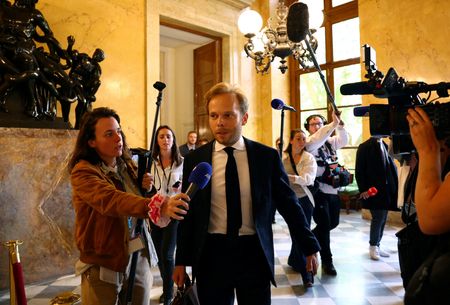
The investigation is being spearheaded by Charles Alloncle, a 32-year-old politician allied with National Rally leader Jordan Bardella, who has converted the process into a compelling clash between far-right parliamentary members and media organizations they’ve long claimed show political favoritism.
Through his confrontational questioning of well-known reporters, celebrity hosts and top-level management – while sharing attention-grabbing clips across social platforms – Alloncle has generated remarkable public interest and positioned himself as an emerging figure within the far-right movement.
With the six-month investigation into France’s 4-billion-euro annual public broadcasting system nearing completion, media experts and politicians predict its influence will extend far beyond the actual hearings.
They caution that the inquiry has contributed to undermining confidence in public media and established a foundation for the National Rally’s (RN) commitment to sell off the industry should they gain control in the 2027 elections.
RN leadership has enjoyed directing attention toward public broadcasters that have historically examined the far right and its media supporters closely.
For Alloncle, who currently serves with a faction of former conservatives now supporting the RN, the potential reward could include a ministerial position in a future far-right administration, according to RN insiders.
“He really did the job,” RN lawmaker Renault Matthias told Reuters. “It’s part of a culture war. Privatising public broadcasting is in our manifesto, so this serves our programme.”
FINANCIAL CRITICISMS CONNECT WITH VOTERS
Opponents argue the investigation has exceeded typical parliamentary supervision, drawing parallels to assaults by Britain’s conservative parties against the BBC surrounding the Brexit vote.
Although initial questions concentrated on supposed editorial prejudice, the focus moved toward expenses, employing cherry-picked instances and unsubstantiated suggestions to diminish public backing for government-funded media, according to critics.
“The strategy is not so much to debate editorial bias, but to hammer home the message that it ‘costs too much’,” said Erwan Balanant, a centrist lawmaker on the committee. “It’s a very effective way of destroying the legitimacy of public broadcasting.”
Alloncle highlighted a 60,000 euro payment made to actress Virginie Efira for hosting the 2022 Cannes Film Festival opening ceremony – a standard amount by global measures – as evidence of what he characterized as wasteful expenditure by public broadcasters.
He additionally disclosed the total sum the public broadcaster paid for the festival’s broadcast rights – confidential business information that private rivals could exploit to submit lower bids in future negotiations.
When the investigation began in December, surveys indicated 70% of French citizens held positive views of public broadcasting. However, Alloncle’s budget-centered messaging has gained traction during a period of economic strain.
During Reuters’ conversation with Alloncle near parliament, a pedestrian approached to praise him. “Keep up the good work,” the man said.
Alloncle informed Reuters he entered politics from the financial industry after encountering Bardella at a tech conference. He was subsequently selected as a candidate through an agreement between the RN and a smaller coalition ally.
He offered no regrets for his aggressive approach, which he attributed to toughness developed in business rather than politics. He stated his only objective was enforcing French media regulations that ensure diverse political perspectives.
“That means making sure public broadcasters do not chronically under-represent the RN, but also, say, the hard-left party France Unbowed,” he said.
CONCERNS ABOUT BOLLORE’S MEDIA INFLUENCE
Alloncle’s narrative has received support from conservative Catholic billionaire Vincent Bolloré’s media conglomerate, which stands to gain from any privatization of state media. His properties – including CNews, Journal du Dimanche and Europe 1 – have provided substantial coverage of the investigation and Alloncle’s public appearances.
Several lawmakers claim Bolloré’s media division, Lagardère News holding, went beyond coverage – alleging it distributed suggested question lists reflecting what they characterized as an antagonistic stance toward public broadcasters.
“It was a clear case of interference, and I told them to stop,” the inquiry’s chair, centrist lawmaker Jeremie Patrier-Leitus told Reuters, confirming an earlier Le Monde report.
Neither Lagardère News nor Alloncle responded to requests for comment regarding the question lists.
Media historian Alexis Lévrier views the situation as demonstrating a wider alignment between media ownership and political influence. “It’s a political and media empire aspiring to wield power in 2027,” he said.
During his testimony before the same investigation last month, Bolloré rejected any coordination with Alloncle. “I had never seen him before today,” Bolloré told lawmakers. “But he seems very likeable — and very effective.”