
KHARTOUM, Sudan — When Khaled Abdulgader saw children playing with what looked like a soccer ball, he rushed to intervene. The moment he picked up the object, it detonated in his hands, severing two of his fingers and sending metal fragments into his chest.
During a medical follow-up visit after the explosion occurred last year, Abdulgader remained grateful despite his injuries.
“I feel like, ‘Thank God it was just my hands,’” Abdulgader said.
His experience reflects a growing crisis affecting hundreds of civilians who have been wounded or killed by unexploded military devices during Sudan’s ongoing three-year conflict. These dangerous remnants include landmines along with failed bombs, artillery shells, grenades and rockets — totaling tens of thousands of items scattered throughout the region.
Officials and humanitarian organizations report the problem is especially severe in and around Khartoum, where many residents unfamiliar with these dangers have begun returning home after Sudanese forces regained control of the capital in recent months.
United Nations data shows nearly 60 individuals were wounded or killed in Khartoum state during the previous year, with children accounting for more than half of these casualties. In just the first quarter of this year, 23 more people became victims, including 21 children.
Sudan’s history of prolonged warfare has resulted in unexploded ordnance contaminating an area equivalent to roughly 7,700 football fields across the nation.
More than half of this contamination stems from fighting that began in 2023 between Sudan’s military and the Rapid Support Forces militia, bringing this threat to previously unaffected regions like Khartoum state.
Aid organizations report that both Sudan’s army and the RSF have been accused of deploying mines during their battle for the capital.
“The presence of land mines and other explosive ordnance is of great concern to everybody,” said Juma Abuanja, the team leader for Jasmar, a Sudanese demining group.
According to Abuanja, the cleanup effort will require years to complete. The painstaking demining process allows crews to safely clear only 10 to 15 square meters each day.
Khartoum remains largely deserted, littered with evidence of fierce combat. Burned and empty structures show bullet damage throughout the city.
During a recent visit, AP reporters witnessed a soldier retrieving what appeared to be part of a rocket-propelled grenade from a residence after a local resident called for assistance in identifying the potential threat.
Despite the dangers, tens of thousands have returned to the city, with 1.7 million people now back in Khartoum state, according to UN figures.
UN reports indicate that demining specialists have cleared approximately 7.8 million square meters of land in Khartoum state over nearly the past year. Their efforts uncovered more than 36,000 dangerous items, including hundreds of anti-tank and anti-personnel mines.
Items that can be safely transported are taken to remote areas for destruction, while those too dangerous to move are detonated where they’re found.
Significant work remains as residents attempt to rebuild their communities.
In Khartoum, Jasmar’s demining crew has dedicated eight months to clearing explosives from a well-known park, one of at least seven identified minefields in Khartoum state. These contaminated zones range from suburban areas to downtown locations, with some positioned near critical bridges.
Team members took breaks under shade trees last week, removing their protective gear and face masks between work periods to escape the intense heat.
The park cleanup covering some 123,000 square meters started in August and should finish by May. The team has already discovered more than 160 explosive devices, including both anti-personnel and anti-tank mines.
Abuanja confirmed at least one fatality occurred in the park before their clearance work began. The location is now secured with barriers and warning signs.
Sudan’s government acknowledges it’s working to minimize the threat but faces severe limitations in funding and staffing.
A government representative told AP they’re conducting awareness campaigns through mosque visits, market outreach, radio programs and podcasts, while developing educational resources for schools. The official requested anonymity as they lacked media authorization.
However, multiple injured victims informed AP they had never encountered any warnings, which only began in late 2024.
Some residents suggested people might hesitate to report unexploded weapons to authorities due to concerns about being questioned regarding possession of military items. A Human Rights Watch report from earlier this year documented security forces detaining civilians on suspicion of collaborating with the RSF, particularly in areas where the army has regained territory.
Others fail to recognize the danger before it’s too late.
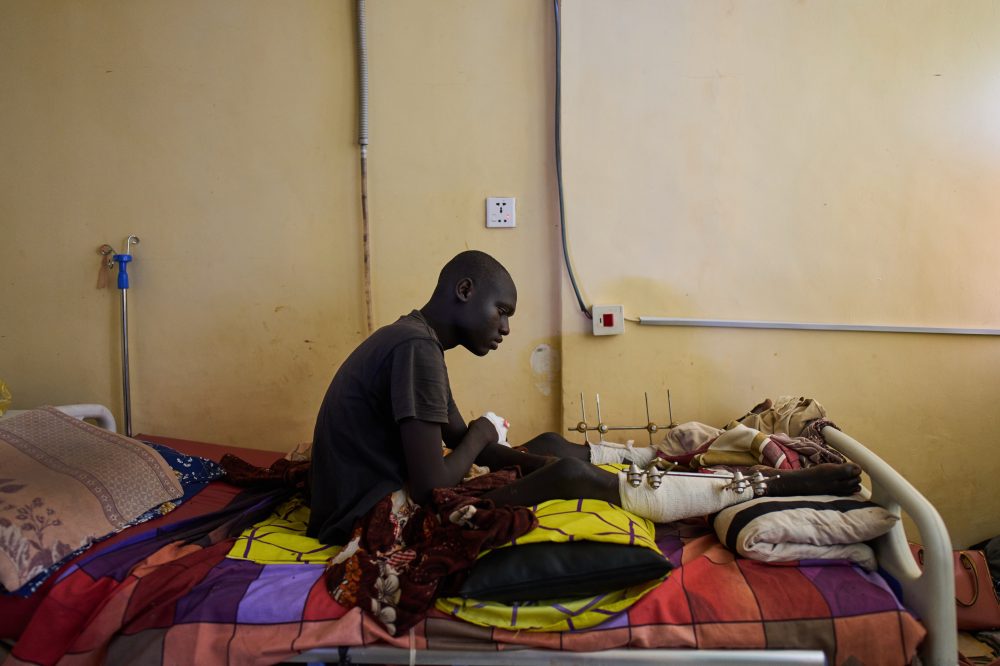
Mogadem Ibrahim thought he was picking up automotive debris when he grabbed a metal fragment. When the object adhered to his hand and he attempted to shake it off, it exploded.
The 18-year-old now conceals his bandaged left arm under his clothing. The August blast near his Omdurman home destroyed his fingers and ended his ability to work in manual labor.
“I feel depressed and worthless. I was supporting my family and now I’m sitting here and doing nothing,” he said.