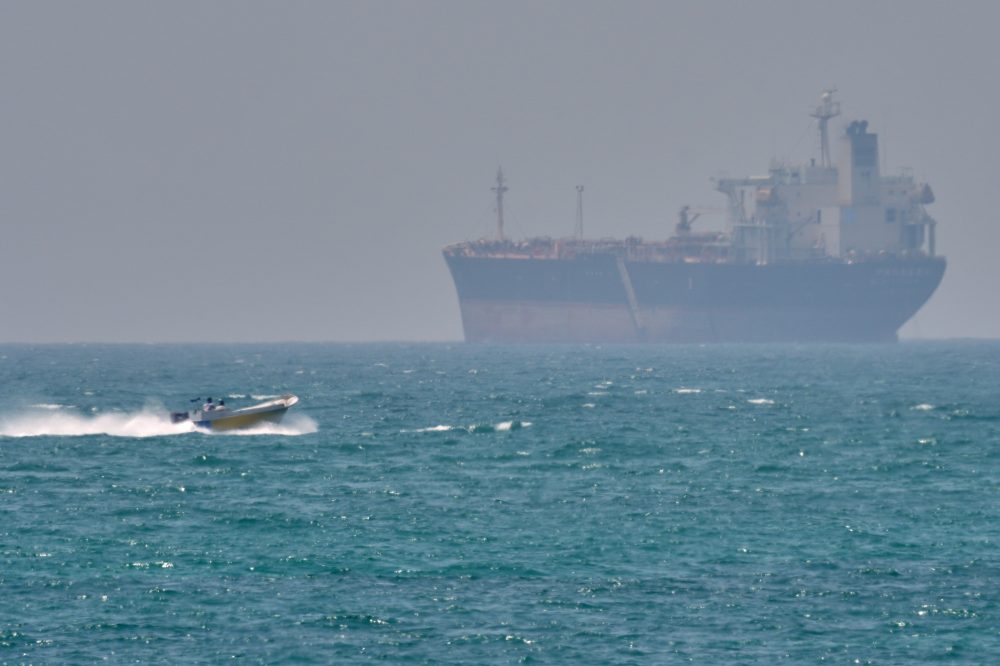

WASHINGTON — American military forces intercepted and searched a commercial cargo vessel this week as part of the ongoing naval blockade targeting Iranian shipping, but permitted the ship to continue its journey after determining it posed no threat.
According to U.S. Central Command’s social media announcement, Marines rappelled from helicopters onto the Blue Star III on Tuesday and “released the vessel after conducting a search and confirming its voyage would not include an Iranian port call.” Video footage captured American troops descending by rope onto the ship’s deck.
This marks the fourth commercial vessel inspected since the Trump administration launched its Iranian shipping blockade more than two weeks ago, though it’s the first ship not detained by U.S. forces. The naval operation seeks to apply economic pressure on Iran during ongoing ceasefire negotiations, as Tehran’s closure of the Strait of Hormuz continues disrupting global energy markets through the vital shipping corridor.
Maritime tracking data indicates the Blue Star III had departed from Qasim port in Pakistan and was traveling toward Sohar port in Oman.
Military officials provided no details about what initially raised suspicions about the vessel. U.S. Central Command has intensified efforts to demonstrate the blockade’s effectiveness despite criticism from maritime analysts.
The Middle East military command has been issuing regular reports on merchant vessels it claims the blockade has deterred, and stated Tuesday that “U.S. forces cut off economic trade going into and coming out of Iran.”
When the blockade commenced, Joint Chiefs of Staff Chairman Gen. Dan Caine announced that enforcement operations would reach beyond Iranian territorial waters and U.S. Central Command’s jurisdiction.
Military authorities have also published an extensive catalog of items classified as contraband, stating they will inspect, search and confiscate such materials from commercial ships “regardless of location.”
An official notice declares that any “goods that are destined for an enemy and that may be susceptible to use in armed conflict” are “subject to capture at any place beyond neutral territory.”
Maritime specialists like Campbell University professor Salvatore Mercogliano have pointed out that Iranian vessels possess multiple methods to evade the blockade, such as falsifying their location data or navigating through Pakistani waters.
Mercogliano also emphasized that monitoring the enormous volume of maritime traffic presents significant logistical challenges for military forces.
U.S. Central Command spokesperson Capt. Tim Hawkins described Tuesday’s Blue Star boarding as evidence that “demonstrates our thorough enforcement of the blockade.”