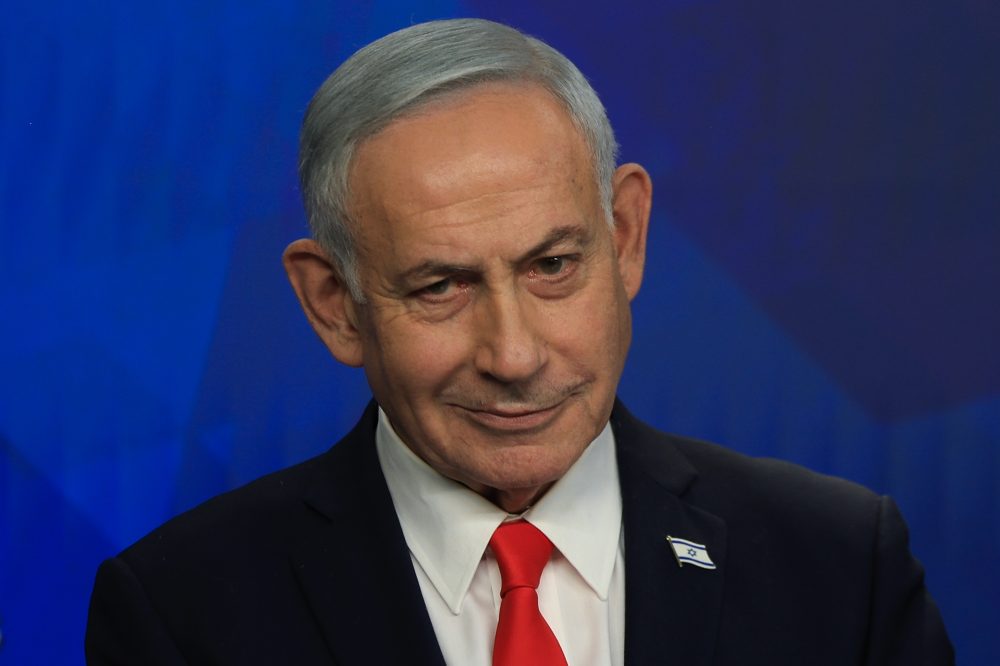

Israeli Prime Minister Benjamin Netanyahu has asserted that Iran would have developed a nuclear weapon and deployed it against Israel had it not been for two recent military campaigns — but that claim is not backed by any publicly available evidence and contradicts findings from U.S. intelligence agencies and the United Nations nuclear watchdog.
Netanyahu has spent decades warning about the dangers of Iran’s disputed nuclear program, most notably during dramatic presentations at the United Nations. His rhetoric has intensified following a recent interim peace deal reached between the U.S. and Iran, and with Israeli elections scheduled later this year.
Iran has consistently maintained that its nuclear activities are intended for peaceful purposes, even as it has enriched uranium to near-weapons-grade levels well beyond what civilian energy programs require. The United States and other nations say Iran operated a nuclear weapons program until 2003, when it was reportedly abandoned.
Even before the recent conflicts damaged Iran’s nuclear capabilities, the country was still months or years away from producing a functional atomic weapon — and there was no evidence it had made the decision to build one. Israel itself is widely believed to possess nuclear weapons.
Speaking Sunday at the JNS International Policy Summit, Netanyahu delivered remarks in English: “We have prevented Iran from carrying out a plan to annihilate us, and today they would have had a nuclear weapon, an atomic bomb to do so. Had we not acted in Operation Rising Lion and then in Operation Roaring Lion, Iran would have had atomic bombs. And let me tell you something, they would have used them.”
Iran and Israel have been bitter adversaries since Iran’s 1979 Islamic Revolution. Iranian leaders have repeatedly called for Israel’s destruction, while Netanyahu has made confronting Iran’s nuclear ambitions a defining mission since the 1990s, consistently warning that Tehran was on the verge of obtaining a bomb.
When U.S. President Donald Trump withdrew from the 2015 nuclear agreement — a deal Netanyahu had long opposed — the United States reimposed and expanded severe economic sanctions on Iran that had been eased under the accord. Iran reacted by ramping up uranium enrichment to 60%, which is technically just one step below weapons-grade.
The International Atomic Energy Agency, the U.N.’s nuclear oversight body, has pointed out that Iran is the only country without nuclear weapons that enriches uranium to that level. The IAEA’s director-general, Rafael Mariano Grossi, has said Iran’s stockpile of highly enriched uranium could potentially be used to construct as many as 10 nuclear bombs, if Iran chose to pursue that path.
Despite this, there is no publicly available evidence that Iran has maintained an active nuclear weapons program since 2003, when the IAEA, the U.S., and others say Tehran shut down the effort as U.S. forces invaded Iraq. IAEA inspections, though increasingly restricted in recent years, have not uncovered any evidence of a weapons program.
To produce a deployable weapon, Iran would need to enrich uranium to 90% purity, construct an actual bomb, and likely miniaturize it for use on a ballistic missile. That entire process would require months or years and would carry a significant risk of detection by Israeli or American intelligence.
A 2025 report from the Office of the Director of National Intelligence, which coordinates all U.S. intelligence agencies, stated plainly: “We continue to assess Iran is not building a nuclear weapon.”
Israel launched a 12-day military campaign against Iran in June 2025, known as Operation Rising Lion. During that conflict, the United States struck Iranian nuclear facilities, destroying centrifuges and halting uranium enrichment. That enrichment activity has not been known to resume, and the bombing is believed to have buried Iran’s stockpile of highly enriched uranium underground. Iran has since prevented IAEA inspectors from accessing the bombed locations.
Following that conflict, Netanyahu boasted that Israel had sent Iran’s nuclear program “to oblivion.” The U.S. and Israel then carried out a surprise military operation on February 28, which Israel has named Operation Roaring Lion.
The initial strikes in that operation killed Iran’s longtime supreme leader, Ayatollah Ali Khamenei, who held ultimate authority over the country’s nuclear decisions. Iranian diplomats say he had issued a fatwa, or religious ruling, prohibiting nuclear weapons.
His son and successor, Ayatollah Mojtaba Khamenei, is believed to have been wounded in those strikes and has not made any public appearances since assuming leadership. He is regarded as a more hardline figure than his father and has not issued any statements regarding Iran’s nuclear intentions.
Some other Iranian officials have suggested the country should consider pursuing nuclear weapons if its survival is at stake.