
LONDON (AP) — When Keir Starmer was elected Britain’s prime minister, voters saw him as a steady, reliable figure who could put an end to years of turmoil under Conservative leadership. He was seen as dependable rather than dazzling — exactly what many thought the country needed.
But his time in office is now coming to a close in under two years, brought down by a string of political blunders, divisions within his own party, and one catastrophic appointment that drew him into the orbit of the Jeffrey Epstein scandal — a man Starmer had never personally met and whose crimes he had no part in.
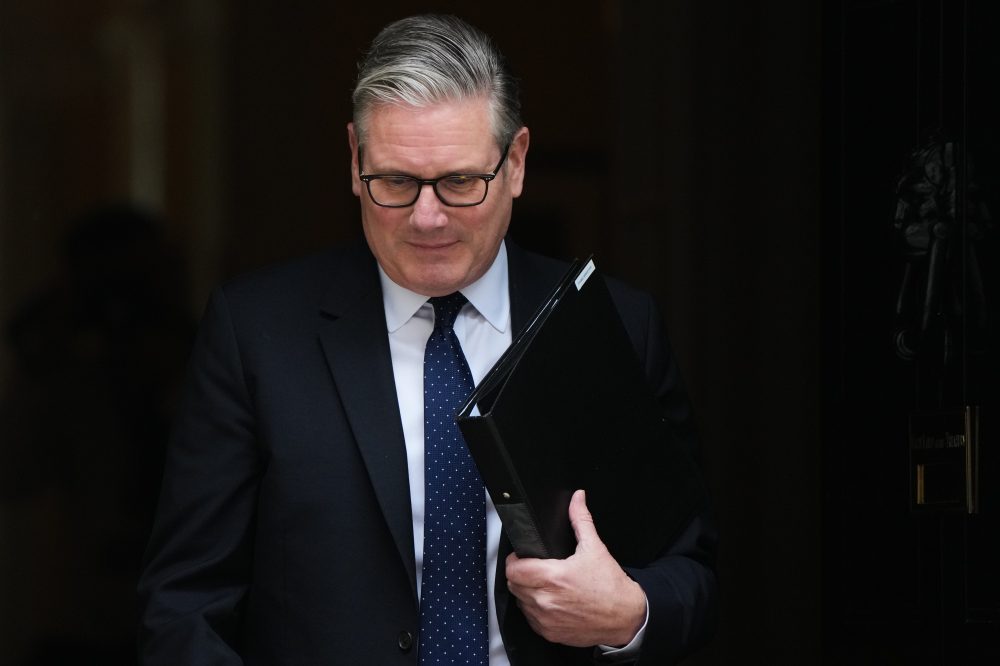
On Monday, Starmer delivered an emotional announcement that he is stepping away from the leadership of the governing Labour Party. He will remain as a caretaker prime minister while the party selects a new leader in the weeks ahead.
“The question my party is asking now is whether I am best placed to lead us into the next general election,” he said. “I have heard the answer of my parliamentary party to that question, and I accept that answer with good grace.”
Rob Ford, a political science professor at the University of Manchester, noted that Starmer’s appeal had been built on a promise of “no more soap opera politics.” But Ford said the government turned out to be “the antithesis of what he said he was going to be about, and it’s very hard to survive that.”
The breaking point came when Labour suffered a crushing defeat in a midterm round of local and regional elections on May 7. That loss set off a wave of government resignations and internal challenges that appear poised to bring former Greater Manchester Mayor Andy Burnham into 10 Downing Street.
The fall from grace is dramatic when measured against where Starmer stood on July 4, 2024, when he led the center-left Labour Party back to power after 14 years in opposition, capturing 411 of the 650 seats in the House of Commons.
The day after that victory, standing outside the prime minister’s official residence, Starmer vowed to restore “respect to politics” and build a government rooted in “public service.” After the turbulence of the final years of Conservative rule — which saw scandals and the rapid removal of prime ministers Boris Johnson and Liz Truss — Starmer pledged to dial back the drama and make governing more routine.
Some of the seeds of his downfall were planted in the nature of his victory itself. Despite Labour’s commanding majority in Parliament, the party had only earned the support of 34% of voters, with many of those votes appearing to reflect frustration with the Conservatives rather than genuine enthusiasm for Labour.
That lukewarm foundation was further weakened by a succession of stumbles. Early controversy over accepting gifts — including designer eyeglasses and tickets to a Taylor Swift concert — was followed by a series of policy reversals, most notably awkward efforts to reduce welfare spending that sparked outrage among Labour members.
What ultimately ended his tenure, however, was his decision to appoint Peter Mandelson as the United Kingdom’s ambassador to the United States.
Mandelson was viewed as well-suited to help Britain manage relations during U.S. President Donald Trump’s second term. His background in trade and his ease among the wealthy were seen as valuable credentials, and he helped negotiate a trade agreement that shielded Britain from some of the tariffs Trump had imposed globally.
But the appointment turned disastrous. Mandelson had referred to himself as Epstein’s “best pal” back in 2003, and in September 2025, documents surfaced revealing just how deep that connection ran. Starmer dismissed Mandelson from the post, but additional revelations in the months that followed sent his leadership into a tailspin.
Ford noted that because Starmer came to politics in his 50s following a distinguished legal career, he lacked the “political radar” needed to detect potential pitfalls before they became crises.
That legal career had been a distinguished one — Starmer rose to become chief prosecutor for England and Wales, handling cases involving terrorism, organized crime, and other serious matters. He was knighted for his leadership of the Crown Prosecution Service, and political opponents used his title, Sir Keir Starmer, to portray him as out of touch — an elite “lefty London lawyer.”
That characterization persisted even though Starmer’s background was far from privileged. The son of a toolmaker — a fact he frequently referenced in speeches — he has a passion for soccer and still plays the sport at age 63. He enjoys watching his favorite team, Arsenal, over a beer at his local pub. He and his wife Victoria, who works in occupational health, have two teenage children they have worked hard to keep away from public scrutiny.
Starmer first won a seat in Parliament in 2015 and was chosen to lead and rebuild Labour five years later, following the party’s worst election performance since 1935. He took over from veteran socialist Jeremy Corbyn, who had steered Labour to defeats in both 2017 and 2019. Starmer moved the party toward the political center, abandoned some of his predecessor’s more left-leaning positions, and issued an apology for antisemitism that an internal investigation found had been allowed to take hold under Corbyn.
His sharp, prosecutorial style served him well in Parliament, where he relentlessly challenged the three Conservative prime ministers he faced. He was particularly cutting in his attacks on Boris Johnson over the parties held inside Downing Street during the COVID-19 pandemic, in clear violation of the nation’s own lockdown rules.
Yet the role of prime minister demands a different kind of skill, and Starmer frequently came up short domestically, lacking the adaptability and political instincts the position requires.
He appeared far more at ease on the world stage — particularly in rallying European backing for Ukraine in its war against Russia and in working to contain the fallout from the U.S.-Israeli war on Iran.
That conflict created tension between Starmer and Trump, with whom he had initially built a cordial relationship despite their very different political outlooks.
“He’s liberal, which is a bit different from me, but I think he’s a very good person and I think he’s done a very good job thus far,” Trump said in January.
Starmer initially avoided public criticism of Trump, but began speaking out more forcefully after the U.S. president made threats regarding Greenland. His criticism sharpened further once the Iran conflict began, and by March, Trump was dismissing him as “not Winston Churchill” and taking jabs at the Royal Navy.
Starmer’s choice to keep Britain largely out of the Iran conflict was well-received by the British public, but it did nothing to reverse his party’s declining poll numbers.
Many Labour members of Parliament, elected with relatively narrow margins in their districts, grew increasingly nervous as the party’s standing in polls continued to fall. Starmer’s personal approval rating sank to among the lowest ever recorded for a sitting prime minister.
For much of the Labour caucus, the Mandelson-Epstein revelations were the last straw, exposing what they saw as a serious lapse in Starmer’s judgment.
Significant anger arose over the fact that Mandelson had been placed in such a sensitive, high-visibility role at all. Starmer removed him after a first set of emails published in September showed Mandelson had maintained a friendship with Epstein even after the late financier’s 2008 conviction for sex offenses involving a minor.
Then, emails released in January 2026 indicated that Mandelson had also shared sensitive government information — information that could potentially affect financial markets — with the disgraced financier in 2009, while serving as a member of the Labour Cabinet.
Mandelson has since been arrested and questioned by police on suspicion of misconduct in public office. He has not been charged, and faces no allegations of sexual misconduct.
Making matters worse was the disclosure that Mandelson had been appointed despite failing security screening required for the ambassador position. Starmer’s apologies and his claims that he had been unaware of the failed vetting process found fewer and fewer sympathetic ears.
In the House of Commons on April 28, Labour lawmaker Emma Lewell said she felt “let down, disappointed and angry,” describing Mandelson’s appointment as “a fundamental failure of judgment.”
Following Labour’s drubbing at the polls in May’s local and regional elections, the party moved quickly. A Labour lawmaker in Greater Manchester stepped aside to allow Burnham to run for a parliamentary seat. Burnham won by a wide margin and described the moment as a “turning point” for British politics. Within days, Starmer announced he would be stepping down.