
BRUSSELS (AP) — A Taliban delegation arrived in Brussels on Tuesday for private, closed-door discussions with European Union staff, with the talks expected to center on the deportation of Afghan migrants, according to a Taliban official.
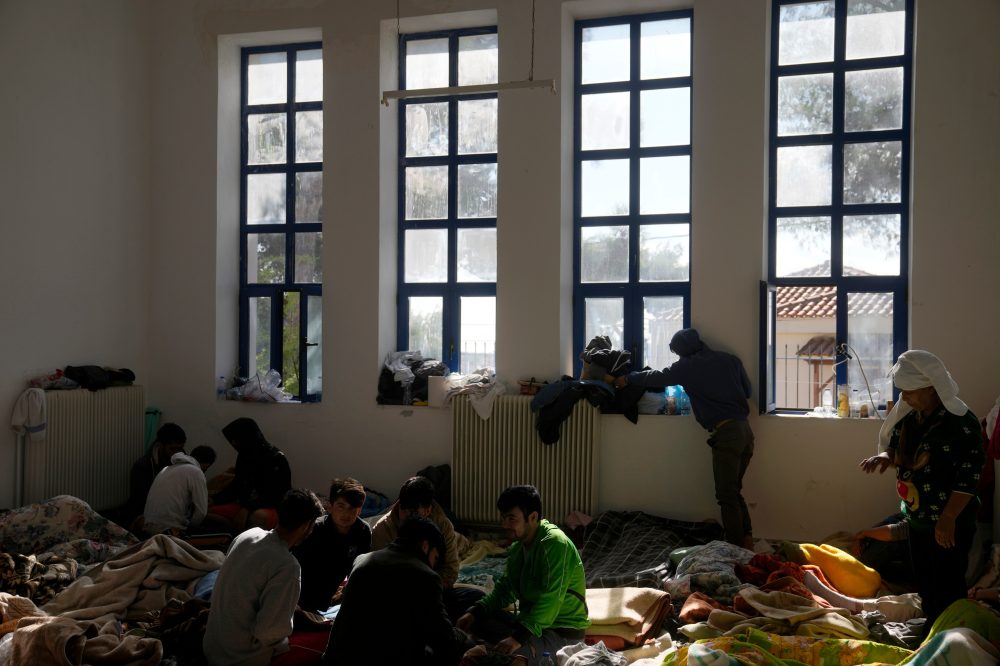
Afghans represent one of the largest migrant groups applying for asylum within the EU. However, a growing number of governments across the 27-nation bloc are pushing to accelerate and expand deportations for those whose asylum claims are denied or who have been convicted of crimes in their host countries.
Since the Taliban took control of Afghanistan in 2021 — following the chaotic withdrawal of U.S.-led military forces — Afghan authorities have imposed sweeping restrictions on civil rights, with women and girls bearing the brunt of those measures.
Human rights organizations said Tuesday’s meeting weakens the EU’s obligations to uphold human rights and could put people at risk both in Europe and in Afghanistan.
“Any engagement with the Taliban needs to prioritize protecting human rights and accountability — not deporting people to danger there,” said Fereshta Abbasi, a researcher at Human Rights Watch. “EU countries are undermining their credibility by condemning Taliban abuses and pursuing accountability on one hand, while cooperating with the Taliban to forcibly return Afghans on the other.”
Not a single EU member state recognizes the Taliban as a legitimate government, making Tuesday’s meeting in Brussels a notable — if small — break from the group’s diplomatic isolation since it came to power five years ago.
The Taliban’s five-member delegation includes Abdul Qahar Balkhi, a New Zealand-born spokesperson for the Taliban’s foreign ministry, according to a Taliban official who spoke on the condition of anonymity.
Belgian Foreign Minister Maxime Prévot stated that while Belgium does not recognize the Taliban, it would honor EU requests to issue the group visas.
“Belgium cannot confer legitimacy on a regime accused of serious human rights violations,” he said in a written statement, noting Belgium’s role as host to EU institutions. “Making a meeting possible in the framework of our host-state policy does not amount to recognition, does not amount to legitimacy, and does not constitute an invitation by the Belgian government.”
The Taliban delegation members received visas following security screening. Those visas carry limited territorial validity, allowing just 24 hours in Belgium with no access to other countries within the Schengen border-free travel area.
Because neither Belgium nor the EU officially recognizes the Taliban government, the meeting will not be held in any official EU or Belgian government building. The European Commission has repeatedly declined to provide further details about the gathering.
A European Commission spokesperson said Monday that the meeting was organized in response to pressure from a clear majority of EU member states — 20 of which signed a letter in October calling for stronger migration policies, including a significant increase in deportations.
“They had asked the Commission to coordinate such technical contacts on returns,” said spokesperson Markus Lammert. “Member states are looking into ways to return persons who have committed serious crimes and who are possibly a security threat.”
This is not the first such contact between the EU and the Taliban. An earlier meeting took place in Afghanistan in January, when the Commission sent a mission to Kabul. The Commission also maintains staff there.
The October letter was drafted in part by Belgian Migration Minister Anneleen Van Bossuyt, who said at the time that “we have sent a clear and powerful message to the European Commission: we can no longer afford a standstill. It is high time for a firm and joint approach, so that Europe can regain control over migration and security.”
Van Bossuyt noted that across the EU, only 2% of the 22,870 Afghans ordered to leave had actually done so.
A separate Commission spokesperson emphasized that the meeting “does not mean by any means recognition” of the Taliban government.
Afghanistan has also been managing the return of roughly 3 million Afghans from Pakistan and Iran over the past year alone — people who were largely forced back to their home country — adding further strain to a nation already grappling with food shortages, economic collapse, and international sanctions against the Taliban’s Islamic Emirate.
Taliban authorities have banned Afghan women and girls from attending school beyond the primary level and from working in nearly all professions, while also imposing strict rules on what women may wear in public.
“The desperate scenes of people — including EU staff — fleeing Afghanistan are a recent memory. It is unconscionable that the EU would now try and deport people to Afghanistan, which has only become more dangerous in the meantime,” said Eve Geddie, Director of Amnesty International’s European Institutions Office.
Facing mounting political pressure to crack down on migration across the bloc, the EU has recently enacted sweeping changes to its collective migration rules. Those reforms aim to increase deportations and include provisions for so-called “return hubs,” expanded domestic surveillance, tighter border controls, and engagement with the Taliban — a government the EU does not recognize due to human rights concerns.
With Afghanistan facing food insecurity and economic deterioration, the Taliban government is seeking humanitarian assistance and hoping to reduce its international isolation.