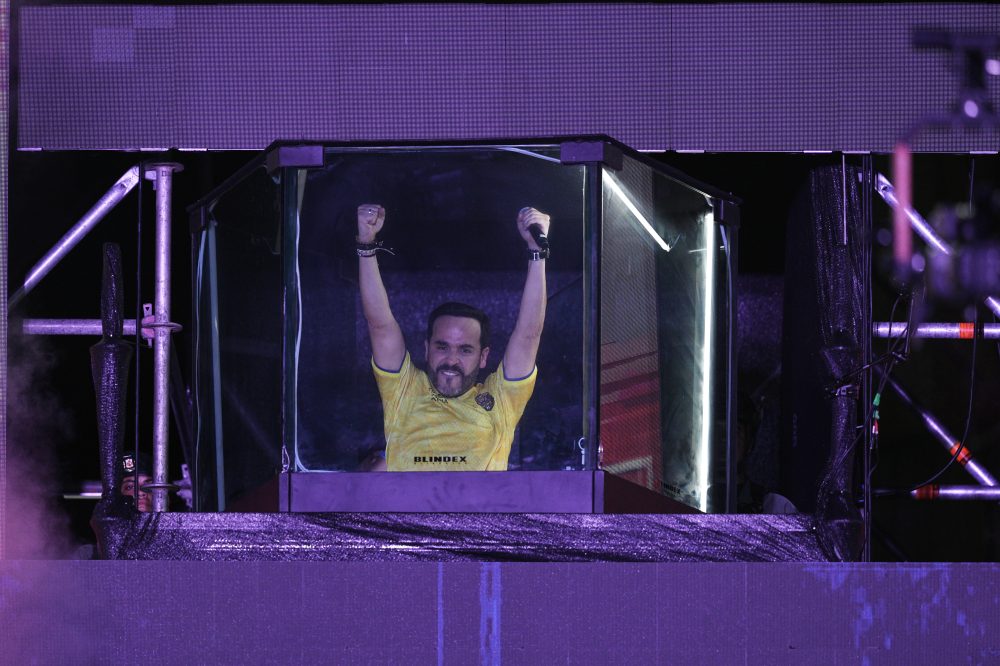

BOGOTA, Colombia — A Trump-endorsed political outsider named Abelardo de la Espriella appears to have captured the Colombian presidency, making that nation the newest addition to a growing list of Latin American countries that have shifted toward conservative leadership.
With nearly all ballots counted as of Monday, de la Espriella held a lead of roughly one percentage point — approximately 251,000 votes — over his opponent Iván Cepeda. No official winner has been declared yet. Cepeda has disputed the results, though a review of the vote is not expected to reverse the outcome.
De la Espriella ran on a law-and-order platform that included scrapping peace negotiations with Colombian rebel factions and constructing large-scale prisons similar to those built in El Salvador. U.S. President Donald Trump backed the lawyer and business owner, who goes by the nickname “The Tiger,” calling him the right person to bring security and order back to Colombia.
Here is a look at other Latin American nations that have recently elected conservative presidents:
Argentina: Javier Milei, an economist and TV personality known as “The Lion,” captured Argentina’s presidency in November 2023 after pledging to dramatically reduce government spending and bring under control the country’s long-running inflation crisis. The libertarian candidate defeated the incumbent Peronist movement. Since taking office, Milei has halted the central bank’s practice of printing money to cover the government’s budget gap, dismissed civil servants, paused public infrastructure investment, and reduced subsidies on utility bills. Argentina’s inflation rate has dropped from 211% in 2023 to 32% in 2025, though critics argue his austerity measures have lowered the quality of life for many Argentines, particularly those working in the public sector.
Ecuador: Daniel Noboa, a member of one of Ecuador’s most prominent wealthy families, was reelected to a four-year term in April 2025 with 56% of the vote. The conservative president has deployed the military to help restore order in coastal cities where drug gangs are battling for control of ports and trafficking routes. Despite this approach, homicide rates have not seen significant improvement, and the government has faced criticism over alleged human rights violations, including extrajudicial killings. Under Noboa, Ecuador’s military has launched joint anti-drug operations with the United States. Noboa also pushed to reopen a U.S. military base in the country, but voters rejected that proposal in a referendum last year.
Honduras: Nasry Asfura, a real estate investor and former city mayor representing the National Party, narrowly won Honduras’s presidential election in November, edging out his closest competitor by less than a percentage point. Asfura belongs to the same political party as former President Juan Orlando Hernández, who was pardoned by Trump following a drug trafficking conviction. Trump endorsed Asfura and threatened to withhold aid from Honduras if he was not elected. Since taking office, Asfura’s administration has accepted dozens of deportees from third countries under an agreement signed with the U.S. in early 2025, the majority of whom were Guatemalan nationals.
Chile: In December, José Antonio Kast, a conservative and devout Catholic, won Chile’s presidential election with 58% of the vote, ousting a progressive government that had held power for the previous four years. Kast’s campaign focused heavily on rising crime and a promise to expel migrants from countries such as Venezuela and Haiti who were living in Chile without proper residency documentation. Shortly after taking office, his government extended a trench system along Chile’s borders with Peru and Bolivia, citing efforts to curb drug smuggling and unauthorized migration. His administration has more recently faced public protests over growing unemployment and spending cuts affecting government workers.
Costa Rica: Laura Fernández, who previously served as economy minister under conservative former President Rodrigo Chaves, won Costa Rica’s presidential election in February with 48% of the vote — enough to avoid a runoff by surpassing the required 40% threshold. She defeated her nearest opponent by 15 percentage points. Her campaign included tough crime-fighting proposals such as allowing police to make arrests without warrants and building a large prison modeled after El Salvador’s CECOT facility. Fernández’s government has also accepted multiple flights carrying migrants from third countries deported by the United States, fulfilling an agreement her predecessor signed. In June, one such flight included migrants from China, Vietnam, Colombia, and Azerbaijan.