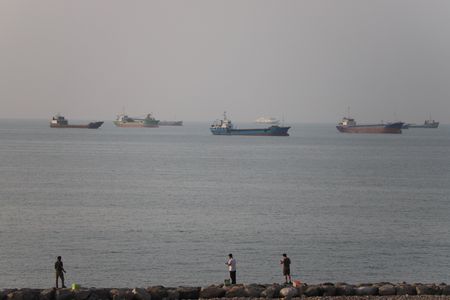

Shipping traffic through the Strait of Hormuz came to a near standstill on Sunday after Iran declared it had once again sealed off the vital waterway, pointing to what it called violations of an interim peace deal by Israel and the United States.
According to data from shipping analytics firm Kpler, just five vessels made their way through the strait on Sunday — a steep drop from the 26 ships recorded passing through the day before. Among those five were three Very Large Crude Carriers, each transporting 2 million barrels of Saudi crude oil and fuel oil, with at least one of those vessels bound for Japan. Analysts noted the figures may not account for ships that disabled their tracking transponders while traveling through the Gulf.
Iran had lifted its effective blockade of the strait last week after reaching an agreement with the United States to extend an April ceasefire by 60 days, creating a window for peace negotiations. However, Iran’s Islamic Revolutionary Guard Corps reversed course on Saturday, declaring the waterway closed again in response to Israeli military strikes in Lebanon. The U.S. military, for its part, stated that commercial vessels were continuing to operate in the area.
On Saturday, among the ships that exited the strait were three Very Large Crude Carriers transporting crude oil from the United Arab Emirates, Kuwait, and Iraq. Three additional tankers carrying assorted oil products also passed through. On the inbound side, 13 ships entered the strait on Saturday, including two Very Large Crude Carriers.
In response to the uncertainty, Gulf energy producers Abu Dhabi National Oil Co. and Kuwait Petroleum Corp. have both issued tenders offering crude oil with flexible loading options — allowing buyers to pick up shipments from locations either inside or outside the Strait of Hormuz.