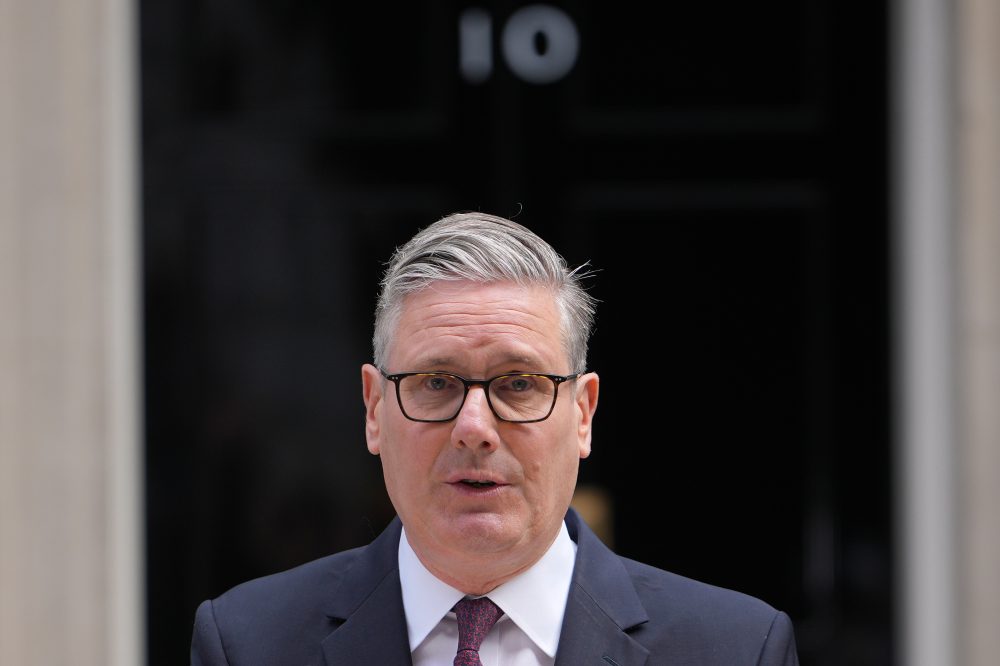

LONDON (AP) — British Prime Minister Keir Starmer rode a wave of historic electoral success into office in 2024, only to step down Monday after barely two years on the job, driven out by a rebellion within his own Labour Party following crushing losses in local elections.
His time in power was marked by a faltering economy, a string of policy reversals, a deeply problematic diplomatic appointment, and a widespread sense that his government lacked a clear direction. Those factors combined to deal Labour a severe defeat in spring local elections, sparking internal calls for his departure that ultimately opened the door for a challenger to force him out.
When Starmer’s party swept to power on July 4, 2024, capturing 411 of 650 seats in Parliament and ending 14 years of Conservative Party rule, the mood was jubilant. It was a dramatic reversal from the party’s previous electoral collapse.
Home Secretary Shabana Mahmood declared that Starmer would never be forgotten for guiding the “party from the brink, back to power.”
In his victory remarks, Starmer painted a picture of national renewal and a government that would work for “working people.” “And now we can look forward,” he told supporters. “Walk into the morning, the sunlight of hope, pale at first but getting stronger through the day, shining once again, on a country with the opportunity after 14 years to get its future back.”
The optimism faded quickly. Britain’s public finances had been badly strained by the COVID-19 pandemic and the economic fallout from Russia’s full-scale invasion of Ukraine, leaving little room for major spending initiatives.
Voters who had thrown out the Conservatives in hopes of economic relief found that Labour’s early efforts produced little improvement. Starmer and his Treasury chief, Rachel Reeves, may have made matters worse by painting an overly gloomy picture of what they had inherited — dampening consumer and business confidence and prompting further economic caution.
Policy choices added to the damage. Labour’s election platform had explicitly promised not to raise income tax or sales tax. Faced with a budget shortfall, the government instead chose to increase a payroll-related tax on businesses, a move that proved deeply unpopular and led many employers to scale back hiring.
A series of additional policy retreats followed, each one feeding the narrative that Starmer’s government was rudderless. The administration reversed course on plans to eliminate winter heating subsidies for millions of retirees, backed away from proposed cuts to welfare spending, and softened a new agricultural inheritance tax after farmers staged angry protests and drove tractors through the streets of London.
On other issues, the government also reversed itself — including Starmer’s decision to launch a national inquiry into organized child sexual abuse, which came after pressure from opposition politicians and Elon Musk.
Among the most damaging episodes of Starmer’s tenure was his decision to appoint controversial Labour figure Peter Mandelson — a man long known by the nickname “Prince of Darkness” for his aggressive political maneuvering — as Britain’s ambassador to the United States. Starmer made the appointment knowing Mandelson had maintained a friendship with convicted sex offender Jeffrey Epstein.
At first, the move appeared shrewd. Mandelson’s background in trade negotiations and his comfort among wealthy and powerful circles helped Britain secure a favorable trade deal with the United States, with lower tariffs than many other nations received from the unpredictable U.S. President Donald Trump.
But in September 2025, new revelations surfaced showing Mandelson had been far more closely connected to the late financier Epstein than he had previously admitted. Starmer dismissed him. The fallout continued to dog the prime minister long after the firing.
Internal government records later revealed that Mandelson had been flagged as a “reputational risk” before his appointment, that he had failed a security background check, and that he was under investigation for allegedly sharing sensitive government information with Epstein during his time as a Cabinet minister more than 15 years ago. Mandelson has denied any wrongdoing.
The final blow came from local elections held last month. Labour suffered a devastating performance as Reform UK, a relatively new hard-right, anti-immigration party, captured the largest share of local seats, while the growing Green Party pulled voters away from Labour on the left flank.
More than 100 Labour members of Parliament publicly called on Starmer to step aside. Several government ministers, including Health Secretary Wes Streeting, resigned from their posts in protest, with speculation mounting that Streeting might challenge Starmer for the leadership.
A sitting member of Parliament gave up his seat to allow Andy Burnham, the widely popular Mayor of Greater Manchester, to return to London and mount a direct challenge to Starmer. Burnham won that contest last week.
Starmer spent the weekend at the prime minister’s country estate, weighing his options as party insiders pressed him to announce a departure timeline. On Monday morning, an emotional Starmer announced his resignation. Burnham was sworn in later that same day in the House of Commons, receiving a triumphant reception from lawmakers.
Whether any other candidates will enter the race remains to be seen. Labour’s national executive committee is scheduled to open nominations on July 9 to formally select Starmer’s permanent replacement.