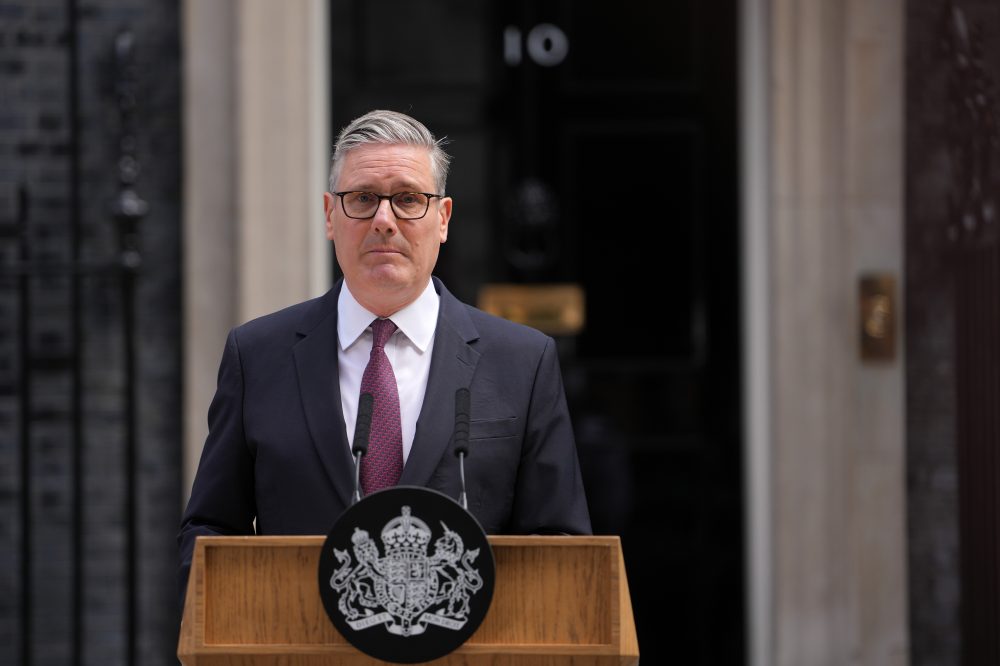

LONDON (AP) — British Prime Minister Keir Starmer admitted Monday that he no longer has the backing of his own Labour Party members in Parliament, announcing he will leave office once a new party leader is selected — potentially as early as mid-July.
The announcement was set in motion by Andy Burnham, the former mayor of Greater Manchester, whose overwhelming win in a special U.K. by-election last Thursday triggered Starmer’s departure. Burnham has since confirmed he intends to run for the Labour leadership.
Burnham is widely viewed as the leading candidate to take over, largely because his Thursday victory in the Makerfield constituency in northwest England was so commanding that it demonstrated broad appeal across the political spectrum.
Even as Labour struggled with poor poll numbers and significant losses in local elections back in May, Burnham bucked the trend. He fended off the candidate from the anti-immigration Reform UK party and pulled in votes from other left-leaning parties as well, pushing Labour’s share of the vote to nearly 55%. Analysts say a similar performance nationally in the next general election would likely keep Labour in power.
While Starmer did not refer to Burnham by name in his resignation statement delivered outside the prime minister’s residence at 10 Downing Street, he acknowledged “with good grace” that he was not the right person to lead Labour into the next national election.
That next general election does not need to take place until 2029. Under British political rules, parties are permitted to change leaders during a term without triggering a general election.
Here is a look at how the coming weeks could play out:
Burnham, who is 56 years old, arrived in London on Monday and was sworn in as a member of Parliament — his return to the role after nearly ten years away, during which he served as the popular mayor of Greater Manchester.
Shortly after Starmer made his statement, Burnham confirmed he would seek the Labour leadership. He described Starmer’s exit as the start of a transition period and stressed the importance of handling it responsibly. “The country expects stability, seriousness and a continued focus on the issues that matter most and that is what it will get,” Burnham stated.
Starmer said he will remain in his role as prime minister until a successor is in place. He indicated that Labour’s national executive committee will open the nomination process on July 9.
If Burnham turns out to be the only candidate, he could be confirmed as party leader within a week or two after that. However, a contested race would likely push the outcome into September.
Burnham has already gained the support of Wes Streeting, who stepped down as health secretary last month and had previously suggested he might run himself. Streeting threw his support behind Burnham, saying “he can win the fight of our lives against the forces of nationalism” — a reference to the anti-immigration Reform UK party led by Nigel Farage, which has surpassed Labour in opinion polls since the July 2024 general election. “We could spend the summer exaggerating small differences, or we can roll up our sleeves and help him to deliver the change our party and our country needs,” Streeting added.
Other potential candidates have not yet responded publicly to Starmer’s announcement. Those names include Starmer’s former deputy Angela Rayner, who stepped down last September over an unpaid property tax issue, and Al Carns, who resigned last week from his position as armed forces minister over disagreements with Starmer’s defense funding plans.
Many within Labour are hoping no one challenges Burnham, which would allow him to move into 10 Downing Street before the party’s autumn conference. Burnham himself was noncommittal when asked whether he would prefer an uncontested path to the leadership as he boarded a train from Manchester to London.
To enter the leadership race, candidates must secure support from at least one-fifth of Labour’s House of Commons lawmakers — that equals 81 members. Candidates who clear that bar must then win backing from either 5% of local constituency parties or at least three party affiliates, such as trade unions and cooperative societies.
Eligible party members and affiliates would then cast ranked-choice votes, with the winner being the first candidate to surpass 50% support. King Charles III would then formally invite the winner to become prime minister and form a new government.