
Keir Starmer was once celebrated as the pragmatic, steady leader Britain needed after years of political turmoil. But when he announced his resignation as prime minister on Monday, it was that same absence of strong ideology — the very quality that had helped carry him to power — that many blamed for his fall.
Starmer led the Labour Party to a historic parliamentary majority in 2024, the largest in Britain’s modern era. Yet rather than laying out a bold vision for the country’s future, he focused narrowly on what he thought was achievable. That approach quickly wore thin.
More than 20 Labour insiders said voters and party members alike came to view him as someone without conviction or direction. One senior Labour lawmaker described the absence of “a guiding light” in his leadership. Without it, the former lawyer found himself pulled in different directions by competing factions within his own party, pressured by outside interests, and unable to connect with a skeptical public that grew to resent what many saw as indecision and stiff, robotic public appearances.
His tenure was marked by policies that fell apart, a revolving door of resignations and firings among his staff, and a communications team that struggled to craft any coherent story about what his government actually stood for.
As pressure mounted, the 63-year-old prime minister increasingly leaned on his wife Victoria for guidance. On May 12 — five days after a crushing set of local election results triggered calls for him to step aside — he had a long lunch with her and came away resolved to continue fighting. But a weekend retreat at the prime minister’s official country residence at Chequers with Victoria appeared to be the turning point that convinced him to accept the inevitable and step down.
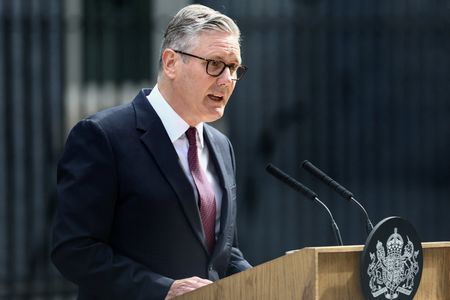
Standing outside his Downing Street residence, Starmer pledged to ensure a smooth handover of power to the next Labour leader, widely expected to be Andy Burnham, the former Greater Manchester mayor.
“The question my party is asking now is whether I am best placed to lead us into the next general election,” he said in an emotional address, his voice breaking as he thanked his family for their support. “I have heard the answer from my parliamentary party to that question and I accept that answer with good grace.”
By the time he resigned, Starmer had become deeply unpopular with voters, weighed down by broken campaign promises and repeated policy reversals. Even some of his most trusted cabinet allies had privately begun urging him to step aside rather than drag the party through a damaging leadership battle. His earlier vows to fight on quickly gave way once most of the party concluded they could not head into the next national election, due in 2029, with him leading the charge.
Burnham had recently won a parliamentary seat in northwestern England and was being hailed as a “Reform slayer” — someone with a real shot at holding back the populist movement led by veteran Brexit campaigner Nigel Farage.
Fear of Farage’s growing influence was a driving force behind the push to remove Starmer. Lawmaker Catherine West, who broke ranks during the May 9-10 weekend to pressure others into mounting a challenge against the prime minister, put it bluntly: “I would do anything to stop Farage.”
Starmer’s political journey had been remarkable in its own right. He became a Labour lawmaker in 2015 at the age of 52, and just five years later took over the party following its worst election performance since 1935 under his predecessor, veteran left-winger Jeremy Corbyn — a tenure defined by antisemitism allegations and a muddled position on Brexit.
Drawing on his background running the Crown Prosecution Service, an independent body that advises police and handles criminal prosecutions, Starmer set about modernizing Labour and making it a credible governing force. He tackled antisemitism accusations, reined in internal factionalism, stabilized the party’s finances, assembled a strong front bench, and developed a policy platform aimed at addressing Britain’s needs.
“Everything we offer will be built on a bedrock of economic stability and a plan for growth,” his spokesperson said at the time.
At first, the strategy worked. Labour won a commanding majority in Britain’s 650-seat parliament. But analysts were quick to note the victory’s fragility — the party actually recorded one of its lowest vote shares in history, and the win relied heavily on tactical voting. After 14 years of Conservative infighting, Brexit chaos, and five prime ministers in eight years, the opposition had essentially self-destructed.
Prominent pollster John Curtice summed it up: “All in all this looks more like an election the Conservatives lost than one Labour won.”
That shaky foundation made governing all the harder. Starmer’s team had deliberately avoided detailed policy planning during the campaign to avoid scaring off voters. One person from his inner circle recalled being told to “stop” developing policy so as not to “frighten people in advance of the general election.” As that person remembered: “We don’t have a plan for what we’re going to do when we get in, if we do get in, because it might jinx it.”
Once in office, the government struggled both to define its agenda and to follow through on it — chasing economic growth that never materialized, trying to curb illegal migration that continued unabated, and attempting to fix a health system that kept presenting new crises.
Starmer repeatedly tried to highlight his government’s accomplishments — improvements to workers’ rights, reductions in health service wait times, and an economic climate that allowed for interest rate cuts. But a former aide said he never managed to offer voters “a destination” — a clear endpoint that would help them understand and connect with his decisions.
Instead, the public fixated on a series of missteps: controversies over personal gifts and donations, policy reversals, and the appointment of Labour veteran Peter Mandelson despite his known ties to the late convicted U.S. sex offender Jeffrey Epstein. Starmer’s claim that he had not been fully informed about the extent of Mandelson’s connections left many feeling he was either out of touch or not in control. “It was a bad appointment,” said one former aide, who suggested it had been pushed through by just two other former advisers.
The atmosphere inside Downing Street grew increasingly tense. Some aides pointed fingers at a hostile right-wing media, but after one attempted reset followed another, Starmer consistently failed to project what one adviser described as “his passion for these domestic causes.” He lost key staff members, including his former chief of staff Morgan McSweeney, in the fallout from the Mandelson controversy, and his relationship with Britain’s civil service deteriorated after he dismissed the top official at the foreign office.
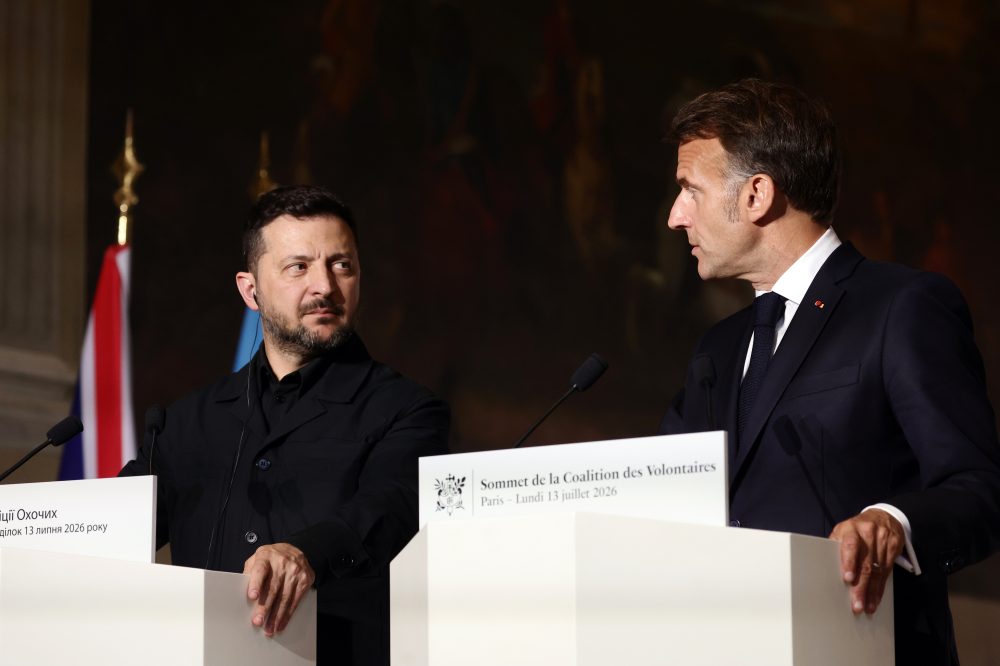
Starmer fared better on the world stage. He earned praise from some European counterparts for helping to lead the so-called “coalition of the willing” — nations prepared to assist in the event of a Ukraine peace agreement. Alongside French President Emmanuel Macron, he also played a role in talks aimed at reopening the Strait of Hormuz.
He initially made some headway with U.S. President Donald Trump, at times appealing to his ego by offering a second state visit to Britain and praising Trump’s efforts toward peace in Ukraine and other conflicts. That goodwill soured, however, after Starmer declined to involve Britain in military action against Iran. On Sunday, Trump posted on Truth Social: “Keir Starmer will resign as Prime Minister of The United Kingdom. He failed badly on two very important subjects — IMMIGRATION AND ENERGY (OPEN NORTH SEA OIL!). I wish him well!” Trump had also said Starmer was no Winston Churchill.
Perhaps Starmer’s most lasting mark on Britain will be the splintering of its traditional two-party political system. Local elections in England and parliamentary votes in Scotland and Wales showed that system had been shattered, with the Reform party establishing a powerful presence across the country. Labour membership numbers declined while Reform’s surged past 270,000.
Starmer had tried to use that threat to rally his own base, warning Labour in February that the battle against Reform was “the fight of our lives.” In the end, it was a fight he could not win.