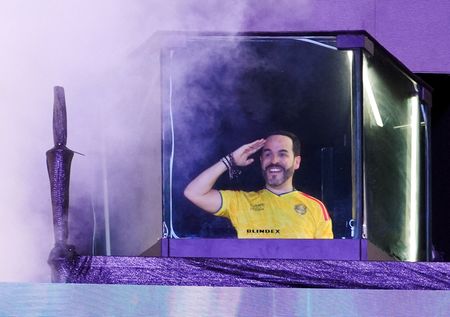

Colombia has taken a sharp turn to the right, choosing nationalist attorney and political outsider Abelardo De La Espriella as its next president — a move that analysts say further solidifies a sweeping conservative wave rolling across Latin America.
Meanwhile, in Peru, officials are still tallying disputed votes from that country’s June 7 presidential runoff. Early projections show conservative Keiko Fujimori on track to win by a razor-thin margin of just over 0.2%, which would give her the presidency after three previous unsuccessful bids.
With Colombia and Peru now trending right, they join Argentina, Chile, Ecuador, Bolivia, and Panama in a regional shift that sharply contrasts with the so-called “pink tide” — a period in the early 2020s when a wave of leftist governments rose to power across the continent, including Colombia’s outgoing President Gustavo Petro, the country’s first leftist head of state.
Under Colombian law, a final verified vote count supervised by notaries and judges is required before results are official. That process was nearly finished late Sunday, though it remains to be seen whether it will fully match the initial tally.
Analysts point to struggling economies and surging crime rates as the driving forces behind the region’s political realignment. Once-fringe hard-right candidates have found growing audiences by pledging to crack down on lawlessness, riding a global wave of right-wing nationalism and benefiting from President Donald Trump’s push to counter China’s expanding footprint in Latin America and assert greater U.S. influence over the region.
“This is an unusual alignment of the stars for Trump,” said Steven Levitsky, a professor of Latin American Studies and government at Harvard University. “Rarely do you see a large number of governments as ideologically convergent as we’re seeing now.”
Over the past year, Trump has ordered military strikes that killed more than 150 people aboard suspected drug vessels in the Caribbean, launched a right-wing regional coalition called the Shield of the Americas, and captured Venezuelan President Nicolas Maduro in a raid on Caracas.
Colombia’s Petro had been among Trump’s harshest critics in the region, drawing threats of military action and economic sanctions in response. De La Espriella stands in stark contrast — he is a self-described Trump supporter. A naturalized U.S. citizen who previously lived in Miami, De La Espriella received Trump’s endorsement before the runoff election. He has promised to join the Shield of the Americas, take a hard line against drug traffickers, cut business regulations and taxes, and restart oil and gas projects that were shelved under Petro.
His victory arrives as Colombia grapples with natural gas shortages, even as global energy markets are being rattled by the war on Iran and the closure of the Strait of Hormuz.
With significant oil reserves in Guyana and Venezuela — which Trump has pledged to help develop — and one of the world’s largest shale formations located in Argentina, experts suggest Latin America is positioned to emerge as a major global energy supplier.
Right-wing governments in Argentina, Chile, Peru, and Colombia have built support on promises of tax relief, reduced government spending, and relaxed rules for mining and fossil fuel development. But many of those same governments are now wrestling with budget deficits, leading to unpopular spending cuts that have sparked public protests.
Bolivia declared a state of emergency this past weekend and began clearing blockades that had brought the country to a standstill for more than 50 days, as labor unions and other groups protested austerity measures introduced by center-right President Rodrigo Paz.
In Chile, President Jose Antonio Kast saw his approval numbers drop sharply after the Iran conflict prompted his government to raise fuel prices. In Argentina, President Javier Milei’s belt-tightening policies have been met with repeated demonstrations.
Security remains a stubborn challenge despite tough-on-crime campaign pledges. In Ecuador, homicides jumped 30% last year, with President Daniel Noboa’s government attributing the spike to territorial conflicts among fragmented criminal gangs. Murder rates have also climbed in Costa Rica under right-wing populist Rodrigo Chaves, and his successor, President Laura Fernandez, has pledged a war on crime — though killings remain high as the small Central American nation has become a major transit point for South American cocaine bound for the U.S. and Europe.
For De La Espriella, governing Colombia will be no easy task. Analysts say drug trafficking, illegal mining, and minimal government presence in remote parts of the country pose serious obstacles.
He won by less than 1% and will have to navigate a divided Congress, where his opponent Ivan Cepeda’s Historic Pact party controls more seats than any other faction.
De La Espriella’s fashion choices and his proposal to build mega-prisons have invited comparisons to El Salvador’s President Nayib Bukele, who has dubbed himself the “world’s coolest dictator.” De La Espriella has pushed back on that characterization.
“Colombia is a much larger country and far more complex to manage than El Salvador, and importing El Salvador’s security solutions into Colombia is not feasible, whether legally, budget-wise, or in terms of international engagement,” said Sergio Guzman, founder of Colombia Risk Analysis.
Harvard’s Levitsky added that De La Espriella will need to work within Colombia’s established democratic institutions to advance any reforms, warning that “if he tries to be more radical then he can get into some trouble.”