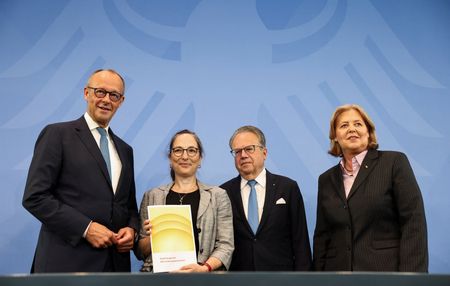

BERLIN — A pension commission appointed by Chancellor Friedrich Merz has put forward a plan to gradually increase Germany’s retirement age and establish a new fund similar to Sweden’s pension model, as the country works to address the challenges of an aging population.
The commission’s report, unveiled on Tuesday, recommended creating a fund based on the Swedish pension structure, where both workers and employers would be required to make contributions. Those funds would then be invested in financial markets to help cover future pension payments.
“The aim is to strengthen the state pension by introducing an additional, compulsory, individually allocated funded pension,” Merz said at a news conference held to present the findings. The report will now be taken up for debate by the coalition government.
Germany’s existing pension system relies on current workers’ contributions to pay the benefits of today’s retirees. That model has come under growing pressure as the population ages and the ratio of working-age people to retirees continues to shrink.
Merz said the proposed changes would help keep contribution levels affordable while also giving younger workers greater confidence that a reliable pension would be waiting for them in the future.
Among the other recommendations in the report: eliminating the current option that allows workers to retire at age 63 without any reduction in benefits, and gradually raising the retirement age in line with life expectancy — potentially reaching age 70 by the early 2090s. Under the current plan, the retirement age is already scheduled to reach 67 by the early 2030s.
The report arrives at a politically sensitive moment, as Merz’s coalition government faces pressure to finalize a package of tax and welfare reforms before parliament heads into its summer recess next month.
Calls to move Germany’s pension system away from its contribution-based model toward one that also draws on capital markets have grown louder for years as demographic trends have shifted. However, previous reform efforts have repeatedly stalled due to political disagreements and the difficult balance between the interests of current retirees and those of younger workers still paying into the system.