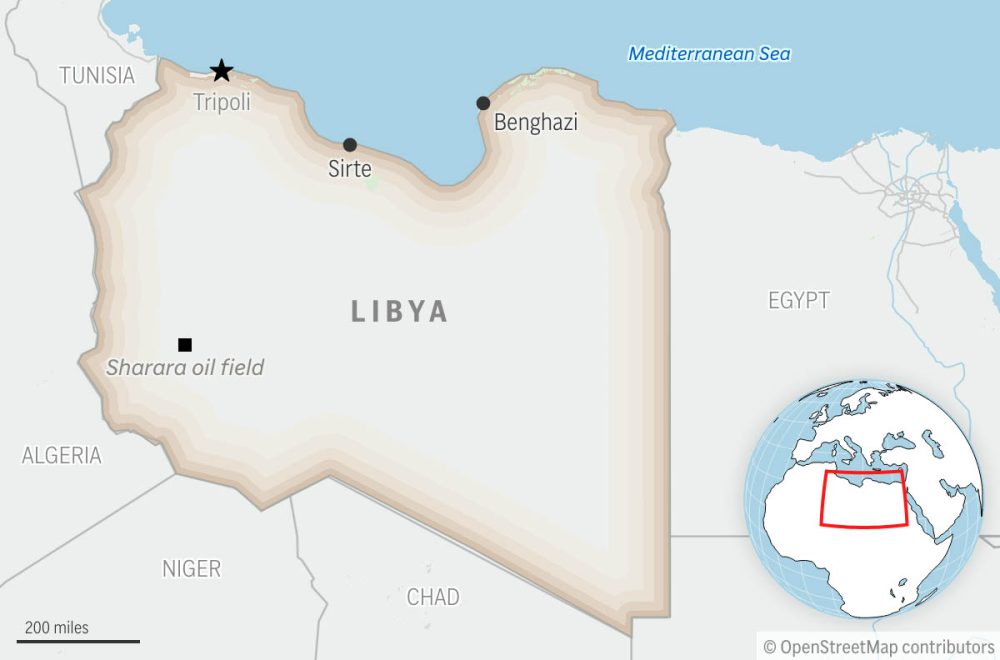

CAIRO — Libyan warlord Ossama Anjiem, better known as Ossama al-Masri, has been found guilty of human rights abuses carried out at a detention center in western Libya, authorities announced Sunday.
Al-Masri, who headed the Tripoli branch of the Reform and Rehabilitation Institution, received a sentence of seven years and four months behind bars. Libya’s attorney general’s office stated he was convicted of “violating the rights of inmates” who came forward with accounts of “torture, cruelty and degrading treatment.”
The detention center where the abuses reportedly occurred is one of several facilities operated by the government-backed Special Defense Force, or SDF — a military police unit charged with addressing crimes including kidnappings, murders, and illegal migration. Despite that mandate, the SDF has been linked to serious atrocities during Libya’s ongoing civil war. The institution did not respond when asked for comment.
Back in January 2025, the International Criminal Court had issued an arrest warrant for al-Masri, alleging “crimes against humanity and war crimes, including murder, torture, rape and sexual violence, allegedly committed in Libya from February 2015 onwards.”
Al-Masri was taken into custody in Turin after arriving in Italy from Germany to attend a soccer match — the day after he crossed into the country. Italy, however, set him free on a technicality and then expelled him back to Libya, a move that infuriated human rights advocates and triggered an ICC investigation into why Italy chose not to transfer him to The Hague.
Italian Justice Minister Carlo Nordio defended the release at the time, arguing that the ICC’s arrest warrant was contradictory and legally flawed.
In addition to the prison term handed down Sunday, the Tripoli Criminal Court ordered that al-Masri be stripped of his legal capacity and civil rights for the duration of his sentence and for one additional year following his release.
Libya has been mired in instability since a NATO-backed revolt overthrew and killed longtime leader Moammar Gadhafi in 2011. Since then, rival governments — one in the country’s east and one in the west — have competed for control, each supported by various armed factions and foreign powers.
At present, Prime Minister Abdul Hamid Dbeibah leads the internationally recognized government based in Tripoli in the west, while Prime Minister Ossama Hammad governs the eastern administration. Military commander Khalifa Hifter, who leads the Libyan National Army, also holds significant influence in the east.
Libya continues to serve as a key transit route for migrants from across Africa and the Middle East who risk dangerous sea crossings in hopes of reaching Europe, fleeing conflict and economic hardship.