
LONDON — Ten years ago this Tuesday, British voters made a decision that would reshape their nation’s future — and not necessarily in the ways they were promised. On June 23, 2016, the U.K. voted 52% to 48% to exit the European Union after more than four decades as a member. What followed was a decade of political upheaval that shows little sign of settling down.
The country is now preparing to install its seventh prime minister since that fateful vote. Conservative leader David Cameron, who called the referendum while personally arguing for the U.K. to remain in the EU, resigned the very next day after the result came in.
Every leader who followed has struggled — most without much success — to manage the aftermath of that break. The most recent, Labour Prime Minister Keir Starmer, announced Monday that he too is stepping down. His two years in office were marked by a sluggish economy, government dysfunction, and a weary, divided public — conditions that experts trace, at least in part, back to Brexit.
Even though Brexit has largely disappeared from daily headlines, academic Chris Grey, who has spent years studying the consequences of Britain’s EU departure, says its influence hasn’t gone away. He described “the subterranean trace of Brexit” as something that still runs beneath the surface of the country’s increasingly chaotic political landscape.
Those who campaigned for leaving the then-28-member political and economic union told voters it would allow Britain to “take back control” of its laws, its economy, and its borders. The “remain” side focused heavily on economic warnings, while the “leave” campaign leaned on emotional appeals.
Boris Johnson, one of the most prominent voices for leaving — and who would later serve as prime minister — declared weeks before the vote: “We can see the sunlit meadows beyond. I believe we would be mad not to take this once-in-a-lifetime chance to walk through that door.”
Margaret MacMillan, an emeritus professor of history at the University of Toronto, said Brexit drew on a complicated mix of motivations, including nostalgia “for an imagined past.”
“It was against what people saw as unrestricted immigration. It was against what they saw as EU regulations. And then there was this mix of nostalgia — ‘We fought alone in the Second World War.’ Which was of course not true,” she said. “It was never clearly explained what Brexit might entail.”
The bold promises — tighter immigration controls, new trade deals, more funding for public services, and freedom from Brussels-issued regulations — quickly ran into hard reality. Bitter negotiations stretched on for years. Britain officially departed the EU on January 31, 2020, with an 11-month transition period before the full separation took effect.
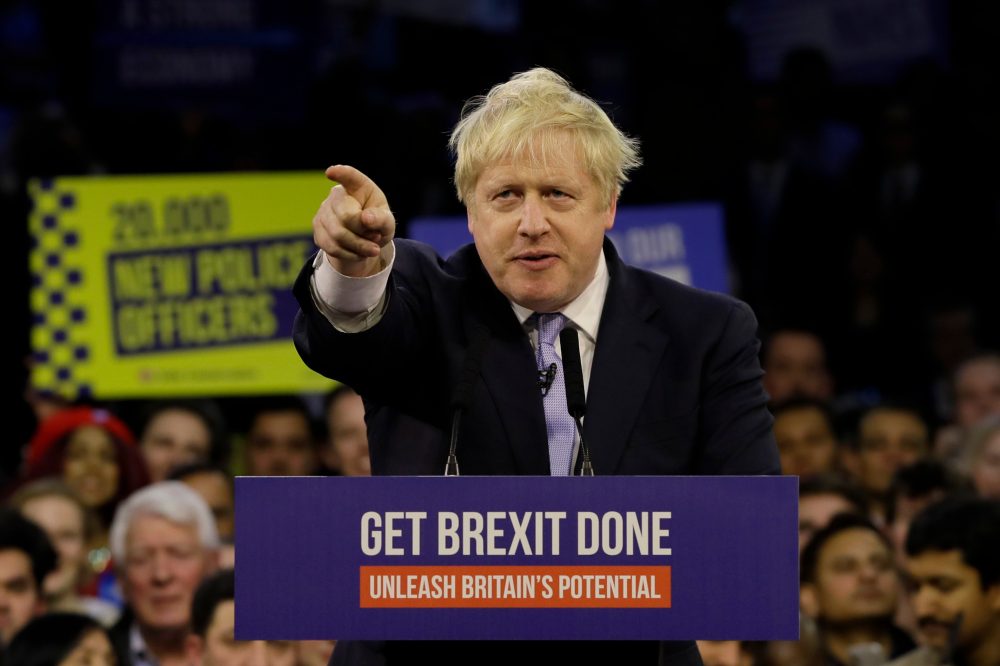
Theresa May, who took over from Cameron, stepped down in 2019 after being unable to get exit terms through a deeply split Parliament. Johnson then took the helm, pledging to “get Brexit done,” and eventually secured a minimal trade agreement — though one that left relations between the U.K. and EU deeply strained.
Johnson himself was pushed out by his own party in mid-2022 amid a wave of financial and ethical controversies. His replacement, Liz Truss, lasted just 49 days in office. The next leader, Rishi Sunak, managed to slightly warm relations with the EU but stopped short of any major shifts in policy.
Starmer came in promising a “reset” with Europe but ruled out rejoining the EU’s single market — the tariff-free, barrier-free trading zone. Now, as he prepares to leave office, Brexit remains unresolved.
Historian Anthony Seldon noted that Cameron originally called the referendum hoping to put to rest the long-running arguments about Europe that had torn apart the Conservative Party for years. That didn’t happen.
“The people who obsessed about it still obsess about it. Britain’s problems have continued,” Seldon told Times Radio.
During the drawn-out exit negotiations, Conservatives who favored a gentler form of Brexit and closer ties with Europe were effectively driven out of the party by the dominant pro-Brexit wing. Labour, while more sympathetic to Europe overall, faces its own internal split between those who want to move closer to the EU — or even rejoin — and senior figures like Starmer who prefer not to reopen old divisions.
A decade later, millions of voters have walked away from both major parties, turning instead to alternatives like the left-leaning Green Party and the hard-right Reform UK, led by Nigel Farage. Farage may be the single biggest political beneficiary of Brexit. He championed the divorce, then argued it had been betrayed. His anti-immigration message has evolved over the years, shifting from concerns about European workers to asylum seekers crossing the Channel in small boats. His party now consistently tops opinion polls.
The British economy has also had a rough decade. Businesses have faced new hurdles trading with the country’s nearest neighbors, though Brexit isn’t the only factor — the COVID-19 pandemic, the Russia-Ukraine war, and the conflict involving Iran have all contributed to sluggish growth.
Hannah White, director of the Institute for Government think tank, said a broader failure of political honesty has made things worse. “We just haven’t had politicians who’ve been upfront with the public about the fact that when they get into power, they won’t be able to have no increases in taxes, no increases in debt, and better public services all in the same breath,” she said. “And so people are disappointed.”
Immigration — one of the central issues driving the Brexit vote — remains as contentious as ever. Net migration actually climbed after Brexit, reaching more than 900,000 in 2023, before dropping to 171,000 last year. In recent years, misinformation and agitation have helped spark anti-immigration street violence tied to crimes committed by, or falsely attributed to, immigrants.
Grey warned that a line once held firm in British public life — separating mainstream political debate from street-level violence — is now weakening. “I think that boundary is being eroded. And I think that did to some large extent begin with Brexit,” he said.
Polls suggest growing second thoughts about the original decision. A recent Ipsos survey found 52% of people in the U.K. would now like to rejoin the EU, while 33% are opposed. Last Saturday, hundreds of people marched through London waving blue and yellow EU flags in a “rejoin” demonstration — though the turnout was far smaller than the massive protests seen during the height of the Brexit battle. Many Britons simply want to move on.
But Brexit remains a subject politicians tread around carefully. Even if Britain were to seek re-entry into the EU, the path back would be long and uncertain, with a wary bloc on the other side.
Grey offered a stark assessment of what lies ahead if leaders continue to dodge the issue. He compared Britain to someone dealing with a persistent, draining illness. “A chronic thing, in this case perhaps not incurable,” he said. “But it’s just that they don’t fancy going to the doctor because they know it’s not going to be very nice.”