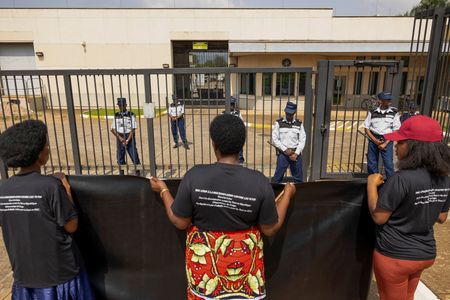
The Democratic Republic of Congo has taken its long-standing dispute with Rwanda to the world’s highest court, filing a formal case at the International Court of Justice over Rwanda’s alleged role in the ongoing conflict in eastern Congo, the Congolese government announced Friday.
In an official statement, Congo accused Rwanda of violating multiple international conventions, including those covering genocide, racial discrimination, and torture.
According to Congo, the alleged crimes committed against civilians over the past three decades include massacres, extrajudicial killings, torture, sexual violence, forced displacement, and discrimination.
Congo further alleges that Rwanda deployed its own forces and provided backing or direction to armed groups carrying out unlawful military operations on Congolese soil — actions Congo says stem from the aftermath of the 1994 Rwandan genocide, when remnants of forces connected to that genocide fled across the border into eastern Congo.
Through the ICJ filing, Congo is seeking a court order requiring Rwanda to stop the alleged violations, as well as financial reparations for Congo and those affected by the conflict.
Rwanda did not immediately respond to the filing. The Rwandan government has repeatedly denied any involvement in supporting rebel groups operating inside Congo.
United Nations experts and several Western governments have concluded that Rwanda has provided support to M23, a significant armed group active in eastern Congo — a finding that aligns with Congo’s position.
This is not the first time Congo has pursued legal action against Rwanda at the ICJ. An earlier case was withdrawn by Congolese authorities in 2001. A second attempt was thrown out by the court in 2006, when judges determined they lacked jurisdiction because Rwanda had either not signed the relevant treaties, entered reservations, or failed to meet other required conditions cited in Congo’s complaint.
The ICJ serves as the United Nations’ principal court for resolving disputes between countries and addressing alleged violations of international treaties.
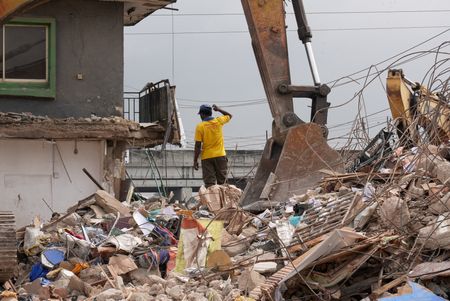
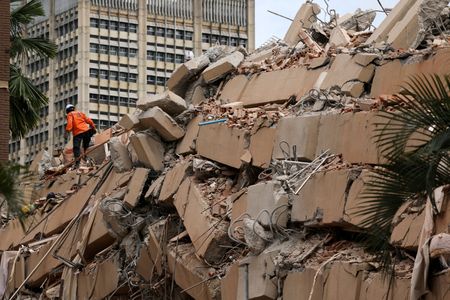
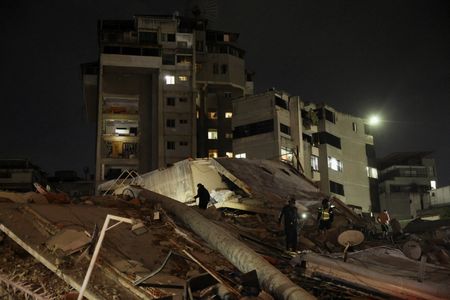
A deadly building collapse in Lagos claimed the lives of at least nine people and left many others hurt on Thursday, according to the state’s commissioner for information, who confirmed the toll on Friday.
The Lagos State Emergency Management Agency — commonly referred to as LASEMA — took charge of the rescue effort, coordinating multiple agencies and bringing in heavy machinery to dig through the debris in search of survivors.
Emergency workers managed to pull people from the rubble and provide medical care at the scene before sending the injured to nearby hospitals for further treatment. In total, 27 people were rescued with injuries ranging in severity.
At the time the structure gave way, both residents and office workers were inside the building.
Lagos Governor Babajide Sanwo-Olu responded to the disaster by directing officials to conduct structural inspections on surrounding buildings and called on property owners to follow established safety regulations.
The collapse has once again brought attention to a troubling pattern in Lagos, where building failures occur with troubling regularity, frequently blamed on substandard construction practices and a lack of consistent enforcement of building codes.
KHARTOUM, Sudan — The conflict that has torn through Sudan for three years has left its mark not only on the landscape, but on the bodies and minds of those who survived it. Thousands have been killed. Millions more have been forced from their homes.
Associated Press reporters spent over a week in and around the capital city of Khartoum following the army’s recapture of the city last year. Fighting continues in other parts of the country as the military battles the paramilitary Rapid Support Forces. A member of the military media was present during the AP’s visit, including during interviews, though the AP maintained full editorial control over its reporting.
These are some of the people they met, and the stories those survivors shared.
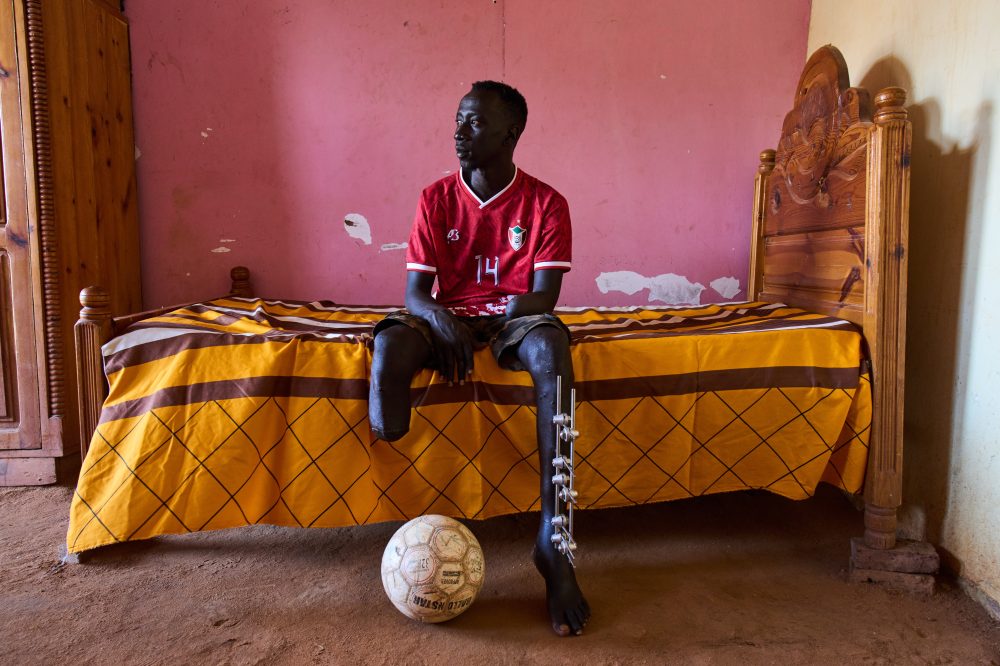
Omer al-Toum once held onto a dream of representing Sudan on the national soccer field. That dream was shattered in October when an unexploded weapon detonated inside his home while he was attempting to use it to drive a nail. The blast took part of his right leg and left arm, and his remaining leg was severely damaged.
Despite everything, the 33-year-old remains calm and warm-spirited, finding joy in his 8-month-old daughter and working to maintain a positive outlook.
“When I knew that my leg had been amputated, my family expected more of a reaction from me but I didn’t show them how affected I was,” he said.
Today, al-Toum cannot bathe or leave his bed without assistance, and some doorways in his home are too narrow for his wheelchair. He hopes to obtain prosthetic limbs, but getting quality ones requires traveling outside the country.
He has found a new sense of purpose coaching young soccer players, encouraging them to stay in school so they always have other paths available to them.
“As long as you are still breathing, you are still capable of doing many things. And when God takes something away from you, he will surely compensate you with other things,” he said.
Noon Madani had not wanted to leave home that August day nearly three years ago, but her older sister urged her to go. Paramilitary forces had taken control of their neighborhood outside Khartoum, yet an overdue bill needed to be handled.
On the way back, a missile struck, killing her 18-year-old sister and crushing the legs of 16-year-old Madani.
Speaking quietly from her wheelchair, her legs still in casts, she described lying motionless next to her sister, looking at missile fragments embedded in her sibling’s head.
“You can’t imagine when someone suddenly tells you that your daughters were hit by an artillery shell. You enter a phase of breakdown,” said their father, Omer Bakar.
Madani spent six months in a hospital undergoing surgeries, fighting infections, and sometimes waiting for medical care as doctors fled the area. Physicians now believe she will eventually be able to walk again. Her younger brothers push her wheelchair to school each day, where she studies science and hopes one day to become a doctor.
“We are trying to forget the war,” her father said, “the nightmare we finally woke up from.”
Fatma Ageb, 38, recalls the morning of February 2025 when her home was hit by shelling. Her husband had been sleeping. Her older daughters had just been talking about what to get their baby sister as a birthday gift. That is the last thing she remembers from that day.
The attack killed her husband and their two older daughters, aged 10 and 12. Shrapnel tore through Ageb’s body, and their 8-year-old daughter was seriously hurt as well.
“If it wasn’t for Zeinab I wouldn’t want to live. She’s always calling for her sisters and father,” Ageb said, wiping tears from her face.
The young girl’s face was scarred in the attack, and she lost her right eye, now replaced with a glass one. At the hospital, Zeinab sat beside her mother wearing a necklace featuring a character from the movie “Frozen,” shyly holding up a drawing she had made while wincing as a doctor tended to her injuries.
Friends and family have pooled together money to help cover the cost of the girl’s surgeries, but more procedures are needed and her mother has no idea how she will pay for them. While Ageb tries to stay strong for her daughter, Zeinab’s scars serve as a constant reminder of all they have lost.
Tariq Abuzeid had devoted years to helping people in need — running soup kitchens from his home, raising funds, and delivering medicine to the sick. When the war reached Khartoum, the construction worker continued his efforts to assist others.
In December 2023, while returning from distributing food during heavy shelling, he lost his right leg.
Now 52 and surrounded by family, he tries to stay composed, but breaks down when he reflects on how drastically his life has changed.
“I used to serve people. … Now I feel like I am a burden,” he said.
The attack caused severe blood loss, which he says has weakened his immune system. He takes dozens of medications daily but remains in constant pain. Finding a quality prosthetic leg and a wheelchair has proven difficult in Khartoum.
Even so, his volunteer efforts have not stopped. Large metal bowls were stacked in his yard as he prepared to serve others their next meal.
By July, the hunger inside the besieged town of Dilling in South Kordofan had become unbearable. A 50-year-old woman fled with her two daughters, only to be abducted by members of the paramilitary RSF.
With their hands bound and faces covered, they said they were transported for hours to a makeshift camp in the desert, where more than a dozen other women were also being held. The woman said she was gang-raped there until she bled and was beaten repeatedly over the course of months.
The AP does not identify individuals who have been sexually assaulted. The United Nations has described sexual violence as one of the defining features of the Sudan conflict.
Each night, she said she would tense up at the sound of fighters’ footsteps approaching the room where the women were held. The men would select a woman and take her away.
When they came for her daughters — aged 25 and 20 — she pleaded for them to take her instead.
One night while the fighters were away, she and her daughters slipped out and fled into the desert. Frightened and physically depleted, they walked for days before reaching another town where they found help.
The RSF did not respond to a request for comment.
The woman and her daughters are now staying at a center for women in Khartoum. In tears, she said a doctor told her that the injuries she sustained from the sexual assaults were so severe that her uterus may need to be removed.
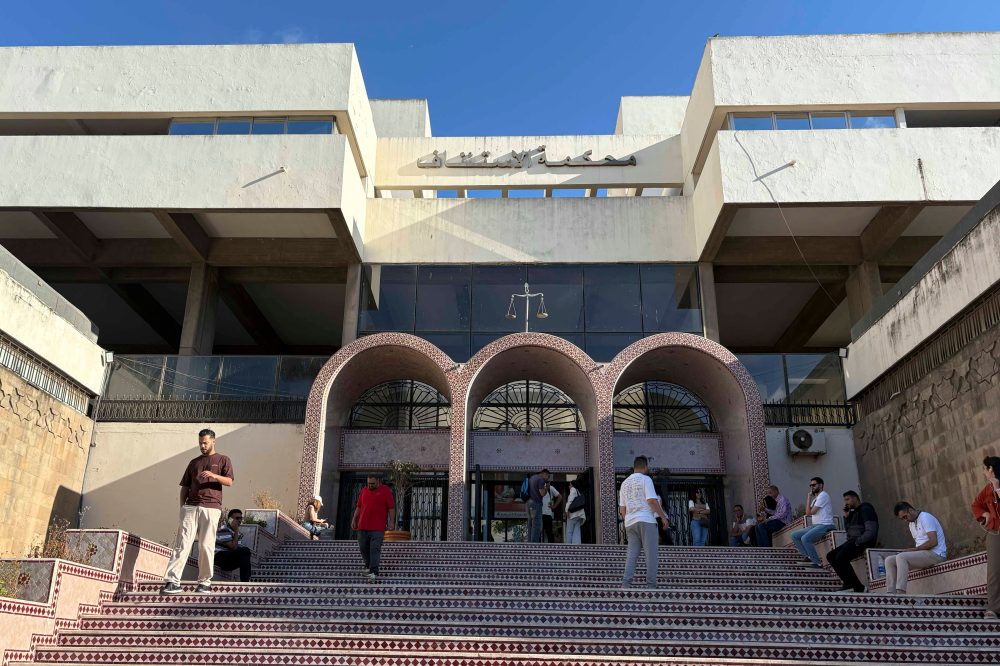
CASABLANCA, Morocco — A Moroccan court has sentenced 29 people to prison, among them prominent politicians, business leaders, and sports figures, in a wide-ranging international drug trafficking and corruption case that sent shockwaves through the country.
Late Thursday, the court also ordered the defendants to pay hundreds of millions of dollars in fines, wrapping up a trial that stretched over more than two years.
The case traces back to an imprisoned drug kingpin who had been nicknamed “Sahara’s Pablo Escobar” — a nod to the infamous Colombian trafficker. While behind bars, the man alleged that some of his business partners, including high-ranking Moroccan politicians, had been involved in drug trafficking and had taken control of his assets. All of those accused have denied any wrongdoing.
The allegations triggered a wave of arrests and a lengthy legal process involving 30 defendants, 18 witnesses, and two civil parties. The scandal reignited long-standing concerns about corruption within Moroccan political circles. It also moved King Mohammed VI — Morocco’s highest authority, a figure officially above politics who rarely makes public statements — to call for the creation of a legally binding code of ethics to, in his words, “moralize” life in parliament.
Abdennebi Bioui, a construction tycoon, former lawmaker with the co-governing Authenticity and Modernity Party (PAM), and head of a Regional Council, received the harshest sentence: 12 years in prison and a fine of $15,989.
Said Naciri, a former PAM lawmaker who also previously served as president of Wydad AC — one of Morocco’s most recognized soccer clubs — was sentenced to 10 years in prison. Belkacem Mir, another former PAM lawmaker and former president of a soccer club, also received a 10-year sentence.
Other defendants were handed sentences of up to nine years and fines reaching as high as $26,649. One defendant was acquitted. Charges in the case included drug and gold trafficking, corruption, forgery, and violations of financial exchange regulations. Defense attorneys have the option to appeal.
The court ordered the seizure of assets belonging to several defendants — including Bioui, Naciri, and Mir — capped at $1 million. It also directed that hundreds of millions of dollars in financial penalties be paid to customs authorities, with the three men bearing the bulk of that responsibility jointly.
Local media reported that prosecutors had pushed for convictions across the board and called for asset seizures.
As the judge read through the sentences, the courtroom erupted. Defendants shouted from their box, with some crying out, “I am innocent. I haven’t done anything.” The tension quickly spread through the packed courtroom No. 8, turning into scenes of panic and grief. Family members screamed, some collapsed to the floor, and others broke down in tears as police officers worked to push through the crowd and restore order.
Court documents show that Hadj Ahmed Ben Brahim, a jailed Malian drug lord, accused his partners of participating in an international gold trafficking network and of seizing his personal assets — including a luxury villa, high-end apartments, and dozens of vehicles.
The Paris-based magazine Jeune Afrique has reported that Ben Brahim worked alongside Moroccan politicians to transport cannabis resin to Libya, Egypt, and Mauritania.
Morocco ranks among the world’s largest producers and exporters of hashish. While the country has legalized cannabis cultivation for medical and industrial uses, illegal drug trafficking remains deeply rooted. Its geographic closeness to Europe has made it a key route for moving narcotics across the Mediterranean.
The court also ordered Bioui, Naciri, and Mir to jointly pay Ben Brahim $106,599.
ISLAMABAD (AP) — While the United States and Iran were exchanging military strikes on June 11, a plane carrying Qatari diplomats sat grounded on a runway in Tehran, unable to leave.
Those mediators had been working through the night in urgent talks aimed at preventing the conflict from escalating into an all-out war, according to a diplomat who was briefed on the negotiations.
That moment on the tarmac captured the chaotic nature of the diplomatic effort — led by Pakistan and Qatar — that ultimately produced last week’s agreement to end a war that had thrown the Middle East into turmoil and taken a toll on the global economy.
It was just one of several flashpoints during which social media threats or actual military action nearly derailed the process. Efforts to implement the deal now face similar obstacles, including continued fighting in Lebanon and threats involving the Strait of Hormuz.
This behind-the-scenes account of the diplomacy that led to the interim agreement is drawn from AP interviews with three Pakistani officials, two regional officials, and the diplomat. All spoke anonymously given the sensitivity of the closed-door discussions.
Pakistan’s Ministry of Foreign Affairs, when asked for comment, pointed to previous public statements and confirmed the country will continue its mediating role. The White House declined to respond. Representatives for Qatar and Iran did not reply to requests for comment.
On the same day the Qatari plane was stuck on the runway, U.S. President Donald Trump again threatened military action, warning that the U.S. would strike Iran
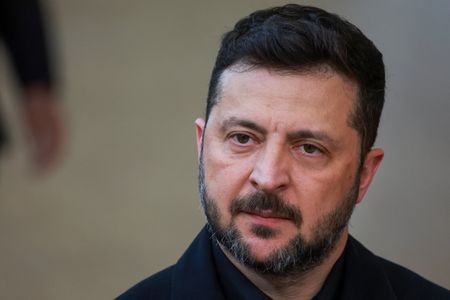
Ukraine has brought 160 of its military personnel home after securing their release from Russian captivity, President Volodymyr Zelenskiy announced on Friday.
Zelenskiy shared the news through a post on the Telegram messaging app, noting that every one of the returned servicemen had been held prisoner since 2022.
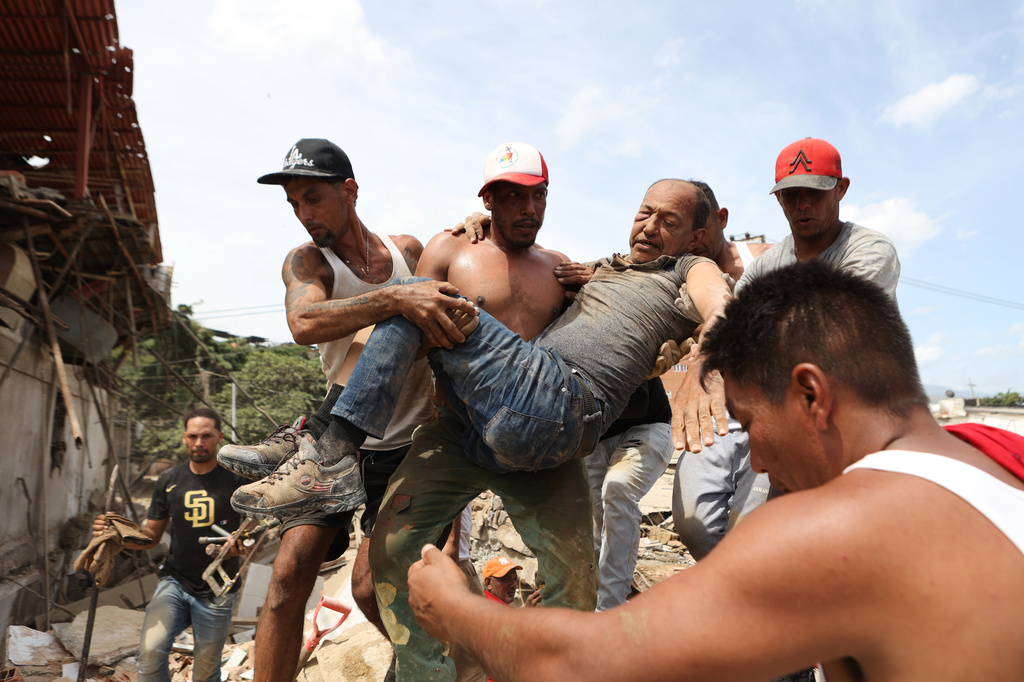
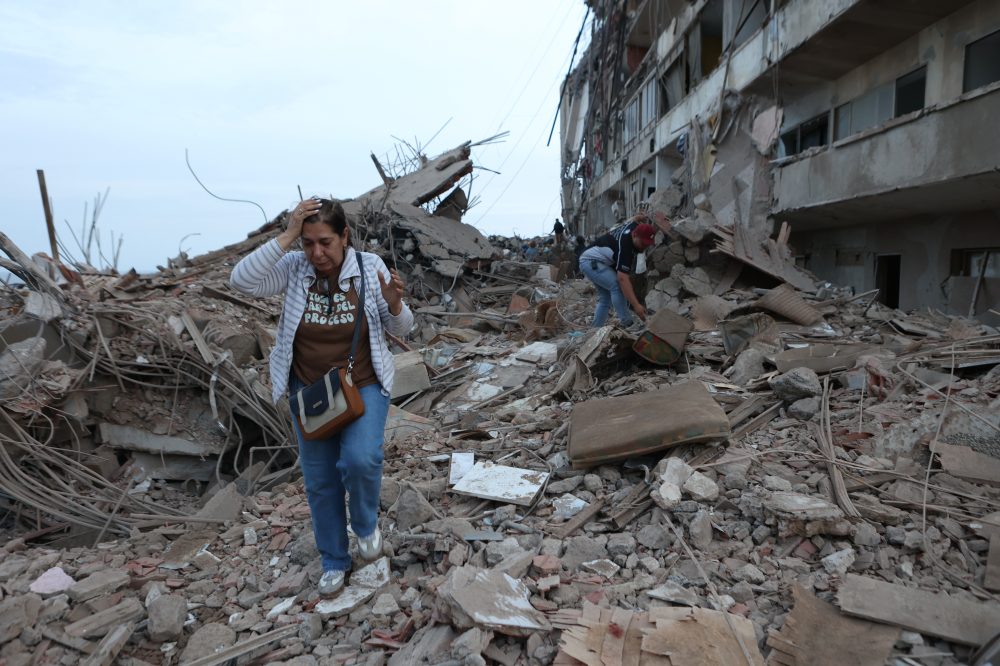
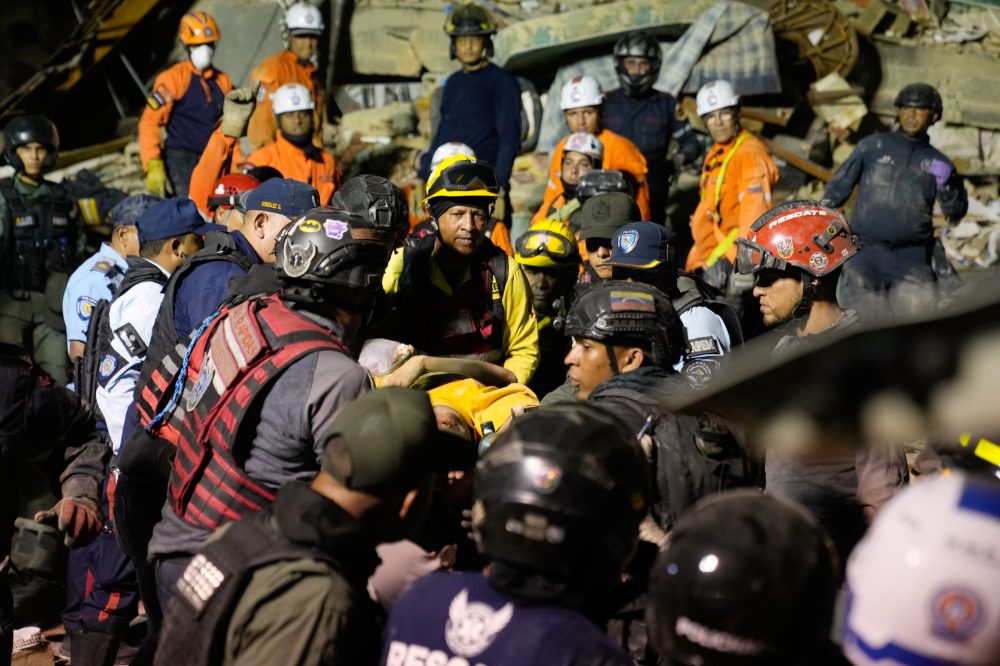
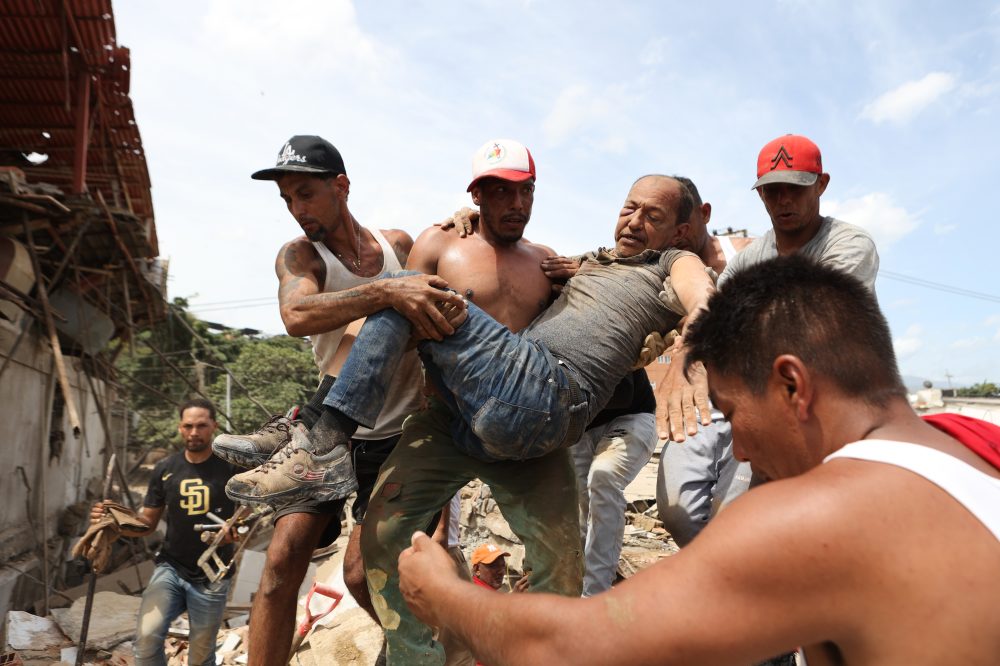
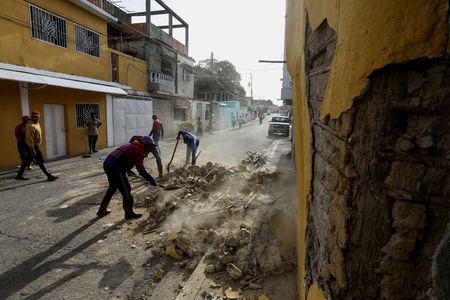
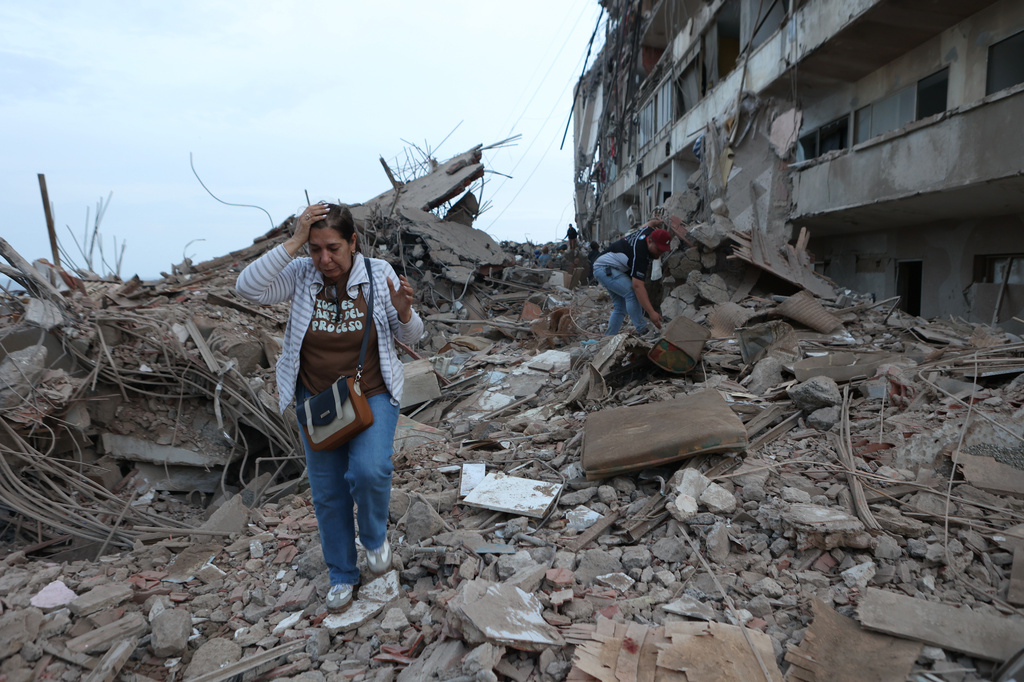
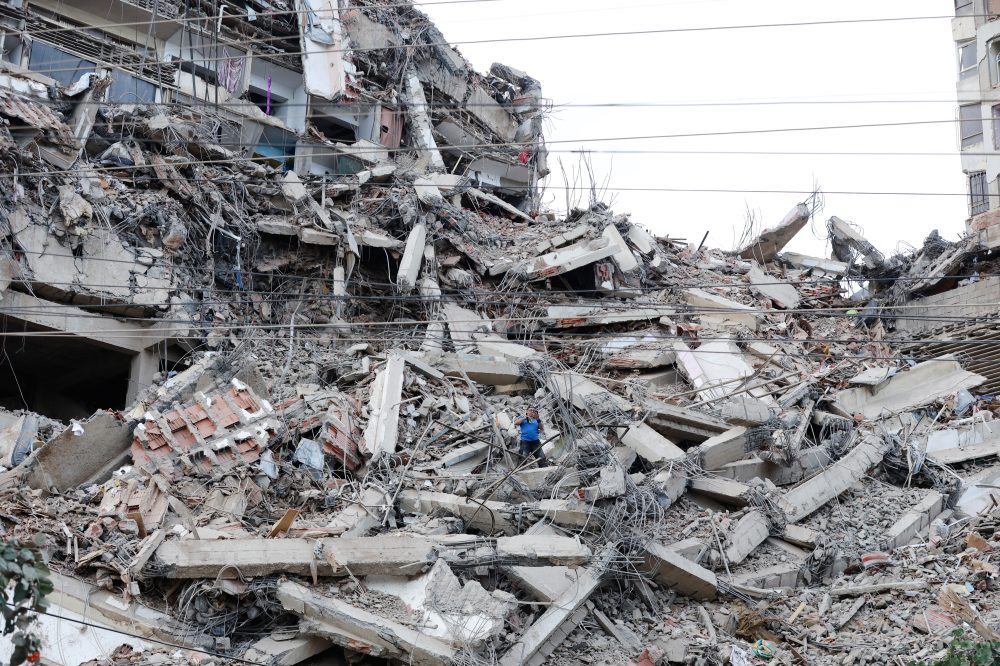
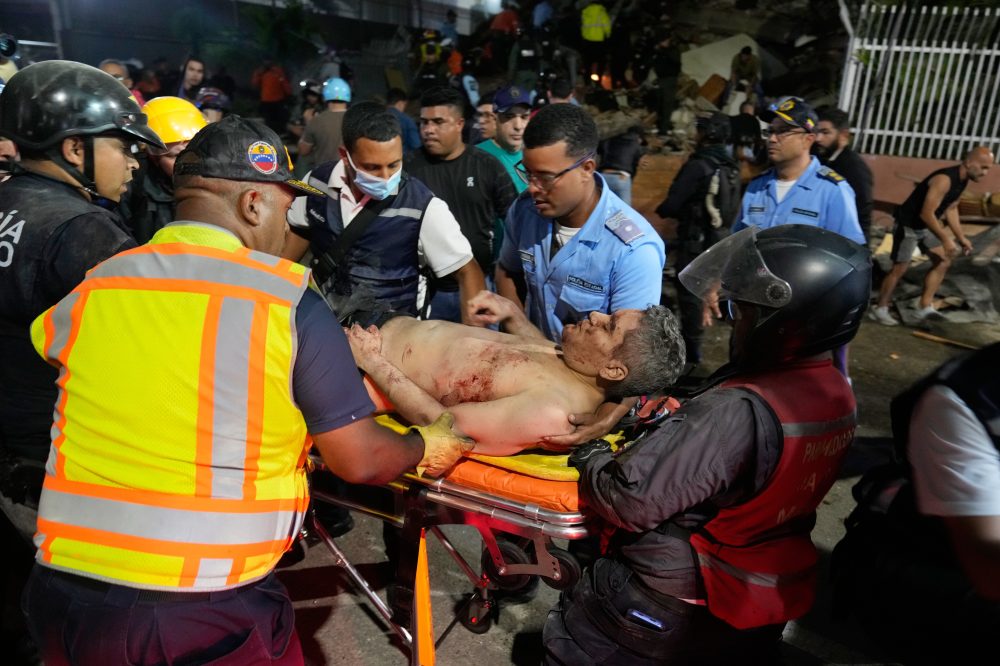
LA GUAIRA, Venezuela — Ordinary citizens worked side by side to claw through collapsed buildings in search of missing family members across northern Venezuela Friday, following two devastating earthquakes that have now claimed at least 589 lives and left thousands more hurt.
Acting President Delcy Rodríguez announced the updated death toll early Friday morning, speaking alongside government and military officials as she greeted international rescue teams arriving from around the globe.
“We are going to rescue the people who are trapped,” she said. “We are working tirelessly on this task.”
Rodríguez said the state of La Guaira has suffered the worst damage from the 7.2 and 7.5 magnitude earthquakes that struck Wednesday evening. She noted the area has been placed under military control as crews continue searching for survivors and distributing food and water to those in need.
The death toll is expected to rise further, with thousands of people still reported missing and rescue efforts ongoing around the clock.
The International Organization for Migration estimates that as many as 6.76 million people across Venezuela may be affected by the quakes, including roughly 2 million in the capital city of Caracas alone. Loyce Pace, the International Red Cross’ regional director for the Americas, noted that “people are still terrified to reenter what were their homes.”
Survivors were pulled from wreckage covered in dust and blood — among them children. Venezuelan state television broadcast dramatic footage of rescues, including one woman who had been pinned beneath a concrete slab with only her bare foot visible before crews managed to pull her out alive. However, government-organized search teams were largely absent outside of Caracas in the early hours following the disaster.
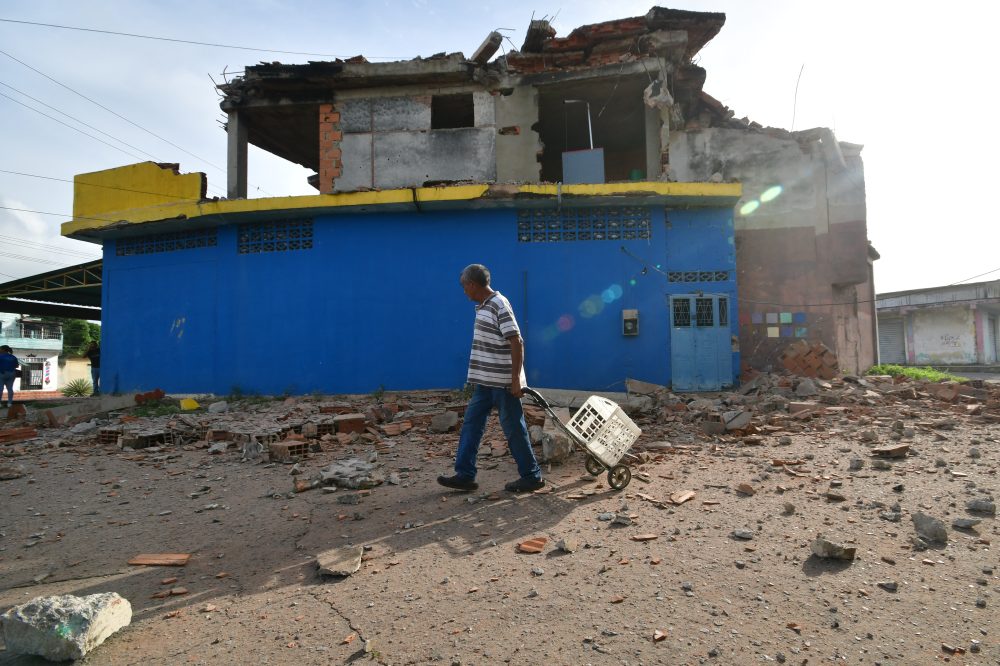
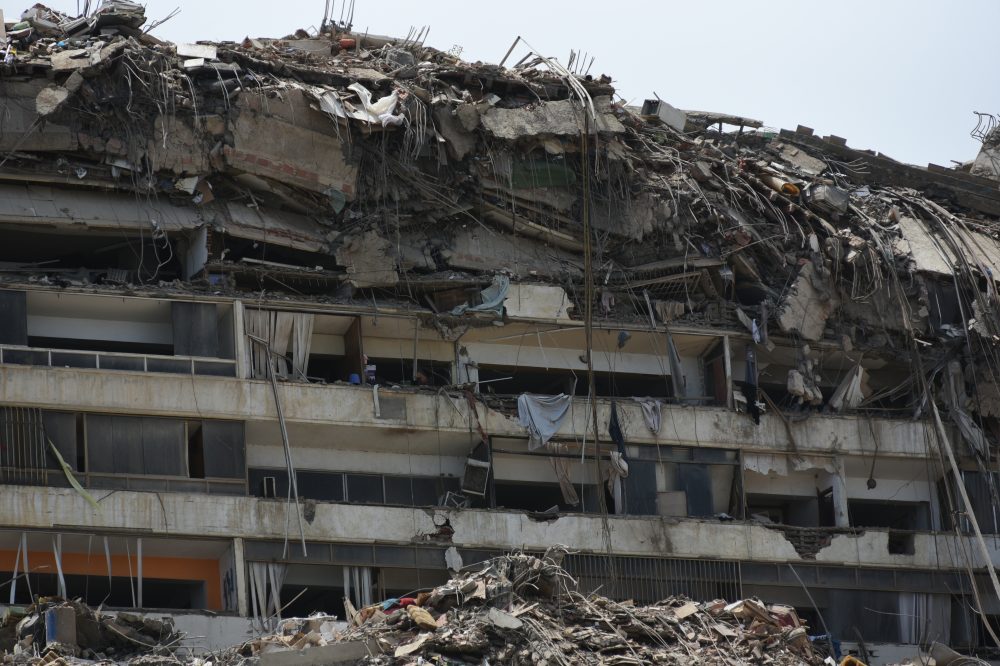
Many residents woke Thursday morning to a shocking scene — buildings reduced to bare frames, furniture dangling from broken windows, and helicopters circling overhead. Entire structures had been flattened and roads split open.
Families posted flyers with photographs of missing loved ones, while others passed around handwritten lists of names. Venezuelans living abroad struggled to reach relatives as phone service across the country was disrupted.
In downtown Caracas, hundreds of people spent the night gathered in parks, parking lots, and other open areas rather than risk returning to damaged buildings.
Dayana Delgado, a mother of three, demanded to know where the heavy machinery that government officials had promised was located, saying it was ordinary residents doing the digging through collapsed structures.
“I want to know where my child is, if he’s trapped or in a shelter,” she said, referring to her missing 8-year-old son.
One mother broke down and collapsed in grief as the bodies of her 3- and 10-year-old children were wrapped in blankets and carried away. Others cried out the names of those they were searching for. Some stood in complete silence, too shocked to react.
Venezuelan authorities said they were redirecting rescue teams from other parts of the country to La Guaira — a region no stranger to tragedy. A devastating mudslide in 1999 killed thousands there and remains one of the country’s worst natural disasters on record.
In La Guaira, resident Cristian Carreño stood staring at his scorched apartment building, which was leaning dangerously to one side.
“I lost everything,” he said. “There are people still inside, I imagine, that couldn’t get out. It’s incredibly devastating.”
Retired schoolteacher Juan Alberto Mendaño made his way through the wreckage in La Guaira, stepping past a body, when he spotted a woman who was trapped and waving her hand for help.
“May God rescue her as quickly as possible,” Mendaño said. “When we heard the scream, there was nothing we could do.”
Among the stories of hope emerging from the destruction, a young man was carried out on a stretcher in the San Bernardino neighborhood of Caracas to applause from bystanders, while his tearful mother cried out, “Leandro, I love you.”
Venezuelan public television also showed video of a young girl, covered in dust and wrapped in a dark sweatshirt, emerging from the rubble with the help of rescuers. Caracas metropolitan rescue team head José Luis Núñez said she was found inside a 10-story building in La Guaira that had collapsed and been crushed “like a pancake.”
“We want to highlight this girl’s strength, determination and will to live,” Núñez said.
The disaster presents a major challenge for Acting President Rodríguez, the former vice president who took office in January following the capture and removal of then-President Nicolás Maduro by the United States. Venezuela has been mired in economic turmoil for more than a decade, and many citizens do not recognize the legitimacy of the political movement Rodríguez leads.
Rodríguez declared a state of emergency in a national address late Wednesday and announced the creation of a $200 million reconstruction fund to help rebuild damaged hospitals and homes. On Thursday, she urged businesses to make heavy construction equipment available to support rescue operations.
“We hope to rescue as many living people as possible,” Rodríguez said.
While Venezuela lies near several fault lines, its location along the boundary of the South American and Caribbean tectonic plates makes major earthquakes relatively rare compared to other parts of Latin America.
The U.S. Geological Survey reported that both earthquakes were centered near Moron on the Caribbean coast, approximately 170 kilometers — or 105 miles — west of Caracas.
The combination of two back-to-back quakes and the shallow depth of the seismic activity intensified the destruction, according to Marcos Ferreira, a geophysicist and researcher at the Geological Survey of Brazil.
“It is as if I am screaming and then someone starts screaming, too. That amplifies the vibration and adds to the potential hazard,” Ferreira explained.
Shortly after United Nations officials in Venezuela urged the government to lift restrictions on social media so that survivors could access potentially life-saving information, Venezuelans found they were able to log onto X. The platform had been blocked since August 2024 under the Maduro government in an effort to limit the spread of information among those who disputed his claimed victory in the July presidential election.
Around 1,000 emergency responders organized into 25 search-and-rescue teams from countries around the world are being deployed to Venezuela, according to Jens Laerke, a spokesperson for the U.N. Office for the Coordination of Humanitarian Affairs.
U.S. Secretary of State Marco Rubio, who spoke directly with Rodríguez after the quakes struck, confirmed that the United States was moving quickly to send assistance.
“We have a whole-of-government response. It’ll be big; it’ll be fast; and it’ll be effective,” Rubio said, while acknowledging that the closure of Venezuela’s main airport near Caracas was creating logistical hurdles.
Venezuelan public television broadcast footage Friday showing the arrival of rescue workers with dogs and specialized equipment — including cameras and ground-penetrating radar — from Spain. Teams from Germany, Chile, and Switzerland also landed in the country. Turkey announced two flights would depart Istanbul on Friday carrying rescuers and search dogs. China said it would also provide assistance, and leaders from Qatar, Brazil, Portugal, and Canada pledged to send help as well.
Rescue teams from El Salvador and the Dominican Republic touched down in Venezuela on Thursday, along with rescuers and material aid from Mexico.
“No country is prepared to provide the response that’s needed. That’s what neighboring countries are there for,” said Dominican air force Maj. Carlos Olivares.
Venezuela’s most powerful earthquake in more than 100 years is presenting interim president Delcy Rodriguez with the toughest test of her young leadership — but political analysts say it could also give her a chance to assert control over a divided government and help put a battered nation back on its feet.
Two earthquakes, measuring magnitudes 7.2 and 7.5, struck Venezuela on Wednesday evening. The full scale of destruction may not be known for weeks, but data models from the U.S. government indicate the death toll could eventually climb above 10,000.
What is already apparent: a massive effort will be needed to rescue survivors, care for the injured, and rebuild homes and damaged infrastructure across the country.
That effort, analysts say, could shape Rodriguez’s entire political trajectory.
She has positioned herself as a force for change in Venezuela, despite having served as vice president under her predecessor, socialist Nicolas Maduro, who was removed from power by Washington in January. She has cultivated a close relationship with U.S. President Donald Trump.
Tony Frangie Mawad, a political scientist based in Caracas, noted the irony of the moment. “The narrative of a new Venezuela is based on reconstruction,” he said. “It ends up being somewhat ironic that the country now has to face, with great difficulty, a very literal reconstruction of its infrastructure.”
Frangie warned that the recovery will face enormous obstacles given Venezuela’s prolonged economic crisis and its weakened public institutions — and that failure remains a real possibility.
But he also outlined a path to political gain. “However, if the government manages a recovery strategy well — especially with the international aid that is arriving — and handles the narrative effectively, it could use this moment to build a sense of national unity, a kind of ‘rally around the flag’ in the face of a natural disaster,” he said.
Rodriguez appears to be pursuing that very approach. In the immediate aftermath of the disaster, she declared, “In unity, we will overcome this situation.”
HISTORY SHOWS EARTHQUAKES CAN RESHAPE POLITICS
Significant U.S. involvement could prove decisive. In 1999, the late leader Hugo Chavez turned away American assistance after deadly landslides killed at least 10,000 people — an early indicator of the anti-U.S. stance that eventually deepened Venezuela’s international isolation. Rodriguez is taking a different approach.
Secretary of State Marco Rubio pledged on Thursday that the American response would be substantial. “It’ll be big. It’ll be fast, and it’ll be effective,” he said.
Analysts suggest that Trump administration aid could expand the U.S. footprint in Venezuela while also increasing the new government’s dependence on Washington.
Ricardo Rios, who leads the Caracas-based consultancy Poder & Estrategia, put it plainly: “It’s a situation that is going to be very well exploited to increase the presence of the United States and its control over Venezuela. And also, for Rodriguez to lean on the United States as her primary ally.”
Earthquakes have altered the course of Latin American politics before. In 1972, a devastating quake leveled much of Managua, killing between 5,000 and 10,000 people. The corrupt handling of the aftermath contributed to the downfall of President Anastasio Somoza, who was ultimately overthrown by the Sandinista revolution in 1979.
In 1985, a catastrophic earthquake struck Mexico City, killing at least 5,000 people and leaving roughly 100,000 homeless. The government’s bungled rescue response is widely seen as a turning point that eventually ended seven decades of one-party rule by the PRI.
In Venezuela’s case, Rodriguez stands to bear the political consequences of any missteps in the recovery effort.
Paul Angelo, a Latin America expert with the Washington-based consultancy McLarty Associates, was in Caracas when the quake struck. He described the scale of the challenge ahead.
“Venezuela’s capacity to handle emergency response has been hollowed out over 10 to 15 years of economic turmoil and displacement of 8 million people beyond Venezuelan borders,” he said. “Without major international assistance, and without a consolidated plan and lots of money infused into a country that is purportedly $240 billion in debt, this will be a long road to recovery.”
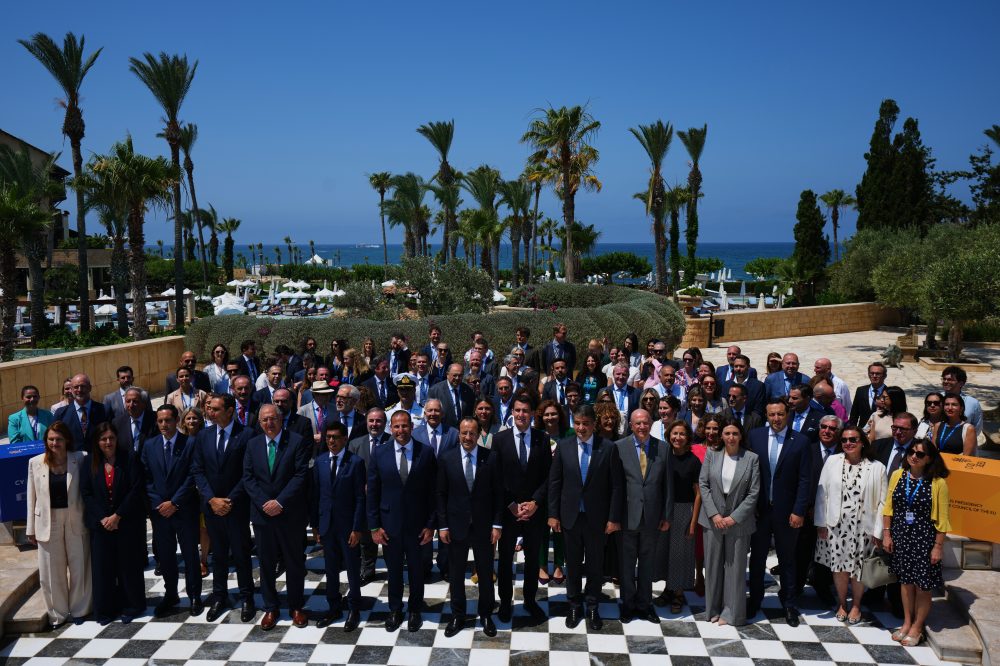
PAPHOS, Cyprus — European Union officials announced Friday a pair of groundbreaking strategies designed to help the bloc’s island and coastal communities thrive — the first time the EU has taken such a comprehensive approach to addressing the unique challenges these regions face.
More than 17 million people reside on over 4,000 islands throughout the EU, including three member nations that are islands themselves — Ireland, Malta, and Cyprus. An additional 95 million people live along the coastlines of 22 EU member countries.
Speaking at a conference focused on strengthening island and coastal communities, European Parliament Vice President Younous Omarjee declared, “Islands have been overlooked in the past, but now that comes to an end.”
Raffaele Fitto, the European Commission’s executive vice president for cohesion and reforms, said the new strategies replace scattered, one-off approaches with a unified framework for tackling the distinctive hardships these communities endure.
Because islands are far from mainland markets and depend heavily on air and sea travel, residents and businesses there face significantly higher costs for transportation, housing, and public services compared to those on the mainland.
“This is what we call the cost of insularity — a cost that millions of EU citizens and businesses pay every day, simply because of where they live and work,” Fitto said.
The island-focused strategy rests on four main pillars: upgrading transportation links and digital infrastructure, addressing climate change impacts and energy needs, tackling shrinking populations and housing shortages, and strengthening security and emergency preparedness.
“From the Baltic to the Mediterranean, islands are on the front line of geopolitical challenges,” Fitto added.
At this stage, no specific projects have been identified for funding. Member nations will submit proposals once the EU’s next budget is released. Fitto indicated that desalination plants and housing construction would be among the top priorities considered.
Fisheries and Oceans Commissioner Costas Kadis noted that EU coastal communities contribute approximately 265 billion euros — roughly $302 billion — to the bloc’s economy each year. However, he said those same communities are under growing pressure from climate change, declining populations, a lack of affordable housing, and limited access to essential services.
The coastal strategy seeks to reduce these communities’ dependence on a single income source by broadening economic activity and generating new employment opportunities. Among the proposals Kadis highlighted is a blue carbon credit program that would provide funding for carbon-absorbing coastal wetlands, marshes, and mangroves.
Additional proposals include the OceanEye initiative, which would position the EU as a global leader in ocean monitoring and research, as well as efforts to promote dual-use technologies and vessels capable of serving both fishing and tourism industries.
The strategy also calls for making coastal areas more resistant to climate change and severe weather events through investments carried out in partnership with the European Investment Bank.
BUCHAREST — Three centre-right parties that made up Romania’s outgoing ruling coalition have put forward European Parliament member Siegfried Muresan as their pick for prime minister, though whether they can secure the votes needed to confirm him remains an open question.
The political turmoil began when the leftist Social Democrats — Romania’s largest political party — walked away from the coalition and joined hands with far-right opposition lawmakers to bring down Liberal Prime Minister Ilie Bolojan in early May.
The prolonged standoff raises the possibility of a snap election in Romania, where the hard-right Alliance for Uniting Romanians is currently ahead in opinion polls by double digits. That party opposes a European Union rearmament initiative and has been critical of providing aid to Ukraine.
The Social Democrats have nominated their own leader, Sorin Grindeanu, for the prime minister post and have made clear they will not support any government that does not include them. On the other side, the Liberals — who form the centre-right bloc alongside the Save Romania Union and the ethnic Hungarian UDMR party — have ruled out entering another coalition with the leftists.
Leaders from all four parties in the outgoing coalition were set to sit down with centrist President Nicusor Dan on Friday evening to discuss a possible path forward for a minority government.
The Alliance for Uniting Romanians, which holds the second-largest share of seats in parliament, recently voted against legislation that would have authorized the shooting down of Russian drones crossing into Romanian airspace near the Ukrainian border. The party has also been a consistent critic of the European Union.
Earlier this week, a Liberal politician designated by President Dan as prime minister — without prior consultation with the Liberal Party — was unable to win a parliamentary confidence vote.
Under Romanian law, the president has one remaining nomination he can make. If two prime ministerial candidates fail to win parliamentary approval within 60 days of a government collapse, the president is permitted to dissolve parliament and call an early election.
The political gridlock is also putting pressure on Romania’s broader economic goals, including efforts to reduce what is currently the largest budget deficit among EU member states, secure access to EU funding, and improve its sovereign credit rating, which sits at the lowest level of investment grade.
Romania’s next regularly scheduled parliamentary election is not due until 2028.
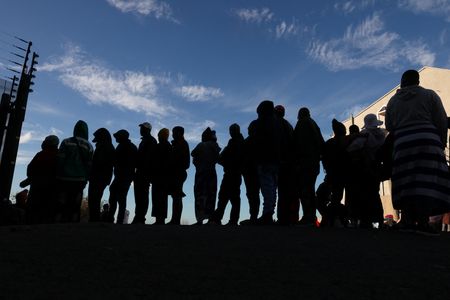
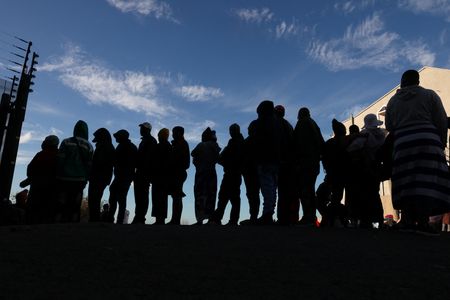
Tensions are running high in South Africa as an anti-immigrant movement has given undocumented foreigners until Tuesday to leave the country, with large-scale rallies expected that many worry could turn violent.
Thousands of African migrants have either begun making their way home or are sheltering together in makeshift camps out of fear of being attacked. The group organizing the demonstrations, called March and March, insists its actions are peaceful.
Here’s a closer look at what’s driving the protests, how widely shared these views are among South Africans, and whether the claims being made actually hold up to scrutiny.
What Are the Protesters Angry About?
Groups opposed to immigration argue that South Africa has been overwhelmed by undocumented foreigners who are stealing jobs, draining public resources, and driving up crime. On June 24, Musa Hlongwa, president of the anti-migrant civil group United South Africa, addressed reporters directly on the issue.
“South Africans are tired of standing in long queues in hospitals … competing for spaces in public schools with illegal immigrants … competing for jobs with foreign nationals … tired of Nigerians who are selling drugs to youth of this country,” Hlongwa said.
How Many South Africans Feel This Way?
Three separate surveys conducted last year all pointed to a growing wave of anti-immigrant feeling in the country. A Human Sciences Research Council poll found that hostility toward immigrants has reached record levels — only one in six adults said they would welcome all foreigners, while 42% said they would welcome none at all, a jump from one-third who held that view in 2021.
An Afrobarometer survey revealed that seven out of ten South Africans view immigrants’ economic impact as harmful, and a striking 85% believe authorities should reduce or completely halt the number of refugees entering the country. Meanwhile, an Ipsos poll found that nearly three-quarters of respondents said they did not trust African immigrants “at all.”
Do the Claims Hold Up?
Claim 1: South Africa Is Being Overrun With Illegal Immigrants
According to a 2023 national statistics office survey, there were 3.1 million migrants living in South Africa — roughly 4.1% of the total population, actually down from 5.6% a decade earlier. By international comparison, that figure is relatively low: the United Kingdom’s migrant share stands at 17%, Canada’s at 22%, and Australia’s at 30%, based on 2024 United Nations data.
While some campaigners argue the official numbers undercount undocumented arrivals, StatsSA uses census methods specifically designed to capture those individuals as well.
“The impression is that there are … hordes of people coming into the country, but the data points to the contrary,” said Anthony Kaziboni, a senior researcher at the University of Johannesburg’s Centre for Social Development in Africa.
Claim 2: Foreigners Are Behind South Africa’s High Crime Rate
Police in South Africa do not publish data on the nationalities of convicted criminals. However, justice department prison figures from 2017 showed that 11,842 foreign nationals were held in South African prisons — about 6% of the total prison population. Of those, 1,380 were incarcerated specifically for illegal entry into the country.
“All evidence suggests immigrants are disproportionately law abiding. Most of their crimes are immigration violations,” said Loren B. Landau, Professor of Migration and Development at the University of Oxford.
Claim 3: African Migrants Are Taking Jobs From Locals
A 2018 World Bank report found the opposite to be true — for every migrant who finds employment, approximately two jobs are created for South African workers through the resulting business activity. That’s because migrants earn wages and then spend most of that money locally on goods and services.
“If you own a restaurant in South Africa … (you) have more customers available to you,” said Lauren Gilbert, director of political science data at GeoQuant. “If migrants are living with dubious kitchen facilities (for example) because migrant housing is often bad … they’re more likely to eat street food.”
Claim 4: Undocumented Migrants Are Draining Public Services
Kaziboni noted that undocumented migrants are very unlikely to use public hospitals or schools — both of which require registration — out of fear of being identified and reported. Economists point to chronic underinvestment and widespread corruption as the real culprits behind the country’s struggling health and education systems.
“To squarely blame immigrants for a failed healthcare crisis is unjust and it’s unfounded. There is no evidence that supports that,” Kaziboni said. “We should blame poor governance, maladministration and corruption,” he added, pointing out that 1.5 trillion rand ($91.27 billion) was lost to corruption during former president Jacob Zuma’s time in office, with an additional 1 billion rand spent just to investigate it.
So Why the Deep-Rooted Hostility?
Historically, the apartheid government relied on migrant labor from across Africa to suppress wages in gold mines and weaken labor unions — a legacy that has left a lasting mark on the national consciousness. Today, one in three South Africans is unemployed, one of the highest rates anywhere in the world. Poor public service delivery contributed to the ruling African National Congress losing its parliamentary majority in 2024 elections, and inequality remains among the worst globally by some measures.
Those conditions create fertile ground for frustration that often gets redirected toward migrants. Politicians have also been known to fan those flames, particularly around election season — and local elections are expected by November of this year.
“Immigrants are by no means the reason why services and the economy have faltered, but people remember what confirms their biases,” Landau said. “What they don’t see is the foreigners investing, trading or providing skills the economy needs.”
DURBAN, South Africa — Long lines of Malawian migrants gathered at a temporary processing camp in the South African city of Durban this week, while hundreds of Zimbabweans spent nights sleeping on the sidewalk outside their country’s consulate in Cape Town — all hoping to escape before planned anti-immigrant protests erupt into violence.
Ebrahim Moosa, 37, stood in a winding queue alongside his wife, some carrying babies on their backs, waiting to board a bus bound for Malawi. “We are scared because you never know what people are planning to do to you. It’s not right to wait and see what will happen,” he said.
South Africa has experienced a surge of xenophobic protests and sometimes deadly attacks in recent weeks, forcing many foreign nationals to flee their homes or be driven out by mobs. Anti-immigrant groups have set June 30 as a deadline for all undocumented migrants to leave the country, and several cities are preparing for potential unrest. The government has urged citizens not to take immigration enforcement into their own hands.
“We are appealing to all those who will be marching to respect the police,” said Phumelele Makoba, the acting police commissioner for KwaZulu-Natal province, considered one of the likely flashpoints for violence.
Law enforcement officials have pledged a major deployment across the country to keep the peace. President Cyril Ramaphosa stated Thursday: “Our security forces are ready.”
The primary organization behind the protests, March and March, has publicly stated it is not calling for violence — but has also said it will not be held responsible for any harm that occurs on June 30.
Neighboring countries including Malawi, Zimbabwe, and Mozambique have been working to bring their citizens home by bus, but have struggled to meet the overwhelming demand.
Mozambican national Antonio Njive, who had been doing odd jobs in South Africa since 2019, fled on June 1 after his home was burned down during a wave of violence that killed five of his fellow Mozambicans. Speaking by phone from Chibuto, Mozambique, he said: “I left home without clothes. Everything was burned.” Njive, along with his wife and 6-year-old daughter, were among hundreds of Mozambican citizens repatriated by bus.
Outside the Zimbabwean consulate in Cape Town, Amina Chiwoko, 30, described the desperate scene. “We are sleeping outside waiting for buses. Everyone just wants to go home,” she said.
For some, however, going home is not an option. Leanne Sefu, 25, is an asylum seeker from the Democratic Republic of Congo who arrived in South Africa at just three years old. “The entire world knows that there’s a war in Congo, so me going back, it feels like going back to death,” she said.
After being attacked at the nail salon where she worked in Durban and forced out of her home, Sefu is now camped outside the Home Affairs office. Sitting on a mattress on the pavement alongside dozens of others, she expressed hope that the government would step in. “What I’m hoping is that maybe the government can help us find a shelter. From yesterday we’ve been hearing people are being attacked and they’re coming here,” she said. “There’s no safety here.”
Xenophobic violence is a long-standing problem in South Africa, where some citizens blame immigrants — largely from other African nations — for crime, unemployment, and overcrowded public services. President Ramaphosa has cautioned against making foreigners scapegoats, attributing the country’s deep social and economic inequalities primarily to the legacy of apartheid. Despite years of sluggish economic growth, South Africa still holds the largest economy on the continent and continues to attract workers from neighboring countries.
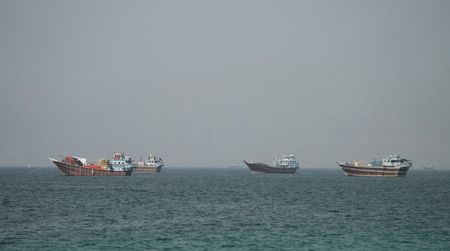
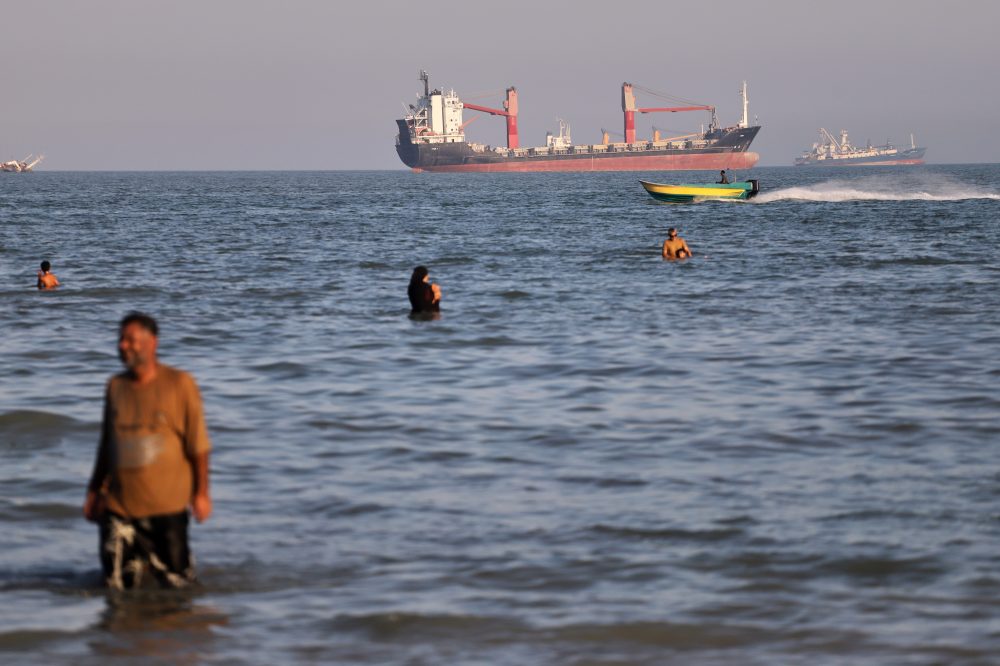
Iran doubled down Friday on its claim to control maritime traffic through the Strait of Hormuz, while also issuing a warning to Gulf nations not to take sides with the United States — all of this coming just one day after a ship was struck near Oman, casting doubt on a shaky preliminary peace agreement.
Tehran was firing back at what it described as an “interventionist, irresponsible and provocative” joint statement issued by the U.S. and six Gulf nations, which rejected Iran’s position that it could collect tolls from vessels passing through the strait.
Iran’s Deputy Foreign Minister Kazem Gharibabadi took to X to make his country’s position clear: “Safe passage through the Strait of Hormuz cannot be guaranteed under ambiguous arrangements, parallel routes or decision-making that does not take Iran’s role as a coastal state into account.”
Oil prices slipped lower on Friday, even as conflicting interpretations of last week’s interim agreement between Iran and the U.S. circulated, and shipping traffic through the strait — a critical corridor through which roughly one-fifth of the world’s oil and liquefied natural gas typically flows — continued to slow.
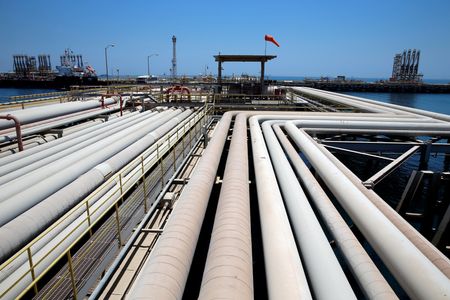
Meanwhile, Saudi Aramco restarted crude oil loading operations Friday at the Ras Tanura terminal in the Gulf, the largest oil port on the planet, following a suspension that had lasted nearly four months, according to shipping data.
U.S. Secretary of State Marco Rubio, who was concluding a visit to Gulf nations aimed at easing regional concerns about the interim agreement, told reporters Thursday that any Iranian move to threaten or block ships in the strait would mean “we’re going to have a problem.”
In their joint statement, Rubio and the Gulf Cooperation Council called for “free, unconditional, and unrestricted navigation” through the Strait of Hormuz, rejecting any tolls or “attempts to assert control.” They also stated that a lasting peace agreement must address Iran’s ballistic missile program, drone capabilities, and backing of proxy forces in the region.
Iran’s foreign ministry responded Friday by pointing to the U.S. military presence in the Gulf as the root cause of regional instability and division, and argued that the strait should be governed jointly by Tehran and Oman under the terms of the interim deal.
“We warn against the continuation of hostile and interventionist policies in the region,” the ministry said in a statement.
Iran gained effective control over the waterway after U.S.-Israeli strikes on Iran on February 28 sparked the war, sending shockwaves through global energy markets and the broader economy.
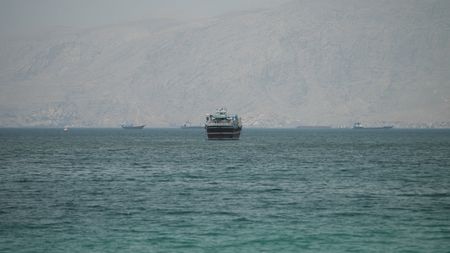
Taiwan’s Evergreen Marine announced Friday that its Singapore-flagged vessel, the Ever Lovely, had been struck by an “unknown object” near Oman on Thursday while traveling a route recommended by the British navy agency UKMTO. No one aboard was injured, and the ship eventually continued on its way out of the strait.
Two U.S. officials told Reuters that Iran had fired on the vessel. Iran’s Persian Gulf Strait Authority — a body established by Tehran to oversee ship transit requests through the strait — responded by stating that travel through unauthorized routes would be “the responsibility of the owner, operator, and vessel commander.”
No immediate response came from the U.S. government. Earlier this month, U.S. President Donald Trump had warned that if Iran failed to honor the interim deal — including reopening the strait — the U.S. would likely resume bombing the country.
Beyond the dispute over the strait, other unresolved issues continue to cloud the framework ceasefire agreement, including disagreements over financial incentives for Iran, nuclear inspections, and Israel’s ongoing military campaign in Lebanon. The deal has established a 60-day window for negotiations on these more complex matters, including Iran’s nuclear program.
Back in the United States, the conflict is becoming an increasing political concern for President Trump as November midterm elections approach, with control of Congress at stake.
The International Maritime Organization, a United Nations agency, temporarily halted its ship escort operations through the Strait of Hormuz following the Oman incident. Earlier in the week, the IMO and Oman had unveiled a new southern transit route through the strait to help clear hundreds of vessels stranded by the conflict — a move that drew sharp criticism from Tehran.
South Korea’s President Lee Jae Myung announced Friday that three South Korean ships would depart the Strait of Hormuz over the weekend, after the country’s Oceans Ministry reported that eight additional South Korean vessels had already exited the waterway.
Shipping data showed two Very Large Crude Carriers operated by Saudi Arabia’s shipping arm Bahri loading crude at Ras Tanura, with a third vessel waiting nearby. Each of these massive tankers is capable of carrying 2 million barrels of oil. Ras Tanura, located on Saudi Arabia’s eastern coast and west of the Strait of Hormuz, previously exported more than 5 million barrels per day before the conflict began.
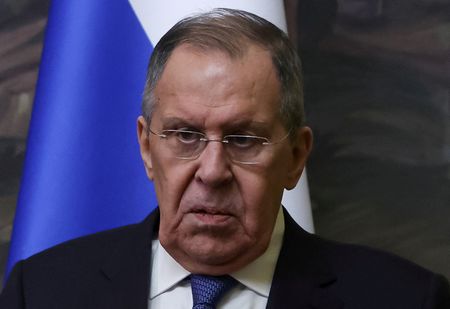
MOSCOW — Russian Foreign Minister Sergei Lavrov is pushing back against U.S. Secretary of State Marco Rubio, demanding that Washington clarify exactly what role it is playing in attempts to bring the war in Ukraine to an end.
In written responses to media questions released Friday, Lavrov intensified a public dispute with Rubio over whether Presidents Vladimir Putin and Donald Trump had reached some form of understanding during their meeting in Alaska last year — an encounter Russia has repeatedly referred to as “the spirit of Anchorage.”
Rubio told reporters Thursday that no deal was struck at that summit. “There was a proposal in Alaska, but there was no agreement in Alaska. If there had been an agreement, we would have had an end of the war,” he said.
Lavrov offered what he described as the most thorough account yet of what took place at the Alaska meeting last August. According to Lavrov, Putin went through a list of U.S. proposals that Trump’s envoy Steve Witkoff had brought to Moscow just days before the summit, going point by point and checking with Witkoff — who was present alongside Trump and Rubio — that he was accurately recalling each proposal. Lavrov, who was also at the meeting, said Witkoff confirmed each point.
“Therefore, when my colleague M. Rubio says that there were only proposals in Alaska but no agreement, it raises a question regarding what we actually mean by ‘agreement,’” Lavrov said.
He continued: “If one side — in this case, the U.S. — put on the table its proposals for a settlement and a way to approach this crisis, and the other side expressed its consent to those proposals, then claiming there was no agreement seems rather inelegant.”
Lavrov added that the “entire situation” surrounding the U.S. role in the peace process needed to be clarified.
The pointed remarks from Lavrov and other Russian officials this week suggest a shift in how Moscow views Washington’s peace efforts, which have stalled since the U.S. and Israel launched military action against Iran in February.
Ukrainian President Volodymyr Zelenskiy told Trump and other Western leaders last week that Ukraine was gaining the upper hand in the conflict, pointing to deep strikes inside Russian territory targeting oil refineries and industrial facilities.
Russia disputes that assessment, maintaining it will achieve battlefield victory if diplomatic efforts fail. Russian forces currently hold roughly one-fifth of Ukrainian territory after more than four years of fighting.
The Kremlin said Friday that it continues to value Trump’s mediation efforts and hopes they will resume. However, Kremlin spokesman Dmitry Peskov, when asked whether Russia views the U.S. as a neutral mediator, said true neutrality is impossible given that the U.S. is still supplying weapons and technical support to Ukraine.
A pair of devastating earthquakes struck Venezuela back-to-back on Wednesday night, bringing down buildings, claiming hundreds of lives, and leaving thousands of people unaccounted for across the northern region of the country. Officials fear the death toll will climb even higher.
In response, governments, nonprofit organizations, and members of the Venezuelan diaspora worldwide have begun mobilizing relief efforts following the magnitude 7.2 and 7.5 quakes. Their focus is on locating the missing and delivering medical care and humanitarian assistance to the many thousands who have been injured or displaced.
According to the International Federation of Red Cross and Red Crescent Societies, the most urgent needs include search and rescue operations, emergency housing for displaced families, emergency medical attention, and eventually access to clean water and sanitation.
Michael Capponi, president of Global Empowerment Mission (GEM), noted that aid organizations will face significant hurdles, including airport closures and the need for expedited visas for relief workers. “No single organization can meet all the needs alone,” he said. “Collaboration across governments and NGOs is critical to ensuring we cover all ground efficiently and swiftly.”
The nonprofit evaluator Charity Navigator advises donors to protect themselves from fraudulent campaigns by confirming that any organization they support has a track record of working on this type of disaster and in this region, and that it holds 501(c)(3) nonprofit status. Charity Navigator has also released its own curated list of vetted organizations assisting Venezuela.
Below are several organizations currently responding that you can support:
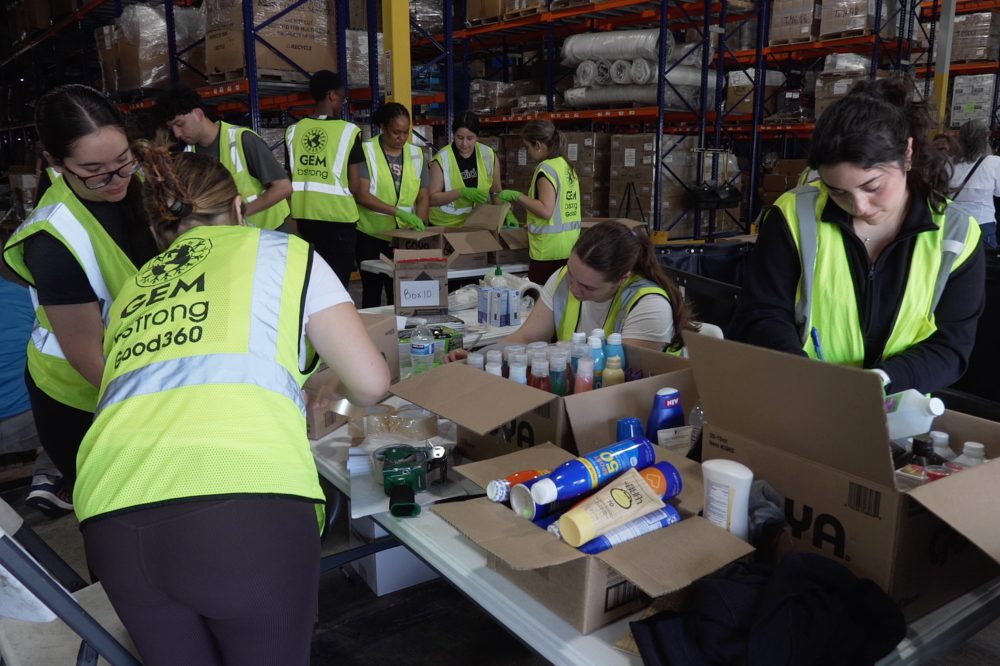
Global Empowerment Mission: This humanitarian relief organization, based in Doral, Florida, is teaming up with its longtime nonprofit partner, the We Love Foundation. GEM began immediately packing food, water, hygiene products, medical supplies, and other emergency essentials for shipment Thursday to Caracas, where it has established a distribution hub. The organization has previously responded to crises in Venezuela, including in 2018 and 2019.
CORE: This humanitarian nonprofit is sending staff and partnering with The Wayuu Taya Foundation, which supports Indigenous Wayuu communities in Venezuela and Colombia and already has people on the ground in Caracas. Together, they plan to distribute cash assistance to affected families along with food, drinking water, hygiene kits, and other essential supplies. CORE was originally established following the 2010 earthquake in Haiti.
Direct Relief: Based in California, this medical humanitarian organization is funding the deployment of a team from Spanish Bomberos Unidos Sin Fronteras (BUSF) to support search-and-rescue operations. It is also prepared to ship medical supplies to local healthcare partners as the need arises. Direct Relief has responded to multiple earthquake disasters, including the 2023 disaster in Syria and Turkey.
International Red Cross: Although the Venezuelan Red Cross’ own national headquarters suffered damage, its countrywide network of hospitals and clinics remains operational and continues providing care. Rescue teams are supporting evacuation and search efforts and mobilizing pre-positioned relief supplies. Red Cross Societies in Ecuador, Colombia, Mexico, Costa Rica, Honduras, and Argentina — nations home to large Venezuelan communities — have activated services to help people reconnect with loved ones.
Airlink: This global humanitarian organization specializes in coordinating transportation and logistics for nonprofits sending relief and personnel to disaster zones worldwide. It is working to mobilize airlines and logistics companies to deliver search-and-rescue teams, medical responders, and supplies such as medicines, water filters, and food to Venezuela.
World Central Kitchen: The nonprofit founded by Chef José Andrés is mobilizing to provide hot meals to affected families and first responders as quickly as possible. The organization has led multiple relief efforts in Venezuela, most recently in 2024 when families in the state of Sucre were displaced by Hurricane Beryl.
Catholic Relief Services: The international aid arm of the U.S. Catholic Church is working alongside local partner Caritas Venezuela to provide emergency shelter, food, water, and medical care to impacted families.
Global Impact: This philanthropy adviser and intermediary has created a Venezuela Earthquakes Response fund that will channel donations to multiple vetted organizations, including UNICEF USA and Save the Children.
Members of Venezuela’s diaspora living in the United States are coming together to help those affected by a series of deadly earthquakes that recently struck their home country.
In the Houston area, Venezuelan residents organized donation drives and gathered to express their solidarity with earthquake victims back in Venezuela.
At a cargo business in Katy, Texas, supporters covered a wall with messages of hope and encouragement, displayed alongside a Venezuelan flag, as part of the community’s response to the disaster.
The outpouring of support reflects the deep ties that Venezuelan expatriates maintain with their homeland, even from thousands of miles away.
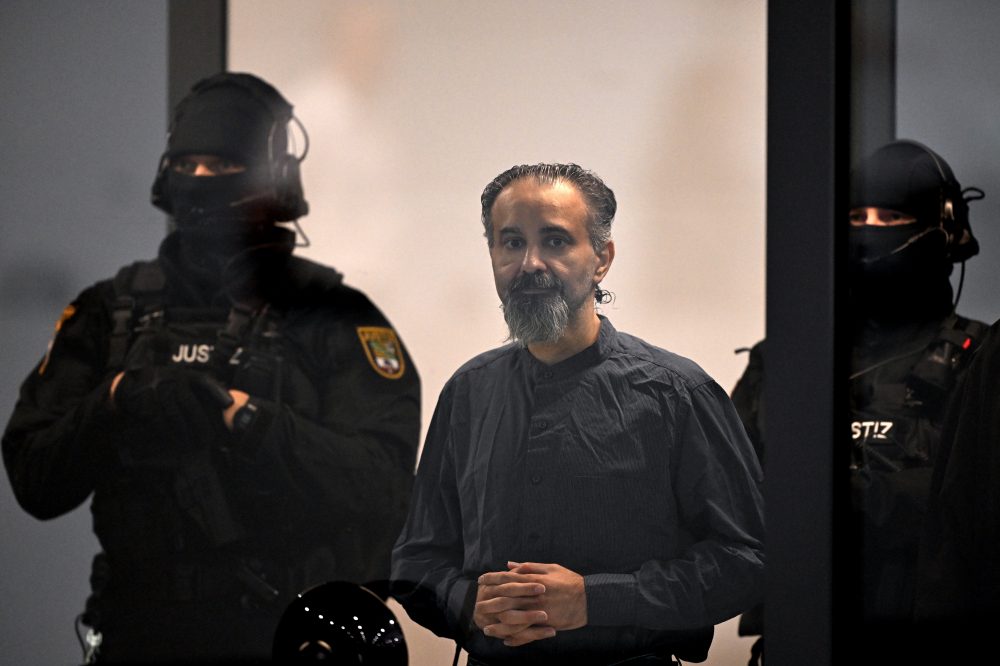
BERLIN — A 51-year-old Saudi doctor has been convicted of murder and handed a life prison sentence for carrying out a deadly vehicle attack on a Christmas market in the German city of Magdeburg in 2024 that claimed six lives.
The defendant, identified as Taleb al-Abdulmohsen, stood trial at the state court in the eastern German city beginning in November. According to German news agency dpa, the court determined that he bears “particularly serious” guilt — a designation that bars him from being considered for release after 15 years, which is the standard provision under German law.
The attack took place on December 20, 2024, and lasted just over one minute. Six people died — five women and one boy — while many others suffered injuries.
Investigators determined that al-Abdulmohsen used a rented BMW X3 to carry out the attack, reaching speeds of up to 48 kilometers per hour, or roughly 30 miles per hour, as he drove through the crowded market. Authorities stated at the time of the indictment that he was not under the influence of alcohol. They believe he acted alone and was motivated by frustration over the outcome of a legal dispute and the failure of various criminal complaints he had filed.
Officials noted that the suspect does not match the typical profile seen in extremist attacks. Al-Abdulmohsen described himself as a former Muslim who was sharply critical of Islam, and his social media activity showed support for far-right views. He had previously drawn attention from authorities due to threatening behavior, but had no known history of physical violence.
The Magdeburg attack was among several incidents involving immigrants that elevated migration as a central issue heading into Germany’s national election in February 2025. Al-Abdulmohsen had come to Germany in 2006 and had been granted permanent residency.
SEOUL, South Korea — A South Korean court sentenced the wife of ousted former President Yoon Suk Yeol to seven years behind bars on Friday, finding her guilty of accepting high-end luxury items from business figures and others who were seeking political and business favors in return.
The Seoul Central District Court issued the ruling, which comes on the heels of a separate appeals court decision that sentenced Kim Keon Hee to four years in prison on charges related to accepting gifts from the Unification Church and profiting from a stock price manipulation scheme.
Judge Jo Soon-pyo delivered a pointed rebuke of Kim’s conduct in announcing the verdict. “Given the nature of the position, a president’s spouse must exercise the highest degree of self-restraint and vigilance,” the judge said. “Nevertheless, defendant Kim Keon Hee neglected that social responsibility and repeatedly accepted valuables by exploiting her influence as a means of brokering favors.”
As part of the ruling, the court ordered the seizure of luxury items Kim had received, among them a Van Cleef & Arpels diamond necklace, a Tiffany brooch, a Dior handbag, a storage case for a gold turtle figurine, and a painting by well-known Korean artist Lee Ufan.
Kim, dressed in a gray suit and wearing a white face mask, sat quietly with her head lowered as the verdict was read. While she has acknowledged receiving the gifts, she has maintained they were not connected to any exchange of favors. Her legal team did not immediately indicate whether they plan to appeal Friday’s decision. She has been facing trial in several cases since her arrest last August.
Her husband, former President Yoon, was removed from office in April 2025 following his impeachment, which stemmed from his brief declaration of martial law in December 2024. That move came after a clash with the liberal opposition, which held a majority in the legislature and had repeatedly blocked his policy agenda. Yoon was arrested in July 2025 and is currently standing trial in multiple cases. He has appealed a life sentence for rebellion as well as a separate 30-year prison term connected to charges that he ordered drone flights over North Korea’s capital in an effort to stoke tensions and provide justification for imposing martial law.
Liberal President Lee Jae Myung, who won a special presidential election to succeed Yoon, has authorized numerous investigations into the former president’s martial law declaration and other allegations involving his administration and his wife.
A special prosecutor brought bribery charges against Kim in December. Among the allegations was that in 2022 she received the Van Cleef & Arpels necklace and additional jewelry totaling 138 million won — roughly $90,000 — from Seohee Construction Chairman Lee Bong-kwan, in return for helping secure a government position for his son-in-law. The court found Kim guilty on that count and also sentenced Lee Bong-kwan to one year in prison, suspended for two years.
Kim was additionally convicted of accepting a luxury watch from businessman Seo Seong-bin, who was seeking government backing for his robotic dog business; a Dior handbag and other gifts from Pastor Choi Jae-yong, who hoped to participate in a civilian diplomatic delegation and other government-funded programs; a gold turtle and a traditional painting from former National Education Commission chief Lee Bae-yong, who had lobbied for her appointment; and a painting by Lee Ufan valued at 140 million won (approximately $90,900) from former senior prosecutor Kim Sang-min, who was seeking the conservative party’s nomination ahead of the 2024 legislative elections.
The court handed Seo and Lee Bae-yong suspended prison sentences, while Choi was fined 8 million won, equivalent to about $5,200.
KUALA LUMPUR — Malaysian customs authorities announced Friday that they had stopped an attempt to smuggle advanced artificial intelligence chips worth 52.9 million ringgit — approximately $12.93 million — through the nation’s primary international airport earlier this month.
The seizure comes after Malaysia put export controls in place last year on high-performance chips of U.S. origin. That move came after pressure from the United States, which has been working to prevent advanced chips critical to AI development from reaching China.
On June 5, inspectors at Kuala Lumpur International Airport discovered 72 server units packed with advanced AI chips that had been flown into the airport’s free trade zone. The airport’s customs director, Zulkifli Muhammad, shared the details with reporters.
According to Zulkifli, early investigation results indicated the servers were destined to be re-exported to another country in Asia — a transaction that would have required a permit under Malaysia’s Strategic Trade Act.
The shipment had been falsely labeled as “computer components” in an apparent effort to avoid scrutiny, Zulkifli explained. Malaysia was listed as a transit point as a way to work around export restrictions before the goods reached their final destination. He declined to provide additional specifics, noting that an investigation is still underway.
The servers have been confiscated, and a Malaysian company that was involved in arranging the shipment has been asked to cooperate with investigators, Zulkifli added.
This is not the first time Malaysia has been linked to potential chip smuggling activity. Last year, the country investigated reports that a Chinese company operating within Malaysia was using servers equipped with Nvidia chips for AI-related work, though no evidence of illegal semiconductor trading was found.
In a related development from last August, the United States charged two Chinese nationals with illegally shipping tens of millions of dollars’ worth of AI chips from their El Monte-based company to China, allegedly using shipping and freight forwarding companies in Malaysia and Singapore as intermediaries.
In an unrelated case at the same airport, Zulkifli said customs officers on June 10 also seized six boxes containing 4,760 cartridges of vape liquid valued at 1.19 million ringgit (approximately $290,953). The cartridges were hidden inside the casings of central processing units.
Testing revealed the vape liquid had been laced with methamphetamine. The shipment was reportedly bound for export to a neighboring country, though Zulkifli did not identify which one.
PARIS — France’s national statistics agency, Insee, has confirmed that a cyberattack resulted in a breach of personal data from its internal directory, impacting approximately 12,800 current and former employees, as well as members of civil service corps connected to the organization.
According to officials, the information exposed during the breach was limited to names and professional contact details. Insee stated that no sensitive data — including passwords, personal contact information, banking details, social security numbers, or health records — was accessed during the attack.
Paris police on Friday gave organizers of the city’s Pride March an ultimatum: voluntarily cancel Saturday’s event because of an extreme heatwave, or face an outright ban.
The warning came as the exceptional heat has pushed emergency services and hospitals in the French capital to their limits. The Pride March typically brings tens of thousands of participants into the streets of Paris each year.
Authorities extended the same cancellation request to two other large gatherings expected to draw similar crowds — a music festival known as Solidays and an athletics competition scheduled at Stade Charlety.
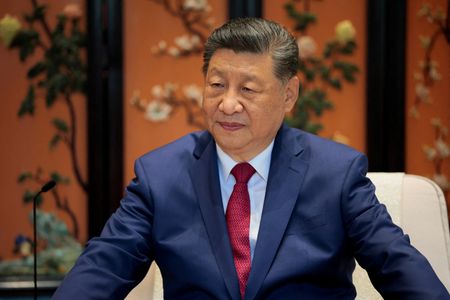
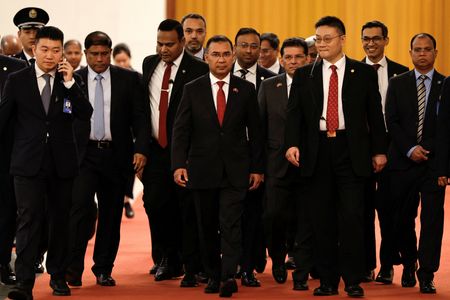
BEIJING — Chinese President Xi Jinping announced Friday that his country is ready to forge a security partnership with Cambodia, making the declaration during a face-to-face meeting in Beijing with Hun Sen, who serves as president of Cambodia’s Senate.
According to China’s state-run news agency Xinhua, Xi described the current international and regional climate as going through “complex and profound changes,” and said the two nations should join forces to bring greater stability to peace and development across the region.
Several key points emerged from the meeting:
Xi stated that China has consistently treated Cambodia as a top priority in its relationships with neighboring countries, and that Beijing stands firmly behind Cambodia’s right to protect its own sovereignty and national security.
The Chinese president urged both sides to elevate their foundation of strategic trust “to a new height.”
Xi also commended Cambodia for its efforts to combat telecommunications and online fraud, pledging that China would partner with Cambodia to wipe out what he referred to as the “tumour” of such criminal activity.
Hun Sen’s trip to China, which Beijing had previously characterized as an official “goodwill” visit, is scheduled to last from June 25 through June 27.
The two countries held their first-ever meeting under a “2+2” Strategic Dialogue Mechanism back in April, bringing together foreign and defense ministers from both nations to address political and security matters.
A court in Magdeburg, Germany, handed down a life sentence on Friday to a Saudi doctor convicted of killing six people and injuring hundreds of others after he drove a rented BMW into a crowd at a historic Christmas market in the eastern German city in late 2024.
The attack, which occurred just days before Christmas, rattled the entire nation and inflamed an already heated national debate over immigration — coming just months before a general election that took place in February 2025.
The convicted man, identified under German privacy laws only as Taleb A., was a psychiatrist originally from Saudi Arabia. Officials described him as someone with a documented history of anti-Islamic rhetoric and far-right sympathies.
Prosecutors charged him with the murder of six individuals and the attempted murder of hundreds more. According to the prosecution, the attack was carefully planned over several weeks and lasted one minute and four seconds. Among those killed were five women between the ages of 45 and 75, as well as a nine-year-old boy.
Investigators believe the attacker acted alone, driven by deep frustration over the outcome of a civil legal dispute and his repeated failures in pursuing various criminal complaints, prosecutors said.
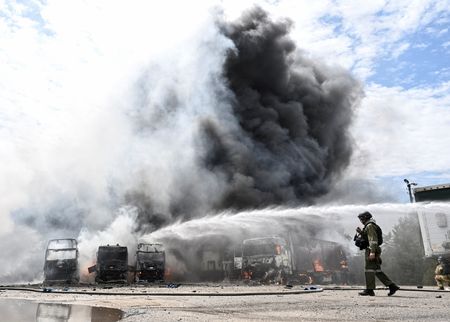
Russia’s Defense Ministry announced Friday that its air defense systems intercepted 660 Ukrainian drones during a large-scale overnight attack targeting 12 Russian regions, the Russian-controlled Crimean peninsula, and the waters of the Black Sea and the Azov Sea.
The strike is believed to be among the largest drone attacks Ukraine has launched against Russian territory and illegally annexed Crimea since Russia launched its full-scale invasion of Ukraine more than four years ago.
For months, Ukraine has been deploying long-range drones to strike targets well behind the front lines — including oil production sites and energy infrastructure — deep inside Russia. Western officials and analysts say the campaign has constricted Russian fuel supplies and disrupted military logistics, slowing Russian battlefield operations and putting increased pressure on Russian President Vladimir Putin.
The massive drone barrage was launched just hours after Ukrainian President Volodymyr Zelenskyy posted on X that he had ordered what he called “a 40-day influence operation” — widely interpreted as a significant escalation of strikes — with the goal of “compelling (Russia) to end the war,” following more than a year of U.S.-led peace efforts that produced no meaningful results.
In the Tula region, located just south of Moscow, Tula Gov. Dmitry Milyaev reported in an online post that a private residence was damaged and a woman was injured in the attack. He also noted that a power line was knocked out along with an unidentified industrial facility in the city of Novomoskovsk.
Russian independent news outlet Astra reported that a chemical plant and a hydroelectric facility in Novomoskovsk were hit and caught fire, though The Associated Press was unable to independently confirm those claims and no official acknowledgment was issued.
Moscow Mayor Sergei Sobyanin reported that 47 Ukrainian drones were intercepted as they approached the Russian capital. He did not report any injuries or structural damage in the city.
Meanwhile, in northeastern Ukraine, two people lost their lives and seven others were wounded in Russian attacks on the Kharkiv region over the previous 24-hour period, according to regional head Oleh Syniehubov. Russian forces struck the city of Kharkiv and 16 surrounding communities using guided aerial bombs and multiple types of drones, he said.
Ukraine’s air force reported that its defense forces overnight intercepted 174 out of 189 Russian drones. However, four of the seven Iskander-M ballistic missiles fired by Russia managed to break through Ukrainian air defenses and hit various locations.
A father gently holding his daughter’s hand as she wore a fairy costume. A 24-year-old man dressed in a pilot’s uniform, gazing confidently at the camera. A family wrapped in each other’s arms on a soccer field.
These are just some of the photos being shared online by relatives — both inside Venezuela and living abroad — who are desperately trying to locate family members who have gone silent following two devastating earthquakes that struck the country Wednesday night.
Health Minister Carlos Alvarado announced late Thursday that the death toll had climbed to approximately 235, with more than 4,300 people reported injured. The number of victims is expected to continue rising after the two quakes, measuring 7.2 and 7.5 in magnitude, caused widespread destruction — making them among the most powerful earthquakes to hit Venezuela in over a century.
Because communication networks have been severely disrupted, many Venezuelans are relying on social media platforms and online registries to gather information that the government has not provided. Independent registries tracking the missing have documented as many as 40,000 people — a number that dwarfs the official government count.
While some survivors rushed to dig through the wreckage of collapsed buildings, others turned to digital tools, creating flyers on WhatsApp, Facebook, and X listing the names and faces of their missing relatives.
One of those people is Vanesa Marcano, 31, who posted photos from Madrid of her uncle and aunt, who reside in La Guaira state, north of the capital Caracas — an area that suffered some of the worst damage and loss of life. Marcano shared the images hoping the couple was simply unreachable because of downed communication lines. Her uncle’s daughter and his 7-year-old grandson, who were visiting from the United States, are also among the missing.
MELBOURNE, Australia — Australia’s government is working to beef up a law that prohibits children younger than 16 from using social media, Prime Minister Anthony Albanese announced to Parliament.
Observers noted on Friday that the government’s push came in response to growing evidence that the ban — which took effect on December 10 of last year — has not been working. Australia was the first nation in the world to pass such legislation, though several other countries have since moved in the same direction.
Speaking to Parliament on Thursday, Albanese said his government was actively looking at ways to make the ban more effective.
“We’re working on that as a priority because this is something that other generations didn’t have to deal with, which is why it’s complex,” Albanese said.
On Friday, Albanese told the Australian Broadcasting Corp. that the government is asking whether the current laws are as strong as they can be, and whether eSafety Commissioner Julie Inman Grant — Australia’s top online safety official — has all the tools she needs to do her job.
The announcement follows Britain’s declaration last week of plans to prohibit children under 16 from accessing a range of social media platforms, citing concerns about harmful content and too much screen time. Canada, Brazil, and Indonesia have also introduced legislation or announced age-based limits on children’s social media use. France, Spain, Denmark, Thailand, and South Korea are among the nations studying or developing their own approaches.
Back in April, Inman Grant said she was weighing potential court action against Facebook, Instagram, Snapchat, TikTok, and YouTube, claiming those platforms were not doing enough to keep young Australian children off their services.
Those platforms, along with X, Kick, Reddit, Threads, and Twitch, could face fines of up to 49.5 million Australian dollars — roughly $34 million U.S. — if they fail to take reasonable steps to remove accounts belonging to underage users.
Lisa Given, an information sciences expert at Melbourne’s RMIT University, said the government’s proposed changes are a direct response to evidence that the current law is falling short. She pointed to data released by eSafety in March showing that seven out of ten underage children still had active accounts on Facebook, Instagram, Snapchat, and TikTok after the ban went into effect in December.
Given also cited a study published Wednesday in the British Medical Journal, which found that 85% of a group of Australian 12-to-17-year-olds were still using the restricted platforms.
“I do think it’s failing,” Given said. “Many kids in the media have reported that they also think that this is really a failed exercise.”
The Sydney Morning Herald reported that Inman Grant said in an interview from early June: “I don’t have potent powers.” She was also quoted as saying, “What I would say is a regulator is only as good as the tools and the resources that they’re given.”
The Associated Press reached out to Inman Grant’s office on Friday to verify the accuracy of those reported comments, but did not receive an immediate response.
Given said Inman Grant faces a difficult challenge in enforcing a law that the platforms themselves are pushing back against.
“Either the eSafety Commissioner needs more powers or we’ve got to have some other approach to enforcement,” Given said.
Given also expects the courts will ultimately need to weigh in on what counts as the “reasonable steps” platforms are legally required to take to keep children off their services.
Albanese said his government will also move forward with what he called digital duty of care legislation, which would hold social media platforms responsible for foreseeable harms caused by their content and algorithms — part of a broader effort to enforce the social media ban.
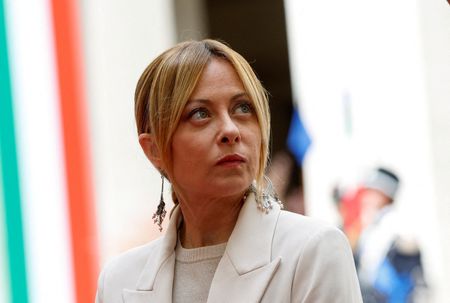
ROME — Italy has confirmed it will participate in the U.S.-led Pax Silica initiative focused on artificial intelligence supply chains, even as tensions linger between Prime Minister Giorgia Meloni and U.S. President Donald Trump, according to an Italian foreign ministry official.
Ambassador Armando Varricchio, speaking to the Italian newspaper Corriere della Sera on Friday, said that Italian Foreign Minister Antonio Tajani and U.S. Secretary of State Marco Rubio are expected to sign a memorandum of understanding “at the first available opportunity.”
“This provides a political basis that demonstrates the willingness to resume from where we had temporarily left off,” Varricchio said.
Pax Silica is a U.S. State Department program that brings allied nations together to protect and strengthen supply chains tied to artificial intelligence. The initiative spans a wide range of sectors, including energy, critical minerals, advanced manufacturing, and AI development. The European Commission formally joined the effort on Thursday, while the Netherlands signed on earlier in the week.
Varricchio, who serves as Italy’s special envoy for innovation, attended a Washington summit on the initiative Thursday in an observer capacity. He also put his name to a joint declaration on AI opportunities alongside representatives from countries including Britain, Germany, Japan, India, and South Korea.
Italy had originally been scheduled to officially join Pax Silica on Monday in Miami. However, Foreign Minister Tajani canceled that trip after Meloni and Trump had a very public disagreement, stemming from the U.S. president’s complaints that Italy had not sufficiently supported the war against Iran.
TOKYO — The head of the United Nations’ nuclear watchdog agency declared Friday that the recently signed interim agreement between the United States and Iran requires international inspectors to be granted access to Iranian nuclear sites.
The U.S. and Iran signed a memorandum of understanding last week, setting the stage for 60 days of negotiations aimed at resolving more complicated sticking points, including questions surrounding Iran’s nuclear program. However, Iran’s deputy foreign minister, Kazem Gharibabadi, stated Wednesday that there were no current plans to allow inspectors into those facilities.
International Atomic Energy Agency Director General Rafael Grossi pushed back on that position during a press conference in Japan on Friday, making clear that inspections are required under the agreement.
“There is an agreement and to comply with that agreement, the IAEA will have to have access and inspect,” Grossi said. “We hope to be there soon.”
Grossi confirmed that IAEA inspectors have already conducted an initial meeting with Iranian officials to work through technical details. He said the first priority of any site visit would be verifying that IAEA seals on previously inspected nuclear material are still intact and confirming that no material has gone missing.
“Intentions are not enough. We have to have a very strong verification system in place,” he added.
Iran has not disclosed to the IAEA how much of its enriched uranium survived recent U.S. and Israeli military strikes, nor has it revealed where that material is currently located.
Before the conflict began, the IAEA estimated Iran held approximately 440.9 kilograms of uranium enriched to up to 60 percent purity. If enriched to a higher level, that quantity would be sufficient to produce roughly 10 nuclear weapons, according to IAEA benchmarks.
Belgian police announced Friday that they have pinpointed the suspects believed to be responsible for a March attack on a synagogue in the city of Liege — an incident that authorities have classified as an antisemitic act.
Despite the announcement, officials declined to release any information about the suspects, and a spokesperson for the agency refused to elaborate further.
The attack occurred in the early morning hours of March 9, when an explosion rocked the synagogue at approximately 4 a.m. The blast shattered windows at the synagogue and also blew out windows in a building directly across the street. Fortunately, no one was injured.
JAKARTA — Social media giants TikTok and YouTube have together shut down approximately 4.7 million accounts belonging to children under the age of 16 in Indonesia, the nation’s communications minister announced, as the country’s new social media restrictions begin to show results.
TikTok, owned by Chinese tech firm ByteDance, removed roughly 4.1 million accounts, while YouTube — operated by Alphabet’s Google — deactivated an additional 600,000. Communications and Digital Minister Meutya Hafid made the announcement late Thursday, expressing hope that other platforms would take similar action. Neither company immediately responded to requests for comment.
The closures stem from a regulation Indonesia put in place in March, which mandates that social media platforms classified as high-risk must deactivate any accounts held by users younger than 16. Platforms already brought under the rule include X, Meta’s Instagram, and the videogame platform Roblox.
“We’re not just delaying a child’s access, but we want behaviours from platforms to change, too,” Minister Meutya said Thursday. She added that the ministry is currently reviewing self-assessment reports submitted by the companies involved.
Indonesian officials say the restrictions are designed to reduce the risks of cyberbullying and addictive platform use among young people. The policy draws comparisons to a landmark ban enacted in Australia last year, which was driven by concerns over social media’s impact on the mental health of minors.
Australia’s approach has drawn international attention, with multiple countries exploring similar measures as worries grow about the physical and mental well-being of children online. Most recently, Britain announced plans this month to expand restrictions even further, targeting gaming and live-streaming platforms in addition to traditional social media.
Massive plumes of dark smoke rose above the outskirts of Myanmar’s largest city Friday as government authorities incinerated over 50 tons of illegal substances — including heroin, opium, ketamine, methamphetamine, marijuana and crystal meth — representing roughly $600 million in confiscated narcotics destroyed across the country.
Myanmar, also referred to as Burma, has struggled for decades with drug production tied to political instability and economic hardship stemming from years of armed conflict.
Despite ongoing efforts to suppress the illegal drug trade, the country has long ranked among the world’s top producers of heroin and methamphetamine, serving as a primary supplier of illicit substances flowing into East and Southeast Asia.
Experts say that the violent political turmoil that followed the military’s seizure of power in 2021 — which sparked a civil war between the military government, pro-democracy forces, and various ethnic armed groups — has driven drug production even higher.
Back in January, the military government announced what it described as the country’s largest-ever seizures of illegal drugs and drug-manufacturing equipment, recovered from 12 production sites during raids conducted in the northern region of Shan state.
The street value of this year’s drug destruction was more than twice the total from last year, according to Police Lt. Col. Aung Myat Soe of Yangon’s Anti-Narcotics Police Force, who spoke with reporters at a bus station compound on the city’s outskirts where the burning took place.
In Yangon alone, authorities destroyed approximately $321 million worth of 31 different types of drugs, Aung Myat Soe said.
Similar destruction events were held in Mandalay and in Taunggyi, the capital of eastern Myanmar’s Shan state — regions closer to the drug production zones — in observance of the United Nations’ International Day Against Drug Abuse and Illicit Trafficking.
Large portions of Myanmar remain under the control of long-standing militias representing the country’s many ethnic groups. Several of these groups are engaged in fighting against the military-led government in a bloody civil war, alongside pro-democracy movements that emerged after the military ousted democratically elected Aung San Suu Kyi in 2021.
Earlier this year, elections took place that international observers described as neither free nor fair, with major opposition groups barred from participating. The military government won by a wide margin.
The government has argued that the country’s militias rely on drug profits to fund their armed campaigns and have little incentive to pursue peace because they benefit financially from the narcotics trade.
While some armed groups are known to be involved in drug trafficking — both now and historically — others have actually moved to suppress drug activity in areas they control.
One such group, the Ta’ang National Liberation Army, which seized large portions of northern Shan state during the civil war before agreeing to a ceasefire with the military in October, announced Thursday that it plans to destroy approximately $5.5 million worth of confiscated drugs within its own controlled territory.
A newly released United Nations report is sounding the alarm on the rapidly expanding global illegal drug trade, revealing that cocaine production and methamphetamine seizures have both reached record levels.
According to the United Nations Office on Drugs and Crime’s annual World Drug Report, cocaine production climbed to approximately 4,100 metric tons of pure product in 2024 — the most recent year with available data. That figure represents a fourfold increase over the past decade. Meanwhile, methamphetamine seizures point to production growing at a rate of about 13% per year.
The agency’s executive director, Monica Juma, expressed serious concern about the changing drug landscape. “We have seen an unprecedented spike in new types of drugs on the market, and worryingly, some are more potent or dangerous than before,” she said in an official statement.
Part of what’s driving the shift is a dramatic drop in heroin availability. After the Taliban returned to power in Afghanistan — historically the world’s dominant opium supplier — and banned opium production in 2023, the supply of heroin, which is made from opium, fell sharply and has not recovered.
That void appears to be getting filled, at least in part, by powerful synthetic opioids. The UNODC noted a significant rise in reports of new synthetic opioids in 2024, including fentanyls and even more dangerous substances known as nitazenes, particularly in Europe.
“Instances of new psychoactive substance synthetic opioids reported in early warning systems increased in 2023 and 2024 across most regions, but most prominently in Europe, Oceania and Africa, suggesting a recent diversification by market actors,” the report stated.
The report also highlighted regional differences in how the fentanyl crisis is evolving. “North America, where fentanyl has largely displaced heroin, reported around a 10% increase in the number of new psychoactive substance synthetic opioids identified in 2024 from the previous year, while that number rose by more than 80% in Europe and by 150% in Oceania,” it noted.
On the cocaine front, both supply and demand continued to climb, while the drug’s purity increased and its street price dropped. Researchers also found shifts in how and where cocaine is being used.
“Qualitative research conducted in 2024 indicates an expansion of cocaine use to social settings beyond the nightlife scene and its integration into daily routines, together with an upsurge in ‘crack’ cocaine use among socioeconomically disadvantaged groups and a shift from heroin use to ‘crack’ cocaine use,” the report said.
Data tracking individuals seeking treatment for drug dependency strongly points to a rise in crack cocaine use across Western and Central Europe that began as far back as 2015, the report added.
Taiwanese shipping company Evergreen Marine announced Friday that one of its cargo vessels was struck by an unknown object in waters off Oman, though the ship has since safely cleared the Strait of Hormuz.
In a filing with the Taiwan stock exchange, the company disclosed that the starboard side of the bridge aboard the Ever Lovely — a vessel owned by its Singapore-based subsidiary — was hit by an unidentified object approximately 3.6 nautical miles off Oman’s Khawr Naiwah. The incident occurred a day before Friday’s announcement.
A crew inspection following the strike revealed damage in the area surrounding the bridge windows. However, the company confirmed that all crew members, the vessel itself, and its cargo are unharmed.
Evergreen Marine stated that the ship’s main engine and navigation systems are functioning normally and that there are no concerns about the vessel’s ability to remain seaworthy. The Ever Lovely has since exited the Strait of Hormuz without further incident.
The company also noted that the ship had been traveling along the recommended route provided by the British navy agency UKMTO while transiting the strait.
UKMTO had previously reported on Thursday that a cargo vessel had indicated a suspected attack as it passed through the Strait of Hormuz near the Omani coastline.
Montenegrin police, working alongside the U.S. Federal Bureau of Investigation, have arrested an Iranian national suspected of carrying out cyberattacks that caused an estimated $3.4 billion in damage to U.S. infrastructure, according to officials in Montenegro.
The suspect, a 39-year-old man holding both Iranian and Turkish citizenship, is being sought by the Southern District Court in New York. He faces charges that include conspiracy to commit computer fraud, hacking, and identity theft.
Authorities say he was taken into custody in Kotor, a coastal resort town along the Adriatic Sea. Montenegro’s police directorate confirmed the arrest on Thursday.
In an official statement, police said that “from 2013 onward, … he carried out massive hacking attacks … targeting more than 150 universities in the United States, causing damage estimated at over $3.4 billion.”
The stolen data and access to compromised university accounts were reportedly used for the benefit of Iran’s Islamic Revolutionary Guard Corps, as well as other Iranian institutions, including universities, police said.
The case is now expected to go before a High Court judge in Montenegro’s capital city of Podgorica, where extradition proceedings will take place.
The FBI had not responded to requests for comment at the time of this report.
Iran and the IRGC have a well-documented history of state-sponsored cyber operations aimed at the United States. In April, U.S. cybersecurity, law enforcement, and intelligence agencies issued a warning about a growing wave of Iranian hacking campaigns targeting critical American infrastructure.
High in the Swiss Alps at the Great St. Bernard Pass, the iconic dogs that share its name still roam the same rugged mountain terrain their ancestors walked for centuries — once searching for travelers trapped under heavy snowfall.
Meanwhile, down in the valley below, a one-of-a-kind living museum dedicated to Switzerland’s national dog has just celebrated its first anniversary.
Barryland, located in Martigny, Switzerland, is the only museum in the world devoted exclusively to St. Bernard dogs. Since opening last summer after outgrowing a much smaller facility, it has drawn more than 130,000 visitors. Guests can observe live grooming and physical therapy sessions, experience the historic mountain pass through augmented reality, and dive deep into the breed’s remarkable story.
“We have a lot of demand and interest for this breed and this whole history and patrimony,” said Barryland director Mélanie Glassey-Roth. “So we decided to create a new park, a big one.”
Perched at 2,469 meters — roughly 8,100 feet — above sea level along the border between Switzerland and Italy, the Great St. Bernard Pass ranks among the country’s highest and most dangerous mountain crossings.
Large mountain dogs have called the pass home since the mid-1600s. They originally served as guard dogs, then became companions, and eventually developed a remarkable natural ability to locate hikers lost in snow and dense fog — a talent unlike anything the Alpine region had ever seen.
The breed takes its name from the Great St. Bernard Hospice, established in 1050 by Bernard de Montjoux — the archdeacon of Aosta and a future saint — as a safe haven for pilgrims and merchants braving the perilous crossing. The dogs became essential to that mission, and by the early 1800s, soldiers who traveled with Napoleon Bonaparte’s army through the pass helped spread the breed’s legendary reputation across Europe.
The most celebrated of all the St. Bernards was Barry the First, who is traditionally credited with rescuing more than 40 people during his time at the hospice between 1800 and 1812. In honor of his legacy, the Barry Foundation — which oversees the breeding program — always keeps a male dog named Barry.
Today, the foundation employs 21 keepers who look after 32 dogs, with approximately 20 purebred puppies born each year. Because modern St. Bernards have grown too large to be airlifted by helicopter, they no longer participate in mountain rescues. Smaller breeds like Australian shepherds have taken over that role, though some St. Bernards remain on the pass to carry on the tradition.
The foundation’s dogs consume roughly 10 metric tons — about 22,046 pounds — of dry food annually. Each summer, they roam the mountain snowfields before making the 40-kilometer (25-mile) journey back down winding roads to their kennels at Barryland.
“We get to see them born, and we get to see them grow up, and then become mothers, and we get to accompany them through all those different challenges in life,” said keeper Alexandra Piatti. “We are their guide, so we can help them with socialization and educate them, and really be by their side for their whole lives.”
So far in 2025, the foundation reports that its dogs have completed 609 community visits to hospitals, care homes, schools, and prisons throughout Switzerland.
Keeper Déborah Dini sums up the responsibility of caring for such historically significant animals simply and warmly.
“We perpetuate the tradition,” she said. “We take care of them. We love them.”
LONDON — NATO’s number two military leader is calling on member nations to use an upcoming summit in Turkey as an opportunity to demonstrate unity, pledge stronger defense spending, and reaffirm the alliance’s backing of Ukraine.
Air Chief Marshal Sir John Stringer, NATO’s deputy supreme allied commander in Europe, sat down with The Associated Press in London less than two weeks ahead of the high-stakes Ankara summit scheduled for July 7-8. The gathering will serve as a major test of cohesion for the 77-year-old alliance.
The run-up to the summit has been marked by mixed signals from U.S. President Donald Trump, who has at times threatened to withdraw from NATO, pushed to annex Greenland, and offered flattering remarks toward Russian President Vladimir Putin. U.S. Defense Secretary Pete Hegseth added to the tension last week by criticizing NATO allies for not allowing the use of their bases to strike Iran, while also announcing an unexpected six-month review of American military forces stationed in Europe.
Adding to the turbulence, government ministers in the United Kingdom have stepped down, citing concerns that the country’s military spending plans are insufficient to keep Britain secure.
Stringer, a senior British air force officer, acknowledged the alliance is going through a difficult stretch. “Are we in one of those moments at the moment? Yes, we are,” he said during an interview at a military conference in London, where AP also spoke with other senior European military leaders about their expectations for the summit.
He described summits as “highly political events” that serve as a demonstration of an organization’s unity, noting it would be unusual if decades of NATO expansion hadn’t produced some turbulence along the way.
Trump has long pushed European allies to take greater responsibility for their own defense, and with the notable exception of Spain, most member nations have responded with an unprecedented increase in military spending.
Maj. Gen. Indrek Sirel, a commander in Estonia’s armed forces, said Europe must strengthen its own militaries while also helping Ukraine chip away at Russia’s military capabilities, given Russia’s growing threat to the continent.
Brig. Gen. Jyri Raitasalo of Finland — which shares NATO’s longest border with Russia — put it bluntly: “Europe as a whole has a lot to do in order to be credible against Russia.”
Stringer said European nations are making investments to build a “really credible force,” pointing to examples like some countries quadrupling their production of 155 mm artillery shells. He said the summit will address ramping up production at a scale the alliance hasn’t seen in decades.
The results of Hegseth’s six-month force review will largely determine how quickly European nations must take over their own security responsibilities. Earlier this month, the U.S. military in Europe indicated that Washington would be pulling back some capabilities and expecting allies to fill those gaps.
While the Trump administration has maintained that troop reductions were long planned and coordinated with allies, Sirel said it remains unclear exactly how U.S. forces will be positioned in the Baltic states, including their role in deterring Russia along NATO’s eastern flank.
Sirel said he remained “confident” in a continued U.S. presence, while acknowledging that Estonia’s military is preparing to adapt quickly to sudden changes.
Stringer said replacing U.S. long-range strike and surveillance capabilities would be difficult, but expressed confidence that allies could bridge the gap — not necessarily with identical equipment, but through a “cocktail” of mixed capabilities. He noted that while only the U.S. operates B1 and B52 bombers, the loss of those assets could theoretically be offset by missiles fired from ground, sea, and smaller aircraft platforms.
NATO allies were caught off guard in May when Trump announced plans to send 5,000 U.S. troops to Poland just weeks after ordering a similar number withdrawn from Europe.
Raitasalo, who serves as Finland’s military logistics chief, said such abrupt shifts are problematic because military planning depends on long-term strategy. “If you change your mind, or change your plan, every week or every month or even every year, you will not get very good results,” he said. He added that allies need to make firm commitments of actual capabilities rather than simply promising spending targets.
Sweden’s army chief, Maj. Gen. Jonny Lindfors, said a successful summit outcome would be “a common picture of how to realign when it comes to deterrence and defense.” He said he hopes for at least an outline — if not a clear vision — of how defense responsibilities should be redistributed, so that he can understand what “NATO 3.0 is starting to look like.”
British Defense Secretary John Healey resigned earlier this month alongside another minister, stating that the government was neither willing nor able to commit the resources Britain needs to “defend the country at this time of rising threats.” At last year’s NATO summit, members agreed to spend 3.5% of their gross domestic product on core defense, and the U.K. committed to hitting that target by 2035. However, Healey said the proposed defense investment plan would only bring spending to 2.68% of GDP by 2030.
The new defense secretary, Dan Jarvis, has pledged that Britain will honor its commitments, and the British government has agreed to publish its spending plan.
Stringer said the U.K. is “as beholden” as any other member to having a credible path to the 3.5% target by the time of the summit. He warned that Britain cannot rely on its reputation for strategic leadership within NATO alone, and must back that up with actual “forces and resources.”
At last year’s summit, NATO Secretary General Mark Rutte managed to keep Trump engaged by framing the meeting as a major win for his push to get allies to spend more. Stringer said this year’s summit must demonstrate “cohesion and unity” among all 32 members, while also featuring honest conversations and credible action plans.
Raitasalo said the meeting must go beyond the usual “communiques, roadmaps and action plans” and show deterrence through real action. He warned that if NATO members fail to turn promises into deeds, the “credibility” of the entire alliance is on the line.
PARIS (AP) — A record-breaking heat wave descended on Paris this week, forcing the city’s elite fashion houses into a frantic scramble to keep guests comfortable — handing out ice packs, deploying mist machines, and serving chilled water on silver trays.
Despite those efforts, many venues remained stifling. Water supplies ran low, and air conditioning was either nonexistent or simply not up to the task.
And yet, the models kept walking — wearing leather, neoprene, and wool.
That striking contradiction defined Paris Fashion Week Men’s, where an extreme heat wave transformed a spring-summer showcase into a real-world question: Can the luxury fashion world dress — or even behave — in ways appropriate for the warming planet it often claims to care about?
“I honestly thought I was going to pass out,” said Ben Freeman, a London-based fashion critic originally from Australia.
Several attendees seated in the front row suggested that Paris may need to rethink the timing of fashion week altogether if climate change continues to produce more frequent and severe heat waves.
“I don’t know how the models did it this week in some of the leather and knit coats,” said Thomas Levy, a 24-year-old fashion student who spoke outside one of the shows. “The heat rarely seems to make it into the clothes. It shows up in the sets like at waterfalls and mist machines and ice packs.”
Throughout the week, designers largely treated the heat as a problem of hospitality, staging, or scheduling — almost never as a challenge for the clothing itself.
Attendees received cold towels, ice packs, and bottled water. Stage sets featured waves, fog, and cooling mist. Show times were pushed earlier in the day, with punctuality reframed as a safety measure against the heat.
Dior shifted its Wednesday show from 2:30 in the afternoon to 9 in the morning, but the heat still took its toll. Water was in short supply, there was no air conditioning, and some guests appeared to be feeling unwell.
Jonathan Anderson offered one of the more climate-conscious design responses with sheer silk-chiffon tailoring — but other collections leaned into heavy knits that seemed better suited for cooler climates than a Paris June.
“The calendar does not make any sense,” Anderson told reporters, pointing to disrupted delivery schedules and a shifting business model that has left the fashion calendar out of step with both actual weather patterns and the way luxury clothing is now sold.
These shows are labeled spring-summer, but the collections are far more complex than simple warm-weather wear.
Luxury lines are designed for worldwide markets, with deliveries staggered across months and customers who often spend the hottest parts of the year in air-conditioned environments. For many buyers, a wool coat purchased in June is not a seasonal oddity — it’s a deliberate choice.
At Saint Laurent, models moved through billowing clouds of vapor produced by a fog installation by artist Fujiko Nakaya inside the Bourse de Commerce, transforming heat into a visual experience rather than a problem to escape. Designer Anthony Vaccarello stripped down his tailoring to unlined jackets and soft, pale looks — lighter, he told reporters, because of the heat — before dialing the temperature back up with leather briefs, choker scarves, bare legs, and transparent shoes fogged with condensation.
The collection wasn’t a concession to summer — it was Saint Laurent’s own interpretation of it: cooler in construction, bolder in attitude.
At Louis Vuitton, designer Pharrell Williams sent models emerging from a massive artificial wave onto sand. Even so, the wetsuits were neoprene and the coats were cashmere and fur.
Issey Miyake’s IM Men label offered one of the week’s most practical responses. The show, titled “In Praise of Bamboo Shadows,” greeted guests with ice packs at the entrance, then showcased garments made from bamboo-thread fabrics blended with organic cotton and light nylon, featuring shadowy prints. The silhouettes were designed to hang away from the body, treating circulating air as part of the design concept rather than something the venue alone had to provide.
At Ami, designer Alexandre Mattiussi stated the obvious while standing next to an industrial fan — “Paris is burning” — and dressed the moment like a Parisian simply living through it: loose shorts, relaxed washed trench coats, and “I Love Paris” T-shirts.
Rick Owens came perhaps closest to making heat itself the central theme. He moved his Thursday show to an earlier time slot due to the heat, then sent models through mist at the Palais de Tokyo wearing garments with small fans built inside them. One prominent fashion critic described the show as “a metaphor for climate catastrophe.”
Pascal Morand, who leads France’s Haute Couture and Fashion Federation, said organizers were adhering to the French government’s official heat-wave response plan.
“We are conscious of the challenges and very attentive to preserving the Fashion Week experience in this context of structural change,” he told the Associated Press.
Fashion wasn’t the only Paris institution feeling the strain. The Louvre museum cut its operating hours during the heat wave, acknowledging that its historic building “remains vulnerable and is not sufficiently adapted to climate change.”
That vulnerability feeds into a broader French debate over air conditioning, which remains widely viewed with suspicion across much of Europe — seen by many as wasteful or environmentally irresponsible.
Fashion week became a glamorous version of the same challenge facing France as a whole: how to keep public events, workplaces, and cultural spectacles functioning in heat the country was never designed to handle — without simply filling every building with air conditioning.
President Emmanuel Macron’s government has leaned, as much of France has, toward solutions like shade, better insulation, and urban tree planting.
Europe is warming faster than any other continent, with cities built largely of stone and largely without air conditioning.
“Paris Fashion Week is the canary in the mine,” Freeman said.
From sports to tourism to construction, industries built around fixed schedules and outdoor audiences are being forced to adapt to heat that arrives earlier, lingers longer, and reaches higher temperatures than before.
Paris Fashion Week — outdoor, fixed in time, and watched by the world — became one of the most visible tests yet of that new reality.
In cities across northern Venezuela, desperate residents worked side by side Thursday to dig through collapsed buildings in search of missing family members and neighbors, one day after two powerful earthquakes struck the region and left a trail of death and destruction.
The official death toll climbed to approximately 235 by late Thursday, with at least 4,300 people reported injured, according to Venezuela’s Health Minister Carlos Alvarado, who spoke to state media. Authorities expect those numbers to rise, as thousands of people remain unaccounted for and rescue operations continue around the clock.
The two earthquakes — measuring 7.2 and 7.5 in magnitude — hit Wednesday evening and rank among the most powerful to strike Venezuela in over a century. The tremors were felt across a wide stretch of the region.
Rescuers pulled survivors from the wreckage covered in dust and blood, including children and animals. Venezuelan state television broadcast dramatic footage of the rescue efforts, including one scene where a woman was pinned beneath a concrete slab with only her bare foot visible before rescuers were able to pull her out alive. However, government-organized search teams were largely absent from areas outside the capital Caracas in the early hours following the disaster.
The coastal area of La Guaira, located north of Caracas, bore some of the worst damage and the highest casualty counts. Venezuela’s primary international airport, situated in that region, was forced to close because of structural damage, making it harder to bring in outside assistance.
By Thursday morning, stunned residents surveyed a landscape of gutted buildings, furniture dangling from broken windows, and helicopters sweeping overhead. Entire structures had been flattened and roads split open by the force of the quakes.
Families plastered walls with missing-person flyers bearing photographs of loved ones, while others passed around handwritten lists of names. Venezuelans living abroad struggled to reach relatives back home as phone service across the country was severely disrupted.
In central Caracas, hundreds of people spent the night in parks, parking lots, and other open areas, too afraid to return to their homes.
Dayana Delgado, a mother of three, demanded to know where the heavy machinery that government officials had promised was, saying it was ordinary residents who were doing the digging through collapsed structures.
BEIJING — Bangladeshi Prime Minister Tarique Rahman sat down with Chinese President Xi Jinping in the Chinese capital on Friday, making a direct appeal for China to help shrink the trade gap between the two countries, broaden the range of Bangladeshi goods exported to China, and back key development initiatives in Bangladesh.
The meeting came during a three-day visit to China that began Wednesday — Rahman’s first trip to the country since he took office as prime minister in February.
Bangladesh has been working to strengthen its relationship with China, one of its biggest trading partners and a major source of development funding.
The trip also carries significant diplomatic weight. Rahman is working to maintain balanced relationships with both Beijing and New Delhi. His predecessor, Sheikh Hasina, was widely regarded as having closer ties to India. While relations between Dhaka and New Delhi have improved under Rahman’s leadership, tensions remain, including disagreements over border issues.
During his meeting with Xi, Rahman made the case that China could help reduce Bangladesh’s trade deficit by allowing more Bangladeshi products into its market.
“We request China to consider import our fresh mangoes, jackfruit, guava, aquatic products, raw leather, jute products and pharmaceutical products,” Rahman said, according to a media pool report.
He also stressed that Bangladesh needs China’s assistance in “implementing our major signature projects and upgrading and modernisation of our existing industrial units.”
Bangladesh became part of China’s Belt and Road Initiative in 2016, a large-scale infrastructure and development program championed by Xi that aims to link Asia, Africa, and Europe.
In response, China indicated it is prepared to work with Bangladesh on importing more quality Bangladeshi products, encouraging Chinese companies to invest there, and growing cooperation in areas like new energy, the digital economy, and artificial intelligence, according to a statement from the Chinese government.
Earlier in the visit, Rahman met with Premier Li Qiang on Thursday, where the two sides signed several cooperation agreements aimed at strengthening bilateral ties, state media reported.
Bangladesh currently owes China $6.2 billion, according to World Bank figures. The Beijing-based Asian Infrastructure Investment Bank has provided an additional $2.3 billion in loans. By comparison, India has lent its neighbor $1.6 billion.
Chinese companies have also invested $7.7 billion in Bangladesh, roughly half of it in the country’s energy sector, according to data from the American Enterprise Institute think tank.
However, China has grown more selective about where it puts its financing dollars, said Chim Lee, a senior analyst at the Economist Intelligence Unit in Beijing.
“Not least because it tends to be looking for key logistics corridors these days that can be scaled up, and Bangladesh is a bit tricky because it just doesn’t provide the same kind of corridor as say Central Asia or Myanmar,” Lee said.
Saudi Aramco has restarted oil loading operations at its Ras Tanura terminal along the Gulf coast, ending a near four-month shutdown, according to shipping data from LSEG released Friday.
The data indicates two Very Large Crude Carriers — each with a capacity of 2 million barrels of oil — were actively taking on crude at the terminal, with a third vessel waiting in the area.
Attempts to reach Saudi Aramco for comment outside of business hours were unsuccessful.
According to the shipping data, the last time the company loaded a cargo from the Ras Tanura port was March 8, when a shipment was sent to China. After that, Saudi Aramco was forced to redirect all of its exports through the Red Sea port of Yanbu, after Iran’s blockade of the Strait of Hormuz — during its war with the U.S. and Israel — cut off access to the Gulf for shipping vessels.
With the United States and Iran having reached an interim agreement to bring the war to a halt, energy producers across the Middle East have been increasing both their output and their export activity.
Australia’s prime minister said Friday he wants to ensure the nation’s ban on social media for children is as robust as possible, following a new study showing the world’s first such law has done little to curb teen use in its first six months.
The government intends to put the legislation through rigorous testing. The law prohibits platforms such as Meta’s Instagram and Google’s YouTube from creating accounts for anyone under the age of 16.
“What we want to do is to make sure that the laws are as strong as possible and that they will withstand any legal challenges which are made,” Prime Minister Anthony Albanese told the Australian Broadcasting Corp.
Albanese added that a major priority would be ensuring the eSafety Commission — the country’s internet watchdog — has enough authority to carry out its responsibilities. He did not elaborate on what specific actions the government plans to take, and the regulator declined to offer any comment.
The Australian experiment is being closely followed by nations around the world that are grappling with concerns about the mental and physical wellbeing of young people. Britain, for instance, announced this month that it plans to go even further, extending similar restrictions to gaming and live-streaming platforms as well.
The eSafety Commission and Communications Minister Anika Wells have indicated they are preparing legal action against several platforms. Companies found to have systematically failed to enforce the ban could face fines of up to A$49.5 million, or roughly $34 million U.S.
Reddit has filed a High Court challenge against the ban, with preliminary hearings still underway. The company was not immediately reachable for comment Friday.
When the ban took effect last December, early reports suggested millions of accounts had been shut down. However, parents and researchers have since noted that teen social media habits appear largely unchanged.
A study published this week in the British Medical Journal found that 85% of Australians between the ages of 12 and 15 were still active on social media three months after the ban went into effect. The research was based on a study of 408 adolescents.
According to the paper, two-thirds of underage users got around the restrictions by either claiming to be older than 16 or submitting a selfie that the platform accepted as proof of being over the age limit.
“Despite the intent of the (ban) to delay access to social media platforms and reduce the potential for online harms, little evidence was found of immediate substantive reductions in reported social media use by adolescents,” the study concluded.
North Korean leader Kim Jong Un personally watched a series of major weapons tests and demanded that his military build up what he called a “deadly and destructive offensive posture,” according to North Korea’s state-run media on Friday. The announcement came just days after the country put its first naval destroyer into service.
The move fits a broader pattern of Kim pushing to expand both nuclear and conventional military power while refusing to engage in diplomatic talks with South Korea or the United States.
Thursday’s tests were designed to measure the destructive power of a “special mission” warhead fitted to a tactical ballistic missile, an upgraded multiple rocket launch system, and the accuracy of shells fired at extended range from a self-propelled gun-howitzer, according to the official Korean Central News Agency, known as KCNA.
KCNA reported that Kim said the test results demonstrated technological advancement in efforts to shift the military’s fire posture along the southern border — a statement widely understood to mean the weapons systems are intended to strike targets in South Korea, including American military installations located there.
Kim described his country’s self-defense policy as one that aims to build “the deadly and destructive offensive posture to make no enemy dare to confront.” He added, “To make the enemies feel constant uneasiness and fear is just an important aspect of the exercise of war deterrent.”
State media also reported that the special mission warhead is specifically designed for “inflicting fatal damage on major targets including airfields, ports and power facilities of the enemy.”
Earlier this week on Tuesday, North Korea officially commissioned the Choe Hyon, a 5,000-ton destroyer that Kim described as a symbol of his nation’s expanding naval and nuclear strength. It is considered the most advanced warship in North Korea’s fleet.
Kim’s military buildup has accelerated since high-stakes diplomatic negotiations with U.S. President Donald Trump fell apart in 2019. Since then, he has focused on growing both his nuclear and missile programs while also investing in more sophisticated conventional weapons.
In response to Trump’s repeated attempts to restart diplomatic conversations, Kim has indicated that talks could happen — but only if the United States drops its requirement that North Korea give up its nuclear weapons as a condition for negotiations. Kim has also taken an increasingly hostile stance toward South Korea, labeling it his country’s “principal enemy” and constructing additional military infrastructure along the heavily fortified border between the two nations.
In recent years, Kim has also expanded North Korea’s international relationships, most notably by deepening ties with Russia in support of its ongoing war in Ukraine. Earlier this month, Chinese President Xi Jinping traveled to North Korea for his first visit in seven years, where he met with Kim.
SEOUL — South Korea is moving aggressively to build up its drone warfare capabilities, with plans to train half a million so-called “drone warriors” and purchase more than 20,000 low-cost, expendable drones, according to the country’s Defence Ministry, which announced the initiative on Friday.
Beyond those acquisitions, the South Korean military intends to manufacture 110,000 drones between now and 2029, with the goal of distributing them across various military units. Officials described the effort as part of a larger strategy to strengthen the country’s unmanned systems and better position its forces against the threat posed by North Korea.
TOKYO — Fresh economic data released Friday shows that core inflation in Japan’s capital city gained momentum in June, reflecting growing price pressures tied to the ongoing conflict in the Middle East.
The numbers are expected to be closely examined by the Bank of Japan when its board meets next month for a quarterly review of the country’s growth and price outlooks.
Tokyo’s core consumer price index — a measure that leaves out costs for volatile fresh food items — climbed 1.6% in June compared to the same month a year ago. That marks an increase from the 1.3% rise recorded in May and matched what analysts had predicted.
A separate index that removes both fresh food and fuel costs, which the Bank of Japan monitors closely as a more reliable indicator of underlying inflation trends, rose 1.9% in June, up from 1.6% in May.
The conflict in the Middle East has made it more difficult for the Bank of Japan to determine when and how quickly to raise interest rates. Higher energy prices are pushing inflation upward while at the same time putting strain on an economy that relies heavily on imported oil.
Earlier this month, the Bank of Japan raised interest rates to their highest level in 31 years — a significant move in its effort to return to more normal monetary policy. The bank signaled it could tighten rates further as it works to manage the inflationary effects of the energy shock stemming from the Iran war.
The Russian-appointed governor overseeing the occupied portion of Ukraine’s Kherson region announced early Friday that electricity had been completely or partially cut off throughout the area, which borders Crimea. Governor Vladimir Saldo made the announcement via Telegram but offered no additional details about the cause or extent of the outages.
In Sevastopol, Crimea’s largest city — which Russia seized and annexed in 2014 — authorities have been deliberately limiting power distribution to prevent the already-stressed electrical grid from being overwhelmed. Those restrictions followed a series of Ukrainian drone attacks that have also triggered a fuel shortage in the region.
The situation in Crimea is worsening on multiple fronts. The Russian-installed governor of Crimea, Sergei Aksyonov, announced Thursday that train service to the peninsula will be gradually scaled back. Crimea is a popular warm-weather destination for Russian tourists during the summer months. Aksyonov had previously ordered the closure of children’s summer camps on the peninsula.
Aksyonov also confirmed that one person died Thursday in a drone strike near the crossing point between Crimea and the Russian-held section of the Kherson region.
Starlink, the satellite-based internet service that operates under Elon Musk’s SpaceX, announced Thursday that it will waive service charges for its Venezuelan customers for an entire month following two earthquakes that struck the South American nation.
Beyond the free service offer, the company stated it is moving quickly to get equipment on the ground. In a post on X, Starlink said it is working to “rapidly deploy Starlink terminals and restore connectivity to the hardest-hit areas.”
For Hillel Neuer, executive director of UN Watch, the challenge facing Israel starts long before any vote is cast or report is published. It begins, he says, with the culture inside the United Nations itself.
“I remind myself every time I walk in the UN that I’m entering a dystopian universe, not unlike 1984, as described by George Orwell, where there’s doublethink and doublespeak, and the truth is often erased and rewritten,” Neuer told The Media Line in Jerusalem.
More than two and a half years after the Hamas-led attacks of October 7, 2023, a growing number of Israeli officials, legal advocates, policy researchers, former military figures, and Christian supporters of Israel are describing the country’s diplomatic and legal exposure as a battlefront of its own. At the JNS International Policy Summit held in Jerusalem this week, speakers repeatedly returned to a central theme: Israel’s military struggle is now deeply connected to a parallel contest playing out in the UN, the International Criminal Court (ICC), the International Court of Justice (ICJ), Western university campuses, and social media — all arenas where the language of legitimacy is being fought over.
The concern, as summit speakers framed it, goes beyond simple criticism of Israel. The argument is that international institutions, legal bodies, and public narratives can feed into each other — transforming reports into headlines, headlines into political pressure, and political pressure into court filings, mandates, and boycotts.
Asher Fredman, executive director of the Misgav Institute of National Security, asked what was driving what he described as “this campaign of accusations against Israel, claims against Israel, legal steps against Israel.” His conclusion was direct: “The United Nations is a central engine and catalyst of this campaign,” Fredman told The Media Line. He argued that too many policymakers still view the UN as a venue for symbolic gestures rather than as a system that actively shapes budgets, mandates, commissions, and legitimacy itself.
That analysis forms the foundation of a Misgav Institute report co-authored by Fredman and former Israeli Ambassador to the UN Gilad Erdan, which calls on the United States to move away from attempting to reform the UN and instead adopt a strategy of “Disengage, Withdraw, and Replace.”
Fredman said Washington should stop automatically funding UN operations and instead support only those functions that clearly benefit American interests. He also argued that Israel has made a comparable error by focusing heavily on bilateral relationships while treating UN votes as little more than diplomatic theater. “People don’t understand that the UN is actually really important, because the UN often gets to the very core legitimacy of a country, and that leads to legal proceedings, that leads to boycotts, that leads to blacklists,” he said.
The same concern emerged most sharply during the summit’s legal discussions, where a central strategic question was whether Israel should continue fighting within international institutions or concentrate more energy on challenging those institutions’ authority from the outside. That debate has grown more urgent since the ICC issued arrest warrants in November 2024 for Prime Minister Benjamin Netanyahu and former Defense Minister Yoav Gallant, while Israel has continued to contest the court’s jurisdiction over its actions.
International lawyer Ron Soffer described the ICC as “a strategic threat to the State of Israel” — noting that, unlike UN bodies that issue condemnations, the ICC can pursue actual arrest warrants. Alan Baker, a former Israeli ambassador to Canada who participated in the Rome Statute negotiations, said Israel’s decision to stay out of the court had been the right call. “We didn’t make a mistake,” he said.
Others at the summit argued that Israel and its supporters should stop expecting legal arguments alone to carry the day. “The ICC is not a court, it does not function as a court, and we can have the cleverest legal arguments. It will not help,” said Eugene Kontorovich, professor of law and director of the Center for the Middle East and International Law at George Mason University’s Antonin Scalia Law School. He contended that pressure and sanctions would prove more effective than persuasion.
Not everyone agreed with that position. Yael Vias Gvirsman, founder and CEO of October 7 Justice Without Borders — which represents hundreds of direct victims of the October 7 attacks before courts including the ICC — argued that Israel should not surrender the legal arena to its opponents. The question, she said, is not whether the ICC is inherently good or bad, but “what place we choose to fill in this space.”
That disagreement extended to the International Court of Justice, where South Africa’s genocide case against Israel remains in its written phase. In May 2026, the court set November 22, 2027, as the deadline for South Africa to submit its reply to Israel’s written pleading.
Kontorovich called the South Africa case “a legal October 7th” and warned that because Israel accepted ICJ jurisdiction under the Genocide Convention, the court now has a platform that could be invoked in every future Israeli military conflict. Jonathan Turner, chief executive of UK Lawyers for Israel Charitable Trust, countered that disengagement cannot be the only answer. “We can say, until we’re blue in the face, that its advisory opinions are not binding,” Turner said — but without Israel and its allies presenting facts before the court, the world will never hear the rebuttal.
Vias Gvirsman took the same view on the ICJ, arguing that Israel should use precedent and evidence to challenge South Africa’s case. “If we want to respect ourselves, we have a good case; let’s bring it to the court,” she said.
The debate became most concrete around the United Nations Relief and Works Agency for Palestine Refugees in the Near East, known as UNRWA. In the United States, efforts to hold the agency legally accountable have already hit a wall: a federal district court in New York ruled in 2025 that UNRWA, as a subsidiary organ of the UN, enjoys immunity in American courts and dismissed the case against it. Israel, meanwhile, has separately pursued domestic legislation to strip the agency of that immunity within its own borders.
In that US litigation, Joseph H. Tipograph of Heideman Nudelman and Kalik argued that UNRWA is “not a refugee agency” in the traditional sense because, in his view, it perpetuates refugee status across multiple generations. “If UNRWA is immune, it can do what it wants,” Tipograph said.
A parallel effort has unfolded in Israel. Nitsana Darshan-Leitner, founder of Shurat HaDin, said her organization pushed for legislation removing UNRWA’s immunity in Israel after representing the family of a victim whose body, she said, was transported into Gaza by UNRWA officials using a UNRWA vehicle. When the attorney general later filed a position in court, Darshan-Leitner said, the new Israeli law had already narrowed the space for argument. The attorney general’s position, as Darshan-Leitner described it, was that her “hands are tied” because Israeli law no longer recognizes UNRWA’s immunity in that case.
For Neuer, UNRWA sits at the heart of the broader UN problem. He argued that the agency has evolved into an institution that keeps the conflict alive through education, employment, and a political narrative centered on the right of return. UN Watch reports issued over the past two years allege deep Hamas infiltration of UNRWA staff unions and schools. UNRWA has rejected the broader allegation that it knowingly enables terrorism, saying it acts on neutrality violations when evidence is provided. “If we want to have peace in this region, de-radicalization begins and ends with UNRWA,” Neuer said.
Neuer also addressed the question of the UN’s future leadership. While arguing that the next secretary-general will have limited impact — because what he sees as anti-Israel machinery is embedded in mandates, bureaucratic culture, and member-state politics — he singled out former UN human rights chief Michelle Bachelet for criticism. “She already was the UN Human Rights Chief, and she had a very poor record,” he said, arguing she gave China, Russia, and other authoritarian governments too much latitude. More broadly, he said the UN should operate more like an emergency room performing triage, adding, “We don’t need a UN if all they’re going to do is appease dictatorships. We need someone, we think, to speak out for victims, especially in non-democracies.”
Israeli leaders echoed those themes. Foreign Minister Gideon Sa’ar framed the challenge in diplomatic terms, saying Israel must push back against language that transforms accusations into accepted political categories while simultaneously building new alliances. Referring to a European commissioner who had labeled Israel an apartheid state, Sa’ar said such language could not be treated as routine criticism. “We also, as a country, must draw red lines,” he said. At the same time, he argued Israel cannot devote all of its energy to “blocking initiatives against Israel,” and pointed to new Israeli embassies, efforts to expand the number of embassies located in Jerusalem, and what he described as his ministry’s “Latin America year” in 2026 as examples of proactive diplomacy.
President Isaac Herzog called on Israel to “employ truth to counter the bias, distortions, and double standards spread constantly in the media, online, and across the halls of the United Nations.” Prime Minister Benjamin Netanyahu framed the effort as another dimension of a long war, calling the battle against delegitimization and antisemitism the “Eighth Front” and declaring, “We will fight on the Eighth Front as well.”
US Ambassador to Israel Mike Huckabee delivered his message in the language of faith and history. After outlining President Donald Trump’s stance on Iran, Hezbollah, Hamas, and the Houthis, Huckabee described the US-Israel alliance as rooted in something deeper than modern politics, saying America is tied “more to Mount Sinai than it is to Athens or Rome.”
At a separate Christian-Israel Alliance Forum chaired by Josh Reinstein, president of the Israel Allies Foundation, the focus shifted from courts and UN agencies to faith networks, media outreach, and public advocacy. Troy Miller, president and CEO of the National Religious Broadcasters, said the issue is “not just about a battle that’s anti-Semitic or anti-Zionism,” but part of a broader struggle over Western civilization, Christian persecution, and the values that will shape the international order. “If we end up divided and fighting this separately, we’re going to fail,” he said.
Sagiv Asulin, a former senior Mossad officer and expert on influence operations and strategic perception at the Jerusalem Center for Security and Foreign Affairs, put the challenge in starker terms. Israel, he said, is winning militarily on many fronts but “losing terribly” in the arena of public perception and information warfare. After October 7, he said, he found himself thinking not just about that day but about “the paradigm of October 8th” — how quickly anti-Israel demonstrations and narratives appeared on Western campuses and streets.
The media dimension was addressed directly by Katie Huch, creative director at New Beginnings Church and Larry Huch Ministries, who said younger audiences are being shaped by platforms where anti-Israel content vastly outnumbers pro-Israel content. “Social media is a problem, but it’s also a tool, and we can use it to our advantage,” she said, calling for both digital engagement and efforts to bring young Christians to Israel firsthand.
David Parsons, senior vice president and spokesman for the International Christian Embassy Jerusalem, made the same case through the lens of tourism and public diplomacy. “Christians come and leave as goodwill ambassadors of this country,” he said.
Military and political voices pushed the argument further. Col. Richard Kemp said Israel cannot expect to win the information war when audiences begin from the assumption that Israel is illegitimate. Jonathan Conricus, a former Israel Defense Forces international spokesman, said Israel has invested far too little in the information space. “If you leave a vacuum for your enemy, he will populate it,” Conricus said.
Former Prime Minister Naftali Bennett was perhaps the bluntest voice on the subject. Israel, he said, has allowed its public image in the United States to deteriorate and cannot count indefinitely on the personal goodwill of any single president. “If Israel were a PR firm, I definitely would not hire us,” Bennett said.
Even Neuer, one of the summit’s sharpest critics of the UN, acknowledged that Israel can damage its own cause. While he said UN bias against Israel persists regardless of which government is in power, he specifically called out inflammatory rhetoric by National Security Minister Itamar Ben-Gvir as counterproductive. When Israeli ministers use language that appears to celebrate suffering, he said, “you lose almost all of your friends.”
For Fredman, the path forward involves concrete steps: linking bilateral relationships to multilateral behavior, conditioning UN funding, exposing hostile networks, and dramatically increasing investment in strategic communications. “Israel for years has not only been greatly under-investing in its strategic communications and public diplomacy, but on the level of creating people-to-people ties and cooperation with civil society, it has not received resources,” he said.
For Vias Gvirsman, any strategy must also preserve moral boundaries. In her closing remarks, she described law as a form of power — but power that must reflect “sanctity of life” and “human dignity.” The question, she said, is “how do we fight a battle we cannot lose” without surrendering identity and values in the process.
That tension may well define Israel’s next chapter. Its leaders say the country has shifted the military balance against Iran, Hezbollah, and Hamas. Its lawyers, advocates, and supporters argue that the institutional battle remains far harder to win. In the UN, the ICC, the ICJ, and the broader court of public opinion, Israel is working not only to defeat individual accusations but to prevent those accusations from becoming the standard language through which governments, courts, and media evaluate it.
Israeli Foreign Minister Gideon Sa’ar is preparing to bring a resolution before the Israeli government at an upcoming cabinet meeting that would formally recognize the Armenian Genocide — an official acknowledgment of the systematic mass killings of the Armenian people during the final years of the Ottoman Empire.
The resolution puts forward the position that Israel carries both a moral and historical responsibility to recognize the genocide and to stand against any efforts to deny, downplay, or distort what happened.
According to the explanatory text attached to the resolution, the genocide began in April 1915 when hundreds of Armenian intellectuals, community leaders, and educated professionals were arrested, deported, and killed in Constantinople. Ottoman authorities then launched a broader campaign against the wider Armenian population — drafting men into forced labor before executing them, while women, children, and elderly civilians were driven from their homes and forced on death marches toward the Syrian desert. Along the way, victims were subjected to mass murder, rape, deliberate starvation, and dehydration.
The resolution’s supporting text estimates that approximately 1.5 million people lost their lives, and that the campaign wiped out a cultural and historical legacy that had been present across Anatolia for thousands of years.
The proposal also points to ongoing organized efforts to deny or minimize the genocide, singling out what it describes as the manipulative rewriting of history books — primarily by Turkey — despite what it calls extensive and unequivocal historical documentation of the events.
As of now, 32 countries have formally recognized the Armenian Genocide through parliamentary resolutions, legislation, or official declarations, according to the proposal.
Beyond simply recognizing the genocide, the resolution calls on Israel to actively condemn all attempts to obscure, minimize, or deny the atrocities carried out against the Armenian people.
Should the Israeli government vote to approve the measure, it would then be forwarded to the Knesset for additional consideration and approval.
The US military announced Wednesday that an airstrike in northwestern Syria took out a senior commander within the Islamic State, known as ISIS, as part of continued operations targeting armed groups believed to be planning attacks on Americans and US interests abroad.
US Central Command, known as CENTCOM, confirmed its forces conducted the strike on June 19, resulting in the death of Ali Husayn al-Ulaywi. Officials described the operation as part of a sustained campaign to disrupt and eliminate terrorist threats aimed at Americans both overseas and on US soil.
In a post on X, CENTCOM stated: “CENTCOM and our partners remain committed to rooting out remaining remnants of ISIS to ensure its enduring defeat. We will continue to defend the U.S. homeland, our service members, and allies and partners across the region.”
The strike comes as ISIS has announced a new phase of operations inside Syria, specifically targeting the government of President Ahmed al-Sharaa. The group has claimed credit for a string of attacks since February. Last year, President al-Sharaa’s government joined the US-led coalition working to combat ISIS.
Most recently, ISIS claimed responsibility for an attack near the city of Manbij, located in Syria’s northeastern Aleppo province, this past Saturday.
At the peak of its strength during the Syrian civil war roughly a decade ago, ISIS controlled approximately a quarter or more of Syrian territory before being pushed out by the US-led coalition.
In a separate announcement, CENTCOM said Cooper is scheduled to travel to Israel on Thursday. The visit coincides with ongoing US-brokered negotiations between Israel and Lebanon. Cooper is expected to sit down with IDF Chief of Staff Eyal Zamir and Defense Minister Israel Katz. Discussions are anticipated to focus on strategic coordination regarding Iran, security developments along Israel’s northern border, and the ongoing situation involving Hezbollah in Lebanon.
Two senior American officials told The Wall Street Journal that Iran’s Islamic Revolutionary Guard Corps carried out an attack on a Singapore-registered merchant ship as it passed through the Strait of Hormuz on Thursday.
The vessel was traveling near the coast of Oman when it came under attack — just hours after Iran’s paramilitary naval force had put out a warning telling commercial ships to stay out of shipping lanes in the strategic waterway unless they had received explicit authorization from Tehran.
The ship took a hit to its bridge — the area aboard that houses navigation, communications, and command operations. UK Maritime Trade Operations confirmed the bridge sustained structural damage but reported that no crew members were injured in the incident.
The attack is being viewed as a significant challenge to a US-Iran deal reached in mid-June, which included commitments from both governments to keep the Strait of Hormuz open to international maritime traffic. According to The Wall Street Journal, the White House declined to offer any comment on the attack.
Iran’s warning to merchant vessels came just hours before the ship was struck. Tehran had specifically directed ships to avoid unauthorized transit routes through the strait — meaning any passage not cleared by the Iranian government.
Over the weekend, Iran had already closed the Strait of Hormuz after demanding a halt to Israeli military operations in Lebanon. The most recent attack took place in spite of the agreement’s requirement that the waterway remain accessible to international shipping.
The International Maritime Organization confirmed that the Singapore-flagged cargo vessel targeted in the attack was not part of any evacuation program.
Before the regional conflict that erupted this spring, the Strait of Hormuz served as a transit corridor for roughly 20% of the world’s oil and natural gas shipments. Disruptions to shipping through the passage have historically caused significant swings in global energy prices.
Venezuela was struck by an unusual back-to-back earthquake event on Wednesday, claiming the lives of at least 188 people and leaving more than 200 others trapped beneath rubble. Thousands more have been reported missing, and over 1,500 people have been injured. Officials fear the death toll will continue to climb.
According to the U.S. Geological Survey, two powerful earthquakes — measuring 7.2 and 7.5 in magnitude — struck just 39 seconds apart along the San Sebastian fault on Venezuela’s northern coast. They rank among the strongest earthquakes to hit the South American country in over 100 years.
The first quake, a 7.2-magnitude foreshock, struck west of Morón on the Caribbean coast, roughly 170 kilometers (105 miles) west of the capital, Caracas, at a depth of 22 kilometers (about 14 miles). The second, a 7.5-magnitude mainshock, was centered about 16 kilometers (10 miles) southwest of Morón at a shallower depth of 10 kilometers (about 6 miles).
The U.S. Geological Survey described the pair as a seismic “doublet” — two earthquakes that are similar in magnitude, timing, and location. Both resulted from shallow strike-slip faulting near the boundary where the Caribbean and South American tectonic plates meet.
Some of the worst damage occurred in La Guaira, a coastal area north of Caracas. Acting President Delcy Rodríguez described the city as a “disaster zone” and confirmed that rescue teams from across Venezuela have been deployed there. La Guaira sits approximately 165 kilometers (103 miles) east of the 7.5-magnitude quake’s epicenter, where dozens of buildings have collapsed.
Rescue workers and civilians worked side by side to pull survivors from concrete debris, many of them covered in dust and blood. Families gathered in tears outside the wreckage of their homes. Desperate relatives posted missing-person flyers and shared handwritten lists of names in search of loved ones still unaccounted for.
The destruction extended well beyond La Guaira. Buildings in downtown Caracas were damaged, and evacuations were reported as far away as Brazil’s Amazon region, approximately 1,700 kilometers (1,050 miles) from the epicenter. Hundreds of Caracas residents spent the night outdoors in parks and parking lots after losing power and cellphone service. Venezuela’s main airport in Caracas was damaged and shut down, subway service was suspended, and natural gas supplies were cut off. Schools will be closed for several days, as the buildings are being repurposed as shelters and donation centers.
Rodríguez announced the government would establish a $200 million reconstruction fund to help repair damaged hospitals and homes.
The earthquake disaster adds to an already difficult situation for Rodríguez, the former vice president who assumed office in January after the U.S. captured former President Nicolás Maduro. Maduro and his wife, Cilia Flores, are currently jailed in New York City while awaiting trial on drug trafficking charges. Rodríguez took over a nation already grappling with more than a decade of economic instability. Her leadership has drawn criticism from both those who reject her political movement’s legitimacy and some loyalists who have questioned her handling of the government and her closer ties with the United States.
On Thursday, the U.S. announced it would send two specialized urban search and rescue teams to Venezuela and provide $150 million in aid through nongovernmental organizations and the United Nations Office for the Coordination of Humanitarian Affairs. The United Nations also said international rescue teams were expected to begin arriving within hours. Qatar and Mexico are among the other nations sending assistance.
Venezuelan communities in the United States have been quickly organizing donation drives. More than 770,000 Venezuelans currently live in the U.S., with large populations concentrated in Florida, Texas, and Utah.
Iran has once again put ships on notice: pass through the Strait of Hormuz without permission from Tehran, and face the consequences. The warning came even as ongoing negotiations aim to resolve the regional conflict and a United Nations-backed effort begins moving vessels that had been stuck during the fighting.
Iran’s Revolutionary Guards, the ideological branch of the country’s military, issued a formal statement Thursday declaring that the only permitted route through the strategic waterway is one that Iran itself has designated.
“The only authorized route for passage through the Strait of Hormuz is the route announced by the Islamic Republic of Iran,” the Revolutionary Guards stated, adding that any ship crossing without that authorization would be “unacceptable and extremely dangerous.”
The Guards also took aim at a separate route through the strait that they said had been announced by “certain authorities,” rejecting it as illegitimate.
The warning came after a spokesperson for a United Nations shipping agency confirmed that vessels previously trapped by the conflict had begun moving through the Strait of Hormuz. The International Maritime Organization said the operation — which took months to plan and only began rolling out during the ceasefire — is designed to allow hundreds of ships carrying approximately 11,000 sailors stranded in the Gulf to safely pass through.
Adding another layer of tension, Iran has signaled its intention to charge what it calls “maritime service fees” — not tolls, it insists — for ships transiting the strait. That idea drew a sharp rebuke from US Secretary of State Marco Rubio, who addressed the matter at a Gulf Cooperation Council meeting held in Bahrain.
“International waterways do not belong to any nation state. This is a foundational principle in the world today, without which the world would be in total chaos,” Rubio said.
He went further, warning of the global implications of allowing such fees to stand: “If in fact we accepted that you can charge money to use an international waterway because it happens to be near your territorial space, well then this will spread throughout the world like a contagion.”
Rubio added that while the Trump administration remains committed to reaching a resolution through a signed memorandum of understanding, it is not willing to accept peace “at any price” — and will not tolerate fees being imposed on ships using the Strait of Hormuz.
The strait is a narrow passage between Iran and the Gulf states that serves as a critical chokepoint for global energy supplies, with approximately 20% of the world’s crude oil and liquefied natural gas passing through it under normal conditions.
Venezuelan communities across the United States sprang into action Thursday, organizing donation drives after a pair of catastrophic earthquakes tore through their home country, leaving at least 188 people dead and hundreds more injured.
Oscar Torres, along with thousands of others, spent the past 24 hours glued to a WhatsApp group that keeps Venezuelan expatriates connected with their families back home. Torres lives in Doral, Florida — a city just outside Miami that holds the largest concentration of Venezuelans in the entire country.
“Already this morning, I was looking at the group in Doral and everybody’s pitching in — money, medicine, water. First, necessity items,” said Torres, a sales manager who relocated from Venezuela to the U.S. back in 1995. “They’re talking about making the first shipment ASAP.”
The back-to-back quakes — measuring 7.2 and 7.5 in magnitude — struck Wednesday night and caused significant destruction to Venezuela’s primary airport in the capital city of Caracas. That damage could seriously delay getting emergency supplies into the country. The two earthquakes rank among the most powerful Venezuela has experienced in over 100 years.
Images from the disaster zone showed injured children, animals, and civilians covered in dust and blood being pulled from the wreckage of collapsed concrete structures.
Beyond the confirmed dead and injured, thousands of additional people are unaccounted for, leaving relatives living in the U.S. frantically trying to get updates. More than 770,000 Venezuelans currently reside in the United States, with large populations concentrated in Florida, Texas, and Utah.
In the Houston area, which is home to a sizeable Venezuelan community, residents turned to Facebook groups and other social media platforms to spread the word about local drop-off locations for donations. Items in high demand include first aid and medical supplies such as gauze, bandages, antiseptics, disposable gloves, face masks, syringes, thermometers, and blood pressure monitors.
Many of the collection sites are located in Katy, a suburb roughly 30 miles west of downtown Houston that has earned the nickname “Katyzuela” due to its high number of Venezuelan residents. Local resident Daniel Arenas translated a Spanish-language social media post into English and shared it Thursday on his LinkedIn page in hopes of reaching donors across the greater Houston area.
“I came to this country ten years ago, built a life here, but my heart is still in Venezuela,” Arenas said. “It’s devastating what’s happening over there. They don’t have the resources to handle this.”
Arenas, who works as a maritime industry consultant, said his wife has been deeply worried about her aunt, who lives in a high-rise apartment in Caracas. The aunt sent a distressed message on WhatsApp shortly after the earthquakes struck.
“She was crying and screaming and saying she was in pain but not sure from where,” Arenas recalled. “She said she lost everything. She was desperate.”
Arenas said his wife was eventually able to make contact with her aunt.
Back in Florida, local officials in Doral and various advocacy organizations used social media and press conferences to call on the public to contribute aid.
Torres said he plans to donate money to the relief efforts. He still has uncles and cousins living in Caracas and Valencia, another Venezuelan city that suffered heavy damage. He said some of his relatives were hurt while evacuating buildings during the quakes.
“Their homes are destroyed and a few buildings have collapsed,” Torres said. “Thankfully, I don’t know anyone who passed away.”
Israel’s national emergency medical organization, Magen David Adom, chose to mark National Paramedic Day on Thursday by shining a spotlight on one of its own — 20-year-old Druze paramedic Ghadir Saleh, a young woman whose life took an unexpected turn from concert stages to ambulance calls.
Saleh grew up in the northern Druze city of Maghar and is now a volunteer on Magen David Adom Mobile Intensive Care Units, a role she stepped into after finishing the organization’s paramedic training program through her National Service.
Before emergency medicine became her focus, music was her world. She began playing the violin at age nine and went on to represent Israel in multiple international delegations. After finishing high school, she gave back by teaching violin to at-risk youth and children on the autism spectrum through the Ministry of Education.
Her path toward a musical career began to shift after a doctor recommended she ease the physical demands on her hands. But an earlier experience had already planted the seed for a different calling.
“I’ve been playing since I was nine years old. I represented Israel on several international delegations around the world, and I never imagined I would pursue anything other than music,” Saleh said.
A serious accident when she was 16 years old proved to be another turning point. Watching those around her struggle to respond — not even knowing to call 101, MDA’s emergency hotline — left a lasting impression during her long recovery.
“When I was injured in the accident, the people around me didn’t know how to help. They didn’t even know they should call 101, MDA’s emergency hotline. Throughout my recovery, which involved countless hospital visits and medical examinations, I kept thinking about how important it is to know what to do in situations like that,” she said.
Saleh went on to enroll in MDA’s intensive paramedic training course, which she described as both rigorous and transformative — helping her grow not just as a medical professional, but as a person.
She now responds to emergencies on mobile intensive care units across Israel and says she has been met with overwhelming support from her family and the broader Druze community.
“I want to help people and save lives. The Druze community is known for being traditional, but in the end, it doesn’t matter what religion I am or what religion my patient is. It’s about one person helping another,” she said.
While Saleh still picks up her violin from time to time, she says emergency medicine has given her a deeper sense of purpose. Serving others and her country, she added, has become the most fulfilling chapter of her life so far.
The standoff over the Strait of Hormuz has shifted away from military confrontation and into the realm of diplomatic language — where the precise meaning of a few carefully chosen words could determine who ultimately controls one of the globe’s most vital shipping corridors.
At the center of the dispute is not an outright toll provision, but a collection of ambiguous phrases: a “no charge” clause covering 60 days in a US-Iran memorandum, references to “maritime services” and “associated costs” in a joint statement between Oman and Iran, and Washington’s firm position that the strait cannot become a passage requiring permission from any single nation.
Following talks in Muscat that included Iranian Parliament Speaker Mohammad Bagher Ghalibaf, Iranian Foreign Minister Abbas Araghchi, Sultan Haitham bin Tariq of Oman, and Omani Foreign Minister Badr bin Hamad Al Busaidi, Oman and Iran released a joint statement backing the Islamabad Memorandum of Understanding between Washington and Tehran. The statement identified Oman and Iran as the two coastal nations bordering the Strait of Hormuz, called for safe passage consistent with international law, and underscored both nations’ sovereignty over their territorial waters.
The statement’s most contentious section announced that Oman and Iran would continue discussions through a joint foreign ministry working group aimed at reaching an agreement on the future management of navigation through the strait, the services to be offered, and the costs connected to those services. The two countries also said they would seek input from other coastal nations in the region.
Notably, the statement never uses the word “tolls.” However, by referencing services and costs, it opens the door to debate over where a toll ends and a maritime service charge, safety fee, or administrative cost begins.
The US-Iran memorandum, as described by a senior US official and published by Arab Center Washington DC, takes a similarly cautious approach. It states that Iran will make its “best efforts” to ensure safe passage for commercial ships “with no charge, for 60 days only,” traveling between the Persian Gulf and the Sea of Oman in either direction. It also calls for Iran to engage in dialogue with Oman to define future administration and maritime services in the strait, in coordination with other Gulf coastal states and in accordance with international law.
The three parties are reading these documents very differently. Washington interprets “no charge” to mean no tolls, no fees, no insurance costs, and no Iranian-run payment system. Tehran appears to view the language as leaving space for future negotiations over maritime services and their associated costs. Oman’s position is more balanced, weaving together safe passage, international law, coastal-state sovereignty, regional consultation, and a working group process.
Trita Parsi, executive vice president of the Quincy Institute for Responsible Statecraft, cautioned against reading the Oman-Iran discussions as an immediate decision to charge ships for passage.
“Unlike some reporting, they are not announcing that they will collect tolls,” Parsi told The Media Line. He said the two countries were instead laying the groundwork for “future navigation” of the strait and the “services” to be provided, along with the cost of those services.
In Parsi’s assessment, the Oman-Iran statement signals negotiations over how the strait will be governed once the 60-day window closes — not an immediate imposition of charges. He also pointed out that the statement calls for consultations with other coastal states, suggesting an effort to make management of the strait “a regional affair” rather than something handled solely by Iran and Oman.
The legal framing carries significant political weight. A unilateral Iranian charge on vessels transiting Hormuz would be viewed in Washington as a direct challenge to freedom of navigation. But a regional maritime safety framework involving Oman, Iran, and other Gulf coastal states gives Tehran a more defensible position — framing the discussion as one about sovereignty, safety, and administration rather than coercive control. US officials remain concerned that even this softer approach could allow Iran to use its geographic position as leverage.
US Department of State adviser Willian I., who asked to be identified only by first name and last initial, said the conflicting accounts reflect deliberate political messaging rather than simple diplomatic misunderstanding.
“What we’re seeing isn’t confusion, it’s two governments performing for two different domestic and international audiences at the same time. Iran has to prove to its own hard-liners, especially the Revolutionary Guard, that it didn’t capitulate. Washington has to prove to its own public that it won, that the strait is open, and that the pressure campaign worked. Both narratives can’t be fully true simultaneously, so we get contradictory statements almost daily, and that gap is where disinformation thrives,” Willian I. told The Media Line.
The same text is being used to serve different political purposes. Washington wants to present the arrangement as evidence that the strait is reopening without tolls or Iranian conditions attached. Tehran, on the other hand, needs to avoid looking like it accepted a US-dictated framework or gave up its claim to a role in managing the waterway.
That leaves the most difficult question for a later date: who, if anyone, will have the authority to attach costs to passage through Hormuz once the 60-day period ends.
Willian I. acknowledged that a formal assurance on tolls exists, but warned against treating it as politically permanent.
“On the tolls, I can say this with confidence: Iran has given a direct, head-of-state-level assurance that there will be no toll. That commitment exists. But you have to separate the official channel from the fake news; there’s a faction within the IRGC actively spreading conflicting signals to undermine the negotiations, and Iranian positions on this have shifted quickly before. So the guarantee is real, but it’s fragile, and it would be naive to treat any single statement from Tehran as final,” he said.
That assessment aligns with the US government’s public position that Iran has assured Washington it is not pursuing tolls or other charges. Still, the practical details remain unsettled. The documents do not define what qualifies as a “service,” who provides it, who sets the price, whether payments would be voluntary or mandatory, or whether any payment mechanism would involve Iranian-linked institutions or security forces.
The longer-term challenge is political and strategic, not just financial. The Strait of Hormuz is not an ordinary shipping lane. It is a narrow chokepoint through which a significant portion of the world’s oil and liquefied natural gas flows. Even modest uncertainty over transit rights, naval authority, registration requirements, insurance obligations, or administrative fees can ripple out to affect shipping markets, energy prices, and military positioning across the Gulf region.
Willian I. said the toll dispute is really part of a broader argument over who holds authority in the strait.
“There’s a second, distinct issue people are conflating with the toll story: Iran and Oman are jointly exploring a future framework to administer the strait, built on the claim that those waters fall under their sovereignty. That’s a different fight, about control, not just money, and it’s one Washington will not accept, now or later. The US has made clear it will not tolerate any arrangement that lets Iran convert a strategic chokepoint into a permission-based corridor,” he said.
For Washington, that is the line it will not cross. The United States can accept de-escalation language, a temporary reopening of the strait, Omani mediation, and even a regional consultation mechanism. What it cannot accept is any arrangement that effectively gives Tehran veto power over commercial shipping or creates a payment system that acknowledges Iranian authority over transit.
The Oman-Iran statement attempts to balance those competing pressures. It invokes safe passage and freedom of navigation, but also stresses sovereignty and sovereign rights. It references international standards, but leaves undefined who will determine what services are provided and what they cost. It calls for consultations with other regional states, but starts with a bilateral Oman-Iran working group.
That structure allows Oman to function as both a mediator and a coastal state, while giving Tehran language it can use domestically to argue that it has not surrendered the strait as a strategic asset.
A similar gap between public language and unresolved implementation appears in the nuclear dimension of the US-Iran process. The framework also addresses Iran’s nuclear program, enriched material, and oversight by the International Atomic Energy Agency. Washington has characterized the arrangement as a path toward inspections and nuclear restraint. Iranian public messaging has been more guarded, focusing on principles rather than specifics.
“Yes, Iran has agreed in principle to allow the nuclear agency to visit, that much is confirmed. What hasn’t been confirmed is any detail of how, where, or when, because those details don’t exist yet. My read is that this is a stalling tactic. Iran’s strategic objective hasn’t changed: it still wants the capability to be feared on the world stage. Fully abandoning the weapons track would be read, both internationally and by the regime’s own hard-line base, as a humiliating defeat. No Iranian government survives that politically,” Willian I. said.
The same political constraints apply to the Hormuz situation. Iran may be willing to accept language that eases immediate pressure, restores shipping traffic, and keeps negotiations going. But publicly conceding that it has no future role in the strait, no ability to shape maritime services, and no leverage over passage would be a much harder sell for a leadership trying to frame the outcome as a win rather than a retreat.
“There’s a pattern here worth naming directly: authoritarian regimes don’t publicly concede. Iran is not going to announce that it’s accepting UN inspectors unconditionally, abandoning its programs, or fully relinquishing control of the strait, even if, behind closed doors, that’s exactly the direction things are moving. No head of state admits he’s losing a war. A dictatorship admits it even less. Every public statement coming out of Tehran right now needs to be read as messaging for an internal audience first, fact second,” Willian I. said.
Even so, the language around “services” and “costs” leaves a narrow but meaningful opening for future conflict. Iran can argue it is not charging a toll but seeking compensation for safety, navigation, environmental, or administrative services. Washington can counter that any mandatory payment tied to passage is simply a toll under a different name. Oman can maintain that the matter must be resolved through international law and coastal-state consultation. Shipping companies, insurers, and Gulf nations will ultimately have to judge whether the emerging framework reduces risk or introduces a new kind of uncertainty.
The weeks ahead will reveal whether the US-Iran ceasefire framework can hold together despite the gap between public narratives and the operational details that still need to be worked out.
If the final arrangement preserves safe, open, and charge-free navigation, Washington will declare its pressure campaign a success. If it gives Iran and Oman a path to define services and costs in ways that change the practical rules of passage, Tehran will claim it turned a military crisis into a new regional governance structure.
The Strait of Hormuz is open — at least in the language of diplomatic documents. Whether it stays open in legal, commercial, and strategic terms is the question that remains unanswered.
The Israel Defense Forces has announced the accidental death of Master Sgt. (res.) Basel Sweid, 32, a reservist driver serving with the 75th Battalion. Sweid, who hailed from the Druze village of Peki’in, lost his life when his vehicle rolled over in southern Lebanon.
A second IDF soldier was moderately injured in the same incident. That soldier was transported to a hospital for care, and his family was informed of the situation.
Sheikh Mowafaq Tarif, the spiritual leader of Israel’s Druze community, spoke about Sweid’s dedication, noting that he had served hundreds of days in reserve duty and viewed his military service as both a calling and an honor to protect his country.
Sheikh Tarif also described Sweid’s character beyond the battlefield. “Basel was a man of giving who volunteered for many months at the emergency operations center established by the Druze community following the massacre of Druze in Syria in July 2025,” he said.
In civilian life, Sweid had worked as an operations coordinator in the administrative management division at Rambam Health Care Campus.
In a completely separate incident, the IDF confirmed that a civilian contractor working for the Defense Ministry was killed on Wednesday inside the Gaza Strip. The contractor, identified as Raad Abu al-Qi’an of Hura, was employed by a private company performing demolition work on behalf of the Defense Ministry.
Abu al-Qi’an was operating heavy machinery when a structure unexpectedly collapsed, killing him at the scene. The IDF categorized the death as an operational accident and confirmed that his family had been notified. Both the military and the Defense Ministry offered their condolences to his loved ones.
Nearly a full day after two devastating earthquakes rocked Venezuela, survivors in the coastal city of La Guaira were still clawing through the wreckage of collapsed buildings with nothing but their hands, desperately hoping to find neighbors still alive.
“We are trying to help with what we can, but there is a lack of equipment,” said Carlos Borges, expressing frustration over the shortage of backhoes and other heavy machinery needed to move massive concrete slabs — the remains of what were once high-rise apartment buildings.
Borges and his team managed to pull three survivors from one building. Meanwhile, anxious family members gathered nearby, including a single mother waiting and hoping for news about her missing teenage son, as of Thursday morning.
Models from the U.S. Geological Survey suggested the final death toll from Wednesday’s twin quakes — which struck in and around the capital city of Caracas — could climb beyond 10,000. The government of acting President Delcy Rodriguez has so far confirmed nearly 200 fatalities and 1,520 people injured.
La Guaira, a popular beach destination and the hardest-hit city in the country, along with Moron — located near the earthquakes’ epicenter — were left largely on their own amid limited government assistance.
“Is it not possible to call in the military? Everyone come, come and pitch in. Put them in an armored vehicle and come help the people. Find tractors wherever you can,” pleaded Argenis Martinez, a La Guaira resident searching through rubble for a missing relative in the Los Corales neighborhood.
Despite a shutoff of domestic gas service, some debris caught fire overnight. Frightened residents — many with no safe place to go — gathered in the streets or stared into the ruins of destroyed buildings, searching for any sign of life.
The government reported that approximately 250 buildings had been damaged or destroyed, mostly in La Guaira. Officials said aid was on the way from Spain, the United States, Mexico, and Qatar, and called on private businesses to loan heavy equipment such as backhoes to support rescue operations.
In other parts of La Guaira, neighbors recovered two bodies from a home — one of them a young girl — while also managing to rescue a mother and her two children, injured but alive, from the wreckage of an apartment building.
Reuters journalists on the scene observed members of a colectivo — motorcycle groups aligned with the ruling party that have long faced accusations of targeting anti-government demonstrators — helping with rescue efforts at at least one location.
“My building is uninhabitable and now I have nothing. It’s just me and my son, and I have no family in the country,” said Suhayl Sarquiz, 50, who had also lost her job just a few months earlier.
Reports of looting also emerged from parts of La Guaira, where people were searching for food and water. A Reuters team witnessed looting at a minimum of two stores in the area.
The city’s Jose Maria Vargas Hospital was overwhelmed with the injured, with some patients receiving care outside the building as police worked to control access. Hospital officials declined to provide information to reporters.
“It’s a tragedy,” said Beatriz Rodriguez, 60, whose nephew had both legs amputated at the hospital after being crushed in the quakes. A six-year-old nephew was also killed.
Venezuela’s armed forces announced they are deploying field hospitals to La Guaira capable of performing emergency surgeries. A Reuters team in the city Thursday spotted a military convoy near the local stadium engaged in aid operations.
Hospitals in other affected areas were also stretched beyond their limits. At a hospital in Moron, Dr. Augusto Ramirez was working through a 24-hour emergency shift and found himself running dangerously low on even the most basic supplies.
Along with two other doctors and additional staff, Ramirez had treated 112 patients since the earthquakes collapsed homes and knocked out electricity and water service in the town. Nine people have died from skull fractures and other injuries — including three children.
ANKARA, Turkey — A number of independent Turkish news organizations have been shut out of coverage for the upcoming NATO summit in Ankara, with journalism groups condemning the move as a direct attack on press freedom.
U.S. President Donald Trump is expected to attend the July 7-8 gathering of leaders from the alliance’s 32 member nations in the Turkish capital. Key topics on the agenda include defense spending and demonstrating alliance unity.
Among the outlets whose journalists were denied credentials are Halk TV, Sozcu TV, Cumhuriyet newspaper, T24 news website, and ANKA news agency — all considered either independent or opposition-leaning. The Turkish Journalists’ Association and other media solidarity organizations confirmed the exclusions.
According to the association, the rejected journalists received no explanation for the denial and were not given any avenue to challenge the decision.
“Preventing certain media outlets from covering events of public importance undermines freedom of information and reporting,” the association stated. “International organizations must act in line with the democratic values they claim to uphold.”
NATO spokeswoman Allison Hart addressed the situation in a post on X, explaining that for summits held outside NATO’s Brussels headquarters, the alliance depends on the host country to vet and approve journalists from that nation.
“We are in contact with Turkish authorities on accreditation for the NATO Summit in Ankara. It is very important for NATO that media can attend major events in person,” Hart said.
Turkish government officials have not made any public comment regarding the accreditation denials.
Turkey has been rolling out extensive security measures ahead of the summit. Earlier this week, security forces arrested more than 200 individuals suspected of ties to extremist organizations, according to the Ankara chief prosecutor’s office.
However, opposition parties and media reports indicated that those swept up in the arrests included a politician, an academic, a journalist, a prominent LGBTQ activist, and lawyers — prompting calls for their release.
Human Rights Watch also weighed in Thursday, criticizing the arrests and urging NATO to make sure basic democratic rights are upheld throughout the summit.
“The misuse of terrorism laws to conduct mass arrests and silence people in the run-up to a NATO summit flies in the face of the founding values of the alliance,” said Benjamin Ward, the group’s deputy director for Europe and Central Asia. “The authorities should immediately release those detained, and NATO should insist that peaceful expression and assembly must be permitted around the summit.”
The Turkish government’s Communications Directorate pushed back Thursday, asserting that those who were detained “were assessed to have been involved in activities connected to various terrorist organizations.”
Venezuela was rocked by two deadly earthquakes in quick succession on Wednesday, resulting in hundreds of casualties. The unusual back-to-back disaster highlights a long and tragic history of powerful earthquakes across Latin America. Here is a look at some of the deadliest seismic events to strike South and Central America over the past century.
September 2017 — Mexico: Within roughly one week, Mexico was hit by both an 8.1 and a 7.1 magnitude earthquake. The twin disasters devastated southern and central parts of the country, including Mexico City, and together claimed nearly 500 lives.
April 16, 2016 — Ecuador: A magnitude 7.8 earthquake tore through coastal provinces, leveling entire towns and killing more than 650 people.
February 27, 2010 — Chile: Central Chile was shaken by a powerful magnitude 8.8 earthquake that rattled the nation’s capital for roughly a minute and a half and set off a tsunami. The disaster left 523 people dead.
August 15, 2007 — Peru: A magnitude 8.0 earthquake struck close to Peru’s central coast, taking the lives of more than 500 people.
January and February 2001 — El Salvador: A magnitude 7.7 earthquake struck off El Salvador’s coast on January 13, 2001, followed by a 6.6 magnitude quake approximately one month later. The earthquakes and the landslides they triggered together killed 1,200 or more people.
January 25, 1999 — Western Colombia: A magnitude 6.0 earthquake caused widespread destruction in the city of Armenia, killing around 1,170 people.
April 22, 1991 — Costa Rica: A magnitude 7.4 earthquake claimed more than 80 lives across Costa Rica and Panama. Roughly 30,000 people were cut off from access to food, water, and medical care for several days.
September 19, 1985 — Central Mexico: A magnitude 8.1 earthquake killed approximately 12,000 people, though the full death toll has never been precisely determined.
February 4, 1976 — Western Guatemala: A magnitude 7.5 earthquake killed more than 22,700 people.
December 23, 1972 — Nicaragua: A magnitude 6.2 earthquake killed more than 6,000 people, with certain estimates placing the death toll as high as 9,000.
May 31, 1970 — Northern Peru: A magnitude 7.9 earthquake killed more than 66,000 people in one of the region’s worst-ever disasters.
May 22, 1960 — Chile: A magnitude 9.5 earthquake — known as both the Valdivia earthquake and the Great Chilean earthquake — holds the record as the largest earthquake ever recorded anywhere on Earth. The disaster killed more than 1,655 people, many of them in a resulting tsunami, and left 2 million people without homes.
August 5, 1949 — Ecuador: A magnitude 6.8 earthquake killed approximately 5,050 people.
January 24, 1939 — Chile: A magnitude 8.3 earthquake struck the Chillan area, killing around 28,000 people, with some estimates putting the number closer to 30,000.
January 31, 1906 — Ecuador: A magnitude 8.8 earthquake struck near Esmeraldas and is known as the Ecuador-Colombia earthquake. It unleashed a powerful tsunami that killed roughly 1,500 people and sent waves as far north as San Francisco.
Turkey’s top diplomat has reached out to Venezuela following a series of deadly earthquakes, pledging ongoing support for the affected country.
Turkish Foreign Minister Hakan Fidan spoke by phone Thursday with Venezuelan Foreign Minister Yvan Gil, according to a source from Turkey’s foreign ministry. The two officials discussed the earthquake situation in Venezuela and the country’s need for humanitarian assistance.
During the call, Fidan made clear that Turkey intends to continue providing help and support to Venezuela as it deals with the aftermath of the disasters, the source added.
WASHINGTON — Iran attacked a cargo ship traveling through the Strait of Hormuz on Thursday, according to two American officials who shared the information with Reuters under the condition that their names not be used.
The vessel had already reported being struck by a projectile before the Iranian attack. According to the British navy’s maritime agency, UKMTO, the ship was hit on its starboard side at a location approximately 7.5 nautical miles to the southeast of Oman’s port of Dahit.
The United Nations’ international shipping agency announced Thursday that it is putting on hold a major effort to evacuate hundreds of ships and thousands of crew members through the Strait of Hormuz, following an attack on a vessel in the Gulf of Oman.
Arsenio Dominguez, the Secretary-General of the U.N.’s International Maritime Organization (IMO), confirmed the incident in an official statement. “I have been informed of an attack today in the Gulf of Oman on a vessel which passed through the Strait of Hormuz. This vessel did not transit under IMO’s evacuation framework,” he said.
Dominguez added that a temporary halt was necessary to ensure the safety of all ships involved. “I have decided to temporarily pause its implementation in order to reconfirm that the necessary safety guarantees continue to be in place for the ships on our evacuation list and all those in the region,” he stated.
The evacuation program had only just gotten underway on Tuesday. It was designed as a voluntary option, giving ships and their crews two possible routes to exit the Gulf — one passing through Iranian waters and another through Omani waters, with oversight provided by the United States, according to the IMO.
TORONTO (AP) — Canadian Prime Minister Mark Carney announced Thursday that he believes Canada should restore its diplomatic presence in both Iran and Venezuela, reversing decisions made by earlier administrations that shuttered the embassies in those countries.
Carney made the case that without functioning embassies, the Canadian government struggles to assist its citizens living or traveling in those nations and is less able to respond effectively to humanitarian emergencies — even when Ottawa strongly disagrees with those governments’ actions.
“Engagement is not endorsement,” Carney said. “Having an embassy, having consular services in a country, does not mean we endorse the policies of that country.”
Carney pointed specifically to Venezuela, where a recent earthquake has created urgent conditions and where Canada’s lack of an on-the-ground diplomatic presence is limiting its ability to deliver timely assistance.
While he made clear that no final decision has been reached, Carney said the current situation is untenable and must change.
“Moving towards that, in my judgement, a decision to be made, is what we need to do,” Carney said when speaking about restoring the embassies.
The embassy in Tehran was closed in 2012 under former Conservative Prime Minister Stephen Harper, who severed diplomatic ties with Iran entirely and expelled Iranian diplomats from Canada, describing the Islamic Republic as the most serious threat to global peace.
Canada’s embassy in Venezuela was suspended in 2019 after the regime of then-Venezuelan President Nicolás Maduro refused to renew visas for Canadian diplomatic staff.
“There are a series of countries with whom we don’t see eye to eye, to put it mildly, where we don’t have representation in the country,” Carney said. “And that puts us at a disadvantage, first and foremost, to helping Canadians that are in these countries.”
Carney acknowledged there are legitimate reasons those embassies were closed, but argued that their continued closure means Canada is failing to meet a fundamental obligation of its government.
“There is a humanitarian crisis in Venezuela and there is a need to act very quickly so in my opinion we must change the way we are doing things,” Carney said.
Carney also revealed that U.S. President Donald Trump reached out to him by phone on Wednesday. The two leaders discussed the upcoming NATO summit next month, along with developments involving Iran and the broader Middle East situation. Carney noted that U.S. Defense Secretary Pete Hegseth and other officials were also part of that call.
MANAMA, Bahrain — U.S. Secretary of State Marco Rubio declared Thursday that the relationship between the United States and its Gulf Arab allies remains strong, even as some of those partners worry they could be sidelined in ongoing talks aimed at ending the war with Iran.
Rubio completed a three-day diplomatic swing through the United Arab Emirates, Kuwait, and Bahrain this week, working to assure all members of the Gulf Cooperation Council that the Trump administration stands firmly behind them as negotiations continue. The conflict traces back to a war launched by President Donald Trump and Israel on February 28, which severely cut into the region’s oil exports and resulted in several Gulf nations being struck by Iranian missiles and drones in retaliation.
Speaking from Bahrain, the final leg of his trip, Rubio acknowledged the concerns raised by Gulf partners. “They’ve shared with us some very concrete concerns, ideas,” he said. “And when I say concern, the biggest concern is that they really just want to be informed every step along the way as we enter these negotiations at both the technical and political levels.”
Rubio added that the U.S. is committed to keeping its partners engaged. “We want them to be involved and we want the views of all these countries to be reflected,” he said. “We don’t want to and will not be making any decisions or commitments that in any way undermines the prosperity, stability or security of our Gulf partners.”
Following the meeting, the U.S. and the six Gulf Cooperation Council members — Bahrain, Kuwait, Oman, Qatar, Saudi Arabia, and the United Arab Emirates — issued a joint statement highlighting their shared objectives. The statement called for maintaining momentum and unity in negotiations toward a lasting end to hostilities and reaffirmed a shared goal of preventing Iran from ever obtaining a nuclear weapon.
The two sides also voiced opposition to any Iranian effort to impose fees or exert control over the Strait of Hormuz, welcomed an Omani-led initiative to establish a safe evacuation corridor for sailors stranded in the waterway, and made clear that any economic relief Iran receives “is conditional and reversible, contingent on Iran’s compliance” with both the temporary agreement and any final deal.
Despite the upbeat tone of the joint statement, the Gulf Cooperation Council’s secretary general, Jasem Mohamed Albudaiwi, signaled that underlying doubts persist. He emphasized that any future agreements must account for the specific needs of Gulf member states to protect their interests and guarantee “their security and stability.” His statement also hinted that Gulf nations felt left out of earlier rounds of talks.
“Such arrangements must be based on the principles of international law, respect for state sovereignty, good neighborliness, and non-interference in internal affairs, thereby contributing to the consolidation of regional security and stability,” Albudaiwi said.
Before Rubio addressed the group, Bahraini Foreign Minister Abdullatif bin Rashid Al Zayani, who hosted the meeting, said the memorandum of understanding reached so far is a positive step, but that significant questions still need to be answered.
“While this progress is encouraging, it is critically important that Iran fully adheres to its obligations,” including those outlined in the memorandum, Al Zayani said. He outlined what full compliance would look like: blocking Iran from acquiring nuclear weapons, ensuring freedom of navigation, stopping all missile and drone attacks, cutting off support for proxy forces, and ending interference in neighboring countries’ affairs.
LA GUAIRA, Venezuela — Rescue teams scrambled through collapsed buildings Thursday as Venezuelans desperately searched for survivors following two powerful earthquakes that officials say have claimed at least 164 lives, with fears that the death toll will climb much higher.
The two quakes — measuring 7.2 and 7.5 in magnitude — struck Wednesday evening and rank among the most powerful to hit Venezuela in over a century. Nearly 1,000 people were injured, and thousands remain unaccounted for across the country. The coastal region of La Guaira, located north of the capital city of Caracas, suffered some of the most severe destruction and loss of life, according to officials.
The tremors were powerful enough to prompt building evacuations as far away as Brazil’s Amazon region, roughly 1,700 kilometers (about 1,050 miles) from Caracas. Venezuela’s main airport sustained damage and was forced to close.
Across northern Venezuela, frightened residents flooded into the streets, picking through debris in search of missing loved ones. Television footage captured rescue workers cutting through mountains of rubble with power tools in an effort to reach those trapped inside.
In La Guaira, retired schoolteacher Juan Alberto Mendaño made his way through the wreckage, stepping past a body, when he spotted a woman pinned beneath the debris, waving her hand for help.
CAIRO — A journalist working in Yemen was killed late Wednesday when an explosive device hidden in his vehicle detonated in the port city of Mukalla, located in Hadramout province, according to Yemen’s government, which announced Thursday that investigators had been ordered to find those responsible.
The victim, Mohamed Eida, worked as a correspondent for Al-Arabiya and Al-Hadath, two television networks backed by Saudi Arabia. According to the broadcaster, local authorities had alerted Eida roughly one month before his death that his life was in danger.
A relative of Eida, who asked not to be identified out of fear of retaliation, said his body had not yet been released to his family. Authorities informed the family that the remains would be held while the investigation is ongoing.
Rashad al-Alimi, the chairman of Yemen’s Saudi-backed Presidential Leadership Council — the governing body of the country’s internationally recognized government — confirmed the death and the bombing. A statement from the council said al-Alimi directed local officials to conduct an investigation.
Al-Alimi did not point to any suspected perpetrators. However, Al-Hadath reported, citing unnamed sources, that two individuals had been taken into custody and that a third suspect was still being sought.
The Yemeni Journalists Syndicate labeled the attack a “terrorist” act, calling it a blatant assault on press freedom and evidence that Yemen continues to be a dangerous place for journalists. The organization warned that allowing those responsible to avoid punishment would invite further attacks, endanger more journalists, and violate both national and international laws protecting freedom of expression.
United Nations Special Envoy Hans Grundberg also spoke out against the killing on Thursday, urging the protection of media workers and expressing support for “continued efforts to establish the facts, ensure accountability, and strengthen public confidence.”
According to the journalists syndicate, Eida had previously fled Yemen’s capital, Sanaa, after being pursued by Houthi rebels, who exercise de facto control over that city. At the time, he was reporting for Alhurra, a U.S.-funded broadcaster. Al-Arabiya reported that armed men had attempted to detain him, prompting his departure from Sanaa for Aden. The broadcaster added that the men also broke into his home and took his belongings, though it did not identify who they were. Eida later relocated to Mukalla, where he worked for the network.
Yemen has been torn apart by more than ten years of civil war. The conflict began when Iran-backed Houthi forces took control of Sanaa and large portions of northern Yemen, driving the internationally recognized government out of the country. A coalition led by Saudi Arabia, which included the United Arab Emirates, later stepped in in an attempt to restore the government to power.
More than 30 journalists were reportedly killed in Israeli airstrikes targeting Houthi positions in Sanaa last September, amid a broader series of confrontations between Israeli forces and the Iran-backed group. The Houthis had stated they were striking Israel in response to the ongoing war in the Gaza Strip.
SARTA, West Bank — A Palestinian man was shot and killed by Israeli soldiers inside his home in the occupied West Bank, according to a family member who spoke on Thursday. The Israeli military acknowledged the shooting, stating that the man had hurled objects at the soldiers before they fired.
The victim, Mustafa Al-Khatib, 32, was discovered dead in his bedroom in the West Bank village of Sarta, located approximately 32 kilometers — about 20 miles — north of Jerusalem. His cousin, Amin Al-Khatib, said soldiers had forced their way through the front door of the home.
“I entered the house. They had broken the door,” Amin said. “He was lying in his bedroom. … We found him on the ground.”
According to the Israeli military, troops were conducting operations in the area when a man began throwing objects at them. The military said soldiers fired warning shots before directing fire at the man.
Video recorded inside the residence showed overturned and ransacked cupboards, along with bloodstains visible on the floor.
The Palestinian Health Ministry, based in Ramallah, released a statement indicating that Al-Khatib’s death raised the total number of Palestinians killed in the West Bank to 72 since the start of the year.
World leaders responded Thursday with expressions of solidarity and pledges of assistance following two devastating earthquakes that struck Venezuela the previous evening, claiming at least 164 lives, injuring over 1,000 people, and leaving many others trapped under rubble.
The two quakes — measuring 7.2 and 7.5 in magnitude — rank among the most powerful to hit Venezuela in over a century. The tremors were strong enough to be felt across the surrounding region.
Venezuelan officials worked urgently to maximize daylight hours in their push to locate and rescue those believed to still be buried beneath collapsed structures.
U.S. Secretary of State Marco Rubio posted a message on social platform X, stating, “The United States extends our deepest condolences to the people of Venezuela following the devastating earthquakes.” He announced that the U.S. is “immediately deploying search and rescue teams, medical resources, and humanitarian assistance to Venezuela,” and extended sympathy to “all those who have lost loved ones, those injured, and the courageous rescue workers working tirelessly in the aftermath.”
French President Emmanuel Macron also used platform X to express France’s solidarity with the Venezuelan people, announcing that a team of 85 French rescue specialists focused on search and clearance operations is “being deployed immediately” to the country. “France stands ready, alongside its European partners, to provide assistance to the affected populations in response to the needs identified by the Venezuelan authorities,” Macron wrote.
Brazilian President Luiz Inácio Lula da Silva shared his country’s “determination” to back Venezuela’s recovery. Writing on X, Lula said he directed Brazil’s Ministry of Foreign Affairs to assess conditions in Venezuela “and to evaluate what assistance measures Brazil might adopt.” He added, “I reaffirm our determination to support the government of Acting President Delcy Rodríguez in the recovery of affected areas in this sister nation, whose people have demonstrated great resilience in the face of adversity.”
China’s Foreign Ministry spokesperson Guo Jiakun addressed the disaster at a Thursday news conference, saying, “China has taken note of the reports concerning Venezuela. We extend our sincere condolences to the Venezuelan government and the affected people.” He added that “China is willing to provide assistance to Venezuela to the best of its ability, according to Venezuela’s needs.”
Spanish Prime Minister Pedro Sánchez shared his support on Instagram, writing, “All the support from me and Spain to the Venezuelan people after the devastating earthquakes of last night. Our thoughts are with the victims and their families.”
Colombia’s leader also voiced support on X, writing, “I stand in full solidarity with the brotherly people of Venezuela following the devastating earthquake. Colombia stands with you during this difficult time with affection, respect, and hope. My prayers are with the victims and their families. God will provide.”
BUDAPEST — Two human rights organizations in Hungary are raising concerns about a proposed constitutional amendment put forward by Prime Minister Peter Magyar’s government that would remove President Tamas Sulyok from office and place a term limit on members of parliament.
Magyar’s centre-right Tisza party, which defeated Viktor Orban’s nationalist government in April after 16 years in power, has described Sulyok as a “puppet” of Orban. The party also argues that a 12-year term limit on lawmakers would help encourage broader representation in government.
Hungary’s president holds only limited powers, including the ability to veto legislation or send it for review.
Sulyok spent 10 years as a Constitutional Court judge — eight of those as its head — before parliament appointed him president in 2024. He has maintained that he carries no political agenda and has simply provided the checks and balances that his role requires.
Because Tisza holds a supermajority in parliament, the party has the ability to change the constitution and undo reforms made under Orban that critics say damaged the country’s democratic institutions.
On Thursday, Prime Minister Magyar dismissed the criticism of the proposal, describing the legislative package as “fast, tight, self-limiting and precise,” and said everything in it had been publicly known beforehand.
Magyar also announced at a briefing that he has invited President Sulyok and experts from the Venice Commission — the Council of Europe’s advisory panel — to Budapest next week to talk through the planned changes.
The proposed legislation states that its goal is to create “the preconditions for the restoration of constitutional democracy.” The amendment would end Sulyok’s term immediately, pointing to what it calls society’s “serious loss of confidence” in him.
Amnesty International Hungary said it considered Sulyok to have become “unworthy of his office.” However, the group’s communication director, Aron Demeter, told the television channel ATV on Wednesday evening that impeachment would be a “better and fairer” path than removing the president through a constitutional amendment, and would better align with international standards.
Political analyst Gabor Torok also took issue with the plan to remove the head of state “with a one-sentence constitutional amendment.” Writing on Facebook, Torok said: “Those who vote for this think … they can do anything with their qualified majority.”
The Hungarian Civil Liberties Union weighed in as well, saying that establishing a term limit for parliament members is not a pressing matter and should instead be addressed as part of a thorough and comprehensive constitutional review process.
The U.S. International Development Finance Corporation has reached an agreement with the World Bank’s guarantee arm, MIGA, to establish a political risk insurance framework tied to a joint U.S.-Ukrainian reconstruction investment fund.
The agreement was signed Thursday on the sidelines of a Ukraine recovery conference taking place in Gdansk, Poland. According to the DFC, the framework is designed to encourage and support private sector investment in Ukraine alongside the fund’s existing investments.
The U.S.-Ukrainian fund was established under a minerals agreement signed between the two countries a year ago and focuses on five key sectors, with critical minerals among them. Ukraine remains engaged in active combat against Russia’s full-scale military invasion, which began in February 2022. Ukraine has indicated that approval of a second project under the fund is expected within the coming weeks.
DFC Chief of Staff Conor Coleman said the agreement would allow the agency to bring additional private investment vehicles alongside joint projects being pursued under the U.S.-Ukraine Reconstruction Investment Fund. He added that the arrangement would give investors the “confidence to pursue high-impact opportunities in Ukraine,” though he offered no additional specifics.
Political risk insurance is a specialized form of coverage that shields businesses, investors, and lenders from financial losses resulting from unstable government actions, political unrest, or geopolitical conflict.
Ed Mountfield, vice president and chief financial officer of the World Bank’s Multilateral Investment Guarantee Agency, said investment guarantees are essential for drawing in private capital and that the partnership would help improve Ukraine’s broader business climate.
The agreement was signed by Coleman and Mountfield, with Ukraine Economy Minister Oleksiy Sobolev, World Bank President Ajay Banga, and U.S. Treasury Undersecretary Jonathan Greenstein present as witnesses.
ADEN — A journalist working as a correspondent for Saudi Arabia’s Al Arabiya television was killed late Wednesday after a bomb planted on his car detonated, the network announced Thursday.
The victim, Mohammed Aydah, was a Yemeni national who worked for both Al Arabiya and its sister channel Al Hadath. He was killed in the city of Mukalla, located in Yemen’s eastern Hadramout governorate.
Al Arabiya reported that local security authorities in Mukalla had alerted Aydah roughly a month before his death that he faced a credible threat to his life, though no further details were provided. As of Thursday, no group had claimed responsibility for the bombing.
The assassination occurred amid a backdrop of political instability in the country. Tensions had recently escalated following clashes between Saudi-backed forces loyal to Yemen’s internationally recognized government and UAE-backed separatists, with fighting flaring between November and January. During that period, control of Mukalla shifted between the separatist group — known as the Southern Transitional Council — and the Saudi-backed forces, who currently hold the city.
The Southern Transitional Council issued a statement condemning the killing, describing the attack as evidence of deeper security problems in Hadramout. The group attributed those problems to the dismantling of units under its command that had previously helped drive al Qaeda out of the region in 2016.
Rashad al-Alimi, the head of Yemen’s presidential leadership council, ordered the creation of a high-level joint committee to investigate the killing. He pledged that authorities would pursue those responsible with full force.
Yemen has been engulfed in conflict since 2014, when Iran-backed Houthi forces seized the capital, Sanaa, triggering intervention by a Saudi-led military coalition.
The Committee to Protect Journalists considers Yemen one of the most hazardous countries in the world for members of the press.
A massive portion of coastline near the famous lighthouse in Biarritz — a resort town along France’s southwestern Atlantic coast — gave way Wednesday evening, claiming the life of one diver and leaving a second unaccounted for, according to local authorities.
The cliff gave way at approximately 8:20 p.m. local time, with three divers positioned at the base when it happened, Biarritz City Hall confirmed in an official statement. One of the three managed to escape without injury and was treated by emergency responders on scene.
Search and rescue teams, including specially trained divers, were immediately deployed to look for the remaining two individuals. The body of one female diver was recovered during the operation. Efforts to locate the second missing diver picked back up on Thursday.
In response to the danger of additional collapses, officials have closed off a 300-meter (985-foot) zone around the cliff to the public, prohibiting access to the area on foot, in the water, or by boat.
Biarritz is a well-known European tourist hotspot, celebrated for its dramatic cliff scenery, sandy beaches, and reputation as one of the top surfing destinations on the continent.
WARSAW, Poland — Ukraine received its first major financial boost Thursday as the European Union disbursed an initial 3 billion-euro ($3.4 billion) installment from a larger 90 billion-euro ($101 billion) loan commitment. The announcement came at the opening of a conference focused on Ukraine’s post-war reconstruction, held in Poland.
Ukrainian Prime Minister Yulia Svyrydenko made the announcement as prominent European figures — including German Chancellor Friedrich Merz and European Commission President Ursula von der Leyen — gathered in Gdansk. The event serves as both a fundraising platform and a show of solidarity, sending a clear signal to Russia that Western nations remain committed to supporting Ukraine over the long term.
“We are forced to innovate to survive and this has become our superpower,” Svyrydenko said, expressing gratitude on behalf of Ukraine for the support pledged to the country.
Von der Leyen reaffirmed the EU’s financial backing for Ukraine, just days after the country formally began EU membership negotiations on June 15. She noted that since Russia launched its full-scale invasion in February 2022, EU nations have collectively provided 200 billion euros ($225 billion) in economic, financial, and military assistance. The newly approved 90 billion-euro loan is set to be delivered over the next two years.
Von der Leyen also announced that an additional 6 billion euros ($6.7 billion) — a second installment from the loan, earmarked specifically for drone production — would begin flowing to Ukraine “in the coming days.”
In a separate development, European leaders announced the launch of a new European equity fund aimed at channeling investment into key sectors of the Ukrainian economy. Merz described the fund’s purpose: “With an initial public package of up to 220 million euros, we are creating the confidence and the risk-sharing mechanism that private investors need to engage now.” The fund, which grew out of last year’s recovery conference in Rome, has backing from the EU along with Germany, Poland, Italy, and France.
Merz acknowledged that government funding alone cannot fully rebuild Ukraine, but stressed that “by investing now and committing long-term capital, Europe is sending a clear message: we believe in Ukraine’s future within the European family.”
Svyrydenko said the Ukrainian delegation plans to sign 160 agreements worth more than 10 billion euros ($11.2 billion) before the Gdansk conference concludes.
Svyrydenko stepped in to lead the Ukrainian delegation after President Volodymyr Zelenskyy withdrew from the conference just days beforehand. His absence stems from a diplomatic rift with Polish President Karol Nawrocki over historical World War II events that have strained ties between the two countries.
Earlier this month, Nawrocki revoked Poland’s highest state honor from Zelenskyy after the Ukrainian president named a military unit after a Ukrainian paramilitary organization accused of killing Poles during the war. The Ukrainian Insurgent Army, known as the UPA, fought for Ukrainian independence against both Nazi German and Soviet forces, but Poland accuses the group of massacring tens of thousands of Poles — primarily in the Nazi-occupied regions of Volhynia and Eastern Galicia — an act Poland classifies as genocide.
Zelenskyy has since returned the Polish honor, and other Ukrainian officials have done the same.
Polish Prime Minister Donald Tusk suggested that Zelenskyy’s absence from the conference may actually help ease tensions between the two nations. Svyrydenko did not address the dispute during her remarks. Tusk, in his own speech, offered this reflection: “We can only build the future on the basis of truth, mutual respect and understanding the past.”
A proposed Israeli law that would transfer civil oversight of historic archaeological sites in the West Bank to Israeli government control is facing fierce opposition from Palestinians and Israeli human rights organizations, who argue it is effectively an annexation move that would accelerate settlement expansion.
The legislation, known as the “Heritage Authority in Judea and Samaria” bill, cleared one of three required votes in Israel’s parliament back in May. However, it remains uncertain whether the remaining votes will happen before parliament breaks ahead of an election expected by October 27.
If passed, the bill would place Roman, Byzantine, and Crusader-era archaeological sites under the Israeli Ministry of Heritage and allow for the “expropriation and purchase of real estate” in the West Bank — a territory Israel refers to by its Hebrew biblical name.
The move would effectively strip the Western-backed Palestinian Authority of its oversight role at several ancient sites. Under the Oslo peace accords reached in the 1990s, the Palestinian Authority has exercised limited self-governance over portions of the West Bank, which Israel seized during the 1967 war.
The Palestinian Authority’s tourism minister, Hani Al-Hayek, was blunt in his criticism, saying “control over these antiquities is intended to expand control and expand settlements in these areas, deep inside Palestinian territories.”
Israel, for its part, maintains that the bill’s goal is simply to protect and preserve ancient historical sites.
Israeli settlements watchdog Peace Now characterized the legislation as something that “constitutes an annexationist measure in every respect” and warned it would trigger widespread confiscation of Palestinian land. The organization noted that while using archaeology as a tool to expand settlements is not new, the current government’s approach is unprecedented in its scale.
One community directly in the crosshairs is the Palestinian village of Sebastia, located in the northern West Bank. Many residents there can trace their family ties to the land back hundreds of years, and the local economy depends heavily on visitors to a nearby archaeological site.
That site contains ruins from the 9th-century B.C. Israelite kingdom, along with remnants from the Roman, Byzantine, Crusader, and Ottoman periods. Archaeologists note it is currently on a tentative list for UNESCO World Heritage Site designation.
In late 2025, Israel announced plans to seize approximately 1,800 dunams — roughly 445 acres — at the site, citing development goals. Village officials say the seizure would affect around 5,000 olive trees growing in the village’s groves.
Sebastia’s Deputy Mayor Nizar Kayed described the impact on the community: “They are incorporating areas containing water resources, roads and antiquities, leaving us as residents without any resources. It is part of settlement expansion.”
Local business owner Nahed Sakha, whose restaurant sits on land targeted for confiscation, said tourism had already been declining since late 2023 due to regional conflict. “It seems that the Israeli plan (is) to isolate the archaeological site from the people,” Sakha said.
Israeli parliament member Zvi Sukkot, who has been a driving force behind the bill, argues that bringing these sites under Israeli control is about protecting ancient remnants with deep biblical significance. “There’s nothing here that changes the legal status of Judea and Samaria,” he told Reuters.
Sukkot added: “There are many people who are bothered by our desire to prove the ties between the people of Israel and this land. All the stories of the Bible, all our history, the people (of Israel) were born in Judea and Samaria.”
Sukkot belongs to the pro-settler Religious Zionism party and, like many members of Prime Minister Benjamin Netanyahu’s coalition, opposes the establishment of a Palestinian state and supports annexing the West Bank.
United Nations bodies and the majority of the world’s countries consider Israeli settlements in the West Bank to be illegal under international law, specifically citing the Fourth Geneva Convention, which prohibits transferring a civilian population into occupied territory. Israel rejects that interpretation, describing the West Bank as disputed rather than occupied territory and pointing to security considerations as well as historical and biblical connections to the land.
The bill has also raised alarms within Israel itself. Legal officials in Israel’s defense establishment have expressed concern, and the Israel Academy of Sciences and Humanities sent an open letter to Prime Minister Netanyahu and parliament member Sukkot urging them to scrap the measure entirely.
“This will undoubtedly lead to an immediate deterioration in Israel’s international relations in the field of archaeology, and it will also have an impact on other areas of science and research,” the academy warned.
LONDON — The British government announced plans Thursday to make harmful practices aimed at changing a person’s sexual orientation or gender identity a criminal offense.
Officials released a draft Conversion Practices Bill covering England and Wales that would ban these so-called conversion therapies outright. Anyone convicted of carrying out such practices could face an unlimited financial penalty, a prison sentence of up to five years, or both.
The proposed legislation would go even further by making it a crime to encourage or assist conversion therapies that take place outside England and Wales.
Britain first committed to banning conversion practices in 2021, reaffirming that pledge in January 2023. The newly released draft bill represents the government’s most concrete step yet toward fulfilling that promise.
Beyond criminal penalties, the bill would establish civil protections for individuals considered at risk of abuse — modeled after existing legal safeguards already in place for victims of forced marriage and female genital mutilation.
The draft legislation does include exemptions for what officials described as legitimate healthcare. Under those provisions, therapists and counselors would still be permitted to hold open discussions with clients about issues of sexuality and personal identity.
Before the bill can be introduced to parliament for a full debate, it will first go through a pre-legislative review process.
KYIV — Russian forces launched a series of attacks across Ukraine on Thursday, striking three rail locomotives and two fuel stations, according to Ukrainian officials. One person was killed in the assault, the latest in a mounting wave of strikes on the country’s infrastructure.
The CEO of Ukraine’s state-owned railway company, Ukrzaliznytsia, Oleksandr Pertsovskyi, confirmed the strikes in a Facebook post, saying two of the locomotive attacks occurred in the southern Zaporizhzhia region and one in the northeastern Sumy region.
Pertsovskyi described how two train crews were able to escape without injury, but the third strike had a tragic outcome. “Two crews were evacuated in time and none of them was hurt, but the third strike in Zaporizhzhia ended in tragedy: the driver managed to get to safety, but the assistant driver, who was in the rear cab, could not be saved,” he said.
Local officials confirmed that fuel stations in both Zaporizhzhia and Sumy were also hit during the attacks.
Earlier this month, Pertsovskyi told Reuters that Russia had struck more than 100 locomotives since the start of the year — a rate he described as “simply insane.” He accused Moscow of deliberately trying to shut down Ukrzaliznytsia’s operations entirely.
Both Russia and Ukraine have been targeting each other’s fuel supplies and transportation networks in an effort to cut off resources reaching front-line troops. The conflict, now in its fifth year, has seen repeated strikes on logistics infrastructure on both sides.
Earlier in June, Ukrainian attacks on Russian fuel supply lines caused widespread shortages in numerous Russian regions and in Russian-occupied Crimea.
KYIV, Ukraine — Ukrainian President Volodymyr Zelenskyy says Russia is pulling a substantial portion of its air defense systems away from other parts of the country to guard Moscow and several other critical locations, as Ukraine’s long-range drone strikes continue to reach deep into Russian territory.
In his nightly video address on Wednesday, Zelenskyy said Russia has been funneling air defense resources to its capital, to Valdai — a town roughly 500 kilometers (about 300 miles) northwest of Moscow where Russian President Vladimir Putin maintains a residence — and to the Kerch Bridge, a key supply link between the Crimean Peninsula and the Russian mainland.
“In the Moscow region alone, they have amassed hundreds of launchers” for air defense missiles, Zelenskyy said. “Nearly 90 launchers have been redeployed to Valdai from other regions of Russia.”
Ukraine has been ramping up its aerial offensive over recent months, striking Russian military installations and energy infrastructure. Those attacks have contributed to fuel shortages and disrupted supply lines supporting Russia’s military, hampering Moscow’s invasion after more than four years of conflict.
Ukrainian drones have recently struck both Moscow and St. Petersburg, Russia’s second-largest city and Putin’s hometown. Ukraine is also working to sever Russia’s access to Crimea, the Black Sea peninsula Moscow seized and illegally annexed in 2014.
Zelenskyy suggested the redeployment of Russian air defenses would leave other areas of Russia open to attack from Ukraine’s increasingly advanced drones, which are now capable of traveling more than 1,500 kilometers (roughly 900 miles).
“There are many difficulties (for Russia), all because Putin refuses to end his war and to hear our proposals for a meeting, genuine negotiations, and a dignified peace,” Zelenskyy said.
Zelenskyy has agreed to an unconditional ceasefire called for by U.S. President Donald Trump, but Putin has declined, and a year of U.S.-led diplomatic efforts has produced no meaningful progress toward peace.
Trump, who has at times been critical of Zelenskyy, said at the White House on Wednesday that the Ukrainian leader is “courageous” and “doing pretty well” in the war.
Ukraine’s outlook has improved over the course of the grinding conflict, as domestic production of sophisticated drones has helped tie down the larger Russian military force.
Zelenskyy said he secured commitments of continued international support during a recent G7 leaders’ summit, which included Trump, and that the promised assistance would help sustain Ukraine’s intensified campaign.
“Our operation, including the one concerning Crimea, has been carefully planned, and the way it is unfolding clearly demonstrates that if Ukraine receives exactly what we discussed with our partners at the G7 — and that depends on our partners’ decisions — we will quickly create conditions in which Russia will be forced to choose peace,” he said.
“We very much hope for a positive response from our partners,” Zelenskyy added. “They know exactly what we are talking about.”
In a separate development, Belarus — whose factories have played an important role in supporting Russia’s war effort — appears to have turned off signal relay equipment on its territory that Ukraine said was being used to help direct Russian drone attacks. Zelenskyy had demanded last week that Belarus remove the relay stations, threatening to take action against them if not removed, a move that could have led to direct conflict between the two countries.
Ukrainian intelligence has confirmed the repeaters are now inactive, Zelenskyy said in an audio message sent to journalists. However, he noted that “there are many questions regarding Belarus,” whose territory Russia used as a launching point for its initial invasion of Ukraine.
The Institute for the Study of War, a Washington-based think tank, said Belarusian President Alexander Lukashenko is carefully navigating his position in the conflict. “Lukashenko continues to stall and deflect the Kremlin’s intensified attempts to drag Belarus into the war in Ukraine while maintaining relatively neutral rhetoric towards Ukraine,” the institute said.
Ukrainian military officials on Wednesday ordered a mandatory evacuation of communities in the Chernihiv region, which borders Belarus, beginning July 1. Ukrainian Gen. Oleksandr Syrskyi, the armed forces commander, said last week that Ukraine is bolstering its northern border defenses and establishing new army drone units there.
Overnight, Russia launched one ballistic missile and 90 long-range strike drones at Ukraine, according to the Ukrainian air force. A Russian drone hit a gas station Thursday morning in Ukraine’s northeastern Sumy region, wounding four people including two workers, according to the regional administration head. Russian forces have targeted gas stations in that region 13 times in June alone. A separate overnight Russian strike in the southern city of Zaporizhzhia injured one woman and damaged another gas station, the regional head said.
Russia’s Defense Ministry reported that its air defenses intercepted 269 Ukrainian drones between late Wednesday and early Thursday. Several Russian airports also temporarily halted flights overnight amid the drone attacks.
BEIJING (AP) — China pushed back Thursday against international criticism of its recent naval patrols in waters east of Taiwan, one day after three major European nations voiced serious concerns about what they called “novel Chinese activity.”
Britain, France, and Germany stopped short of specifically identifying the activity but warned it was putting regional stability at risk. In response, a Chinese Foreign Ministry spokesperson argued that China’s law-enforcement and patrol operations were actually intended to preserve stability and order at sea.
The patrols came after Japan and the Philippines announced plans to discuss their shared maritime boundaries in waters that Beijing considers its own. China responded by sending coast guard vessels to the area.
“These are necessary actions in response to Japan’s and the Philippines’ manipulation of maritime delimitation issues and infringement upon China’s maritime rights and interests,” Foreign Ministry spokesperson Guo Jiakun said during a daily press briefing.
A joint statement issued by the de facto embassies of the three European nations in Taiwan said China’s moves were a threat to regional stability, freedom of navigation, and the safety of international shipping routes. Taiwan’s Central News Agency also reported that the United States expressed concern about the activity.
Earlier this month, Taiwan reported that Chinese coast guard vessels were stopping commercial ships near the island and asking them to disclose their planned routes — a move Taiwan characterized as harassment.
The waters in question serve as a critical shipping corridor for oil, natural gas, and goods moving from the Middle East and Europe to ports in China, Japan, and South Korea. While Taiwan operates as a self-governing island, China claims it as part of its territory and asserts rights over the surrounding waters.
Guo defended the operations, calling them “legitimate exercises of jurisdiction in accordance with the law.”
Relations between Beijing and Tokyo have been strained since Japan’s Prime Minister Sanae Takaichi suggested last year that Japan’s military could become involved if China took military action against Taiwan.
The situation surrounding Taiwan remains one of the most volatile potential flashpoints between China and the United States, which is Taiwan’s primary arms supplier.
Adding to the tension, China sent its newest and most powerful aircraft carrier through the Taiwan Strait earlier this week — just hours after Taiwan launched a five-day military exercise designed to rehearse its response to a potential Chinese attack.
SAO PAULO/BRASILIA — Conservative candidates in Brazil are pledging to bring El Salvador’s aggressive crime-fighting playbook to South America’s largest nation, making public safety a defining issue in the country’s upcoming October general election.
The push reflects the growing regional influence of Salvadoran President Nayib Bukele, whose administration has suspended civil liberties while dramatically reducing crime rates, inspiring a wave of imitators across Latin America. In recent weeks, right-wing candidates in Colombia and Peru both won presidential contests by running heavily on anti-crime platforms.
In Brazil, Senator Flavio Bolsonaro, Congressman Nikolas Ferreira, and former Governor Romeu Zema have each made trips to El Salvador — with some touring its 40,000-capacity “mega prison” known as CECOT — in an effort to build voter enthusiasm for stricter crime measures.
Bolsonaro, who leads among conservative candidates in Brazil’s presidential polling, rolled out a public safety proposal last week that includes “five new maximum-security prisons along the lines of El Salvador’s model.”
At a public event, the senator declared, “More prisons, fewer criminals on the loose,” echoing the tough rhetoric of his father, former President Jair Bolsonaro. Along with his brother Eduardo, a former congressman, he met with Bukele’s security minister during a visit to El Salvador last year. Ferreira, who received the most votes of any lower house lawmaker in Brazil’s 2022 elections, made a similar visit.
Support for Bukele’s methods is quickly becoming a shared position among Brazil’s conservative leaders. Presidential contender Romeu Zema praised El Salvador’s “pragmatic” approach during a March 31 interview with Reuters.
“In El Salvador … criminals stay locked up. Here in Brazil, criminals walk free,” Zema said.
São Paulo Governor Tarcisio de Freitas has also pointed to El Salvador as a model worth studying. Speaking at a public event late last year, he said: “Not to draw too close a comparison, but look at what Bukele did in El Salvador, what it was and what it is now.” He added, “We need to start truly confronting crime with the harshness it deserves.”
Bukele’s strategy has combined a prolonged state of emergency, sweeping mass arrests, military-assisted policing, and the construction of the massive CECOT facility. His government credits the approach with a historic drop in homicides and the dismantling of gangs that had long terrorized the country.
However, the crackdown has come at a cost to constitutional rights, press freedom, and judicial independence. Human rights organizations have accused Salvadoran authorities of carrying out widespread arbitrary arrests and torture. Bukele’s government has denied those allegations, arguing that extreme measures were necessary to break the gangs’ hold on the country.
The model is spreading across the region. Costa Rica welcomed Bukele in January for the opening of its own CECOT-style prison, built with Salvadoran assistance. Costa Rica’s President Laura Fernandez took office last month vowing a “heavy-handed war against organized crime.”
In Colombia, President-elect Abelardo de la Espriella ran on a platform calling for 10 new mega-prisons, drawing comparisons to the Salvadoran leader — comparisons he rejected. In Peru, where security dominated this year’s presidential race, presumptive President-elect Keiko Fujimori campaigned on a “frontal war” against crime, stricter anti-terrorism laws, and an expanded military role in public safety.
Robert Muggah, co-founder of the Igarape Institute, a Brazilian public policy think tank, wrote in a leading defense policy journal this month that “throughout the region, voters facing chronic insecurity and rising mistrust are rewarding leaders who promise decisive control.” He cautioned, however, that “heavy-handed strategies carry well-known risks when they are poorly designed and politically rewarded.”
Those risks may be particularly serious in Brazil, where decades of mass incarceration have failed to rein in organized crime. The country’s two largest criminal organizations — the First Capital Command and Red Command — both originated as prison gangs before expanding into national and international drug-trafficking networks.
Brazil already has one of the world’s largest prison populations, which nearly quadrupled between 2000 and 2024 to roughly 909,000 inmates, according to the University of London’s World Prison Brief — a system already operating far beyond its intended capacity.
“Brazil is far more complex than El Salvador, and it would be very difficult to implement something like that here,” said Rafael Alcadipani, a public security expert and professor at Brazil’s Getulio Vargas Foundation.
TAIPEI — Taiwanese officials ran a tabletop simulation Thursday, practicing how the island would respond if China attempted to impose a maritime blockade by requiring all ships entering or leaving Taiwanese ports to first obtain Beijing’s approval.
China has long refused to rule out military force as a means of bringing Taiwan under its authority and routinely sends military assets around the island. However, Taiwan’s government has grown increasingly concerned about non-military forms of pressure that Beijing could use, such as deploying its Coast Guard to assert legal control over shipping lanes around the island.
Earlier this month, China’s Coast Guard conducted what Beijing described as a “law enforcement” patrol off Taiwan’s eastern coastline, claiming it had inspected vessels in the area. Taiwan strongly condemned the move, and the United States, France, Britain, and Germany all voiced concern over the action.
National Security Council Deputy Secretary-General Lii Wen addressed a regular gathering of Taiwan President Lai Ching-te’s Whole-of-Society Defence Resilience Committee, confirming the drill had taken place earlier that day.
Lii described the exercise scenario: China’s Coast Guard announces that all vessels entering and departing Taiwanese ports must file declarations through the China International Trade Single Window, a government-run portal for trade processing. From there, Beijing would gradually escalate its actions — moving from inspections to boardings, searches, and ultimately the seizure of ships — steadily increasing what Lii called “interference with Taiwan’s maritime resupply.”
In Taiwan’s simulated response, the island’s own Coast Guard would carry out what Lii described as “strong front-line law enforcement and response actions,” while the military would launch immediate combat readiness exercises. Taiwan’s defense and foreign ministries would also mount a public communications effort, arguing that China’s actions — including unauthorized boardings and inspections — violate international law and undermine freedom of navigation.
China’s Taiwan Affairs Office had not responded to a request for comment. Beijing does not recognize any claim of sovereignty by Taiwan.
Earlier Thursday in Beijing, Chinese defense ministry spokesperson Zhang Xiaogang defended China’s recent patrols. “Our law-enforcement patrols in the relevant waters are legitimate and necessary and are a just action to safeguard national territorial sovereignty and maritime rights and interests,” Zhang said.
Speaking at the opening of the resilience committee meeting, President Lai pushed back, saying China’s “acts of expansion carried out under the guise of law enforcement” are destabilizing the security, peace, and stability of the broader region.
“Taiwan’s efforts to strengthen its self-defence capabilities, maintain the peaceful and stable status quo, and safeguard its democratic and free way of life are absolutely not provocations,” Lai added.
French President Emmanuel Macron announced Thursday that his country’s navy has seized another oil tanker believed to be part of Russia’s so-called shadow fleet — a network of aging vessels Moscow uses to transport oil and gas while evading Western sanctions.
The interception occurred Tuesday as the tanker, named the Deliver, was traveling near the coastline of Sicily. Macron shared the news on Instagram, along with video footage showing French Marines rappelling down from helicopters onto the vessel’s deck.
“This new action against the shadow fleet, conducted days after a similar operation by Britain, shows Europeans’ determination,” Macron wrote in his post.
The French president made clear his country intends to keep up the pressure, stating: “We will not let the shadow fleet evade sanctions and finance the Russian war effort.”
Thursday’s announcement marks at least the fifth tanker France has intercepted that it identifies as part of Russia’s shadow fleet — vessels described as older ships that Russia has come to rely on for moving energy exports in defiance of Western penalties tied to the war in Ukraine.
Russia has condemned such interceptions, characterizing them as illegal actions.
Thousands of people are feared dead in Venezuela after two powerful earthquakes struck in and around the capital city of Caracas on Wednesday, burying victims under collapsed buildings and triggering a series of strong aftershocks.
According to the U.S. Geological Survey, the disaster began with a magnitude 7.2 earthquake centered about 160 kilometers — roughly 100 miles — west of Caracas. Less than a minute later, an even stronger magnitude 7.5 tremor followed. At least 32 deaths have been confirmed and 700 people were reported injured.
Using predictive modeling, the USGS estimated the final death toll would most likely climb into the thousands, with a notable probability that it could surpass 10,000.
Rescue workers picked through the wreckage of a collapsed building in Caracas as darkness fell Wednesday night. Desperate family members gathered nearby, searching for word about loved ones believed to be trapped in the debris. Several survivors were pulled from the rubble, some carried away on stretchers.
“When we went downstairs, the scene was like a horror movie,” said Maria Alejandra, a resident from a neighboring building who declined to give her last name. “We had to climb over the rubble and everything. The building superintendent with the baby and all the neighbors coming down. But from that building, I only saw that one family got out.”
Interim President Delcy Rodriguez acknowledged that the confirmed casualty numbers do not yet include victims from La Guaira state — the hardest-hit area near Caracas and home to the city’s main airport, which was shut down following the disaster.
“Dozens of buildings have collapsed, and we are currently carrying out very intense rescue efforts to save as many lives as God allows us to save,” Rodriguez said during an appearance on state television just before 1 a.m. local time Thursday.
A website created to track missing persons, shared on X by members of Venezuela’s opposition — many of whom are currently outside the country — showed more than 6,600 people listed as unaccounted for shortly after 2 a.m. local time.
The earthquakes struck during the afternoon on a public holiday, meaning many Venezuelans were at home when the ground began shaking.
“There was a very loud crash. Things fell in the house, jugs inside the refrigerator. I’ve never experienced anything like it,” said Coro Martinez, 56, a resident of eastern Caracas.
Aftershocks continued to shake the capital well into the early morning hours of Thursday. Rodriguez said rescue teams from other countries were expected to arrive in the coming hours, and she thanked several world leaders, including U.S. President Donald Trump.
Trump posted on social media that the United States stood ready to help. “The two major earthquakes that just hit the great people of Venezuela are both massive in scale and have left a devastating number of deaths,” Trump wrote. He had previously ordered the capture of Venezuelan President Nicolas Maduro in a violent raid in January.
The United Nations’ Venezuela human rights mission called on the government to lift local restrictions on social media access, calling it a “matter of life and death.” Access had already been restored in some areas.
Former Venezuelan lawmaker Wilmer Azuaje filmed the moment the quake struck Maiquetia Airport, capturing masonry and dust crashing down around him. “Everyone, the situation we’re experiencing here is serious. A high-magnitude earthquake. Look at how everything ended up,” he said in the video.
A tsunami warning was briefly issued following the earthquakes but was quickly canceled once the threat had passed.
Residents throughout Caracas fled into the streets as buildings shook. The city was previously struck by a deadly magnitude 6.3 earthquake in 1967.
“As soon as it started, we began hearing people screaming,” said Astrid Ramirez, a 41-year-old publicist in western Caracas. “Everyone was running down the stairs.”
Maria Romero, an 80-year-old pensioner living in southern Caracas, said police helped her evacuate her home. “This earthquake was horrible, even worse than the one in 1967,” she said.
Another resident, a 41-year-old office worker who asked not to be identified, said she received an alert on her phone moments before the shaking intensified. “As I picked it up and started listening to what it was saying, I first felt light shaking. Then, in less than two seconds, everything started moving,” she said.
Leaders from El Salvador, the Dominican Republic, Brazil, and Spain all expressed support and condolences. The U.S. State Department confirmed it was in contact with Venezuelan authorities and working to mobilize assistance.
Venezuela sits in a seismically active region where the Caribbean Plate and the South American Plate meet. Historical records show that an estimated 30,000 people perished when a major earthquake devastated the cities of Merida and Caracas back in 1812, according to the USGS.
At Caracas’ Hospital de Clinicas, staff were asked to work double shifts to handle the influx of injured patients. School classes were canceled for the remainder of the week as officials began assessing the full extent of the damage.
The Venezuelan Red Cross reported that its own headquarters had been critically damaged, but said rescue teams had been deployed to the most affected areas. France reported that its embassy in Venezuela had also sustained serious damage.
Venezuela’s oil infrastructure did not appear to be immediately impacted. Civil protection officials in Maracaibo, near the major oil hub at Lake Maracaibo, reported no injuries. A worker at the El Palito refinery near Morón — close to the earthquake’s epicenter — said the facility had not been damaged.
UK oil firm Shell, which is considering developing gas fields in Venezuela, said all of its employees were safe and uninjured. One source warned that a prolonged power outage could affect crude oil production levels. Venezuela’s oil ministry, state-run oil company PDVSA, and its primary foreign partner Chevron had not responded to requests for comment at the time of this report.
NAIROBI — Dozens of Kenyans gathered in the streets Thursday under a heavy security presence to honor those who lost their lives two years ago when sweeping anti-government protests swept through Nairobi amid outrage over proposed tax increases and a rising cost of living.
Organizers had called for remembrance marches in both the coastal city of Mombasa and the capital Nairobi, marking the second anniversary of the June 25, 2024 unrest — a day when demonstrations intensified sharply, protesters broke through the gates of parliament, and a subsequent security crackdown resulted in dozens of deaths.
The night before the marches, Interior Minister Kipchumba Murkomen issued a stern warning, stating that anyone attempting to engage in “chaos, looting, destroy property, disrupt businesses, or commit any other criminal acts” would face “the full force of the law.” He also said investigators were already looking into reports of people organizing gangs and acquiring weapons ahead of the anniversary.
In Mombasa, dozens of marchers participated while accompanied by security personnel. Meanwhile, Nairobi’s streets were largely empty, with police deploying roadblocks, water cannons, and razor wire barriers outside parliament. Businesses and restaurants in the central district — the heart of previous demonstrations — remained closed throughout the day.
“Today we remember our comrades who died in the demonstrations,” said John Maina, 26, speaking to Reuters in Nairobi. “They were not fighting for any profit, that is why we remember them, it’s not a protest, it’s a remembrance.”
In Nairobi, opposition leaders joined families of slain protesters and victims of alleged police violence in a march toward parliament, where they placed flowers and candles outside the building.
Brian Musyoka, a 37-year-old motorbike taxi driver, told Reuters the business shutdown was compounding the financial strain already felt by everyday Kenyans. “There is not much work, I may not make anything to cover the loan that paid for this electric bike,” he said.
Protest organizers stated their goals include securing justice for victims, obtaining credible investigations into past police conduct, and winning guarantees that excessive force will not be used against demonstrators in the future.
Last week, the U.S. Embassy in Nairobi issued an advisory urging American citizens in Kenya to stay away from protest areas and crowds, and to anticipate traffic disruptions and roadblocks on Thursday.
President William Ruto announced last week that 2 billion Kenyan shillings — roughly $15.5 million — had been set aside for victims of protest-related rights abuses through a national reparations program. However, rights groups and civil society organizations argue that financial compensation alone does not constitute true accountability for the alleged actions of security forces, and have called on Ruto to issue a public apology.
ZURICH — Swiss President Guy Parmelin is heading to the United States next week to meet with U.S. Trade Representative Jamieson Greer, Switzerland’s government announced Thursday. The visit is part of an ongoing effort by Bern to turn a preliminary tariff agreement with the Trump administration into a formal deal.
Parmelin, who also serves as Switzerland’s economy minister, will make the U.S. stop as part of a wider North American journey scheduled from June 29 through July 9. The trip will also include visits to Canada and Mexico.
Switzerland had found itself facing the steepest American tariffs in all of Europe after President Donald Trump imposed a 39% duty on Swiss imports last summer. That changed in November when the two sides reached an initial agreement, bringing the tariff rate down to 15% — matching the rate applied to European Union goods. Formal negotiations to codify that arrangement have since been underway.
During the North American trip, Parmelin is also expected to attend Switzerland’s soccer World Cup match in Vancouver on July 2. The final portion of his journey will take him to Mexico, where he is scheduled to meet with President Claudia Sheinbaum and several ministers, according to Switzerland’s economy ministry.
Among Switzerland’s longer-term trade priorities is updating the free trade agreement between the European Free Trade Association and Mexico — a pact that has been in place for roughly 25 years, the ministry noted. Switzerland stands as the largest economy within EFTA, which also includes Norway, Iceland, and Liechtenstein.
BAGHDAD — A senior official at Iraq’s oil ministry warned Thursday that the country will be forced to consider every option available if its production quota within OPEC is not substantially raised, according to Reuters.
Additional sources told Reuters that Iraqi officials have discussed the possibility of withdrawing from OPEC entirely, though the current strategy is to stay in the organization and push for a larger share of production.
The possibility of Iraq walking away from OPEC would deal another serious blow to the organization, which already lost the United Arab Emirates as a member this year. Iraq holds the distinction of being one of the group’s five original founding members, and OPEC itself was established in the Iraqi capital of Baghdad.
OPEC had not responded to a request for comment at the time of the report.
The Iraqi official described the situation as urgent, telling Reuters that Iraq is in the grip of a severe financial crisis stemming from the Iran war, and that a meaningful increase in its OPEC production quota is not just important — it must be treated with the highest level of seriousness.
OPEC+ is made up of the Organization of the Petroleum Exporting Countries along with allied oil-producing nations, including Russia.
Cambodia’s highest court has confirmed the 14-year prison sentences handed down to two journalists who were convicted of leaking military secrets during the nation’s border conflict with Thailand, according to their legal team.
The two reporters — Phorn Sopheap, age 39, and Pheap Pheara, age 41 — were both employed by a local news organization called TSP 68 TV Online.
A provincial court in Siem Reap sentenced the pair last December after finding them guilty of “supplying a foreign state with information prejudicial to national defence” under Article 445 of Cambodia’s Criminal Code.
Both journalists were arrested separately on July 31, 2025, after returning from a reporting assignment in Oddar Meanchey province, a region that borders Thailand and saw some of the fighting during the conflict. Authorities alleged that their coverage revealed the locations and tactical strategies of Cambodian military forces.
Before reaching the Supreme Court, their case was reviewed by the Battambang Appeal Court in March, which also upheld the original sentences. Thursday’s Supreme Court decision is now considered final — the only remaining avenue for the journalists is a pardon from the king.
The case is part of a broader pattern of concern about press freedom in Cambodia. The country has faced significant international criticism over its treatment of journalists, activists, and environmental advocates. Among those detained was an award-winning reporter who had been investigating corruption and illegal scam operations within the country.
The U.S.-based watchdog organization Freedom House recently downgraded Cambodia’s press freedom rating, citing the fact that “virtually all independent media outlets in the country have closed.”
Freshly printed Sudanese currency has started showing up in territory held by a powerful paramilitary force that has been at war with Sudan’s national military, potentially widening the nation’s growing divide.
The Rapid Support Forces, known as the RSF, once worked alongside Sudan’s armed forces before the relationship broke down and full-scale fighting erupted in April 2023. The group now holds large portions of the country, including the sprawling western Darfur region.
In an effort to consolidate its hold on these areas, the RSF established a rival governing body last year called the “Tasis” government, which has been gradually taking on governmental responsibilities — including paying the salaries of civil servants.
The question of who controls Sudan’s currency became a flashpoint in 2024, when the military-backed government declared older Sudanese pound notes worthless and rolled out new 500 and 1,000-pound denominations. The RSF rejected these new bills as illegitimate, and residents in RSF-held areas reported that usable cash became increasingly difficult to find. Four residents shared their experiences with Reuters.
That cash shortage appeared to ease in late May, when both civil servants and RSF fighters received payments in Sudanese pounds — something that had been virtually unheard of in RSF-controlled territory. Residents described the notes as brand new and untouched. A photograph shared with Reuters showed the bills were dated May 2022.
The origin of the notes remains unclear. They appear nearly identical to banknotes that were in use before the war began. However, a banker based in Nyala — the Darfur city that serves as the headquarters of the Tasis authority — confirmed to Reuters that the notes were freshly printed.
The bills carry the signature of Hussein Yahia Jangol, who served as Sudan’s central bank governor before the conflict began. Notably, Jangol was named to lead a newly created Tasis-run central bank on May 21, just days before the new notes began circulating.
Tasis Prime Minister Mohamed Hasan al-Taishi said his administration continues to recognize pounds that were issued before June 2024. He declined to address questions about where the new notes came from, but stated that “any arrangements related to cash management or liquidity provision” were based on “well-thought-out technical plans aimed at maintaining economic stability and meeting the needs of citizens and markets.”
Al-Taishi also directed criticism at the military-aligned government, accusing it of hurting ordinary people “by changing the currency, drying up the markets, and exploiting the currency as a tool of war.” The army-backed central bank did not respond when Reuters sought comment.
Sudan’s military has alleged that the RSF receives both financial and military backing from the United Arab Emirates — a claim the UAE denies. Regardless, experts say the RSF may face an uphill battle gaining international recognition for its central bank. Suliman Baldo, who leads the Sudan Transparency and Policy Tracker think tank, noted that most countries would be hesitant to legitimize a parallel banking system.
“But they are moving ahead … because they have a real problem they need to resolve,” Baldo said.
With physical cash hard to come by, many Sudanese have turned to Bankak, a digital payment app operated by the Bank of Khartoum that functions on both sides of the conflict’s front lines — though users often pay steep fees that make it costlier than using cash. In RSF-held areas, a competing transfer service called Future Bank has emerged this year and was reportedly used to distribute at least some of the May salary payments, according to residents.
Since the war began, Sudan’s currency has lost an enormous portion of its value. The pound has recently fallen to more than 5,000 to the dollar, compared to fewer than 600 to the dollar before the fighting started.
TOKYO — Canadian Defence Minister David McGuinty confirmed Thursday that he sat down with Japan’s defence minister to discuss a cutting-edge military aircraft program that the two countries’ governments are jointly pursuing alongside Britain and Italy.
The program in question is the Global Combat Air Programme, known as GCAP, which was launched in 2022 with the goal of producing a next-generation stealth fighter jet by 2035. The effort is being led by three major defense contractors: Britain’s BAE Systems, Japan’s Mitsubishi Heavy Industries, and Italy’s Leonardo.
McGuinty met with Japanese Defence Minister Shinjiro Koizumi in Tokyo on Wednesday. Speaking to Reuters afterward, McGuinty described GCAP as a “promising initiative” and said Canada wants to learn more before making any decisions. “We are interested in learning more about it. I’ll take it back to my team and see what it looks like,” he said.
Canada’s curiosity about the program is drawing attention at a time when GCAP is gaining interest from potential new partners. If Canada were to formally join, it would become the first nation outside the program’s three founding members to participate. Italian Defence Minister Guido Crosetto said this month that he would welcome additional countries willing to share in the development costs.
Officials in Rome and executives at Leonardo have floated Canada, Saudi Arabia, and Germany as countries that could potentially join as partners or observers. However, any expansion of GCAP would need to be approved by all three founding nations.
GCAP is considered one of two major Western sixth-generation fighter jet initiatives. The other is the U.S. Air Force’s Next Generation Air Dominance program, known as NGAD.
A competing European project called the Future Combat Air System, or FCAS, which had been developed by France, Germany, and Spain, has fallen apart due to a dispute between aerospace companies Airbus and Dassault Aviation.
LONDON — British Finance Minister Rachel Reeves publicly declared her support Thursday for Andy Burnham to succeed Keir Starmer as prime minister, while sidestepping questions about whether she might be demoted if he takes the helm of the Labour Party.
“I’m supporting Andy to be prime minister,” Reeves told the BBC. Her comments came after Burnham stepped forward as the sole declared candidate to replace Starmer, who announced his resignation on Monday following pressure over poor poll numbers and disappointing local election results.
Starmer has pledged to manage a smooth transition of power. The formal leadership contest is scheduled to kick off on July 9.
Reeves, who has been a close ally of Starmer, emphasized her loyalty to the departing leader, noting that the two had worked together for six years.
With no other candidates having entered the race, Burnham is widely anticipated to take over without facing a challenge, which could put him in office as early as mid-July. Should that happen, he would become Britain’s seventh prime minister in just ten years.
When pressed about reports suggesting she could be reassigned to a lower-ranking position, Reeves made clear that such decisions would rest with Burnham alone.
“I’m not going to pre-empt the decisions that the new prime minister will make. I’m backing Andy. I think he’d be a great prime minister, but those are his decisions, not mine,” she said.
Reeves also indicated she was prepared to offer focused, short-term assistance on energy bills later this year.
On fiscal policy, Reeves said the incoming leader should honor her existing financial guidelines, which include balancing everyday government spending with tax income and bringing down national debt relative to economic output. Burnham has previously indicated he intends to maintain the current borrowing rules.
“I know that whoever is prime minister and chancellor in the future will inherit a stronger economy than the one I inherited two years ago,” Reeves said.
NAIROBI, Kenya — Police in Kenya deployed roadblocks Thursday to restrict entry into the capital city of Nairobi, taking action ahead of planned demonstrations that mark two years since at least 60 people lost their lives during anti-government protests — an event that also saw demonstrators breach the parliament building.
Relatives of those who died during the 2024 unrest announced they would take to the streets to protest what they describe as an unacceptably slow pursuit of justice for victims. Critics have also accused the government of operating without transparency in its ongoing effort to compensate individuals whose human rights were violated during the demonstrations.
Last week, President William Ruto said citizens would be permitted to protest, but emphasized that the government would also defend the rights of children to attend school and workers to carry out their jobs. He issued a warning against any efforts by demonstrators to bring the country to a halt.
Interior Minister Kipchumba Murkomen announced Wednesday that law enforcement would accompany protesters along their route, but cautioned that criminals using the protest as cover would not be permitted to infiltrate and target businesses.
By Thursday morning, officers had established checkpoints on all major roads leading into Nairobi, turning away drivers attempting to enter the city. The parliament complex remained sealed off with barriers, and many businesses kept their doors shut.
Opposition figures voiced their support for the demonstrations, joining calls for the government to be more open about how its compensation program is being administered.
For Edith Wanjiku, the past two years have been marked by grief and hardship following the death of her son, Ibrahim Kamau, who was 19 years old when he was shot twice in the neck. “We’ve really suffered emotionally for the last two years,” she shared with The Associated Press.
Wanjiku said that despite submitting all required documentation to the Kenya Human Rights Commission, her family has yet to receive anything from the compensation program. “Only two out of 10 families whose children were shot that day near Parliament have been compensated and we are wondering what criteria the government is using,” she said.
The protests that erupted in June 2024 were driven largely by young Kenyans who flooded the parliament building, pressing lawmakers to reject a finance bill that proposed raising taxes at a time when the cost of living was already placing a heavy burden on citizens. Police responded by firing on the crowd outside the building, killing dozens.
President Ruto addressed the compensation issue last week, stating that the payments represent “a state acknowledgment that harm occurred” rather than an “admission” of wrongdoing. He also clarified that the compensation was not meant to serve as the “price of life, of pain or of loss,” and should not be interpreted as a “reward for violence or criminality” in a nation where violent protests occur with some regularity.
DUBAI, United Arab Emirates — A Liberian-flagged oil tanker successfully passed through the Strait of Hormuz on Thursday, taking a newly established route along Oman’s coastline even as Iran’s paramilitary Revolutionary Guard issued stern warnings against unauthorized ship traffic in the waterway.
The vessel, known as the Stoic Warrior, completed its transit at a time of growing friction between Iran and the United States over the specifics of a recent interim agreement aimed at permanently resolving the Iran conflict. The two nations are increasingly at odds over issues ranging from how commercial ships pass through the narrow entrance to the Persian Gulf to what happens to Iran’s stockpile of highly enriched uranium.
Last week, the U.S. and Iran signed a memorandum of understanding that gave both sides 60 days to work out the remaining details. While private negotiations continue, leaders from both countries have also been making public statements about the deal — a dynamic that risks destabilizing the fragile regional ceasefire.
Adding to the uncertainty is renewed fighting in Lebanon between Israel and the Iranian-backed militia Hezbollah. On Wednesday, Israel carried out an airstrike in southern Lebanon that killed two people, according to the country’s state-run news agency. It marked Israel’s first airstrike on Lebanon since the most recent ceasefire went into effect on Saturday.
The Stoic Warrior departed early Thursday morning, sailing close to the shores of the United Arab Emirates before continuing along the Omani coastline. It then rounded Oman’s Musandam Peninsula, following a route developed by Oman in partnership with the International Maritime Organization, a United Nations agency responsible for overseeing global shipping.
That route runs south of the Traffic Separation Scheme — the central strait corridor that ships have used for decades to transport roughly one-fifth of the world’s oil and natural gas. That traditional passage has been effectively shut down after Iran’s Revolutionary Guard reported mining the area during the war that began on February 28, following U.S. and Israeli strikes on Iran. At least one mine has reportedly been spotted in the water.
Iran’s Revolutionary Guard naval forces responded angrily to the Oman-IMO route on Thursday, with a statement carried by Iran’s state-run IRNA news agency.
CARACAS, Venezuela — A pair of devastating earthquakes struck Venezuela on Wednesday evening, leaving at least 32 dead and more than 700 injured, according to the country’s acting president. Officials expect those numbers to grow as rescue teams continue searching through rubble across the nation.
Acting President Delcy Rodríguez addressed the country late Wednesday, declaring a state of emergency and confirming that multiple states suffered damage. She noted that the early casualty figures did not even include the state of La Guaira, which she described as a “disaster zone” and the hardest-hit area in the disaster.
“Dozens of buildings have collapsed there, about 30 kilometers (19 miles) north of Caracas, and we are currently carrying out intensive rescue operations to save lives,” Rodríguez said.
The two earthquakes — measuring 7.2 and 7.5 in magnitude — are considered among the most powerful to hit Venezuela in over a century. The shaking was felt as far away as Brazil’s Amazon region, roughly 1,700 kilometers (1,050 miles) from Venezuela’s capital of Caracas.
According to the U.S. Geological Survey, the first quake initially registered at a 7.1 magnitude before being revised upward to 7.2. Its epicenter was located west of Morón along Venezuela’s Caribbean coast, about 168 kilometers (104 miles) west of Caracas, at a depth of 22 kilometers (13.6 miles). Just one minute later, a second and larger 7.5-magnitude quake struck with its epicenter 16 kilometers (10 miles) southwest of Morón at a depth of 10 kilometers (6.2 miles).
Both quakes hit shortly after 6 p.m. local time.
Rodríguez said the country’s main airport, Simón Bolívar International Airport near Caracas, sustained damage and was forced to close. Subway service and natural gas operations in Caracas were also suspended. She called on Venezuelans to report any damage through a government app and urged healthcare workers to report to hospitals to help treat the injured.
“We urge our population to remain calm,” Rodríguez said. “We urge unity.”
School classes were canceled for several days, and the Ministry of Education announced that some school buildings would serve as shelters and donation centers.
In the coastal state of Falcon, Gov. Víctor Clark reported that 32 people had been hospitalized and 15 individuals were trapped in the hours immediately following the quakes.
Eyewitnesses in Caracas described frightening scenes as buildings swayed and walls crumbled, exposing furniture to the street. Dust clouds rose over at least two neighborhoods in the capital. Many residents fled into the streets, some sitting on the ground holding their pets as debris settled around them. Collapsed structures, downed power poles, and rubble blocked roads throughout the city, and parts of Caracas lost electricity and cellphone service.
“It started off gently and then gradually grew, and in the end, we all had to leave our houses, go outside and gather together,” said Caracas resident Hector Ricci.
Roberto Gamas, another resident of the capital, described the experience: the building he was in “really shook from side to side. Unreal. The force was incredibly strong.”
Venezuela Interior Minister Diosdado Cabello confirmed the quake was felt across several states and asked drivers to yield to ambulances and emergency vehicles. He reported collapsed homes and buildings in the Altamira neighborhood and urged people to stay outside due to the risk of aftershocks causing further structural damage.
“We understand that some people may be desperate, but we are acting according to protocols to activate aid and rescue efforts to help those who need it most,” Cabello said on state television. “Be very careful with children and the elderly. Call each other and check that no one has been harmed.”
The loss of cellphone signal in parts of the country added to the anxiety of many families, especially among the more than 7.7 million Venezuelans who have left the country during its prolonged crisis and were unable to reach loved ones.
Venezuela opposition leader María Corina Machado, currently in exile after departing Venezuela in December, used social media to send her support. “May strength, serenity, and solidarity prevail among us in the face of this difficult time,” she wrote.
Aid offers poured in from numerous governments, including the United States, Argentina, Bolivia, Brazil, Chile, Ecuador, El Salvador, Mexico, Panama, and Uruguay.
Jeremy P. Lewin, the U.S. undersecretary of state for foreign assistance, announced that the State Department had activated a disaster assistance team and task force to coordinate support — including search-and-rescue personnel, medical supplies, humanitarian resources, and other assistance — in coordination with the interim Venezuelan government.
El Salvador President Nayib Bukele, who has historically been at odds with Venezuela’s government, posted on X Wednesday night that he had offered help. “We send you all our solidarity and our prayers. Stay strong, Venezuela,” he wrote.
Ecuadorian President Daniel Noboa announced he had ordered the immediate dispatch of humanitarian aid. “Ecuador will respond with the speed and commitment this moment demands because, despite our enormous differences, humanity must always guide the actions of a leader,” Noboa wrote.
Bolivian President Rodrigo Paz — who declared his own state of emergency less than a week ago following weeks of anti-government protests — said Bolivia stood ready to provide whatever assistance was needed. Brazil’s government expressed solidarity and confirmed no Brazilians had been reported injured.
Buildings in the Brazilian Amazon cities of Manaus, Belem, and Macapá were evacuated, according to reports from TV Globo. The earthquakes were also felt in Colombia’s Caribbean and northeastern regions, though no injuries or damage were reported there.
The U.S. Pacific Tsunami Warning Center briefly issued tsunami alerts following the earthquakes before lifting them shortly afterward.
Strong earthquakes are rare in Venezuela. Although the country sits near several fault lines and straddles the South American and Caribbean tectonic plates, major seismic events are far less frequent there than in other parts of Latin America. Countries along the Pacific coast, such as Mexico and Chile, experience far more frequent earthquakes due to their location along the Ring of Fire — a seismically active belt that the USGS says accounts for 90% of all earthquakes worldwide.
U.S. Secretary of State Marco Rubio arrived in Bahrain’s capital, Manama, on Wednesday night for the final stop of a three-day diplomatic tour through the Gulf region, where he has been working to build support for the Trump administration’s preliminary nuclear agreement with Iran.
The mission is a delicate one. Gulf Arab leaders are concerned that too many concessions to Tehran could shift the region’s security balance and disrupt oil flows — fears Rubio has openly acknowledged as he makes his case for the deal.
In Bahrain, Rubio is scheduled to meet with government officials on Thursday. He will also sit down with the Gulf Cooperation Council — a bloc of six Sunni-led monarchies that includes Saudi Arabia, Qatar, Oman, the United Arab Emirates, and Kuwait.
This trip marks the first high-level U.S. diplomatic mission to the oil-rich Gulf since the U.S.-Iran framework agreement was reached last week to bring an end to the conflict.
At earlier stops in the UAE and Kuwait, Rubio worked to convince officials that the proposed deal does not unfairly favor Iran, which launched strikes against several Gulf nations during the U.S.-Israeli war.
“We’re not going to do anything that undermines the security of our allies, our longstanding allies in the region,” Rubio told reporters during his stop in Kuwait.
The deal has already sparked confusion over its terms. President Donald Trump stated Tuesday that Iran had agreed to nuclear inspections stretching to “infinity,” but Tehran pushed back, saying it had made no such commitment — casting doubt on the durability of the fragile agreement.
The two countries, which concluded an initial round of negotiations in Switzerland on Monday, have also offered contradictory accounts regarding financial incentives for Iran, control of the Strait of Hormuz, and Israel’s ongoing conflict in Lebanon.
All six GCC member nations are long-standing U.S. strategic partners that provided varying levels of logistical support to Washington during the war, and all faced Iranian airstrikes as a consequence. Together, they form the foundation of America’s military and security presence in the Middle East, meaning any shift in their relationship with the U.S. could have wide-ranging consequences for American strategy in the region.
The draft agreement contains no restrictions on Iran’s ballistic missile program, calls for a proposed $300 billion reconstruction fund, and includes provisions that critics say could expand Tehran’s regional influence and its grip on critical oil shipping routes.
Rubio has stated he will not ask Gulf allies to contribute to any reconstruction fund during this trip, even as the memorandum of understanding with Iran suggests that regional countries could be expected to help cover those costs.
Several U.S. Gulf partners are privately expressing disappointment with the interim deal, which could open a path toward U.S. normalization with Iran — a predominantly Shiite nation that most Sunni-led GCC states view as their primary adversary.
Bahrain presents a particularly sensitive case: its Shiite majority population is governed by a Sunni monarchy that fears a financially empowered Iran could stoke internal unrest.
LONDON (AP) — King Charles III is poised to make history on Thursday by becoming the first British monarch to publicly disclose his personal tax bill, a move driven by mounting calls for the royal family to be more open about its finances following months of damaging headlines tied to his disgraced younger brother, the former Prince Andrew.
According to British media reports over the weekend, the information will be made public during Buckingham Palace’s yearly briefing on the sovereign grant — the system by which taxpayers finance the monarchy. Last year’s briefing produced a 159-page document detailing how the palace spent the 86.3 million pounds ($113.7 million) it received from the Treasury, which included funding for a major renovation of the palace itself.
Although Charles previously disclosed his tax payments when he held the title of Prince of Wales, this marks the first time he will do so as king, a role he assumed following the death of his mother, Queen Elizabeth II, in 2022. Prince William, who now holds the Prince of Wales title, is expected to release similar information during a separate briefing.
These disclosures come amid growing pressure from both lawmakers and the general public for more transparency about how the monarchy operates, particularly in the wake of revelations surrounding the former Prince Andrew, who was stripped of his titles in 2025.
Now going by the name Andrew Mountbatten-Windsor, the king’s younger brother is under investigation for misconduct in public office connected to his relationship with convicted sex offender Jeffrey Epstein. Mountbatten-Windsor was also compelled to vacate a large royal estate where he had been living rent-free.
The BBC reported last Saturday, citing palace sources, that the king personally chose to disclose his tax information as part of an effort to “encourage wider understanding and accountability.”
Even before the controversy surrounding Mountbatten-Windsor came to a head, Charles had already committed to reducing the size and cost of the monarchy as part of his effort to secure the future of an institution that is more than 1,000 years old, amid growing debate about the relevance of a hereditary monarchy in a modern democratic society.
The king’s personal wealth is estimated at 680 million pounds ($896 million), placing him at number 230 on the Sunday Times’ annual ranking of Britain’s wealthiest individuals.
While the monarch is not legally required to pay income tax, Charles does so voluntarily on his private earnings. This practice was started by his mother in 1993, following public anger over the cost of repairing Windsor Castle after a serious fire the year before. The arrangement was later formalized through a memorandum of understanding between the government and the crown, which gives Charles the same privacy protections as any ordinary taxpayer.
The king is expected to disclose only the taxes he pays on his private income, which is generated primarily through two privately owned estates — Balmoral in Scotland and Sandringham on England’s east coast — along with savings and investments.
Balmoral spans more than 50,000 acres (20,000 hectares) and includes the king’s summer residence, Balmoral Castle. Much of the property is accessible to visitors, who can enjoy guided tours, afternoon tea, and golf. Sandringham is a 20,000-acre (8,000-hectare) country retreat also located on England’s east coast, where the house and gardens welcome the public and much of the land is farmed by the estate or its tenants.
The king does not pay taxes on the sovereign grant or any other income used to carry out his official royal duties.
Prince William’s main source of private income is the Duchy of Cornwall, a collection of land and investments held in trust by whoever holds the Prince of Wales title. The duchy covers roughly 130,000 acres (52,000 hectares) and reported a profit of 22.9 million pounds ($30.2 million) last year. It is managed by a board of directors, and significant financial decisions require approval from the Treasury.
Before the heat arrived, Amelie Kenney felt like she had landed a great deal: a small but affordable top-floor apartment in Paris, complete with a tiny balcony offering a stunning view of the city’s famous gray rooftops — and, if she leaned out far enough, a glimpse of the Sacré-Cœur basilica crowning Montmartre.
But a record-breaking heat wave has turned her attic apartment into a potential health hazard, and the 23-year-old recent graduate is no longer counting her blessings.
“It’s been the worst week that we’ve had in this apartment,” she said as Paris and much of Europe sweltered. “It’s just baking in the whole afternoon and it’s impossible to just get a respite.”
Many of Paris’ buildings — so charming when viewed from the street — are proving to be hostile and even dangerous environments during the relentless record heat, which is making both long summer days and short, sweat-soaked nights a struggle for survival.
The problem is especially severe for those living directly beneath Paris’ rooftops, who frequently cannot afford larger apartments on lower floors that are less exposed to direct sunlight.
Extreme heat in these spaces can be lethal. France’s public health agency reported last year that a study examining a record 2003 heat wave — which was blamed for 15,000 heat-related deaths — found that living in a Parisian attic room directly under the roof raised the risk of death by more than four times. Additionally, researchers studying heat-related deaths across European cities for a 2023 study published in The Lancet Planetary Health journal determined that Paris carried the highest risk of heat-related deaths among 30 European capitals examined.
Roughly three-quarters of Paris’ rooftops are covered in zinc sheets, giving the city its beloved gray skyline that has long captivated artists and filmmakers. The skill of the city’s zinc roofers has even been recognized by the U.N. cultural agency UNESCO as a valued piece of cultural heritage. Zinc is durable, flexible, and recyclable — but as a metal, it readily absorbs and transfers heat.
“People find the rooftops of Paris charming. There’s the image of the attic room. But in reality, when you look at who lives in these apartments, it’s often students paying a great deal of money for a small room,” said Maider Olivier, with The Foundation for Housing for the Disadvantaged campaign group.
“Not only are they extremely exposed to heat, but it’s also impossible to create cross-ventilation to get rid of the heat at night,” Olivier added.
In the sixth-floor walk-up that Kenney shares with her partner, Francesca Pilia, also 23, the two have managed to fit a desk, a double bed, and a small electric piano. The apartment’s single window juts out from the zinc roof and faces west, meaning it catches direct sunlight from noon until dusk. Together, they pay 735 euros — about $835 — each month in rent.
“It was the cheapest place to be,” Kenney said. “I like that it looks out onto the square. I can see marriages almost every Saturday morning.”
“But now I think if I could spend extra money to be somewhere else, I would,” she added.
While offices, shopping centers, movie theaters, and other modern public spaces typically have air conditioning, private apartments in Paris — particularly in the densely packed central neighborhoods filled with classic Haussmann-style buildings, named after the 19th-century urban planner who reshaped the city with wide boulevards and its distinctive architectural character — almost never do.
Olivier noted that zoning rules designed to preserve Paris’ appearance, including its signature rooftops, are standing in the way of heat adaptation efforts.
“There are people who are unable to insulate their roofs or install shutters to block the sun and prevent their homes from overheating because of regulations to protect the rooftops,” she said. “But these regulations which protect the rooftops of Paris do not protect the people who live beneath those rooftops.”
Kenney, originally from Australia, and Pilia, who is Italian, are both accustomed to warm weather. But Paris’ temperatures — with June record highs pushing past 40°C (104°F) during the day and dropping only to about 25°C (77°F) at night — have worn them down.
The two have purchased a small electric fan, taken cold showers, used wet rags to cool themselves, stayed hydrated, and wrestled with the constant dilemma of whether to leave their window open or shut.
“I’ll wake up and I’ll decide, it’s too hot, I have to open the window,” Kenney said. “An hour later, I wake up, I say, ‘It is too loud, I have to close the window.’”
PHNOM PENH, Cambodia — Cambodia’s highest court was expected to deliver a decision Thursday on whether to overturn the treason convictions of two journalists who were jailed for posting photographs connected to border clashes with Thailand last year.
The ruling arrives at a time when serious questions are being raised about whether the court operates independently of the country’s ruling party.
Phorn Sopheap, a journalist with Battambang Post TV Online, and Pheap Pheara, of TSP 68 TV Online, were taken into custody last July after returning from reporting assignments along the border. Authorities alleged the two men had posted images they captured inside a restricted military zone to Facebook.
Both journalists have denied any wrongdoing, maintaining they had authorization to be in the area where the photographs were taken. They are asking the Supreme Court to throw out their convictions and the 14-year prison sentences that came with them.
Among the photos that drew significant attention was an image showing land mines, which was picked up and widely circulated by Thai media. That photograph strengthened Thailand’s argument that Cambodia had placed new mines along the shared border — mines that had injured Thai soldiers on patrol.
Cambodia’s government officially rejected those claims, stating the country complies with international agreements that prohibit the use of land mines. Cambodian officials suggested the mines found may have been remnants from decades of internal conflict that came to an end in the late 1990s.
The border fighting, which flared up in July and again in December, forced hundreds of thousands of people on both sides of the border from their homes and resulted in the deaths of roughly 100 soldiers and civilians. A ceasefire reached in December has held, though the situation between the two countries remains tense.
The two journalists were originally found guilty of treason in December by Siem Reap Provincial Court, which determined they were guilty of “supplying a foreign state with information prejudicial to national defense.” Each received a 14-year sentence.
After a lower appeals court upheld those convictions in March, more than a dozen journalism organizations — both national and international — signed a joint letter urging the Cambodian government to drop the case against the two men.
Thursday’s hearing at the Supreme Court comes less than a week after that same court upheld an incitement conviction against Rong Chhun, a well-known opposition politician. That ruling once again put a spotlight on what critics describe as a pattern of using the legal system to suppress dissent.
Rong Chhun, who is 56 years old, was found guilty last year of inciting social unrest following meetings he held with villagers who had been displaced by government construction projects. Many observers viewed the prosecution as part of a broader effort by the government of Prime Minister Hun Manet to silence political opponents and critics.
Human Rights Watch said the ruling against Rong Chhun exposed the “lack of independence from the ruling party” within Cambodia’s court system. The government pushed back on that characterization, insisting the Supreme Court operates without political interference.
Cambodia spent nearly four decades under the autocratic leadership of former Prime Minister Hun Sen, a period marked by widespread criticism over human rights abuses, including the suppression of free speech and the right to organize. His son, Hun Manet, who received part of his education in the United States, took over in August 2023, but there have been few indications that political conditions have meaningfully improved.
The Committee to Protect Journalists, based in New York, accused Cambodia’s government earlier this year of “using vague national security laws to criminalize legitimate reporting” in the cases involving Pheap Pheara and Phorn Sopheap.
In the 2025 World Press Freedom Index published by Reporters Without Borders, a Paris-based organization, Cambodia ranked 161st out of 180 countries and territories — placing it in the category of nations where the press freedom situation is considered “very serious.”
Hong Kong police have taken two bookshop owners into custody on suspicion of displaying and selling publications considered to have “seditious” content, according to an official government statement issued Thursday.
Neither the two individuals nor the bookshop were named in the statement. Both were taken into custody on Wednesday.
The arrests were carried out by the National Security Department of the Hong Kong Police Force during an enforcement operation in the Sham Shui Po district. The two detainees — a 33-year-old woman and a 32-year-old man — are the bookshop’s owners.
According to police investigators, the pair is suspected of selling materials that incite hatred toward the Hong Kong Special Administrative Region Government, its courts, and law enforcement agencies.
Authorities also allege that the two individuals received multiple money transfers funded by foreign political organizations.
During the operation, officers confiscated a collection of items labeled “seditious,” along with books and documents connected to the case, from both the shop and the suspects’ residence.
The timing of the arrests is notable — they occurred just one week before July 1, the anniversary marking Hong Kong’s 1997 handover to Chinese rule. Under Hong Kong’s Basic Law, the city was promised a high degree of autonomy for 50 years, which includes freedom of the press.
In 2020, Beijing enacted a national security law in Hong Kong following a year of often violent anti-government demonstrations. The move drew widespread international condemnation, with critics arguing that the freedoms guaranteed to Hong Kong at the time of the handover are steadily eroding.
MELBOURNE, Australia — The final Australian woman remaining in a Syrian camp that housed families of Islamic State group fighters has been granted permission to return home, but she will face a rigorous set of conditions once she does, Home Affairs Minister Tony Burke announced Thursday.
The 29-year-old woman, who once lived in Sydney, and her nine-year-old daughter had been set to travel back to Australia in February alongside a group of other Australian women and children from the Roj camp. However, a temporary exclusion order blocked her from departing at that time.
Australia introduced these exclusion orders in 2019 as a tool to keep defeated IS fighters from coming back from the Middle East for periods of up to two years. This woman is the only known person to have been targeted by such an order.
Burke explained Thursday that after the woman’s legal team applied for a permit allowing her return, his government no longer had a legal basis to keep her out of the country.
Upon her return, police and national security agencies will impose a strict set of requirements. She must keep authorities informed of where she lives, works, studies, and intends to travel. She will also be required to give 24 hours advance notice before using any form of communication technology.
“Even if you want to use a public phone, it’s 24 hours notice. Any social media, 24 hours notice on everything has to be given so that there will be a very high level of scrutiny and surveillance and we have gone absolutely to the legal limit that we’re able to,” Burke told the Australian Broadcasting Corp.
Members of the opposition have pushed back against the government, arguing it should have changed the law to stop the woman from coming back at all.
Officials confirmed the exclusion order had been issued on national security grounds, though they declined to elaborate on the specific reasons behind that decision.
The woman’s attorney, Moustafa Kheir, had not responded to a request for comment as of Thursday.
Australian Federal Police have been looking into the conduct of Australians who traveled to the territory where IS declared its caliphate across parts of Iraq and Syria since 2015 — the same year this woman, then 18 years old, left Sydney for Syria.
Whether she will face arrest when she lands in Australia remains uncertain. Of four women who arrived in Australia on May 7 with nine children, three were taken into custody upon arrival and charged with terrorism and slavery-related offenses. Those three have been denied bail and remain behind bars.