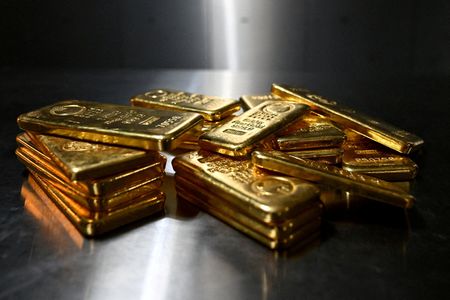

New Zealand is accelerating approval of gold mining projects and actively recruiting mining investors as skyrocketing bullion prices breathe new life into an industry that has been shrinking for years — all while raising questions about the country’s famous “100% Pure” marketing image as the government scrambles to strengthen a struggling economy.
Based on Reuters calculations, New Zealand’s gold output is on pace to double by the mid-2030s, reaching its highest level in at least 30 years. Two new projects have already received approval, and a third is still awaiting a final green light. If that trajectory holds, the country would surpass the government’s goal of raising annual mineral exports — including coal and silver — to NZ$3 billion (about $1.8 billion U.S.) by 2035.
Mining companies see untapped opportunity in the nation, which they consider underexplored, especially as the government works to create jobs amid unemployment levels not seen in nearly a decade and declining business confidence. New Zealand issued 163 new permits for prospecting, mining, and exploration last year — a 16% jump compared to the previous year, according to government data.
However, the mining push is drawing pushback from environmental advocates and some in the agricultural industry, who worry that a larger mining presence could tarnish the clean, natural image that New Zealand has built for its tourism and export industries.
Two major challenges loom for the sector this year: the outcome of a closely watched November 7 election that could reshape existing mining policies, and whether a contentious mining project clears its final regulatory hurdle.
Jake Klein, founder of Australia’s second-largest gold mining company, Evolution Mining, and chairman of Endura Mining — whose Snowy River project is scheduled to begin production in December — said the country has long been overlooked. “New Zealand has been under-recognised as a mining jurisdiction for a long period of time,” he said. “The mining industry likes to discover new jurisdictions … but it’s going to be dependent on success and consistency of government policy,” he added.
Resources Minister Shane Jones told Reuters that the government — which last month cut its economic growth forecast for next year to 2.3% — remains firmly behind the industry. “Our economy needs every arrow in the economic quiver shot with amazing accuracy,” he said.
Gold stands out as one of the few bright spots in New Zealand’s economy. Export revenues from the metal have nearly tripled over three years to NZ$1.83 billion, now making up 2.3% of total goods exports compared with just 0.9% in 2022.
To help jolt the sluggish economy, New Zealand enacted a law in late 2024 designed to cut approval timelines for major infrastructure, mining, and energy projects from years down to months. The fast-track permitting system allows qualifying projects to bypass certain standard regulatory steps and restricts public comment periods and legal challenges. The opposition Labour Party has stated it would amend the law to ensure environmental protections cannot be overridden.
Canadian-listed OceanaGold has already secured approval through the fast-track process, while Santana Minerals is still waiting on a decision under the same streamlined system.
The Snowy River project is expected to bring 250 jobs to the region and add at least NZ$350 million per year in export revenue, according to government projections. Klein said the company hopes to recruit New Zealanders currently working in Australian mines who want to return home. “If we can find New Zealanders working in mines in Australia who want to get back home, we’ll hire them,” he said.
New Zealand’s largest gold producer, OceanaGold, plans to invest NZ$1 billion in its Waihi North project, with production expected to begin in 2032. Senior Vice President Alison Paul noted that the company’s operations draw workers — including some from Australia — who are drawn to regional living and enjoy spending their days off “hunting or fishing or farming, or being with kids and family.”
Westpac senior economist Michael Gordon offered a measured take, noting that while mining is a highly productive industry, much of the financial gain would likely flow to mine owners rather than broadly transform the wider economy.
The most heated debate over gold mining is playing out in Central Otago on New Zealand’s South Island, where Australian-listed explorer Santana Minerals is waiting on consent for its Bendigo-Ophir gold project. A decision is due by October 29, 2026.
Santana Minerals CEO Damian Spring, a New Zealander who lives about an hour’s drive from the proposed mine site, emphasized the well-paying regional jobs the project would generate. “Responsible mining is not a contradiction in terms here. It’s a choice New Zealand is making,” he said.
Government estimates project the proposed mine would contribute an average of NZ$360 million annually to GDP and directly employ 351 people. Still, the project faces significant opposition from wineries, heritage organizations, and environmental groups.
Wine producers in Central Otago are worried the open-cast mine could threaten water supplies and expose their vineyards to airborne pollutants, potentially undermining a premium wine industry that has been built up over decades.
Actor Sam Neill, who owns the Two Paddocks winery in Central Otago, issued a stark warning about what approval of the mine could set in motion. “This would be disastrous. #ravageandpillage,” he said in an emailed statement to Reuters.
Zoe Hawkins, an organizer with Natural Capital — a group representing local residents opposed to the Santana project — said the fast-track permitting system gave community groups only 20 working days to file a response. “I would really like to say that we do have a chance of stopping it. I think that the odds have really been stacked against us,” she said.