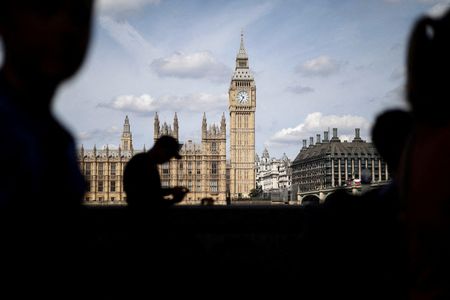

LONDON — British Prime Minister Keir Starmer announced on Monday that he would be stepping down, positioning the United Kingdom to welcome its seventh head of government in just ten years.
The roots of this prolonged political turbulence stretch back to the Brexit referendum, which fell exactly ten years prior on Tuesday. In the years following that historic vote, Britain has worked to chart an independent course but has found it difficult to stimulate a sluggish economy burdened by significant debt, an expanding welfare bill, and an increasingly unstable global landscape.
JUNE 2016: BREXIT VOTE SHOCKS THE WORLD, CAMERON STEPS DOWN
British voters delivered a stunning result by choosing to leave the European Union by a margin of 52% to 48%, ending a membership spanning more than four decades and triggering the country’s gravest political crisis since World War Two. Conservative Prime Minister David Cameron announced his departure, and the party selected Theresa May to take his place.
JUNE 2017: SNAP ELECTION GAMBLE FAILS
With strong poll numbers and a desire for a larger parliamentary majority to advance Brexit legislation, May called a surprise election. The move backfired — the Conservatives lost their majority and were forced to enter into an agreement with Northern Ireland’s pro-UK Democratic Unionist Party to hold onto power.
MAY 2019: PARLIAMENTARY GRIDLOCK ENDS MAY’S TENURE, JOHNSON STEPS IN
Unable to break a parliamentary stalemate over the terms of Britain’s EU departure, May resigned. Boris Johnson, a prominent figure in the pro-Brexit movement, won the internal Conservative Party vote to become the new prime minister.
DECEMBER 2019: CONSERVATIVES WIN BIG UNDER JOHNSON
With parliament still deadlocked over Brexit, Johnson called another snap election. Running on the straightforward slogan “Get Brexit Done,” he led the Conservatives to their most decisive election victory since Margaret Thatcher’s landslide win in 1987.
JANUARY 2020: BRITAIN EXITS THE EU
Armed with a fresh mandate, Johnson pushed a Brexit agreement through parliament and finalized terms with Brussels. On January 31, 2020, Britain officially left the European Union, becoming the first nation ever to withdraw from the bloc.
JULY 2022: JOHNSON FORCED OUT
Johnson steered Britain through the COVID-19 pandemic — even spending time hospitalized with the illness himself — but an accumulation of scandals and poor decisions eventually caught up with him. A revolt among his own ministers led to his resignation.
SEPTEMBER 2022: TRUSS ENTERS AND EXITS IN RECORD TIME
Liz Truss defeated Rishi Sunak in the race to replace Johnson. Her so-called “mini-budget,” which included unfunded tax cuts, rattled financial markets and sent borrowing costs soaring, severely damaging Britain’s standing for fiscal and political reliability. She lasted just 44 days before announcing she would resign.
OCTOBER 2022: SUNAK TAKES THE HELM
Sunak became Britain’s third prime minister within a single calendar year, vowing to bring stability back to government. He outlined five core pledges centered on the economy, curbing illegal immigration, and fixing the health system. In February 2023, he reached an agreement with the EU on trade arrangements for Northern Ireland, helping to ease tensions with the bloc.
MAY 2024: SUNAK CALLS AN ELECTION
With Labour holding roughly a 20-point lead in opinion polls, Sunak announced a general election for July 4.
JULY 2024: STARMER WINS POWER
On July 5, 2024, Labour Party leader Keir Starmer addressed supporters following a landslide election victory. “We said we would end the chaos and we will,” he declared — though the win came with the smallest share of the electoral vote of any majority government in modern history.
AUGUST 2024: STARMER SOUNDS THE ALARM ON FINANCES
Starmer raised concerns about the country’s financial condition, describing what Labour had inherited as “an economic black hole” and cautioning voters that “things will get worse before they get better.”
OCTOBER 2024: LABOUR DELIVERS ITS FIRST BUDGET
Finance minister Rachel Reeves unveiled tax increases totaling £40 billion — roughly $52.76 billion — per year, largely driven by higher employer social security contributions. The move pushed Britain’s peacetime tax burden to its highest recorded level and drew sharp criticism from the business community.
FEBRUARY 2025: REFORM UK SURGES IN THE POLLS
For the first time, the right-wing, anti-immigration party Reform UK pulled ahead of Labour in a national opinion poll. The party, headed by Brexit campaigner Nigel Farage, has continued to lead in polls ever since.
JUNE 2025: STARMER REVERSES WELFARE CUTS UNDER PRESSURE
Facing the prospect of a defeat in parliament at the hands of his own lawmakers, Starmer was compelled to abandon plans to reduce Britain’s welfare expenditures.
SEPTEMBER–APRIL 2025: AMBASSADOR APPOINTMENT SPARKS CONTROVERSY
Scrutiny intensified over Starmer’s decision to appoint Peter Mandelson as Britain’s ambassador to Washington. Mandelson was eventually dismissed due to his connections to the late convicted sex offender Jeffrey Epstein, raising doubts about Starmer’s judgment and the thoroughness of the vetting process.
MAY 2026: LOCAL ELECTIONS DELIVER A BLOW TO LABOUR
Labour suffered significant defeats in English local elections and in votes for the Scottish and Welsh assemblies, fueling further doubts about Starmer’s leadership. Reform UK emerged as the primary winner from Labour’s losses.
MAY 2026: HEALTH MINISTER STEPS DOWN
Health Minister Wes Streeting resigned, stating he had lost faith in Starmer’s ability to lead. He called for a leadership contest and indicated he intended to put his name forward as a candidate.
JUNE 2026: DEFENCE MINISTER ALSO QUITS
Defence Minister John Healey departed after a months-long disagreement over military spending, accusing Starmer of refusing to commit sufficient funds to protect the country against growing threats.
JUNE 2026: BURNHAM VICTORY CLEARS PATH FOR LEADERSHIP CHALLENGE
Greater Manchester Mayor Andy Burnham secured a victory in an election in northern England, soundly defeating Reform UK in the process. His return to Westminster eliminated a significant barrier to a potential leadership challenge against Starmer.