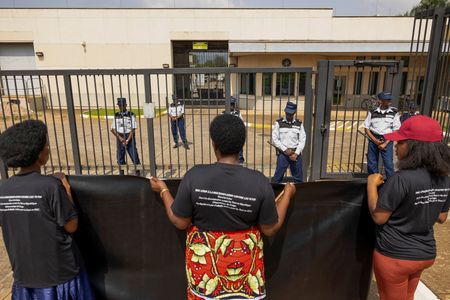

The Democratic Republic of Congo has taken its long-standing dispute with Rwanda to the world’s highest court, filing a formal case at the International Court of Justice over Rwanda’s alleged role in the ongoing conflict in eastern Congo, the Congolese government announced Friday.
In an official statement, Congo accused Rwanda of violating multiple international conventions, including those covering genocide, racial discrimination, and torture.
According to Congo, the alleged crimes committed against civilians over the past three decades include massacres, extrajudicial killings, torture, sexual violence, forced displacement, and discrimination.
Congo further alleges that Rwanda deployed its own forces and provided backing or direction to armed groups carrying out unlawful military operations on Congolese soil — actions Congo says stem from the aftermath of the 1994 Rwandan genocide, when remnants of forces connected to that genocide fled across the border into eastern Congo.
Through the ICJ filing, Congo is seeking a court order requiring Rwanda to stop the alleged violations, as well as financial reparations for Congo and those affected by the conflict.
Rwanda did not immediately respond to the filing. The Rwandan government has repeatedly denied any involvement in supporting rebel groups operating inside Congo.
United Nations experts and several Western governments have concluded that Rwanda has provided support to M23, a significant armed group active in eastern Congo — a finding that aligns with Congo’s position.
This is not the first time Congo has pursued legal action against Rwanda at the ICJ. An earlier case was withdrawn by Congolese authorities in 2001. A second attempt was thrown out by the court in 2006, when judges determined they lacked jurisdiction because Rwanda had either not signed the relevant treaties, entered reservations, or failed to meet other required conditions cited in Congo’s complaint.
The ICJ serves as the United Nations’ principal court for resolving disputes between countries and addressing alleged violations of international treaties.