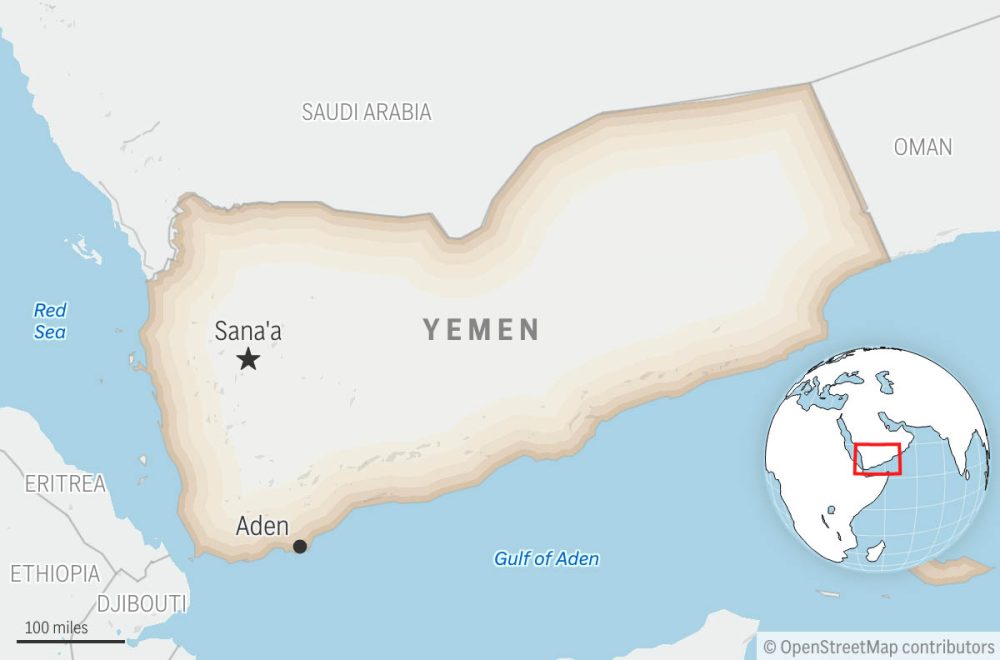

CAIRO — A journalist working in Yemen was killed late Wednesday when an explosive device hidden in his vehicle detonated in the port city of Mukalla, located in Hadramout province, according to Yemen’s government, which announced Thursday that investigators had been ordered to find those responsible.
The victim, Mohamed Eida, worked as a correspondent for Al-Arabiya and Al-Hadath, two television networks backed by Saudi Arabia. According to the broadcaster, local authorities had alerted Eida roughly one month before his death that his life was in danger.
A relative of Eida, who asked not to be identified out of fear of retaliation, said his body had not yet been released to his family. Authorities informed the family that the remains would be held while the investigation is ongoing.
Rashad al-Alimi, the chairman of Yemen’s Saudi-backed Presidential Leadership Council — the governing body of the country’s internationally recognized government — confirmed the death and the bombing. A statement from the council said al-Alimi directed local officials to conduct an investigation.
Al-Alimi did not point to any suspected perpetrators. However, Al-Hadath reported, citing unnamed sources, that two individuals had been taken into custody and that a third suspect was still being sought.
The Yemeni Journalists Syndicate labeled the attack a “terrorist” act, calling it a blatant assault on press freedom and evidence that Yemen continues to be a dangerous place for journalists. The organization warned that allowing those responsible to avoid punishment would invite further attacks, endanger more journalists, and violate both national and international laws protecting freedom of expression.
United Nations Special Envoy Hans Grundberg also spoke out against the killing on Thursday, urging the protection of media workers and expressing support for “continued efforts to establish the facts, ensure accountability, and strengthen public confidence.”
According to the journalists syndicate, Eida had previously fled Yemen’s capital, Sanaa, after being pursued by Houthi rebels, who exercise de facto control over that city. At the time, he was reporting for Alhurra, a U.S.-funded broadcaster. Al-Arabiya reported that armed men had attempted to detain him, prompting his departure from Sanaa for Aden. The broadcaster added that the men also broke into his home and took his belongings, though it did not identify who they were. Eida later relocated to Mukalla, where he worked for the network.
Yemen has been torn apart by more than ten years of civil war. The conflict began when Iran-backed Houthi forces took control of Sanaa and large portions of northern Yemen, driving the internationally recognized government out of the country. A coalition led by Saudi Arabia, which included the United Arab Emirates, later stepped in in an attempt to restore the government to power.
More than 30 journalists were reportedly killed in Israeli airstrikes targeting Houthi positions in Sanaa last September, amid a broader series of confrontations between Israeli forces and the Iran-backed group. The Houthis had stated they were striking Israel in response to the ongoing war in the Gaza Strip.