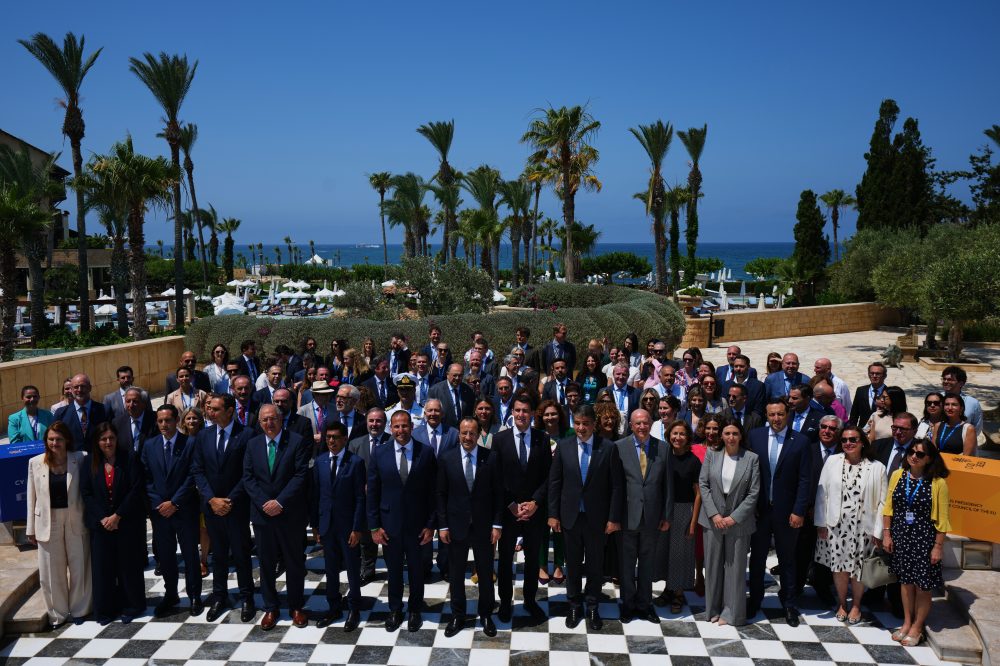

PAPHOS, Cyprus — European Union officials announced Friday a pair of groundbreaking strategies designed to help the bloc’s island and coastal communities thrive — the first time the EU has taken such a comprehensive approach to addressing the unique challenges these regions face.
More than 17 million people reside on over 4,000 islands throughout the EU, including three member nations that are islands themselves — Ireland, Malta, and Cyprus. An additional 95 million people live along the coastlines of 22 EU member countries.
Speaking at a conference focused on strengthening island and coastal communities, European Parliament Vice President Younous Omarjee declared, “Islands have been overlooked in the past, but now that comes to an end.”
Raffaele Fitto, the European Commission’s executive vice president for cohesion and reforms, said the new strategies replace scattered, one-off approaches with a unified framework for tackling the distinctive hardships these communities endure.
Because islands are far from mainland markets and depend heavily on air and sea travel, residents and businesses there face significantly higher costs for transportation, housing, and public services compared to those on the mainland.
“This is what we call the cost of insularity — a cost that millions of EU citizens and businesses pay every day, simply because of where they live and work,” Fitto said.
The island-focused strategy rests on four main pillars: upgrading transportation links and digital infrastructure, addressing climate change impacts and energy needs, tackling shrinking populations and housing shortages, and strengthening security and emergency preparedness.
“From the Baltic to the Mediterranean, islands are on the front line of geopolitical challenges,” Fitto added.
At this stage, no specific projects have been identified for funding. Member nations will submit proposals once the EU’s next budget is released. Fitto indicated that desalination plants and housing construction would be among the top priorities considered.
Fisheries and Oceans Commissioner Costas Kadis noted that EU coastal communities contribute approximately 265 billion euros — roughly $302 billion — to the bloc’s economy each year. However, he said those same communities are under growing pressure from climate change, declining populations, a lack of affordable housing, and limited access to essential services.
The coastal strategy seeks to reduce these communities’ dependence on a single income source by broadening economic activity and generating new employment opportunities. Among the proposals Kadis highlighted is a blue carbon credit program that would provide funding for carbon-absorbing coastal wetlands, marshes, and mangroves.
Additional proposals include the OceanEye initiative, which would position the EU as a global leader in ocean monitoring and research, as well as efforts to promote dual-use technologies and vessels capable of serving both fishing and tourism industries.
The strategy also calls for making coastal areas more resistant to climate change and severe weather events through investments carried out in partnership with the European Investment Bank.