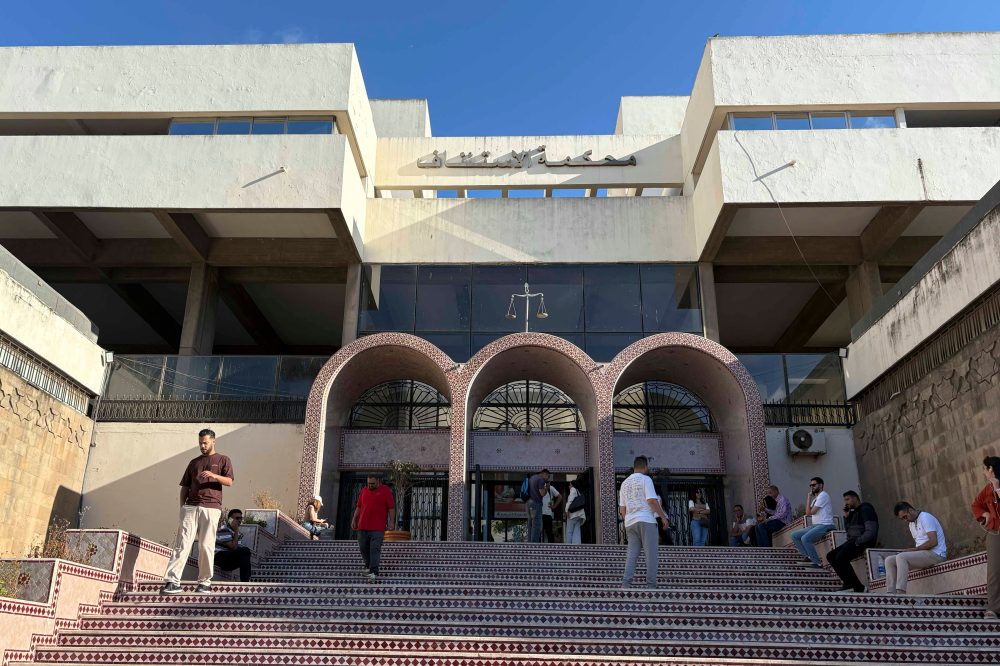

CASABLANCA, Morocco — A Moroccan court has sentenced 29 people to prison, among them prominent politicians, business leaders, and sports figures, in a wide-ranging international drug trafficking and corruption case that sent shockwaves through the country.
Late Thursday, the court also ordered the defendants to pay hundreds of millions of dollars in fines, wrapping up a trial that stretched over more than two years.
The case traces back to an imprisoned drug kingpin who had been nicknamed “Sahara’s Pablo Escobar” — a nod to the infamous Colombian trafficker. While behind bars, the man alleged that some of his business partners, including high-ranking Moroccan politicians, had been involved in drug trafficking and had taken control of his assets. All of those accused have denied any wrongdoing.
The allegations triggered a wave of arrests and a lengthy legal process involving 30 defendants, 18 witnesses, and two civil parties. The scandal reignited long-standing concerns about corruption within Moroccan political circles. It also moved King Mohammed VI — Morocco’s highest authority, a figure officially above politics who rarely makes public statements — to call for the creation of a legally binding code of ethics to, in his words, “moralize” life in parliament.
Abdennebi Bioui, a construction tycoon, former lawmaker with the co-governing Authenticity and Modernity Party (PAM), and head of a Regional Council, received the harshest sentence: 12 years in prison and a fine of $15,989.
Said Naciri, a former PAM lawmaker who also previously served as president of Wydad AC — one of Morocco’s most recognized soccer clubs — was sentenced to 10 years in prison. Belkacem Mir, another former PAM lawmaker and former president of a soccer club, also received a 10-year sentence.
Other defendants were handed sentences of up to nine years and fines reaching as high as $26,649. One defendant was acquitted. Charges in the case included drug and gold trafficking, corruption, forgery, and violations of financial exchange regulations. Defense attorneys have the option to appeal.
The court ordered the seizure of assets belonging to several defendants — including Bioui, Naciri, and Mir — capped at $1 million. It also directed that hundreds of millions of dollars in financial penalties be paid to customs authorities, with the three men bearing the bulk of that responsibility jointly.
Local media reported that prosecutors had pushed for convictions across the board and called for asset seizures.
As the judge read through the sentences, the courtroom erupted. Defendants shouted from their box, with some crying out, “I am innocent. I haven’t done anything.” The tension quickly spread through the packed courtroom No. 8, turning into scenes of panic and grief. Family members screamed, some collapsed to the floor, and others broke down in tears as police officers worked to push through the crowd and restore order.
Court documents show that Hadj Ahmed Ben Brahim, a jailed Malian drug lord, accused his partners of participating in an international gold trafficking network and of seizing his personal assets — including a luxury villa, high-end apartments, and dozens of vehicles.
The Paris-based magazine Jeune Afrique has reported that Ben Brahim worked alongside Moroccan politicians to transport cannabis resin to Libya, Egypt, and Mauritania.
Morocco ranks among the world’s largest producers and exporters of hashish. While the country has legalized cannabis cultivation for medical and industrial uses, illegal drug trafficking remains deeply rooted. Its geographic closeness to Europe has made it a key route for moving narcotics across the Mediterranean.
The court also ordered Bioui, Naciri, and Mir to jointly pay Ben Brahim $106,599.