
BEIJING (AP) — China pushed back Thursday against international criticism of its recent naval patrols in waters east of Taiwan, one day after three major European nations voiced serious concerns about what they called “novel Chinese activity.”
Britain, France, and Germany stopped short of specifically identifying the activity but warned it was putting regional stability at risk. In response, a Chinese Foreign Ministry spokesperson argued that China’s law-enforcement and patrol operations were actually intended to preserve stability and order at sea.
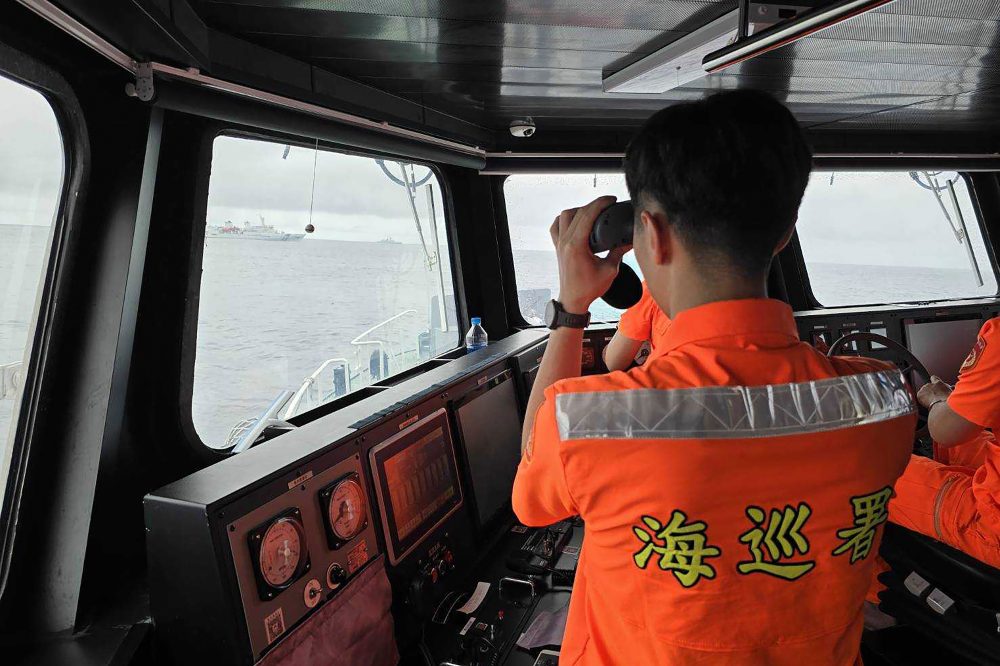
The patrols came after Japan and the Philippines announced plans to discuss their shared maritime boundaries in waters that Beijing considers its own. China responded by sending coast guard vessels to the area.
“These are necessary actions in response to Japan’s and the Philippines’ manipulation of maritime delimitation issues and infringement upon China’s maritime rights and interests,” Foreign Ministry spokesperson Guo Jiakun said during a daily press briefing.
A joint statement issued by the de facto embassies of the three European nations in Taiwan said China’s moves were a threat to regional stability, freedom of navigation, and the safety of international shipping routes. Taiwan’s Central News Agency also reported that the United States expressed concern about the activity.
Earlier this month, Taiwan reported that Chinese coast guard vessels were stopping commercial ships near the island and asking them to disclose their planned routes — a move Taiwan characterized as harassment.
The waters in question serve as a critical shipping corridor for oil, natural gas, and goods moving from the Middle East and Europe to ports in China, Japan, and South Korea. While Taiwan operates as a self-governing island, China claims it as part of its territory and asserts rights over the surrounding waters.
Guo defended the operations, calling them “legitimate exercises of jurisdiction in accordance with the law.”
Relations between Beijing and Tokyo have been strained since Japan’s Prime Minister Sanae Takaichi suggested last year that Japan’s military could become involved if China took military action against Taiwan.
The situation surrounding Taiwan remains one of the most volatile potential flashpoints between China and the United States, which is Taiwan’s primary arms supplier.
Adding to the tension, China sent its newest and most powerful aircraft carrier through the Taiwan Strait earlier this week — just hours after Taiwan launched a five-day military exercise designed to rehearse its response to a potential Chinese attack.