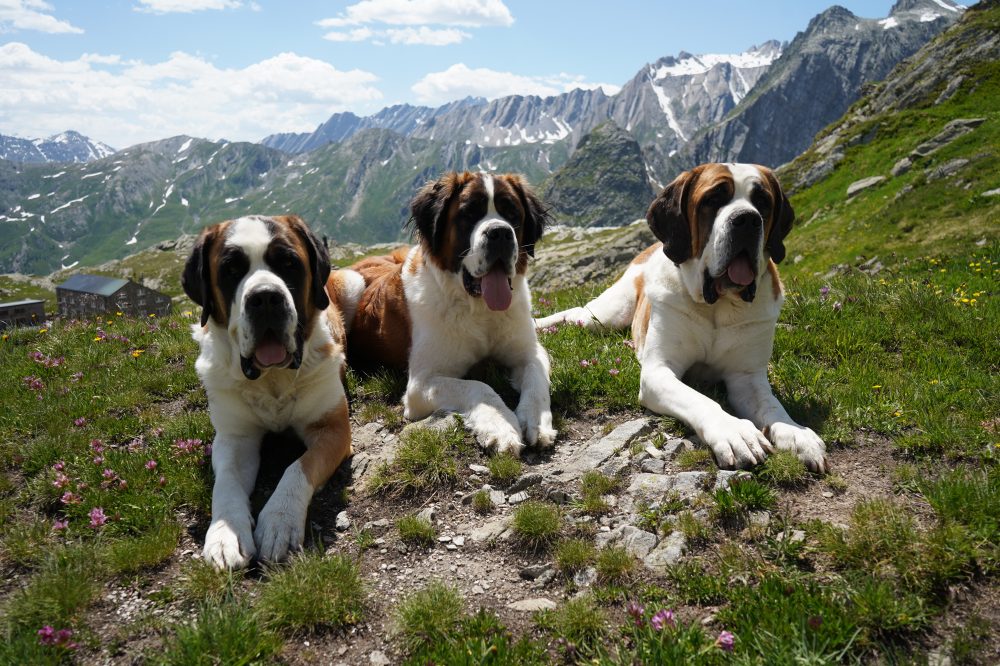

High in the Swiss Alps at the Great St. Bernard Pass, the iconic dogs that share its name still roam the same rugged mountain terrain their ancestors walked for centuries — once searching for travelers trapped under heavy snowfall.
Meanwhile, down in the valley below, a one-of-a-kind living museum dedicated to Switzerland’s national dog has just celebrated its first anniversary.
Barryland, located in Martigny, Switzerland, is the only museum in the world devoted exclusively to St. Bernard dogs. Since opening last summer after outgrowing a much smaller facility, it has drawn more than 130,000 visitors. Guests can observe live grooming and physical therapy sessions, experience the historic mountain pass through augmented reality, and dive deep into the breed’s remarkable story.
“We have a lot of demand and interest for this breed and this whole history and patrimony,” said Barryland director Mélanie Glassey-Roth. “So we decided to create a new park, a big one.”
Perched at 2,469 meters — roughly 8,100 feet — above sea level along the border between Switzerland and Italy, the Great St. Bernard Pass ranks among the country’s highest and most dangerous mountain crossings.
Large mountain dogs have called the pass home since the mid-1600s. They originally served as guard dogs, then became companions, and eventually developed a remarkable natural ability to locate hikers lost in snow and dense fog — a talent unlike anything the Alpine region had ever seen.
The breed takes its name from the Great St. Bernard Hospice, established in 1050 by Bernard de Montjoux — the archdeacon of Aosta and a future saint — as a safe haven for pilgrims and merchants braving the perilous crossing. The dogs became essential to that mission, and by the early 1800s, soldiers who traveled with Napoleon Bonaparte’s army through the pass helped spread the breed’s legendary reputation across Europe.
The most celebrated of all the St. Bernards was Barry the First, who is traditionally credited with rescuing more than 40 people during his time at the hospice between 1800 and 1812. In honor of his legacy, the Barry Foundation — which oversees the breeding program — always keeps a male dog named Barry.
Today, the foundation employs 21 keepers who look after 32 dogs, with approximately 20 purebred puppies born each year. Because modern St. Bernards have grown too large to be airlifted by helicopter, they no longer participate in mountain rescues. Smaller breeds like Australian shepherds have taken over that role, though some St. Bernards remain on the pass to carry on the tradition.
The foundation’s dogs consume roughly 10 metric tons — about 22,046 pounds — of dry food annually. Each summer, they roam the mountain snowfields before making the 40-kilometer (25-mile) journey back down winding roads to their kennels at Barryland.
“We get to see them born, and we get to see them grow up, and then become mothers, and we get to accompany them through all those different challenges in life,” said keeper Alexandra Piatti. “We are their guide, so we can help them with socialization and educate them, and really be by their side for their whole lives.”
So far in 2025, the foundation reports that its dogs have completed 609 community visits to hospitals, care homes, schools, and prisons throughout Switzerland.
Keeper Déborah Dini sums up the responsibility of caring for such historically significant animals simply and warmly.
“We perpetuate the tradition,” she said. “We take care of them. We love them.”