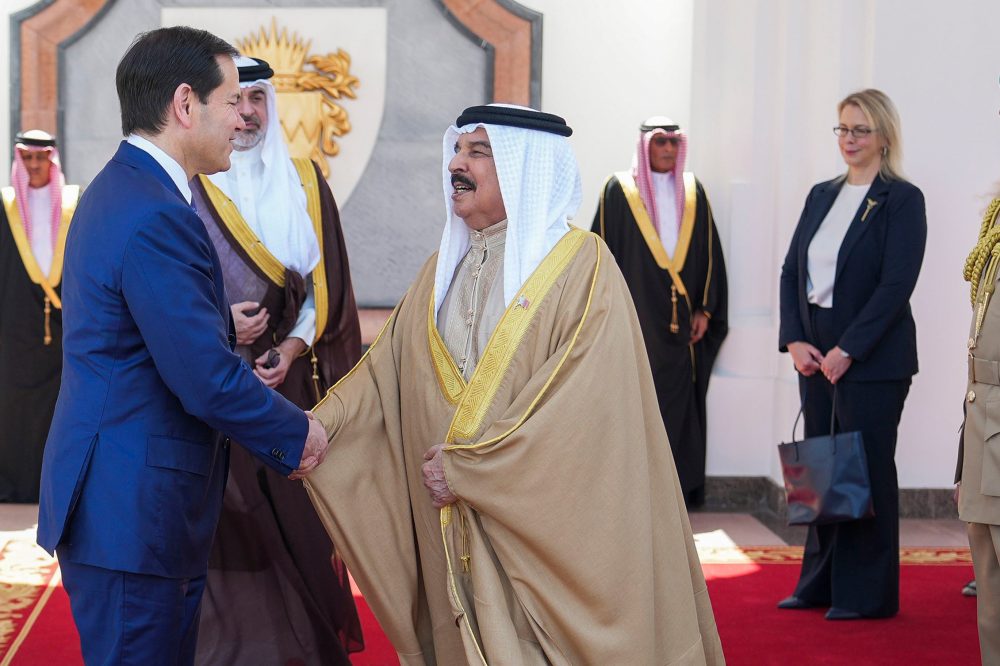

MANAMA, Bahrain — U.S. Secretary of State Marco Rubio declared Thursday that the relationship between the United States and its Gulf Arab allies remains strong, even as some of those partners worry they could be sidelined in ongoing talks aimed at ending the war with Iran.
Rubio completed a three-day diplomatic swing through the United Arab Emirates, Kuwait, and Bahrain this week, working to assure all members of the Gulf Cooperation Council that the Trump administration stands firmly behind them as negotiations continue. The conflict traces back to a war launched by President Donald Trump and Israel on February 28, which severely cut into the region’s oil exports and resulted in several Gulf nations being struck by Iranian missiles and drones in retaliation.
Speaking from Bahrain, the final leg of his trip, Rubio acknowledged the concerns raised by Gulf partners. “They’ve shared with us some very concrete concerns, ideas,” he said. “And when I say concern, the biggest concern is that they really just want to be informed every step along the way as we enter these negotiations at both the technical and political levels.”
Rubio added that the U.S. is committed to keeping its partners engaged. “We want them to be involved and we want the views of all these countries to be reflected,” he said. “We don’t want to and will not be making any decisions or commitments that in any way undermines the prosperity, stability or security of our Gulf partners.”
Following the meeting, the U.S. and the six Gulf Cooperation Council members — Bahrain, Kuwait, Oman, Qatar, Saudi Arabia, and the United Arab Emirates — issued a joint statement highlighting their shared objectives. The statement called for maintaining momentum and unity in negotiations toward a lasting end to hostilities and reaffirmed a shared goal of preventing Iran from ever obtaining a nuclear weapon.
The two sides also voiced opposition to any Iranian effort to impose fees or exert control over the Strait of Hormuz, welcomed an Omani-led initiative to establish a safe evacuation corridor for sailors stranded in the waterway, and made clear that any economic relief Iran receives “is conditional and reversible, contingent on Iran’s compliance” with both the temporary agreement and any final deal.
Despite the upbeat tone of the joint statement, the Gulf Cooperation Council’s secretary general, Jasem Mohamed Albudaiwi, signaled that underlying doubts persist. He emphasized that any future agreements must account for the specific needs of Gulf member states to protect their interests and guarantee “their security and stability.” His statement also hinted that Gulf nations felt left out of earlier rounds of talks.
“Such arrangements must be based on the principles of international law, respect for state sovereignty, good neighborliness, and non-interference in internal affairs, thereby contributing to the consolidation of regional security and stability,” Albudaiwi said.
Before Rubio addressed the group, Bahraini Foreign Minister Abdullatif bin Rashid Al Zayani, who hosted the meeting, said the memorandum of understanding reached so far is a positive step, but that significant questions still need to be answered.
“While this progress is encouraging, it is critically important that Iran fully adheres to its obligations,” including those outlined in the memorandum, Al Zayani said. He outlined what full compliance would look like: blocking Iran from acquiring nuclear weapons, ensuring freedom of navigation, stopping all missile and drone attacks, cutting off support for proxy forces, and ending interference in neighboring countries’ affairs.