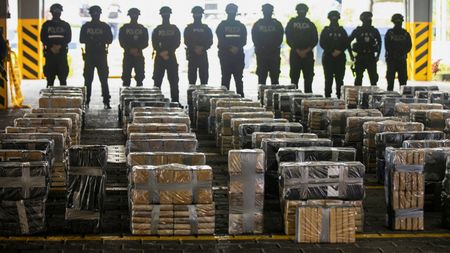

A newly released United Nations report is sounding the alarm on the rapidly expanding global illegal drug trade, revealing that cocaine production and methamphetamine seizures have both reached record levels.
According to the United Nations Office on Drugs and Crime’s annual World Drug Report, cocaine production climbed to approximately 4,100 metric tons of pure product in 2024 — the most recent year with available data. That figure represents a fourfold increase over the past decade. Meanwhile, methamphetamine seizures point to production growing at a rate of about 13% per year.
The agency’s executive director, Monica Juma, expressed serious concern about the changing drug landscape. “We have seen an unprecedented spike in new types of drugs on the market, and worryingly, some are more potent or dangerous than before,” she said in an official statement.
Part of what’s driving the shift is a dramatic drop in heroin availability. After the Taliban returned to power in Afghanistan — historically the world’s dominant opium supplier — and banned opium production in 2023, the supply of heroin, which is made from opium, fell sharply and has not recovered.
That void appears to be getting filled, at least in part, by powerful synthetic opioids. The UNODC noted a significant rise in reports of new synthetic opioids in 2024, including fentanyls and even more dangerous substances known as nitazenes, particularly in Europe.
“Instances of new psychoactive substance synthetic opioids reported in early warning systems increased in 2023 and 2024 across most regions, but most prominently in Europe, Oceania and Africa, suggesting a recent diversification by market actors,” the report stated.
The report also highlighted regional differences in how the fentanyl crisis is evolving. “North America, where fentanyl has largely displaced heroin, reported around a 10% increase in the number of new psychoactive substance synthetic opioids identified in 2024 from the previous year, while that number rose by more than 80% in Europe and by 150% in Oceania,” it noted.
On the cocaine front, both supply and demand continued to climb, while the drug’s purity increased and its street price dropped. Researchers also found shifts in how and where cocaine is being used.
“Qualitative research conducted in 2024 indicates an expansion of cocaine use to social settings beyond the nightlife scene and its integration into daily routines, together with an upsurge in ‘crack’ cocaine use among socioeconomically disadvantaged groups and a shift from heroin use to ‘crack’ cocaine use,” the report said.
Data tracking individuals seeking treatment for drug dependency strongly points to a rise in crack cocaine use across Western and Central Europe that began as far back as 2015, the report added.