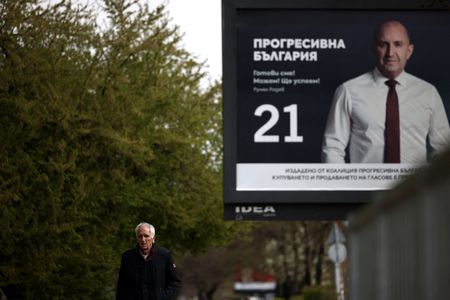
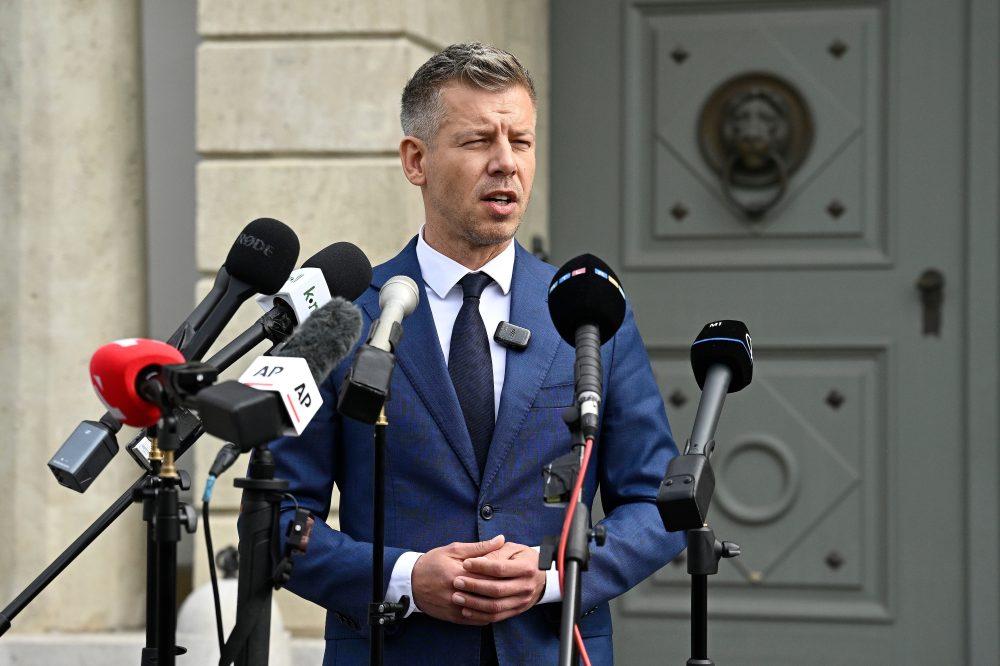
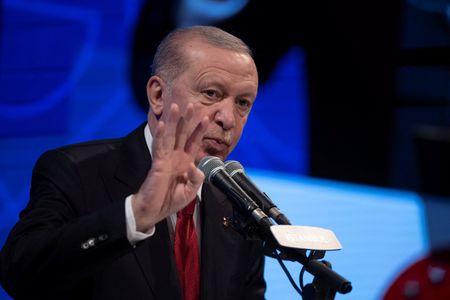
BUDAPEST – Viktor Orban’s unexpected electoral loss has sparked unprecedented internal criticism within his Fidesz party, marking the first time since 2010 that loyalists have openly questioned the Hungarian Prime Minister’s political future.
The conservative leader acknowledged defeat Sunday evening after center-right challenger Peter Magyar achieved an unexpected constitutional majority victory. This decisive win positions Magyar to potentially reverse many of Orban’s controversial judicial and legal system changes when he assumes the premiership next month.
Though Orban has remained largely silent about his intentions moving forward, any indication he might step away from Fidesz leadership could dramatically alter Hungary’s political landscape. His office declined to provide comment when contacted.
PARTY LEADERSHIP IN QUESTION
The electoral outcome has created uncertainty within Fidesz ahead of their scheduled April 28 party meeting, where members plan to analyze their significant loss, according to Andras Cser-Palkovics, the Fidesz mayor of Orban’s hometown Szekesfehervar.
Speaking to YouTube channel Partizan on Wednesday evening, Cser-Palkovics stated: “I think (Orban) does not have to resign at the moment. He should wait for the national caucus and then start assessing (the election result). Then we should have a leadership election soon in any case.” He predicted this leadership contest would occur during late summer or early fall.
These remarks highlight the difficult situation confronting Fidesz: determining the future role of a dominant Hungarian political figure who secured four consecutive electoral victories but apparently failed to recognize changing voter preferences across generations.
“We should have new faces in national politics. I think we need an entirely new presidency,” Cser-Palkovics explained, though he acknowledged uncertainty about who might best position Fidesz for future campaigns.
However, other party members like Janos Pocs have expressed continued support for Orban, telling news website 24.hu that he remains the optimal choice to reinvigorate Fidesz and guide a party that still maintains backing from approximately 2.4 million voters.
YOUNGER VOTERS SEEK CHANGE
Zoltan Novak from the Centre for Fair Political Analysis identified two crucial elements that will determine Orban’s political survival: confidence in his capacity to rebuild Fidesz, and the potential impact of Magyar’s anti-corruption campaign on the party’s standing.
Pre-election polling revealed strong appetite for change among younger demographics, while Orban’s support base consisted primarily of older voters – a trend that could present ongoing challenges in coming years.
“Whether Fidesz is able to engage voters below 65 will be decisive in the next four years,” Novak explained. “If it cannot expand to younger voter groups, its fate will be sealed.”
Magyar’s campaign promise to establish prime ministerial term limits, which could prevent Orban from seeking future office, adds another layer of complexity to the situation.
The overwhelming margin by which Magyar’s Tisza party – established just two years ago – defeated Orban represented a “huge slap in the face” for Fidesz, according to Eurasia Group analyst Orsolya Raczova, explaining the unusual public criticism directed at Orban.
“I do not think Orban would want to leave for the time being, but he will need to shore up his legitimacy if he wants to stay on,” Raczova observed. “I do not think Fidesz is finished, but it definitely needs a rethink and a strategic change.”
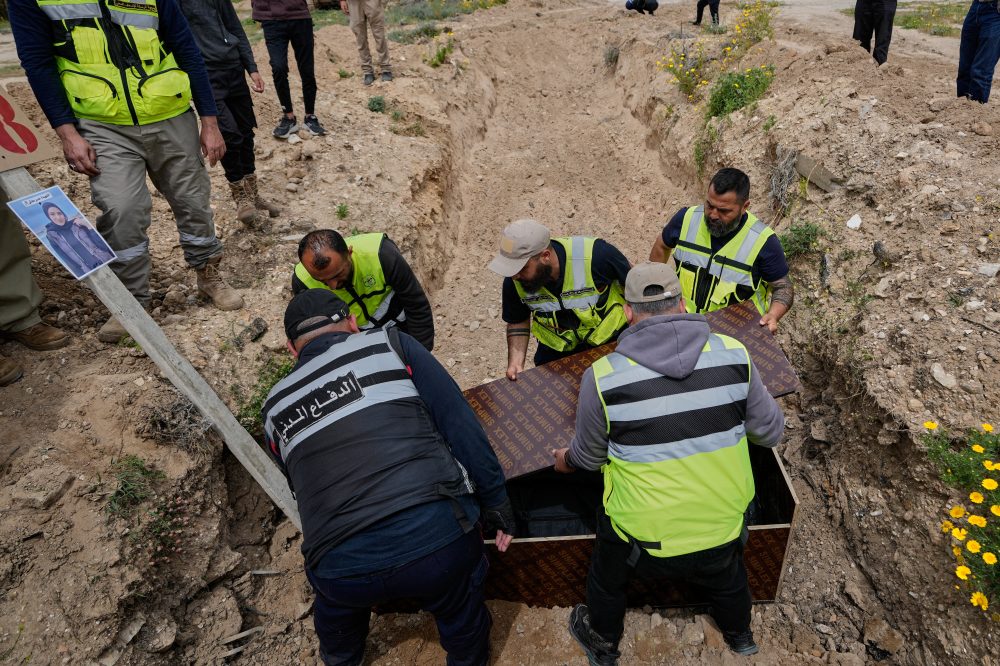
Bahraini authorities announced Thursday they have filed criminal charges against a member of the National Intelligence Agency following the death of a detained man whose body showed evidence of severe physical abuse.
Officials brought charges weeks after the Interior Ministry launched an inquiry into Mohamed al-Mousawi’s death. His family received his body on March 27 showing extensive bruising, burns and lacerations.
Five individuals who witnessed al-Mousawi’s remains at the morgue and funeral spoke with The Associated Press. A forensic specialist from Physicians for Human Rights examined photographs of the body. Those who saw the remains described evidence of beatings, cable whipping and electrical burns. The human rights organization determined the wounds were consistent with blunt force injuries and torture.
Al-Mousawi was detained along with many others during the Iran conflict. His relatives told AP he vanished on March 19 following prayer services with two companions, who remain imprisoned. Officials later confirmed his arrest on allegations of Iranian espionage, which his family has rejected.
Human Rights Watch and the Bahrain Institute for Rights and Democracy called for a thorough investigation. When the Interior Ministry announced its probe, officials dismissed photographs from the military hospital morgue as “inaccurate and misleading.”
The Public Prosecution Office Thursday labeled the charges as “assault resulting in death.” Investigators examined medical documentation, video footage and interviewed witnesses who observed the body. Officials did not mention torture or identify the accused individual, but stated the person confessed to the alleged crimes and was taken into custody. Authorities maintained the original arrest was legitimate.
In 2017, Bahrain reinstated detention authority to its intelligence service, reversing previous limitations enacted due to earlier abuse accusations as the nation intensified its ongoing efforts to silence opposition voices.
Rights organizations claim Bahrain — a Sunni monarchy governing a predominantly Shiite population similar to Iran — exploited the conflict to suppress critics. The island nation, home to the U.S. Navy’s Fifth Fleet, endured weeks of Iranian aerial attacks before a ceasefire was established. Security forces detained longtime Shiite activists, foreign workers who recorded strikes, and protesters who mourned Iran’s Supreme Leader Ayatollah Ali Khamenei’s death or opposed American military presence.
While authorities did not specify the charged individual’s position within the National Intelligence Agency, the Bahrain Institute for Rights and Democracy stated they believe the person was likely a security officer, based on the investigative unit’s responsibilities in examining al-Mousawi’s death.
The organization urged officials to share their conclusions with the victim’s family and highlighted that his two companions who disappeared in March have only contacted relatives twice and could not reveal their detention location.
A devastating outbreak of the deadly H5N1 strain of bird flu has struck a poultry operation in eastern Ivory Coast, according to confirmation from the World Organisation for Animal Health on Thursday.
The outbreak resulted in the deaths of approximately 95,000 birds at the facility located in the Koun-Fao district, which sits close to the border with Ghana. The Paris-based international health organization received the information from Ivorian government officials.
This particular strain of avian influenza has been causing widespread destruction to bird populations across the globe over the past several years, devastating commercial and backyard flocks alike.
French President Emmanuel Macron delivered a direct message to high school students on Thursday, encouraging them to put down their devices and pick up books while advocating for comprehensive social media restrictions for young people.
Speaking to students in Villers-Cotterets, France, Macron proposed implementing a complete social media prohibition for anyone under 15 years old, along with establishing monthly ‘offline days’ where everyone would disconnect from screens.
“We left you in this jungle and it robbed you of your attention,” Macron said to the high school audience, referring to the current lack of social media regulations. “We need to slow down and help you become adults, and above all citizens.”
“That’s why what we want to do is say that before 15 years old, no more social media. And we’d like, one day a month, to have an offline day … to show it’s possible,” the French leader explained, suggesting these screen-free periods could include reading aloud, theater performances, or other activities.
France joins a growing movement of European countries examining social media restrictions following Australia’s pioneering ban on social platforms for children implemented last year. Rising concerns about the effects of social media on youth mental health and safety have prompted policy discussions across the continent.
Currently, French lawmakers are debating legislation to establish the under-15 ban, though the process faces complications. While the lower legislative chamber approved a complete prohibition, senators prefer targeting only platforms deemed dangerous to children. This disagreement may prevent Macron from achieving his goal of having new rules ready for September’s school year start.
At least twelve European nations, including Britain and Norway outside the EU, have either passed or are considering laws establishing minimum age requirements for social media use, typically ranging from 13 to 16 years old. The European Union is also developing an age verification application.
Later Thursday, Macron planned to lead a video conference with fellow EU leaders to coordinate regional approaches. Officials said the meeting would focus on establishing a ‘digital majority’ concept in Europe, restricting access for children below specific ages while requiring age verification systems.
Student reactions in Villers-Cotterets revealed divided opinions about the proposed restrictions.
Fifteen-year-old Sharonn Tsimi Meyong expressed opposition, stating, “I don’t agree, younger ones will feel left out.” Fellow 15-year-old Fabien Andronic also disagreed, arguing that monitoring screen usage should remain a parental responsibility. “I like social networks, we learn a lot there,” he said.
However, Manel Zerouali, also 15, supported protecting younger children through the ban. “On social network there is cyberbullying,” she emphasized.
Despite their varying views on the policy itself, all students agreed that most young people would likely find methods to circumvent any ban. Australia has experienced a significant increase in virtual private network (VPN) downloads since implementing its social media restrictions, as users attempt to access blocked platforms.
Meanwhile in Britain, Prime Minister Keir Starmer addressed social media company executives Thursday, demanding they accept responsibility for protecting children on their platforms and provide genuine safeguards rather than minor adjustments.
“Right now, social media is putting our children at risk,” Starmer told representatives from Meta, Snap, Google, TikTok and X at the meeting’s opening, requesting concrete action plans from the companies.
Britain is currently conducting consultations through next month regarding potential restrictions on children’s social media access, including possible bans for those under 16, usage curfews, application time limits, and restrictions on what officials describe as addictive design elements.
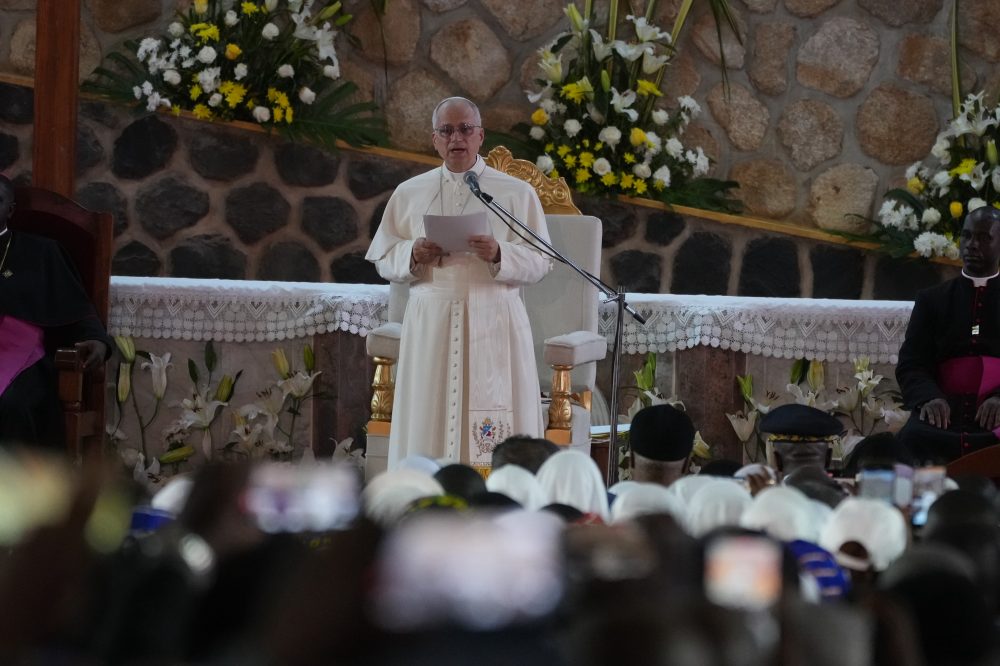
Pope Leo XIV touched down Thursday in Bamenda, located in Cameroon’s northwest region, where he will oversee peace discussions aimed at resolving a brutal separatist conflict that has taken thousands of lives over nearly ten years.
The pontiff’s visit represents one component of his four-country African tour, designed to spotlight interfaith efforts working to resolve the ongoing crisis and provide support to countless trauma survivors.
Fighting has escalated in recent years as government troops battle separatist armed groups seeking independence from Cameroon, a nation divided into eight French-speaking territories and two English-speaking areas.
The western territories of Cameroon have endured continuous warfare since English-speaking rebels initiated an uprising in 2017, aiming to split from the French-speaking majority and create their own nation. This devastating conflict has resulted in more than 6,000 deaths while forcing over 600,000 people from their homes.
The roots of this crisis trace back to World War I’s conclusion, when colonial powers divided Cameroon between British and French administration. Upon gaining independence in 1960-1961, these separate territories merged into a federal system, with French-speaking areas representing approximately 80% of both land mass and population.
Today’s English-speaking minority comprises roughly 20% of Cameroon’s 30 million citizens, who claim systematic discrimination by the French-majority administration under President Paul Biya’s leadership. Biya has governed for more than four decades and currently holds the distinction as the globe’s eldest head of state.
The situation reached a boiling point in 2016 when government officials tried to mandate French language use in schools and courtrooms within English-speaking territories, sparking demonstrations that security personnel brutally suppressed.
Multiple separatist organizations drive the insurgency, with most leadership operating from foreign countries after being banned by Cameroon’s government.
Security experts suggest this overseas presence may hinder domestic peace initiatives, as these leaders can easily secure funding and direct their supporters fighting Cameroonian military forces from abroad.
Norwegian authorities filed charges against Lucas Ayaba Cho, who commands the Ambazonia Defense Forces and plays a central role in the conflict, accusing him of encouraging crimes against humanity in September 2024. Cho has disputed these allegations.
This past December, an American federal jury found two people guilty of conspiring to supply money and equipment to separatist combatants.
Belgian law enforcement detained four individuals in March during investigations targeting Belgian citizens suspected of leading separatist activities and fundraising operations.
While Cameroon’s leadership has implemented various measures to combat the violence, a lasting resolution remains elusive.
National discussions held in 2019 resulted in special administrative status for the northwest and southwest regions, along with recommendations regarding governance, judicial systems, and educational policy. However, many of these suggestions remain unimplemented. Critics have also questioned a disarmament and reintegration initiative for lacking openness and having minimal impact.
Colbert Gwain Fulai, a civil society advocate from Bamenda, explained that government officials initially dismissed the conflict as disturbances caused by “a few misguided” groups in English-speaking areas.
According to Fulai, authorities continue to reject claims of marginalization and primarily treat the situation as requiring military rather than political solutions.
Meanwhile, separatist leadership appears “determined to double down, wagering on the absence of sustained peace efforts,” according to last year’s Crisis Group analysis. Some have established partnerships with Nigerian separatists who similarly aim to establish their own independent nation.
Local residents and community leaders have responded to the pope’s arrival and peace conference with mixed emotions of optimism and skepticism, partly because such government-separatist peace gatherings rarely occur, with the most recent major meeting taking place in 2022.
Lucas Asu, representing the Ambazonia Governing Council separatist organization, stated their dedication to resolving the conflict peacefully through negotiations while claiming government officials avoid meaningful discussions.
Cameroonian government representatives have not yet responded to requests for statements.
Morine Ngum, a mother of three whose spouse died fighting as a separatist in 2022, believes genuine progress must originate with government action.
“I see them (the government) using this crisis as an advantage. It brings them more profit. They just want to use this pope coming to cover up things,” Ngum said.
ISLAMABAD (AP) — Pakistan’s naval forces announced Thursday they had successfully conducted a test launch of a domestically-manufactured anti-ship missile system from a naval vessel.
According to military officials, the weapon “accurately engaged its target with high speed at extended range” during live-fire exercises observed by Chief of the Naval Staff Adm. Naveed Ashraf, alongside scientists and engineers who worked on the project.
The new missile system features improvements over previous versions, including sophisticated guidance technology and better maneuverability capabilities designed to “evade threats, adapt to dynamic conditions and deliver with precision and lethality,” according to the military’s announcement, which described the test as a showcase of Pakistan’s precision-strike capabilities.
Military officials stated that Thursday’s test demonstrated the navy’s dedication to preserving “credible sea-based deterrence” in conventional warfare and protecting maritime security and regional stability.
Pakistan routinely conducts test launches of weapons systems developed within the country, with its missile development program primarily focused on addressing potential threats from neighboring India.
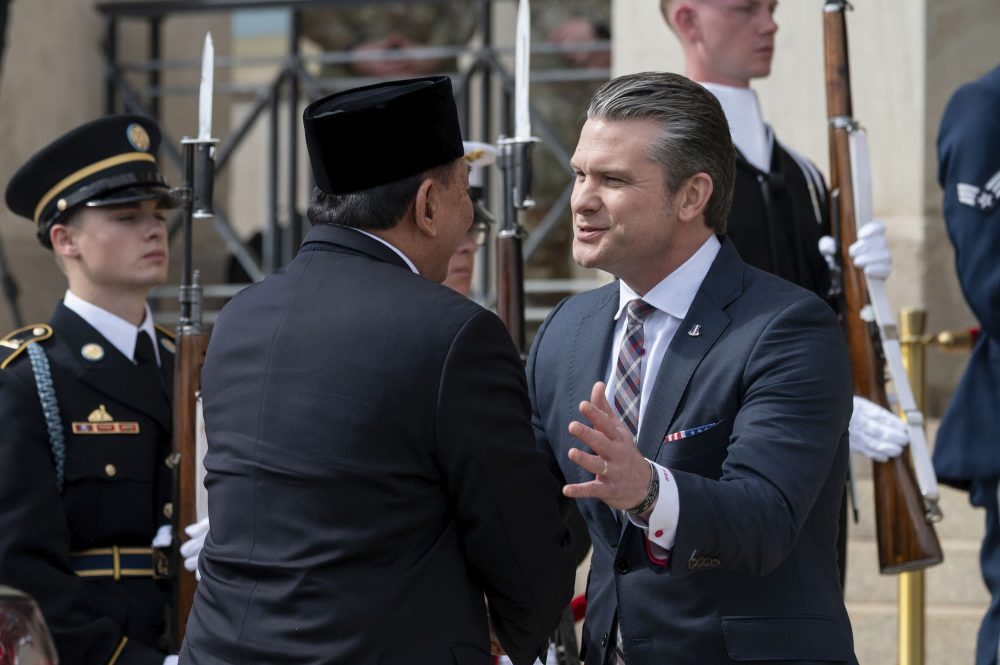
JAKARTA, Indonesia (AP) — Indonesian government officials are currently evaluating an American request for military aircraft access through the country’s airspace, according to statements from the nation’s Foreign Ministry on Thursday.
The request became public knowledge through local news reports following the establishment of a Major Defense Cooperation Partnership between Indonesia and the United States, which was revealed by U.S. Defense Secretary Pete Hegseth during a Monday announcement at the Pentagon.
“It is still under internal consideration by the government and the regulatory mechanism continues to be examined carefully. And of course taking into account … Indonesia’s national interests, airspace sovereignty and our independent and active foreign policy,” Yvonne Mewengkang, spokesperson for Indonesia’s Ministry of Foreign Affairs, told reporters.
Indonesian Defense Ministry officials confirmed earlier this week that American authorities had submitted the overflight request and that discussions regarding the proposal remain ongoing.
“During the deliberation process, Indonesia made several important adjustments and emphasized that the document is non-binding and does not automatically take effect, and that it still requires further discussion through applicable technical mechanisms and national procedures,” the ministry said in a statement.
The United States military has launched a sophisticated mine-clearing mission in the Strait of Hormuz, deploying cutting-edge technology including underwater drones and explosive-carrying robots to address Iran’s disruption of critical shipping lanes.
The operation comes as America works to secure the vital waterway after Iran’s interference with maritime traffic severely impacted worldwide energy deliveries following US and Israeli military actions against Iran in late February.
Military officials announced over the weekend that the mine-removal mission had begun, with two naval vessels navigating through the strait. Additional resources, including unmanned underwater craft, are expected to join the effort in upcoming days, though specific equipment details remain limited.
According to previous Reuters reporting, Iran had positioned approximately twelve mines throughout the Strait of Hormuz recently, though the exact locations of these devices have not been disclosed publicly.
President Donald Trump stated during the weekend that Iranian mine-deployment vessels had all been destroyed, though defense experts warn that Tehran might introduce additional explosive devices.
The effectiveness of mine warfare stems from the devices being inexpensive to deploy while requiring costly removal efforts, explained Jon Pentreath, a former British navy rear admiral now working as a consultant. “Even the threat of a minefield is enough to stop ships, especially commercial ships,” Pentreath noted.
The Navy has modernized its mine-clearing approach significantly from traditional methods. Previously, personnel-operated minesweeping vessels would directly enter dangerous areas, using sonar systems for detection and mechanical equipment towed behind ships to eliminate explosives, sometimes with human diver support. Most of this older fleet has been decommissioned.
Current operations utilize lighter vessels called littoral combat ships, equipped with advanced mine-detection technology including semi-independent surface and underwater drones, plus remote-controlled robots that allow crews to maintain safe distances from minefields. Three such ships are currently deployed.
A senior US official reported in late March that two of these vessels were receiving maintenance in Singapore. At that time, American mine-clearing resources in the Middle East consisted of unmanned underwater craft, four traditional Avenger-class ships, helicopters, and diving teams.
Neither the US Navy nor Central Command provided additional information about current mine-clearing capabilities in the region when contacted.
Intelligence suggests Iran possesses various types of maritime explosive devices, according to former naval personnel and defense specialists. These range from bottom mines that rest on ocean floors and detonate when ships pass overhead, to tethered mines anchored but floating near the surface, drifting mines that move freely with currents, and limpet mines that attach directly to vessel hulls.
The American mission will likely involve searching for mines using unmanned surface and underwater vehicles equipped with detection sensors. When mine-like objects are identified, information is transmitted to crews operating safely outside the minefield for device identification and neutralization planning.
Current Navy detection capabilities include sonar-equipped unmanned surface and underwater vehicles, plus helicopters for spotting near-surface mines, former naval officials report.
For mine destruction, the Navy can deploy systems like the Archerfish, a torpedo-shaped remote-controlled device measuring approximately two meters in length. This expendable unit carries explosive charges and transmits video footage to operators through cable connections, costing tens of thousands of dollars according to manufacturer BAE Systems.
Alternative methods include unmanned boats pulling mine-sweeping equipment that triggers detonations or collects devices, said Bryan Clark, a retired US naval officer and Hudson Institute senior fellow. Human divers are also occasionally deployed, particularly for intelligence collection purposes.
Clark estimates that clearing the strait could require two to three weeks, with potential Iranian attacks on mine-clearing personnel possibly extending the timeline and increasing dangers. Consequently, the US military may deploy protective measures including ships and airborne drones to safeguard crews and equipment.
“Finding and destroying mines is very time consuming,” stated US Admiral Daryl Caudle, chief of naval operations, in March. This extended timeframe leaves mine-clearing operations “vulnerable,” he added.
Technological developments aim to accelerate mine clearance, particularly through improved detection sensors, specialists report.
French defense company Thales claims its newest sonar technology can examine suspected mines from three different perspectives in a single pass, replacing a process that traditionally required multiple sweeps.
Artificial intelligence improvements also enable enhanced data processing aboard unmanned vessels.
The long-term goal involves deploying coordinated unmanned systems capable of searching, identifying, and destroying mines in a streamlined process rather than multiple separate steps.
“That doesn’t exist today,” explained Mark Bock, a retired US Navy captain now serving as vice president of business development for Thales’ US Navy operations. “But it is what all nations are trying to achieve now.”
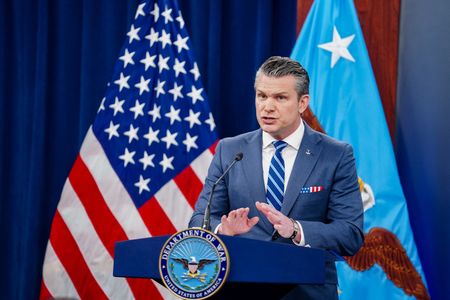
Pentagon officials delivered a stark ultimatum to Iran on Thursday, declaring that American military forces stand ready to immediately resume warfare if Tehran refuses to accept a proposed peace agreement.
Speaking at a Department of Defense briefing, Defense Secretary Pete Hegseth outlined the administration’s dual approach of diplomatic outreach combined with military pressure against the Islamic Republic.
“You Iran, can choose a prosperous future, a golden bridge, and we hope that you do for the people of Iran,” Hegseth stated during his remarks to reporters.
“But if Iran chooses poorly, then they will have a blockade and bombs dropping on infrastructure, power and energy,” the Defense Secretary warned.
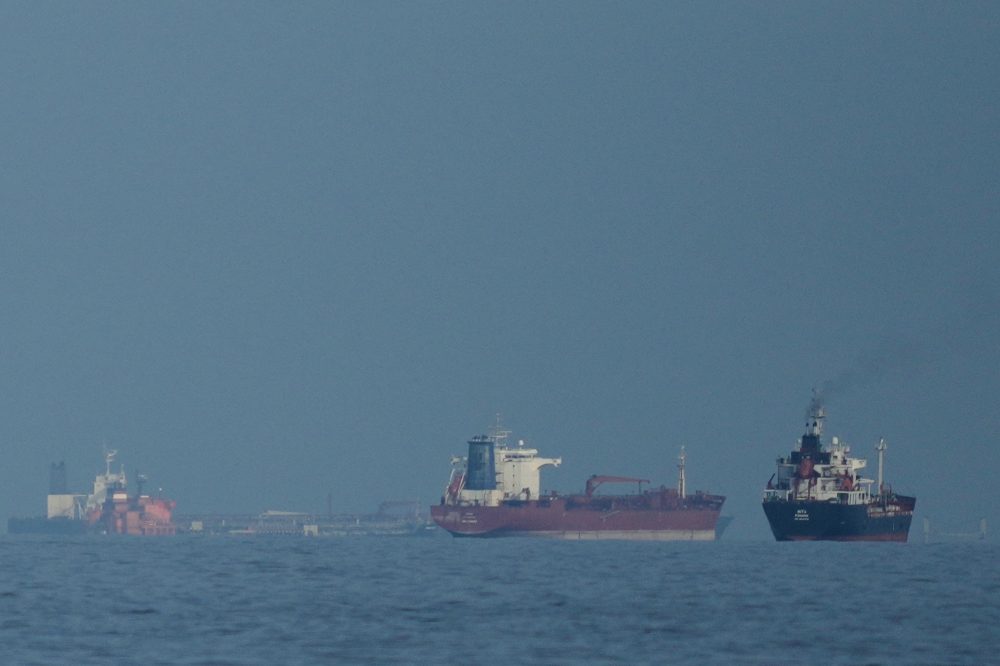
American naval forces have established a comprehensive maritime blockade, preventing vessels from entering or departing Iranian ports as part of the Trump administration’s strategy to compel Tehran toward negotiations.
Joint Chiefs of Staff Chairman General Dan Caine emphasized the military’s state of readiness, telling reporters that U.S. forces were “ready to resume major combat operations at literally a moment’s notice.”
The naval enforcement operation targets any vessel flying Iranian colors or attempting to deliver supplies to the country, according to Caine’s briefing details.
Vessels attempting to breach the maritime barrier face interception and warnings that “If you do not comply with this blockade, we will use force,” with enforcement extending into both Iranian territorial waters and international shipping lanes.
According to military officials, thirteen vessels have voluntarily reversed course rather than challenge the blockade, though no ships have required boarding procedures thus far.
Addressing Iranian leadership directly, Hegseth emphasized American military superiority, stating “this is not a fair fight, and we know what military assets you are moving and where you are moving them to.”
The Trump administration expressed cautious optimism Wednesday about potential diplomatic progress while simultaneously threatening expanded economic sanctions should Iran maintain its current stance.
Recent Middle Eastern conflicts have highlighted significant shortcomings in Britain’s military readiness, intensifying pressure on Prime Minister Keir Starmer to fulfill his defense investment commitments following years of military leadership warnings about declining UK capabilities.
The vulnerability became apparent when a British military installation in Cyprus suffered a drone attack during March fighting involving Iran. Britain’s response was notably slow – requiring three weeks to position a single warship in the eastern Mediterranean, despite once commanding the world’s most powerful navy during World War Two.
In stark contrast, France, Greece and Italy managed to dispatch naval vessels to Cyprus within just days of the incident.
The reduced British military presence has drawn attention from U.S. President Donald Trump, who characterized Britain’s two aircraft carriers as “toys.” His defense secretary Pete Hegseth also ridiculed what he termed the “big, bad Royal Navy.”
Speaking Wednesday about his administration’s military record, Starmer stated his government had implemented the most significant continuous defense spending boost since Cold War times, despite being in office for nearly two years.
Today’s British military represents roughly half its Cold War size, with army personnel at historically low levels not seen since the early 1800s.
The Royal Navy currently maintains 38,000 service members, operating two aircraft carriers alongside 13 combined destroyers and frigates. This represents a dramatic reduction from 1991 figures of approximately 62,000 personnel, three aircraft carriers, and roughly 50 destroyers and frigates.
The Cyprus deployment delays sparked criticism regarding the navy’s available surface vessels. HMS Dragon, a Type 45 air defense destroyer, reached the eastern Mediterranean on March 23. The Royal Navy has announced ongoing upgrades to RFA Lime Bay to enhance minehunting and autonomous technology systems since the Iran conflict began.
This limited response contrasts sharply with the 1990-91 Gulf War deployment, when Britain sent 21 surface ships, two submarines, and 11 Royal Fleet Auxiliary vessels to the region.
The reduced fleet size follows decades of defense budget cuts since the early 1990s, when military spending represented about 3.8% of gross domestic product compared to 2024’s 2.3%.
Britain maintained Middle East naval presence for decades until December 2025, ending when HMS Lancaster was decommissioned in Bahrain just weeks before Iran conflict eruption.
The Royal Navy faces additional challenges as aging frigates require retirement before replacement vessels become operational, while destroyers undergo maintenance. Thirteen new Type 26 and Type 31 frigates are scheduled for service in coming years.
Russian threats closer to home further strain Royal Navy resources, with British warships recently spending a month tracking Russian submarines in the North Atlantic.
Approximately one-fifth of Britain’s defense budget supports nuclear submarines, including the Trident nuclear deterrent with four Vanguard-class submarines. The Continuous At-Sea Deterrence policy ensures at least one submarine remains on patrol constantly. Dreadnought-class submarines will replace the Vanguard fleet in the early 2030s.
The Royal Air Force operates over 150 fighter aircraft, with two-thirds being Eurofighter Typhoons and the remainder Lockheed Martin F-35s, supported by approximately 31,000 permanent staff.
In 1991, the RAF maintained about 700 fast-jet fighters and roughly 88,000 personnel. During the Gulf War, it deployed 157 aircraft including over 80 fighters to the region.
Prior to Iran conflict escalation, Britain positioned six F-35s in Cyprus and four Typhoons from the joint RAF-Qatar 12 Squadron in Qatar. Four additional Typhoons were sent to Qatar in early March following U.S. and Israeli strikes on Iran.
Unlike the Gulf War when Britain actively participated in the U.S.-led coalition against Saddam Hussein’s Iraq, current involvement remains limited to what Starmer describes as defensive missions protecting regional residents, including British citizens.
Britain’s army currently fields 74,000 full-time personnel, down from 148,000 in 1991. Main battle tank numbers have plummeted from approximately 1,200 at Cold War’s end to around 150 currently operational units.
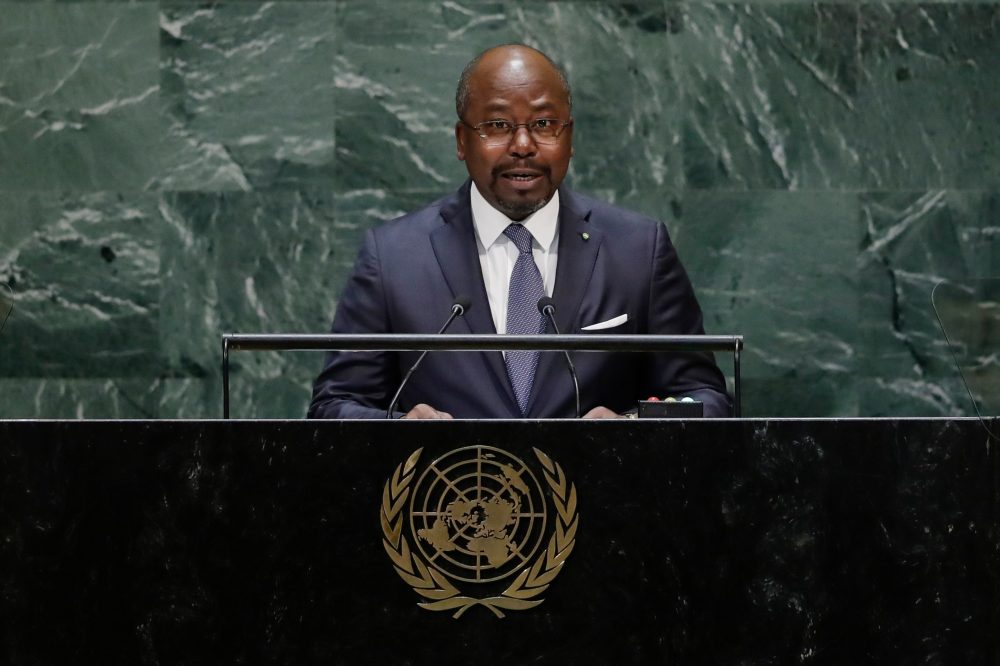
Security forces in Gabon have taken into custody the nation’s former prime minister, Alain-Claude Bilie-By-Nze, a prominent opposition leader who has been critical of the current military government, according to his political party’s announcement Thursday.
Intelligence officers from the General Directorate of Investigations detained the 58-year-old politician at his residence on Wednesday, his party Ensemble pour le Gabon (EPG) reported.
The political organization condemned the detention as “arbitrary, brutal, and manifestly contrary to the fundamental principles of the rule of law.”
EPG officials say their leader faces charges related to an outstanding debt of five million Central African francs (approximately $8,999) from 2008. The financial obligation stems from Bilie-By-Nze’s role in organizing the National Cultural Festival, a government-sponsored celebration of Gabon’s cultural traditions, where a contractor was never compensated and continues seeking payment.
Bilie-By-Nze served as the final prime minister under Ali Bongo Ondimba’s administration before military forces removed the president from power in August 2023. In Gabon’s most recent presidential contest – the first following the military takeover – he finished as runner-up to current junta leader Brice Oligui Nguema.
“We call on the authorities of the Republic to act responsibly and guarantee a peaceful democratic framework, in accordance with Gabon’s national and international commitments,” EPG said.
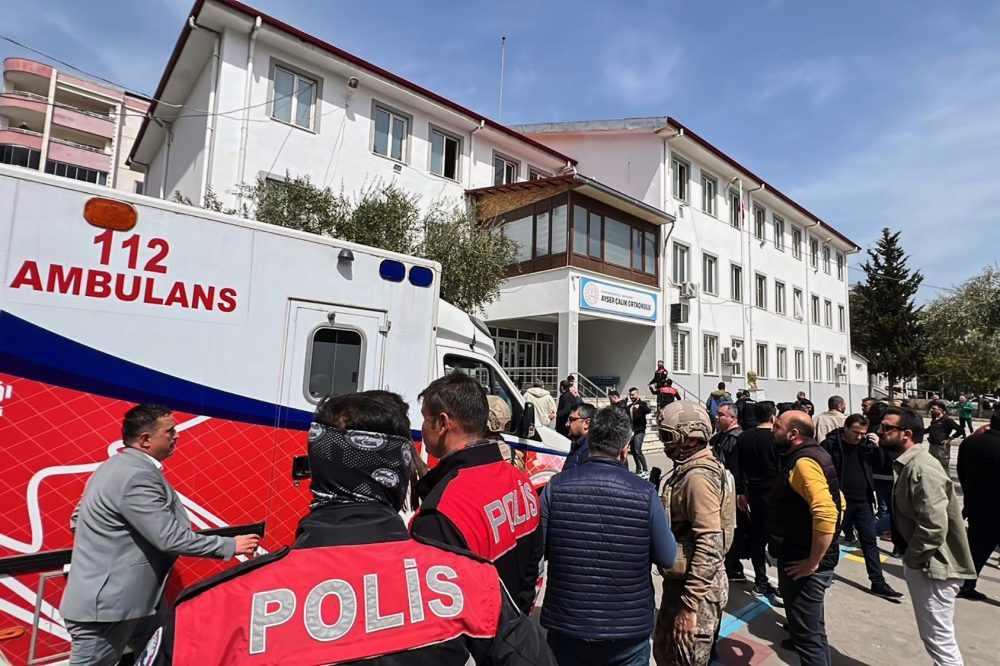
Authorities in Turkey confirmed Thursday that the casualty count from this week’s devastating middle school attack has reached 10 fatalities after another wounded victim succumbed to injuries at the hospital.
The tragic incident unfolded Wednesday when 14-year-old Isa Aras Mersinli carried out a deadly assault at his middle school in Kahramanmaras, located in southern Turkey. The teenager fatally shot one teacher and eight students while injuring 13 additional people before taking his own life.
Medical officials reported that six injured victims remained in serious condition prior to Thursday’s additional death.
Investigators discovered the young shooter had brought five weapons and seven ammunition clips to the school, all belonging to his father – a former police superintendent who has since been taken into custody.
This horrific event occurred merely one day following another school attack in the nearby Sanliurfa province, where a former student wounded 16 individuals at a high school before ending his own life. Most of those injured were students, and authorities have detained 20 people related to Tuesday’s incident.
In response to these unprecedented back-to-back tragedies, Turkey’s interior and education officials convened an emergency security conference Thursday in Ankara. The meeting brought together both cabinet ministers, all 81 regional governors, law enforcement commanders, and educational administrators from across the nation.
A disturbing detail emerged when national police revealed the Kahramanmaras shooter had displayed a photograph of Elliot Rodger as his WhatsApp profile image – referencing the California college student who murdered six people in 2014.
Turkey’s Ministry of Family and Social Services announced the formation of a specialized team to deliver mental health assistance to affected students and families, while also launching a comprehensive review of similar violent incidents.
Funeral services took place Thursday afternoon for the eight 11-year-old students who perished in the attack. Mathematics instructor Ayla Kara, age 55, was also laid to rest the same day.
Cevdet Yesil, father of victim Adnan Gokturk Yesil, described his agonizing experience rushing to the school after learning of the violence. “And unfortunately we searched for our child, our son, until 5 p.m. One way or another, our security forces found him,” Yesil said. “We went to the hospital and identified (his remains). We saw he had died.”
Hundreds of teachers and school staff demonstrated in both Ankara and Izmir, calling for enhanced campus protection measures. Such violent incidents at schools had been extremely uncommon in Turkey until this week’s attacks.
The crisis prompted widespread concern about copycat threats, leading to the arrest of dozens of students Thursday for social media posts suggesting they might carry out similar attacks. Justice Minister Akin Gurlek reported that 67 individuals were detained for online posts targeting 54 different educational institutions.
TOKYO (AP) — What began as a quiet late-night television program in Japan 14 years ago has transformed into an international sensation, featuring a businessman in a suit discovering the pleasure of dining alone at neighborhood restaurants after work.
Actor Yutaka Matsushige, who portrays protagonist Goro Inogashira, initially thought the series would have a brief run before disappearing. Instead, ‘Kodoku no Gurume’ has steadily built a devoted following throughout Japan and internationally, launching its 11th season this month.
The television series draws from a beloved manga created by writer Masayuki Kusumi and illustrator Jiro Taniguchi. Last year, Matsushige expanded the concept into a feature film, serving as director, writer and star of the movie adaptation.
‘The drama is about a man just eating food,’ Matsushige explained at a Thursday press conference in Tokyo announcing the new season’s debut. ‘But the simple notion of “delicious” can go beyond the differences of language or ethnicity, something everyone can easily relate to.’
The program has developed into a cultural phenomenon throughout Asia, with Matsushige building substantial followings in South Korea, Taiwan and China. Following the movie’s production in Japan, South Korea and Paris, he aims to bring the series to global audiences.
Every installment follows Inogashira as he conducts business with clients, often small family-owned shops in local neighborhoods. After completing his work, hunger strikes and he searches for nearby dining establishments. The eating sequences adopt a documentary approach, featuring his internal thoughts as he describes the satisfaction and liberation he finds in discovering appealing restaurants with excellent cuisine.
‘To me, eating is about telling a story,’ Matsushige explained, noting that his role involves conveying the narrative of each restaurant while showcasing the meals and their flavors. ‘What I intend to do in this drama is to show the audience to watch, imagine and enjoy.’
During an era marked by international tensions, Matsushige believes the fundamental act of sharing meals can foster cross-cultural understanding. He continues developing concepts for upcoming projects beyond Japan’s borders.
When asked about potential actors for an American adaptation, Matsushige proposed Nicolas Cage, citing physical similarities to the original comic book character that he feels exceed his own resemblance.
In a lighthearted moment with reporters, he suggested, ‘George Clooney could also be a good candidate.’
Pakistan has confirmed it will serve as the host nation for a second round of diplomatic talks between the United States and Iran, as international efforts continue to bring an end to the military conflict between the two countries.
Pakistani officials announced their willingness to facilitate these crucial peace negotiations, though they have not yet revealed specific details about the timing or exact location where these discussions will occur.
The announcement comes amid ongoing international pressure to maintain and potentially extend the current ceasefire agreement that has temporarily halted hostilities between Washington and Tehran.
The first round of negotiations appears to have made sufficient progress to warrant continued diplomatic engagement, with Pakistan positioning itself as a neutral intermediary in these high-stakes international peace efforts.
NAIROBI, Kenya — A Kenyan court handed down a one-year prison sentence Wednesday to a Chinese citizen who admitted to unlawfully possessing wildlife after authorities discovered hundreds of live ants in his possession stored in special containers.
Zhang Kequn received the jail term and must pay a fine of 1 million Kenyan shillings (equivalent to $7,700) after entering a guilty plea to charges of possessing wildlife without proper authorization.
This case follows similar incidents in Kenya, where Belgian youth were previously penalized for having queen ants in their possession. These insects are sought after as food delicacies and exotic pets in European and Asian countries.
Kequn faced charges together with Kenyan citizen Charles Mwangi, who entered a not guilty plea to the same violations and was freed after posting bail.
According to prosecution evidence, Kequn had been obtaining the ants through Mwangi, reportedly paying 60,000 Kenyan shillings ($463) for a first shipment of 600 ants, followed by 70,000 shillings ($540) for a second batch containing 700 insects.
Law enforcement officials apprehended both men on March 10 when they discovered them with 1,948 garden ants contained in special tubes, plus another 300 ants wrapped in tissue paper. Prosecutors stated the defendants lacked the necessary documentation required by Kenya’s wildlife protection regulations for handling or selling these species.
In a similar case last year, two teenage visitors from Belgium faced wildlife piracy charges in what Kenyan officials identified as part of an emerging pattern involving the illegal trade of smaller, less recognized animal species. Authorities found them carrying 5,000 ants in laboratory tubes. Officials said the insects were bound for European and Asian buyers, with Kenyan authorities placing their value at 1 million shillings ($7,700).
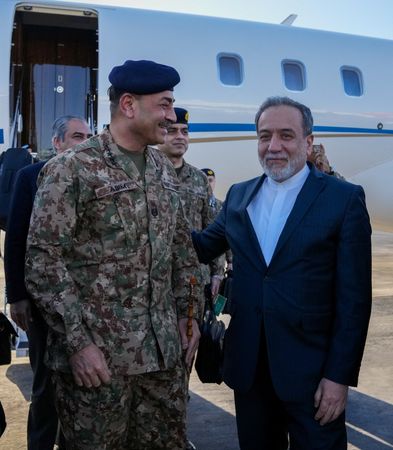
ISLAMABAD — A brief 15-second video clip has thrust Pakistan’s influential military commander back into international focus.
The footage, shared by Iran’s Foreign Minister Abbas Araghchi, captures Field Marshal Asim Munir stepping off an aircraft in military dress and receiving a warm embrace from the Iranian official. The Pakistani leader had journeyed to the heart of regional tensions in an attempt to reduce hostilities and organize additional diplomatic discussions between Tehran and Washington.
While Pakistan serves as the primary intermediary between Iran and the United States, much attention has focused on Prime Minister Shehbaz Sharif and Foreign Minister Ishaq Dar, partly due to their social media posts and public statements regarding their diplomatic work. However, the military chief has emerged as another crucial player in these efforts.
Following Pakistan’s announcement several weeks ago about its mediation role, Sharif assigned Munir to conduct private communications with both American and Iranian political and military officials to help calm the expanding regional tensions, Pakistani sources report.
While specific information about the army chief’s activities and meetings remains limited beyond publicly released photographs, initial diplomatic efforts appear successful. Pakistan successfully persuaded both U.S. and Iranian representatives to participate in uncommon direct discussions in Islamabad last week.
Although these talks yielded no formal accord, communication pathways have stayed active, with Munir viewed as having provided essential support, according to officials who requested anonymity due to lack of authorization to speak publicly.
Within days of concluding the initial discussions, Pakistan continued outreach to both parties, and each side agreed to consider additional talks. To persuade Iran, Munir traveled to Tehran on Wednesday.
“Delighted to welcome Field Marshal Munir to Iran,” Araghchi wrote on his X social media account, accompanying the video of the Pakistani military leader.
Charles Lyons-Jones, a research fellow at the Lowy Institute, observed that while Sharif and Foreign Minister Dar “may well appear to be prominent figures in the U.S.-Iran peace talks, but make no mistake, Asim Munir is the man taking the decisions.”
Munir, a significant figure domestically and internationally, achieved the position of Pakistan’s most powerful military leader in December when the government appointed him as both army staff chief and defense forces commander. Earlier, he received promotion to field marshal, becoming only the second military officer in Pakistani history to earn this distinction.
“Field Marshal Munir is easily the most powerful Pakistani leader since Pervez Musharraf, giving him complete authority over military appointments, civilian government decision-making and the military’s sprawling business empire,” Lyons-Jones noted.
Born in 1968 into a lower-middle-class household, Munir was raised in Rawalpindi and entered military service in 1986 in Pakistan-controlled Kashmir, a contested territory disputed by both Pakistan and India. His service took him throughout the country and included time in Saudi Arabia as a colonel through a long-established program where Pakistani forces assist in training Saudi military personnel. During this period, he acquired Arabic language skills and gained understanding of regional culture and politics, colleagues report.
Munir subsequently occupied multiple senior roles and stands as the only army chief to have led both Military Intelligence and the Inter-Services Intelligence (ISI), Pakistan’s primary intelligence organization.
U.S. President Donald Trump has referred to Munir as “my favorite field marshal,” highlighting the significance he attributes to their relationship.
“The relationship Munir built with Trump has made Pakistan uniquely qualified to mediate peace talks between the United States and Iran,” Lyons-Jones explained. “It is, indeed, the only country in the region that enjoys strong ties to Iran, the Gulf nations and the United States.”
Munir assumed a significant position during last year’s four-day conflict between India and Pakistan, which raised concerns about potential nuclear confrontation, before Trump announced he helped facilitate a ceasefire. Associates report that Munir played a central role in determining Pakistan’s responses to regional crises.
When Iran conducted strikes within Pakistan’s southwestern Balochistan province earlier this year, targeting what it characterized as rebel locations, officials indicate Munir supported a measured response that included Pakistan’s retaliatory strikes against militant bases across the border.
Likewise, after Indian strikes within Pakistan last year, following an attack on tourists in Indian-controlled Kashmir, Munir collaborated with senior military leadership on Pakistan’s response, according to Syed Mohammad Ali, a friend of Munir. Pakistani officials said these included coordinated deployment of air power, missiles and drones.
He employed a comparable strategy along the Afghanistan border, where the nations clashed over support for militant groups targeting Pakistan.
Those familiar with Munir consider him someone who welcomes difficult assignments. He also earns respect for his Quranic knowledge and is called “hafiz,” meaning someone who has memorized the holy book.
“He understands Islam, he understands the Quran, and he believes in what it teaches,” Ali stated. “His concepts are very clear: he does what others fear to do.” Ali characterized Munir as a careful decision-maker. “He thinks many times before taking a decision, and once he decides, he pursues it with full dedication, leaving the outcome to God.”
His associates noted that Munir’s Tehran visit also demonstrates Iranian leadership’s trust in him, observing that senior Iranian officials — operating under increased security concerns following U.S. and Israeli strikes — appeared publicly to receive him despite risks of revealing their whereabouts.
President Donald Trump has announced that Israeli Prime Minister Benjamin Netanyahu and Lebanese President Joseph Aoun will participate in direct discussions on Thursday, marking the first time leaders from both nations have engaged in such talks in more than three decades.
Trump shared the news on his Truth Social platform, stating: “Trying to achieve a small breathing space between Israel and Lebanon. It’s been a long time since the two leaders spoke, something like 34 years. It will happen tomorrow.”
The development comes after a series of diplomatic exchanges in Washington, where US Ambassador to Lebanon Michel Issa held discussions with Secretary of State Marco Rubio. This followed earlier meetings between Israeli and Lebanese diplomatic representatives this week, as both nations appear open to dialogue despite ongoing disagreements about preconditions.
However, confirmation of the meeting remains unclear. A Saudi Al-Arabiya correspondent reported Netanyahu’s expected participation in Thursday’s call with Aoun, but Lebanese government sources speaking to Kan News stated they had no knowledge of such arrangements.
The two sides continue to clash over fundamental terms for any agreement. Lebanese leadership, according to officials, wants a ceasefire established before entering negotiations, while Israel maintains it will not suspend military activities as a prerequisite for talks.
Adding complexity to the situation, Al-Akhbar newspaper, which has ties to Hezbollah, reported that Lebanese Parliament Speaker Nabih Berri opposes any direct dialogue with Israel, ceasefire or not. The publication quoted Berri as saying: “They came to the United States to achieve a ceasefire but returned to fight Hezbollah.”
Netanyahu convened his security cabinet on Wednesday to review potential negotiations with Lebanon. According to Walla news outlet, several ministers voiced their objections to implementing a ceasefire.
Meanwhile, a high-ranking Iranian official told Lebanese media that a preliminary agreement has emerged due to Iranian influence and would align with a ceasefire involving Tehran. These reports suggest the initiative aims to provide Iran with a diplomatic victory before upcoming negotiations, though Jerusalem officials have dismissed suggestions that any deal is close to completion.
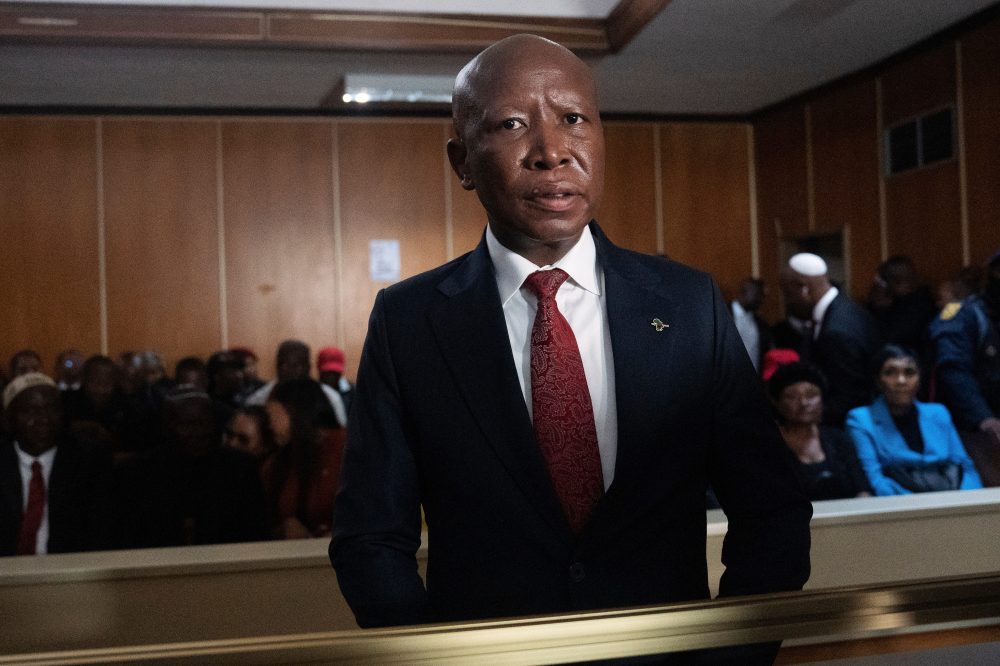
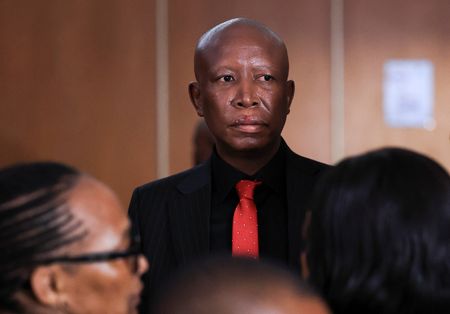
JOHANNESBURG (AP) — Julius Malema, who heads South Africa’s opposition Economic Freedom Fighters party, received a five-year prison term Thursday following his conviction for violating gun laws when he discharged a rifle during a 2018 political gathering.
In October, Malema was found guilty on multiple charges including illegal firearm and ammunition possession, discharging a weapon in an urban area, and putting others at risk through reckless behavior.
The controversial political leader, who heads the leftist Economic Freedom Fighters organization, faced charges along with bodyguard Anton Snyman after footage of the shooting incident spread widely online. Snyman was acquitted of all charges.
When announcing the punishment, Magistrate Twanet Olivier explained she weighed the seriousness of his actions in deciding the sentence. “We hear daily, or weekly, of children playing in the front yards, in the street, who are caught in crossfire, random shots fired, killing people. It’s just the first time that we hear, it’s being called celebratory shots,” Olivier said.
Throughout the legal proceedings, Malema maintained that the accusations were driven by political motivations, noting they originated from Afriforum, an advocacy organization representing white Afrikaner interests that has clashed with Malema repeatedly over the years.
Olivier stated that both the conviction and punishment were determined exclusively by his conduct during the incident in question.
Malema leads the nation’s fourth-largest political party and remains a polarizing personality, largely due to his organization’s platform calling for seizing white-owned property without payment and government takeover of mining operations and financial institutions.
His profile gained international attention when former U.S. President Donald Trump displayed footage of him during a strained discussion with South African President Cyril Ramaphosa, showing Malema performing a contentious anti-apartheid anthem that some view as promoting violence against Afrikaners.
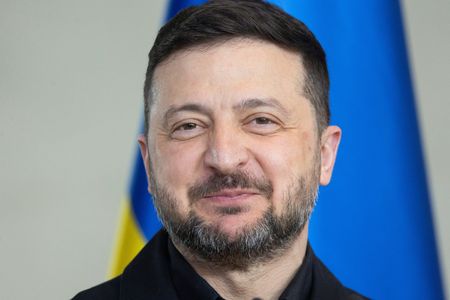
MIDDELBURG, Netherlands — Ukraine’s President Volodymyr Zelenskyy accepted a distinguished international honor Thursday, recognizing both his leadership and his country’s bravery in defending against Russia’s full-scale military assault that began over four years ago.
The International Four Freedoms Award was presented by the Roosevelt Foundation, established in 1982 to recognize individuals who exemplify the four fundamental freedoms President Franklin D. Roosevelt described in his 1941 State of the Union speech: freedom of speech and expression, freedom of worship, freedom from want, and freedom from fear.
“We pay the highest tribute to the unwavering courage and enduring perseverance of the Ukrainian people and to the steadfast and resolute leadership of their president, Volodymyr Zelenskyy,” foundation chair Hugo de Jonge stated during Thursday’s ceremony.
Netherlands Prime Minister Rob Jetten praised Zelenskyy at the event, noting, “It speaks volumes that you only agreed to accept this award if you could do so on behalf of all the people of Ukraine.”
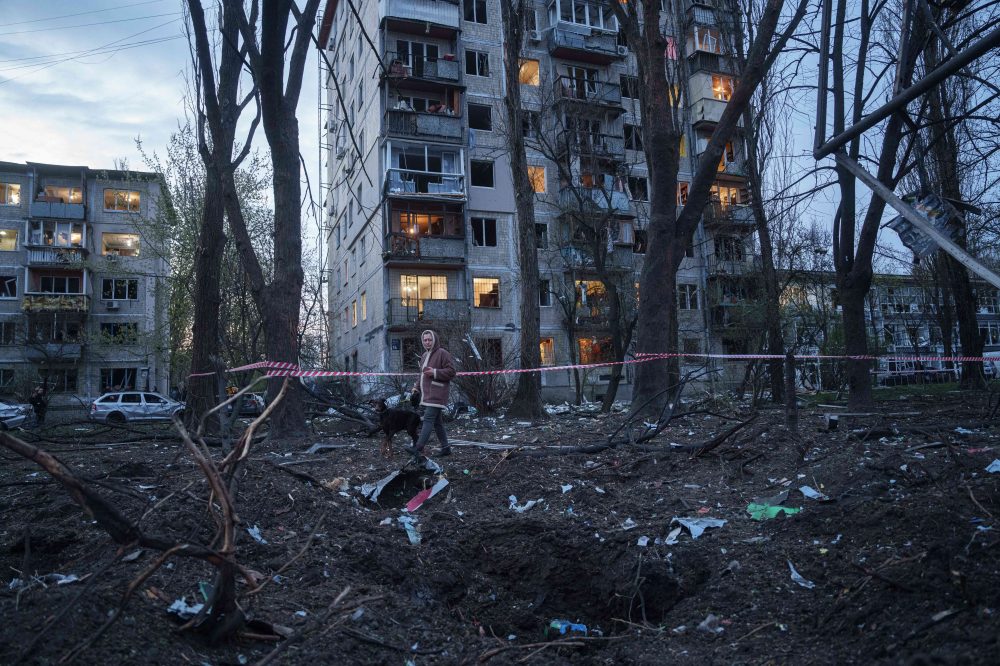
Following a standing ovation from attendees, Zelenskyy requested a moment of silence to honor victims of a recent Russian overnight attack that claimed at least 16 lives and injured numerous others.
“Dozens of people have been injured and, sadly, so sadly, there are also lives lost in Odesa, Kyiv, Dnipro. Just ordinary people, children, civilians, killed by Russian madness,” he stated, while demanding international accountability for war crimes committed in Ukraine.
“Do not let Russia go unpunished,” he urged.
The prestigious award has previously been given to notable figures including Nelson Mandela, the Dalai Lama, former German Chancellor Angela Merkel, and organizations such as the United Nations and the International Committee of the Red Cross.
Other recipients this year included French rape survivor Gisèle Pelicot, who received the Freedom from Fear Award, the Committee to Protect Journalists for the Freedom of Speech Award, and Chilean activist Isidora Uribe Silva, who has cerebral palsy and earned the Freedom from Want Award for her advocacy work on inclusion, equal human rights, and gender equality.
The foundation did not publicly identify the Freedom of Worship Award recipient due to security considerations.
Following the ceremony, Zelenskyy scheduled a meeting with Prime Minister Jetten. The Netherlands has provided substantial support to Ukraine throughout the conflict, including Patriot missile systems and fighter aircraft. On Wednesday, Defense Minister Dilan Yeşilgöz-Zegerius announced a 248 million euro ($292 million) investment in drone technology for Ukrainian forces.
With no additional U.S.-facilitated negotiations with Russia currently scheduled, Zelenskyy has spent the week visiting three European capitals within 48 hours, seeking commitments for continued military and financial assistance from Germany, Norway, and Italy. Ukrainian officials report that Germany and Ukraine have agreed to a defense package worth 4 billion euros ($4.7 billion), while Norway has committed 9 billion euros in aid.
The Four Freedoms ceremony takes place annually at the New Church in Middelburg, located in Zeeland province, the ancestral homeland of President Roosevelt’s family.
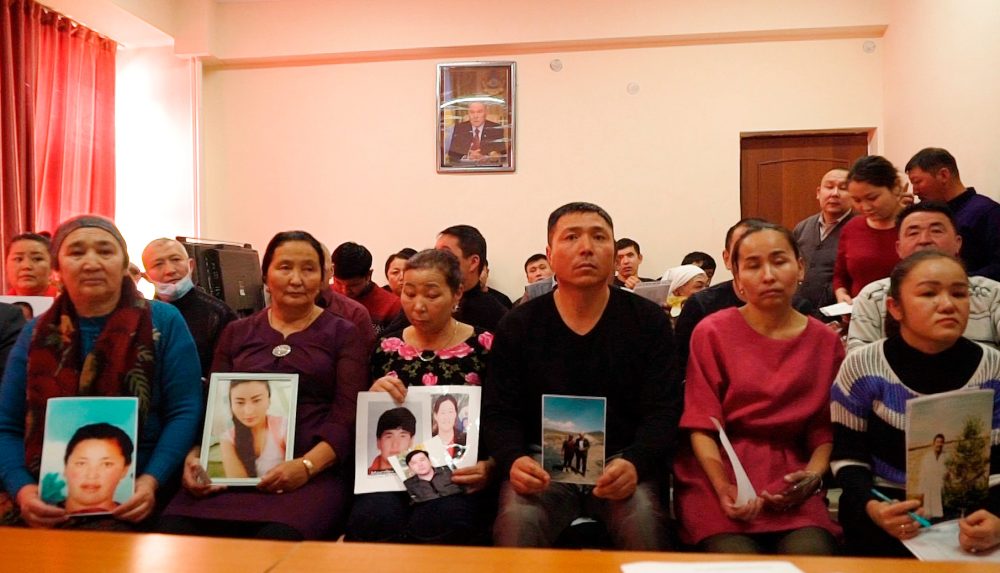
A Kazakhstan court has handed down sentences to 19 activists who demonstrated against China’s harsh treatment of Muslims in the Xinjiang region, marking what human rights experts describe as an extraordinary effort by Kazakhstan to suppress dissent on behalf of Beijing.
The 19 Kazakh citizens staged their demonstration near the Chinese border in November, where they destroyed Chinese flags and images of President Xi Jinping while demanding freedom for a Kazakh citizen being held in Xinjiang.
Eleven demonstrators received five-year prison terms on charges of “inciting discord,” while eight others face travel and movement limitations. Attorney Shinquat Baizhan, who represents the group, verified the punishments that local news outlets also covered.
While Kazakhs who criticize China’s Xinjiang policies have historically encountered government pressure, advocacy organizations note this marks the first instance of such a substantial number of Xinjiang protesters being incarcerated in Kazakhstan.
“This is unprecedented,” stated Yalkun Uluyol, who researches China for Human Rights Watch. “It signals that Kazakhstan is willing to sacrifice freedom of its people to maintain good relations with Beijing.”
Beginning in 2017, Chinese authorities implemented a severe suppression campaign in Xinjiang, forcing over one million Uyghurs, Kazakhs, and other primarily Muslim groups into detention facilities and re-education centers. While many detainees have been freed, the area continues under heavy surveillance with significant restrictions on religious and cultural expression.
The Xinjiang situation has consistently created tension in Kazakhstan, a Central Asian nation of 20 million that depends heavily on Chinese trade. Kazakhstan’s government initiated criminal proceedings against the protesters following a formal complaint from China’s consulate in Almaty, the country’s largest city, according to Uluyol.
The diplomatic communication, which The Associated Press reviewed, described the demonstration as “an open provocation against the national dignity of the People’s Republic of China and an insult to the Chinese Communist Party and the Chinese people.”
China’s Foreign Ministry characterized the sentencing as an “internal affair” and commended Kazakhstan as a “friendly neighbor” that understands “China’s policies on governing Xinjiang.”
Kazakhstan’s Foreign Ministry did not provide a response when contacted for comment.
The convicted activists belonged to Atajurt, a group that champions the rights of Chinese-born Kazakhs experiencing persecution in China. More than one million ethnic Kazakhs live in Xinjiang, with thousands having been detained and many others still facing travel restrictions.
Atajurt has endured ongoing pressure from Kazakhstan’s authoritarian government, which shows little patience for opposition voices. Officials detained the organization’s founder, Serikzhan Bilash, in 2019, freeing him into exile only after he agreed to cease political involvement.
However, the Kazakh government had previously shown some tolerance for the group’s work, recognizing widespread public support in Kazakhstan for Chinese-born Kazakhs.
This tolerance appears to be ending, Uluyol observed, as Kazakhstan strengthens ties with China and shows decreasing acceptance of groups challenging Beijing’s policies.
Bilash warned that the arrests will have far-reaching consequences. His organization provided financial assistance to families of Xinjiang detainees, wrote advocacy letters to embassies and the United Nations, and recorded hundreds of testimonies from people searching for missing relatives.
“The world will lose more than just a human rights organization; it will lose the biggest window into the humanitarian disaster in neighboring Xinjiang,” said Bilash, who now lives in exile in the United States.
NEW YORK (AP) — Mathematician Masood Masjoody was known for publicly accusing those he viewed as enemies. When he posted on social media last autumn that two Iranian-born activists were planning his murder, few people paid attention.
The academic vanished in early February. Police in British Columbia discovered his remains by mid-March and filed first-degree murder charges against the same two individuals Masjoody had identified as threats.
The news shocked Iranians living abroad, especially those who oppose both the current Iranian government and efforts to install the former monarchy’s heir as the country’s future ruler. Shortly after Masjoody’s disappearance, 10 prominent diaspora voices—mostly critics of the monarchist cause or the ongoing conflict with Iran—received a threatening message on X.
“Soon you’ll have to find the corpses of many,” the message warned.
The Farsi-language post, accompanied by a knife emoji, originated from a now-deleted account bearing the name SAVAK, referencing the monarchy’s notorious secret police that once suppressed opposition.
This incident has intensified existing fractures within a diaspora split over the current war and potential future leadership should Iran’s government collapse. Those who received threats point fingers at the influential movement supporting the exiled crown prince who endorses the U.S. and Israeli-led military campaign. The two murder suspects had expressed opposition to Iran’s current regime while supporting monarchist causes in their online activity.
Followers of Reza Pahlavi, whose father was overthrown in the 1979 Islamic Revolution, reject responsibility for such intimidation and claim Iranian government operatives are impersonating activists online. Tehran has an established record of pursuing dissidents internationally.
Peace advocates and Pahlavi opponents describe an atmosphere of intimidation that has prompted some to contact law enforcement and modify their daily habits.
Nik Kowsar, among those targeted in the threatening post, explained he regularly receives hostile social media messages and blocks accounts to avoid harassment.
“But this one gave me chills,” said Kowsar, who faced imprisonment in Iran in 2000 for creating a cartoon mocking a senior cleric and currently resides in Washington, D.C. Previously serving as an unpaid advisor to Pahlavi, he has transformed into a sharp critic, alleging monarchists aim to substitute one authoritarian system for another.
Additional Iranian activists have received comparable threats since then.
Measuring Pahlavi’s actual support within Iran or among expatriates remains challenging.
His January call for demonstrations drew hundreds of thousands to the streets in the most significant protests in years. Authorities responded with brutal suppression, resulting in thousands of deaths and tens of thousands of arrests.
Pahlavi, a Maryland resident, claims readiness to take control and guide a democratic transformation following the theocracy’s fall. However, this possibility seems increasingly remote as Iran has survived weeks of military strikes and a naval embargo without signs of popular revolt since hostilities began.
The exile community has become more divided as the monarchist movement grows “radicalized, more entrenched and more coordinated,” according to Sahar Razavi, who directs the Iranian and Middle East Studies Center at California State University, Sacramento.
“They demand unity of voice and purity of politics and anyone who falls short of that is not just their rival but their enemy that has to be vanquished,” Razavi explained. Her center implemented additional security measures after she faced harassment for hosting a journalist some accused of supporting Iran’s government.
A representative for the National Union for Democracy in Iran, which maintains close ties to Pahlavi, stated the exiled prince has “consistently called for civility in public discourse” and the movement bears no responsibility for antagonism toward critics.
“The prince has, by any estimate, millions of followers. He cannot be reasonably held responsible for the comments of all of them,” policy director Andrew Ghalili wrote in an email. “Second, the Islamic Republic has a history of posing as opposition supporters online to discredit them.”
Two additional activists mentioned in the X message reported the threat to authorities and changed their routines for protection.
“With the latest threat after that Canadian Iranian activist disappeared, I’ll be honest with you, I freaked out,” said Alireza Nader, a Washington, D.C.-based security analyst. Nader, who previously supported Pahlavi but now openly criticizes him, said he currently avoids demonstrations and public gatherings.
Other diaspora activists report receiving concerning threats as well.
Chicago-based activist Ali Tarokh received a March phone call from a number belonging to a fellow Iranian immigrant. Tarokh said the caller labeled him an Iranian government agent and threatened to “go after” him. He contacted police and requested a judge issue a restraining order against the caller.
Tarokh has criticized war supporters, highlighting the conflict’s impact on ordinary Iranians, and continues participating in peace demonstrations despite the intimidation.
“It doesn’t matter if you tell them, ‘I agree with you, the regime has to go, but I disagree with your approach.’ There is zero tolerance,” said Tarokh, who was imprisoned for student activism in Iran and received U.S. political asylum 12 years ago.
The National Iranian American Council, which promotes U.S. diplomatic engagement with Iran, has also experienced increased threats.
Staff members received a January email warning they would be “responsible for all loss of lives” if they continued with an anti-war forum in Cambridge, Massachusetts. Organizers alerted law enforcement before transitioning the event online, said Etan Mabourakh, NIAC’s organizing manager.
A subsequent message targeting the organization’s president threatened to “leave your body in the water” unless panel speakers condemned Iranian leadership.
Some threat recipients attribute hostile online rhetoric to Pahlavi supporters. However, with Iran, Israel, the U.S., and various opposition factions seeking to promote specific narratives about the war and diaspora politics, determining the authenticity of online accounts proves difficult.
“I have to believe that a lot of the things that we see online are not created by authentic users. But that’s not very comforting when we see people we know in real life sharing or repeating them,” said Amy Malek, a William & Mary professor researching the Iranian diaspora.
Kowsar revealed that days before Masjoody’s disappearance, they discussed a harassment lawsuit the mathematician was pursuing against Pahlavi supporters.
Masjoody had filed over six lawsuits since 2014, with a Canadian judge labeling him a “vexatious litigant” last year. Defendants in his final case included one person later charged with his murder, plus Pahlavi himself. In court documents filed last fall, Pahlavi stated he was unfamiliar with Masjoody and disputed the accusations.
Kambiz Ghafouri, another recipient of the X message, said he had long worried about retaliation from Iran’s government despite living in Finland for two decades. Threats seemingly originating from within the diaspora have intensified those concerns.
“Our lives were like hell every day in Iran,” he said.
“But recently, especially after the death of Masood, who was my friend, we feel unsafe here.”
Financial markets in Peru experienced significant volatility this week as leftist congressional representative Roberto Sanchez advanced toward a potential runoff position in the country’s presidential election, sparking investor anxiety reminiscent of Peru’s previous experience with anti-establishment leadership.
Sanchez, who previously served as a cabinet minister during the administration of removed leftist former President Pedro Castillo, may find himself competing against conservative leader Keiko Fujimori in a runoff election set for June 7, pending completion of official ballot tallying.
During a Reuters interview conducted before Sunday’s election, Sanchez expressed his belief that Peru requires a “new beginning” following what he characterized as decades of marginalization of Peru’s underrepresented communities within the existing economic framework.
“We want a new social contract, a plurinational state that recognizes the true face of Peru,” Sanchez stated during the interview at the Together for Peru party headquarters in Lima, where he displayed a wide-brimmed straw hat that he claimed had belonged to Castillo — an emblem strongly connected to the former president’s support among rural voters.
With approximately 92% of votes tallied by Wednesday evening, Sanchez has captured roughly 12% of ballots cast, placing him in second position behind Fujimori’s 17% in an election characterized by processing delays and disputed claims of voting irregularities. The top two vote-getters will proceed to the runoff election.
International election monitors have recognized issues with the voting process but have found no evidence supporting allegations of fraud.
The tight competition for the second runoff position has captured investor attention. Sanchez’s late momentum in vote tallies, combined with his policy agenda including constitutional reform and mining contract renegotiation, could strengthen further as ballots from rural areas, which typically favor leftist candidates, are completely processed.
Sanchez contends that Peru’s economic system has marginalized significant portions of the population, particularly remote and Indigenous communities.
“The rural vote, the Andean vote, the Quechua, Aymara and Amazonian vote was never respected,” he stated.
“We sell stones. Thirty years of mining and the mining towns are still the poorest in our country.”
A cornerstone of his political agenda involves establishing a constituent assembly to create a new constitution, replacing the existing document established during the 1990s under Alberto Fujimori, who is the father of the current frontrunner.
Regarding economic matters, he supports increased government oversight of natural resources and has suggested reviewing mining and gas agreements, implementing windfall profit taxes, and establishing a wealth tax.
“We are not talking about expropriating anyone’s property,” he explained. “We are demanding justice for a people that remain poor despite living atop enormous wealth.”
Coming from an Indigenous background with family ties to Peru’s Andean south, Sanchez has also indicated opposition to the current central bank leadership, creating unease among investors who consider the institution crucial for maintaining economic stability.
Financial markets responded quickly to Sanchez’s electoral progress. Wednesday saw the sol currency decline 1.46% against the dollar to reach its lowest point since late September, while Lima’s primary stock index dropped nearly 5%.
Sanchez’s electoral gains led investors to “recalibrate their positions,” according to Cesar Huiman, an analyst with Renta4 SAB, who described the candidate as “less business-friendly.”
These market concerns are intensified by Sanchez’s strong ties to Castillo, who has provided his endorsement from behind bars.
Castillo currently faces imprisonment on rebellion and conspiracy charges following a brief presidency that concluded with an unsuccessful attempt to dissolve Congress in 2022.
Throughout the interview, Sanchez consistently referenced Castillo as “president,” strengthening beliefs that his campaign represents a continuation of the former leader’s agenda.
While Sanchez stated he would not transfer power back to the former leader if victorious, he acknowledged their close alignment and regular communication. He indicated he would work toward Castillo’s release and pursue accountability for those killed during demonstrations that followed Castillo’s removal from office.
Some political observers suggest Peru’s fractured political environment may constrain the scope of change regardless of electoral results.
Based on preliminary results and pre-election polling projections, Peru’s legislative chambers for the 2026 to 2031 period would likely see increased representation from right-wing parties, although they would remain divided.
“The only certainty in Peru’s chaotic 2026 election is that Keiko Fujimori has a place in the June runoff, and that Congress and the new Senate will lean strongly conservative,” stated Eileen Gavin, principal Americas analyst at Verisk Maplecroft.
This conservative control of the legislature, she noted, indicates that economic policy will likely remain stable, helping markets move beyond immediate political uncertainty.
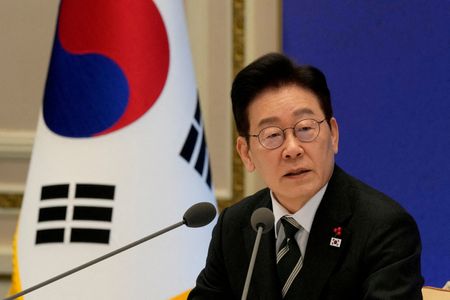
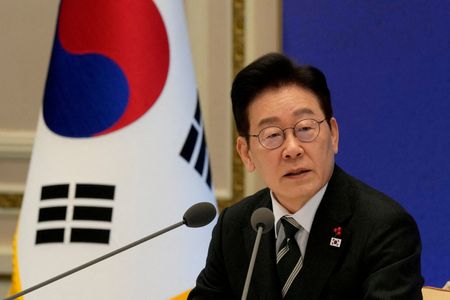
South Korean President Lee Jae Myung is preparing for a significant diplomatic journey that will take him to India and Vietnam later this month, marking a historic moment in international relations.
The presidential trip, scheduled from April 19 through April 24, begins in New Delhi following an invitation from Indian Prime Minister Narendra Modi, according to presidential adviser Wi Sung-lac during a Thursday briefing reported on the Blue House website.
This marks the first time a South Korean head of state has visited India in eight years, with a formal summit planned for April 20. Discussions between the two leaders are anticipated to focus on collaborative efforts in shipbuilding, artificial intelligence, and defense sectors.
A major business component will accompany the diplomatic mission, with Lee participating in a roundtable discussion featuring corporate leaders from both nations. Industry sources tell Yonhap that approximately 200 executives will form an economic delegation for the journey.
The Federation of Korean Industries will manage the India portion of the trip, organizing business forums, leadership meetings, and the execution of memoranda of understanding. Meanwhile, the Korea Chamber of Commerce and Industry will handle the Vietnam segment.
High-profile corporate executives are expected to join the Vietnam delegation, including Samsung Electronics Chairman Jay Y. Lee, SK Group Chairman Chey Tae-won, Hyundai Motor Group Executive Chair Euisun Chung, and LG Group Chairman Koo Kwang-mo, according to Yonhap reporting.
Samsung Electronics, Hyundai Motor Group, and LG Group leaders are also anticipated to participate in the India delegation.
Both the Korea Chamber of Commerce and Industry and the Federation of Korean Industries chose not to provide comments regarding the arrangements.
Wi explained that South Korea aims to strengthen cooperation with India on energy supply chain matters during these uncertain global times, though he did not provide specific details. The president also hopes to address challenges South Koreans face with immigration and residency processes in India.
India represents a crucial market for South Korea’s largest corporations. Hyundai Motor is working toward an annual production goal of 1.5 million vehicles there and successfully listed an Indian subsidiary on the local stock exchange in 2024.
Both Samsung Electronics and LG Electronics maintain manufacturing operations in India, with LG having listed its Indian division on the domestic stock market last year.
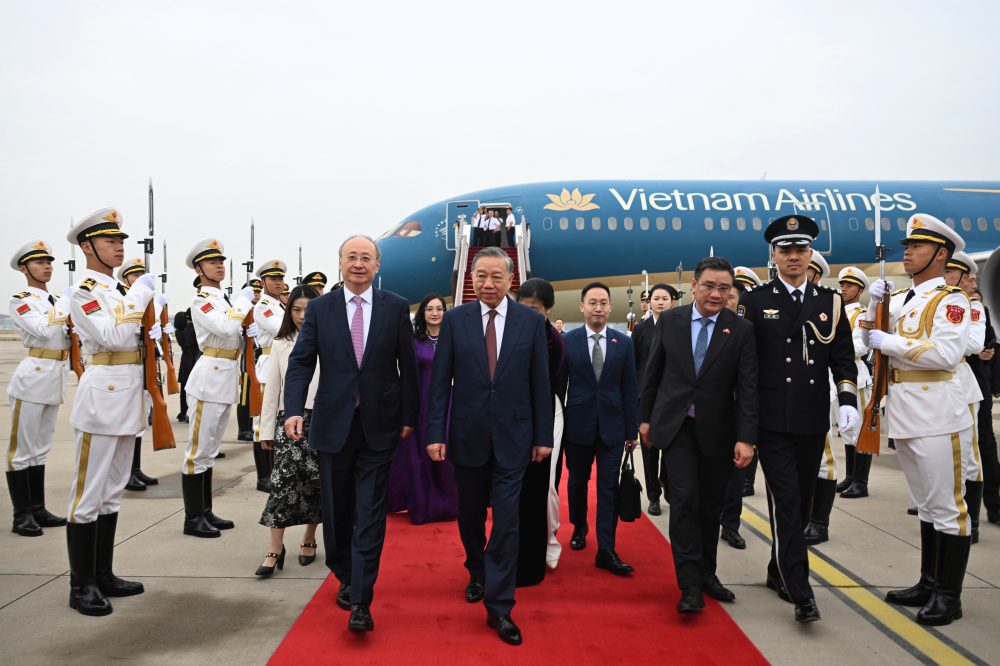
Following the India visit, Lee will continue to Hanoi on April 21, where he will meet with Vietnam’s top leader To Lam on April 22.
The Vietnam discussions will address advancing relationships in energy, global supply chains, and critical minerals, while Lee will also work to strengthen cultural connections between the nations, Wi noted.
During Lam’s Seoul visit in August 2025, the leaders reached an agreement to grow bilateral trade to $150 billion by 2030, with Hanoi expressing support for increased South Korean business investment.
The Biden administration is initiating naval patrol operations in the strategically important Strait of Hormuz, with the stated goal of cutting off Iran’s petroleum export earnings.
According to White House officials, the mission aims to disrupt Tehran’s ability to generate revenue from oil sales. However, defense analysts caution that maritime enforcement operations frequently prove difficult to maintain and can lead to unforeseeable outcomes.
The Strait of Hormuz serves as a crucial waterway for global energy shipments, with approximately one-fifth of the world’s petroleum passing through this narrow passage between Iran and the Arabian Peninsula.
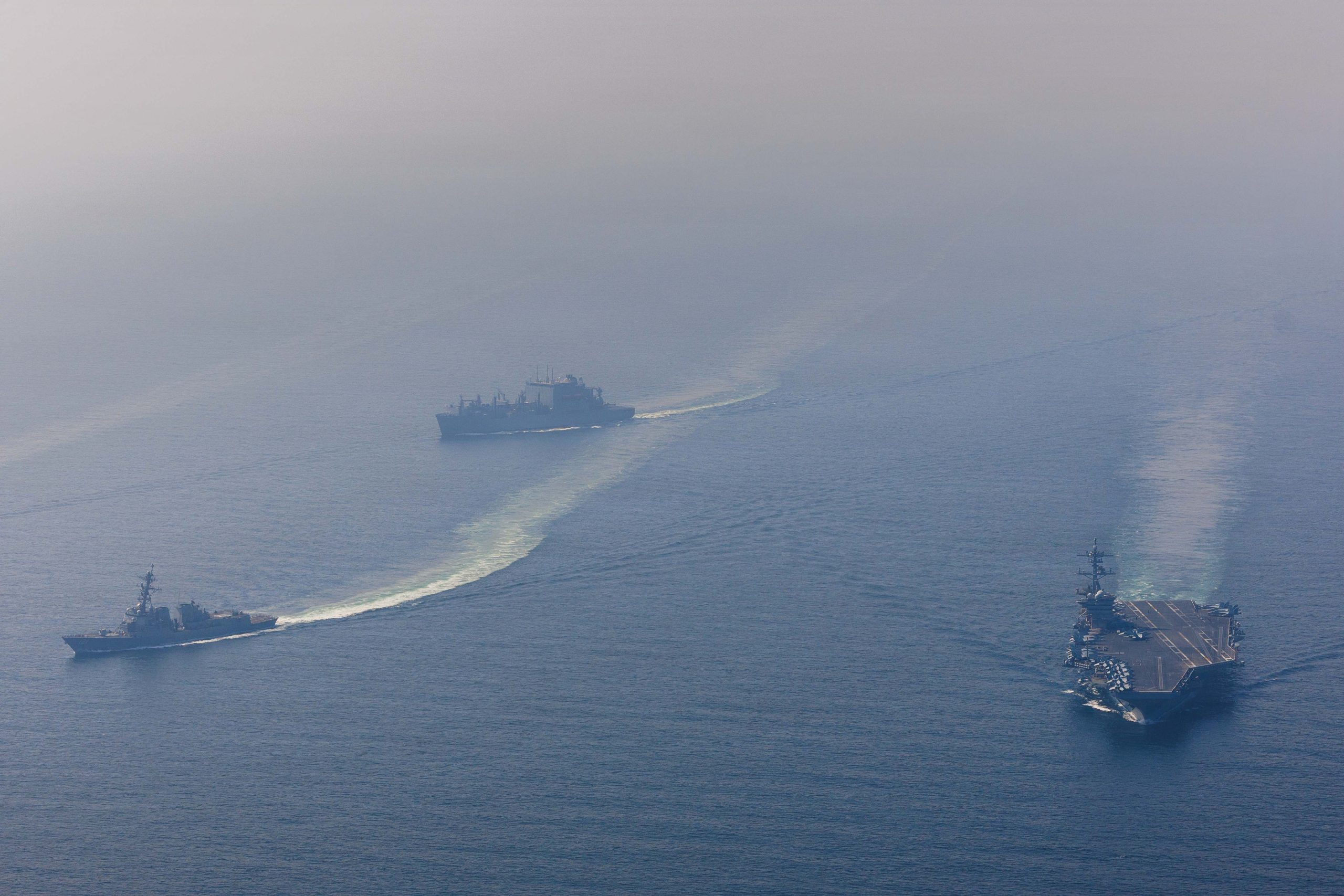
Military vessels including the USS Abraham Lincoln aircraft carrier, the guided-missile destroyer USS Frank E. Petersen Jr., and the supply ship USNS Carl Brashear have been photographed operating in the Arabian Sea as part of the expanded naval presence in the region.
The deployment represents a significant escalation in U.S. efforts to apply economic pressure on Iran through maritime operations, though experts emphasize the complex challenges involved in effectively monitoring and controlling shipping traffic in such busy international waters.
KUGOMPO CITY, South Africa – A magistrate’s court handed down a prison sentence Thursday to Julius Malema, a leading South African opposition figure, for discharging a rifle into the air during a political gathering.
The prominent politician faced conviction last year on multiple weapons-related charges, including illegal firearm possession and firing a weapon in a public area, stemming from an incident that occurred in 2018.
Malema ranks among South Africa’s most well-known political figures in the opposition movement.
MIDDELBURG, Netherlands – Ukrainian President Volodymyr Zelenskyy visited the Netherlands Thursday to receive a prestigious international honor recognizing his nation’s resistance against Russian aggression.
The Roosevelt Foundation presented Zelenskyy and the Ukrainian people with the International Four Freedoms Award during a ceremony in the historic Dutch town of Middelburg. The award takes its name from a famous 1941 address by President Franklin D. Roosevelt that identified four essential human liberties: freedom of expression and speech, freedom of religion, freedom from poverty, and freedom from fear.
When announcing the award selection in January, foundation officials stated they chose Zelenskyy and Ukraine’s citizens in “recognition for their courageous struggle for our freedom and democracy under exceptionally difficult circumstances.”
“They are battling for the security of all Europe and defending, with their lives,” the foundation declared.
Russia’s military assault on Ukraine, which began in February 2022, has resulted in hundreds of thousands of deaths, forced millions from their homes, and left Ukrainian cities in ruins.
Dutch King Willem-Alexander and Prime Minister Rob Jetten attended Thursday’s award ceremony.
The 2026 awards also recognized other champions of freedom, including the Committee to Protect Journalists for their work defending free speech, and French activist Gisele Pelicot, whose husband was found guilty of orchestrating her repeated sexual assault by strangers, receiving the Freedom from Fear honor.
Security considerations prevented organizers from publicly identifying the Freedom of Worship award recipient, while Chilean advocate Isidora Uribe Silva earned recognition in the Freedom from Want category.
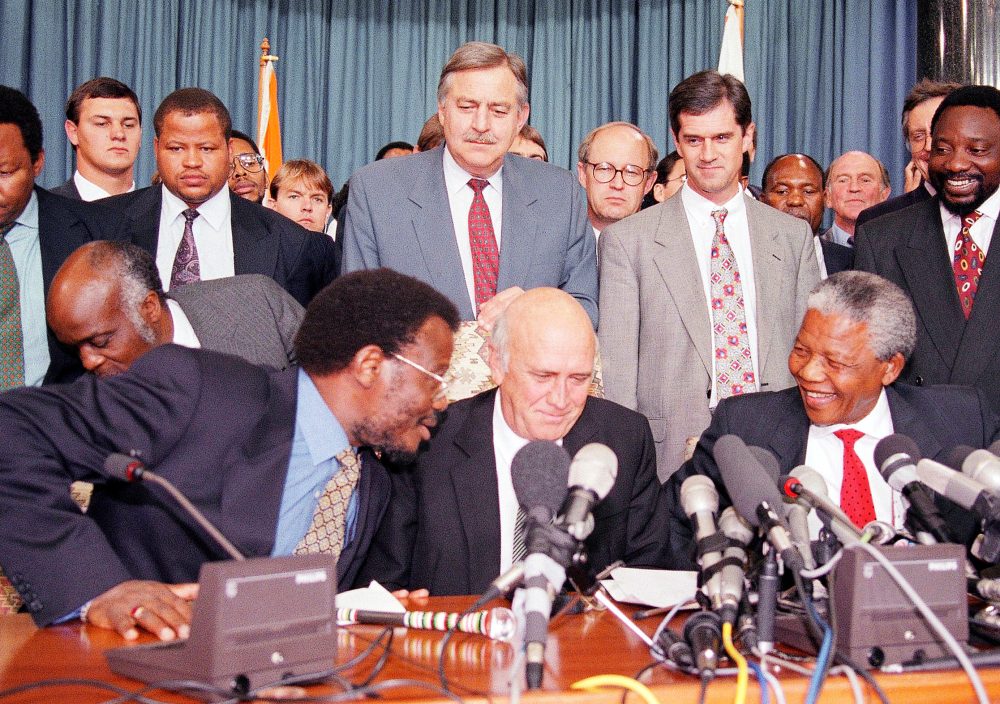
The Four Freedoms Awards have previously honored notable figures including former United Nations Secretary-General Kofi Annan, former German leader Angela Merkel, the Dalai Lama, and the late South African President Nelson Mandela.
A high-ranking Iranian official announced Thursday that diplomatic discussions between Iran and the United States have achieved modest advancement through Pakistani intervention, though significant obstacles persist more than a week into a temporary ceasefire agreement.
The Iranian official stated that the visit by Pakistan’s military leader to Tehran helped bridge some gaps between the two nations, while major disagreements continue regarding nuclear issues. “The trip of the Pakistani army chief to Tehran was effective in reducing differences in some areas, but fundamental disagreements still remain in the nuclear field,” the official explained. “More hopes have been created for extending the ceasefire and holding a second round of talks.”
Key sticking points include Iran’s stockpile of highly enriched uranium and the timeframe for nuclear limitations. “The fate of Iran’s highly enriched uranium and the duration of Iran’s nuclear restrictions are among the highly disputed issues for which no solution has yet been found,” the official noted.
Field Marshal Asim Munir, Pakistan’s army chief, traveled to Tehran Wednesday in an effort to prevent renewed hostilities. Pakistan previously facilitated initial peace discussions between the two countries over the past weekend.
Pakistan’s Foreign Ministry confirmed Thursday that no schedule has been established for additional negotiations between Washington and Tehran.
The diplomatic efforts follow failed weekend discussions aimed at resolving the conflict that began when President Donald Trump and Israel launched a coordinated strike on February 28. That action prompted Iranian retaliation against Gulf nations and sparked additional fighting in Lebanon.
In Bulgaria’s rural Haskovo province, cattle farmer Nikolay Vasiliev displays an election poster outside his property featuring Rumen Radev, the nation’s former president who resigned in January to pursue a parliamentary seat. Vasiliev represents many Bulgarian voters frustrated with years of government corruption that has stifled economic growth and blocked business expansion.
“I see a leader who can make this drastic change and provide security for people,” Vasiliev explained during a farm interview. “The time has come for us to fundamentally solve the problems in the country.”
Radev, a former military pilot with pro-Moscow sympathies, currently tops polling data as Bulgaria prepares for its eighth election in five years. The Black Sea nation of 6.5 million citizens will vote Sunday amid ongoing political turmoil that has prevented stable coalition governments from taking root.
The candidate has gained traction among older rural populations who view him as capable of dismantling what he describes as an “oligarchy” of entrenched corrupt officials. During a recent campaign event, Radev vowed to eliminate “the local feudal lords and strongmen who are suffocating entire regions of Bulgaria.”
Bulgaria ranks 84th globally on Transparency International’s 2025 Corruption Perceptions Index, matching Hungary as the European Union’s lowest-scoring member nation. Corruption experts note that graft permeates everything from government contracting to municipal elections throughout the country.
A Radev administration could dramatically alter Bulgaria’s international relationships, which have traditionally aligned with Brussels. The country recently adopted the euro currency and signed a security pact with Ukraine – decisions Radev publicly opposes.
“The coalition-makers introduced the euro in Bulgaria without asking you. And now, when you pay your bills, always remember which politicians promised you that you would be in the ‘club of the rich’,” Radev stated Wednesday, capitalizing on public anger over increased living costs.
Following Hungarian Prime Minister Viktor Orban’s electoral defeat, Radev positions himself as potentially the EU’s sole remaining leader advocating for improved Russian relations despite the ongoing Ukraine conflict.
“We are the only member state of the European Union that is both Slavic and Eastern Orthodox,” Radev told journalist Martin Karbovski. “We can be a very important link in this whole mechanism…to restore relations with Russia.”
Current polling shows Radev’s Progressive Bulgaria party capturing approximately 30% support, maintaining a 10-point advantage over the largest opposition party, GERB, though falling short of an outright majority. Campaign finance records indicate Progressive Bulgaria has collected over 650,000 euros in private donations, representing 67% of all contributions reported.
Coalition building appears inevitable, which could moderate Radev’s pro-Russian positions. The pro-European We Continue the Change – Democratic Bulgaria alliance, polling around 12%, shares Radev’s reform agenda and represents a potential partnership.
Radev has rejected any alliance with GERB, led by former Prime Minister Boyko Borissov, or the Movement for Rights and Freedoms party, whose leader Delyan Peevski faces U.S. and British sanctions for corruption.
“All indications point towards…coalition-building,” observed Tihomir Bezlov, senior fellow at Sofia’s Centre for the Study of Democracy, though he questioned any coalition’s longevity.
Electoral officials expect voter participation to exceed 50% as the interim government implements anti-corruption measures including vote-buying enforcement and EU assistance combating online disinformation from suspected Russian sources. Radev dismisses these efforts as vote manipulation tactics.
“No one from outside can come and tell us who and what to vote for. That is decided here, by us Bulgarians,” he declared. Russian officials have denied election interference allegations.
Since communism ended in 1989 and EU membership began in 2007, Bulgaria has experienced significant development. The nation now boasts the EU’s lowest unemployment rate, improved life expectancy, and enhanced economic stability through eurozone membership.
Sofia’s renovated downtown features thriving restaurants and well-maintained parks where residents gather during spring evenings, while mountain ski resorts draw European tourists each winter.
However, rural areas like Haskovo suffer from chronic underinvestment and youth migration, leaving deteriorating infrastructure and struggling agricultural communities.
Farmer Vasiliev rejects characterizations of Radev as pro-Russian, focusing instead on leadership character.
“The first word that comes to mind when I think of a leader is ‘dignified’,” he explained. “To be a dignified leader, you must be a dignified person.”
KYIV, Ukraine — Ukrainian forces faced a devastating aerial assault Thursday as Russian military forces unleashed nearly 700 drones and dozens of missiles in a prolonged bombardment that lasted from daylight hours well into the evening, claiming the lives of at least 16 people and wounding over 80 others, according to Ukrainian officials.
The extensive attack represents Moscow’s most significant aerial offensive in nearly two weeks, with authorities reporting that Russian forces deployed close to 700 unmanned aircraft along with numerous ballistic and cruise missiles, focusing their strikes on civilian targets. Since launching its full-scale invasion more than four years ago, Russian forces have consistently targeted civilian areas in daily attacks, occasionally escalating to large-scale bombardments. United Nations data indicates that these ongoing strikes have resulted in over 15,000 civilian deaths in Ukraine.
This latest wave of attacks occurred following Ukrainian President Volodymyr Zelenskyy’s recent two-day diplomatic mission to Germany, Norway, and Italy, where he sought additional air defense capabilities to counter Russian missile threats. Ukraine has expressed concerns that conflicts in Iran are depleting stockpiles of sophisticated American-manufactured defense systems, while also opposing a temporary U.S. exemption on Russian oil sanctions that Kyiv believes helps fund Moscow’s military operations.
“Another night has proven that Russia does not deserve any easing of global policy or lifting of sanctions,” Zelenskyy said on X.
The Ukrainian leader expressed gratitude to Germany, Norway, and Italy for new defense cooperation agreements reached during his recent visit. He also mentioned ongoing discussions with the Netherlands regarding additional military supplies.
However, Zelenskyy noted that certain allied nations have failed to fulfill their military assistance commitments.
“I have instructed the Commander of the Air Force to contact those partners who earlier committed to providing missiles for Patriot and other systems,” Zelenskyy said.
The capital city of Kyiv suffered significant casualties, with at least four deaths including a 12-year-old child, while more than 50 residents sustained injuries, local authorities confirmed.
Tetiana Sokol, a 54-year-old Kyiv resident, described the terrifying experience when two missiles struck near her residence, forcing her to seek shelter in her hallway with her dog as explosions illuminated the darkness and shockwaves shattered windows.
“On the third attack everything broke, everything flew, we were shocked, we didn’t know where to run. I grabbed whatever came to hand and ran away with the dog,” she told The Associated Press. “I still can’t find the cats in the house, they climbed out somewhere, I don’t even know. No windows, nothing, the dog is still walking around in stress.”
Additional casualties were reported across multiple regions: nine fatalities and 23 injuries in the southern coastal city of Odesa, three deaths and approximately three dozen wounded in the central Dnipro area, and one death in southern Zaporizhzhia.
“Such attacks cannot be normalized. These are war crimes that must be stopped and their perpetrators held to account,” Ukraine’s Foreign Minister Andrii Sybiha said on X.
Ukrainian air defense forces successfully intercepted or neutralized 667 of 703 incoming threats, including 636 Shahed-type drones and other unmanned aircraft, according to the country’s air force.
Military officials reported that 20 attack drones and 12 missiles successfully struck 26 different locations throughout the country.
NEW DELHI (AP) — Indian lawmakers began deliberations Thursday on historic legislation that would guarantee women one-third of all seats in the nation’s Parliament, a move that could trigger extensive redistricting and heighten political conflicts across the country.
The proposed legislation would accelerate implementation of a 2023 law requiring 33% of parliamentary and state legislative positions be designated for women. This would represent one of the most significant changes to political representation since India gained independence and could dramatically expand female involvement in a government where women currently have limited presence.
However, the women’s quota proposal is connected to a contentious companion measure that would restructure voting districts, potentially expanding the lower house from its current 543 members to approximately 850.
Although broad cross-party support exists for increasing women’s parliamentary participation, opposition groups have expressed alarm about the redistricting component, cautioning it might shift the political landscape to benefit Prime Minister Narendra Modi’s Bharatiya Janata Party.
Both measures are under consideration during Parliament’s three-day special session and need approval from two-thirds of both legislative chambers. Modi’s governing National Democratic Alliance currently controls 293 parliamentary seats, falling short of the 360 needed for the required supermajority.
Multiple Asian nations, including India’s regional neighbors Nepal and Bangladesh, have established comparable quotas for women in their national legislatures. India already requires one-third of local government positions be reserved for women, yet women currently occupy just 14% of lower house parliamentary seats.
The quota system could bring hundreds of additional women into legislative roles, which advocates believe might shift policy focus toward women’s healthcare, education and combating gender-based violence. The method for distributing seats to women in an enlarged Parliament remains undetermined.
Women’s rights activist Ranjana Kumari described the initiative as making India’s “democracy truly representative” while compelling political parties to nominate more female candidates.
“(The) door is little open. Women will enter and fill the room slowly,” Kumari stated.
Many young Indian women view this development as symbolically important.
Pranita Gupta, a 23-year-old law graduate, explained it will create “a sense of confidence that we can participate in politics and we can be part of Parliament not only as an exception but as well as a norm.”
Implementation of the quota depends on population-based redistricting using information from the most recent completed census in 2011. While the schedule for this redistricting process remains uncertain, the proposal has already sparked political controversy.
Opposition parties caution that population-based constituency creation could transfer political influence toward rapidly growing northern states while reducing parliamentary representation and overall power of southern regions. They contend this could advantage Modi’s party, which enjoys strong northern state support.
India’s Constitution requires parliamentary seat distribution based on population and revision following each census. Nevertheless, boundaries haven’t been redrawn since the 1971 census, as consecutive governments postponed the process due to concerns about unequal population growth patterns.
Southern state leaders, where birth rates have dropped more dramatically, argue population-based redistricting could increase northern representation while disadvantaging southern areas that have controlled population growth and developed stronger economies.
Modi’s party has rejected criticism of the legislation, with Parliamentary Affairs Minister Kiren Rijiju describing the concerns as misleading on Wednesday.
However, opposition emerged Thursday when Tamil Nadu chief minister M.K. Stalin burned a copy of the bill and displayed a black flag in protest. He encouraged residents statewide to take similar action.
Several southern state leaders also appeared in Parliament wearing black clothing as a protest gesture.
Opposition leader Rahul Gandhi accused the redistricting effort of potentially being used to “gerrymander” parliamentary constituencies to favor Modi’s party before the 2029 national elections.
“Delimitation should be based on a transparent policy framework, developed after wide consultations with a consensus,” he posted Wednesday on X.
Fourteen-year-old Fadel al-Naji once loved playing soccer, but now he spends most of his time at home in Gaza City after losing both legs in an Israeli drone strike last September.
The teenager sits quietly on a sofa, one empty pant leg hanging down while the other is folded at his waist, next to his 11-year-old brother who lost an eye in the same attack.
“He has become withdrawn and isolated,” his mother Najwa al-Naji explained while showing old videos of her son juggling a soccer ball on her phone. “It is as if he is dying slowly, and I wish that they would fit him with prosthetic limbs.”
However, artificial limbs remain extremely difficult to obtain for Gaza’s approximately 5,000 war amputees — one-fourth of whom are children like al-Naji — due to Israeli limitations on importing materials such as plaster of Paris, according to seven aid and medical sources who spoke with Reuters.
Israel, which engaged in a two-year conflict with Hamas militants in the Palestinian territory, justifies the restrictions by pointing to security concerns.
When combined with Gaza’s existing amputee population before the war, Palestinian health officials report that the territory’s per capita amputation rate now surpasses even Cambodia, which previously held that distinction due to landmine injuries, according to aid organization Humanity & Inclusion.
The shortage has become so severe that two medical facilities report attempting to salvage old prosthetic devices from war casualties. Other medical professionals are constructing improvised artificial limbs using plastic tubing or wooden boards, though doctors warn this approach could damage residual limbs or lead to infections.
Gaza’s amputee crisis represents the gap between promises made during October’s ceasefire and President Donald Trump’s 20-point plan that envisioned complete aid delivery “without interference.”
The plan also called for reopening the Rafah border crossing — Gaza’s only exit to Egypt — but medical evacuations for amputees and others have remained sporadic.
Israel maintains restrictions on imports of items it considers to have both military and civilian applications, a policy that existed before the two-year conflict. Although plaster of Paris and other plastic components for prosthetics aren’t specifically listed on Israeli dual-use item catalogs, “construction products” do appear there, according to an Israeli export control document.
COGAT, Israel’s military agency overseeing Gaza access, states it allows regular entry of medical equipment but prohibits materials that Hamas could use for “terrorist build-up.”
When asked about prosthetic supplies, COGAT indicated it maintains discussions with the United Nations and other aid organizations to find ways to enable proper medical responses.
The International Committee of the Red Cross, which assists Gaza’s Artificial Limbs and Polio Centre — the territory’s primary prosthetic facility — reports that plaster of Paris imports have been almost entirely blocked for more than four months, with remaining supplies lasting only until June or July.
“What we are producing now are very small quantities compared to the actual need,” explained Hosni Mhana, the center’s spokesperson, though he declined to provide specific numbers.
The Qatari-funded Sheikh Hamad Hospital reports receiving no supplies throughout the war and has completely run out. The facility can now only perform maintenance on existing prosthetics. “There are no local alternatives for prosthetic manufacturing materials,” stated the hospital’s General Director Ahmed Naim.
Humanity & Inclusion, which has fitted 118 temporary prosthetics in Gaza since early 2025, says supplies from its final December 2024 shipment are nearly exhausted.
The Trump-led Board of Peace, which has worked to increase Gaza aid, stated it takes the struggles of amputees and other patients very seriously.
“These are urgent civilian needs,” the board told Reuters, emphasizing that ceasefire obligations included sustained delivery of humanitarian, commercial and medical supplies.
The board noted that restrictions and delays are discussed with appropriate authorities. “We have significant guarantees and commitments that these restrictions will be eased and eliminated as armed parties agree to decommission their weapons and hand over authority to a Palestinian technocratic government in Gaza.”
Prosthetic limbs cannot be shipped complete to Gaza since each device must be custom-built for individual patients, with plaster used to create precise casts of remaining limbs to form fitted sockets.
Reuters spoke with three additional Gaza amputees, all facing difficulties returning to their pre-war routines without prosthetics.
Many amputees remain on waiting lists and may have completed preliminary procedures, including stump revision surgeries to improve the limb’s shape.
Among those waiting is Hazem Foura, a 40-year-old former office employee who hasn’t worked since losing his left leg above the knee in December 2024 when he says Israeli forces bombed his residence.
“I am not asking for the luxuries of life, I am asking for a limb so I can regain my humanity,” he stated.
The absence of prosthetics significantly hampers recovery and extends psychological trauma for amputees, many of whom could have avoided limb loss with more specialized surgeons available.
This situation also increases their vulnerability to continuing Israeli attacks, which have claimed 750 Palestinian lives since the ceasefire, according to Palestinian health officials.
Israeli limitations on items like wheelchairs have relaxed since the ceasefire, the ICRC and UNICEF reported, but medical staff say navigating Gaza’s debris-filled streets remains challenging.
Beyond materials, expertise is also scarce, with only eight prosthetists remaining in Gaza according to the World Health Organization. Follow-up treatment for children presents particular difficulties, medical professionals noted, since they require regular adjustments as they develop.
“The amputation itself is not just a lost limb, it’s lost hope, it’s lost independence,” said Heba Bashir, prosthetic and orthotic technical officer for Humanity & Inclusion. “For the kids, it means losing their future.”
BEIJING – Chinese officials have issued a travel warning for their citizens planning trips to the United States, specifically advising them to avoid Seattle-Tacoma International Airport due to what they describe as harassment by American border agents.
The advisory, released Thursday by China’s foreign ministry, stems from a recent incident involving approximately 20 Chinese academics who were traveling to attend a scholarly conference in the United States. Despite possessing valid American visas, these researchers were turned away at the Seattle airport after being subjected to what Beijing characterized as “unreasonable questioning” by U.S. Customs and Border Protection personnel.
Chinese authorities are urging their nationals to “strengthen safety awareness, avoid entering through this airport” and “make all necessary preparations” when traveling to America. The ministry cited “repeated incidents of malicious questioning and harassment targeting Chinese scholars” specifically at the Seattle-Tacoma facility as the reason for the warning.
The travel advisory also provides guidance for Chinese citizens who may encounter questioning by American law enforcement, recommending they “respond calmly and rationally” during such interactions.
This diplomatic advisory highlights growing tensions between the two nations and raises concerns about the treatment of international visitors at U.S. border crossings.
BANGKOK (AP) — A former U.S. diplomat who launched his refugee advocacy career with a daring unauthorized rescue mission in Vietnam has passed away at 82.
Lionel Rosenblatt died Saturday in the Washington area following a cancer diagnosis. His death marks the end of a remarkable career that began with a bold defiance of government orders during the final days of the Vietnam War.
In 1975, as communist forces closed in on Saigon, Rosenblatt and fellow State Department official Craig Johnstone grew frustrated with U.S. Ambassador Graham Martin’s hesitation to evacuate Vietnamese allies. The two men took personal leave and traveled privately to South Vietnam, where they organized flights that saved between 200 and 400 at-risk Vietnamese citizens.
When they returned to Washington, Secretary of State Henry Kissinger delivered what Rosenblatt described as a formal reprimand mixed with personal praise, but no official punishment followed.
That daring mission launched Rosenblatt into a distinguished career as a refugee advocate. He led the Washington-based Refugees International from 1990 to 2001, pushing for stronger humanitarian responses in conflict zones including Bosnia and Rwanda.
Jeremy Konyndyk, current president of Refugees International, remembered Rosenblatt as a “fierce, creative, passionate champion for refugees” who “helped to shape a generation of humanitarian leaders.”
Born in New York in 1943, Rosenblatt entered the State Department in 1966 with early assignments in Sri Lanka, Vietnam, Thailand and Washington. Southeast Asian refugees became his particular focus.
From 1976 to 1981, he worked at the U.S. Embassy in Bangkok as refugee coordinator, assisting Vietnamese “boat people” and Cambodians fleeing hunger after Vietnam removed the brutal Khmer Rouge from power in 1979.
Rosenblatt showed particular compassion for ethnic minorities often overlooked in major conflicts. He worked extensively with the Hmong people of Laos, who had fought alongside American forces in the “Secret War” against communist Pathet Lao forces.
When the Pathet Lao won control in 1975, tens of thousands of Hmong fled to Thailand, fearing revenge. Recognizing the discrimination these tribal people would face in American resettlement, Rosenblatt and his team deliberately obscured their ethnic identity on official documents to improve their chances of acceptance.
“It was always a mystery to me why they were good enough to fight for us but not good enough to consider for resettlement,” Rosenblatt said in a 2022 television interview.
MELBOURNE, Australia (AP) — Australian Defense Minister Richard Marles announced Thursday that his country will dramatically increase military expenditures by 53 billion Australian dollars ($38 billion) over the coming decade, pointing to the ongoing Iran conflict as a key factor destabilizing worldwide security.
During the release of Australia’s updated two-year defense strategy, Marles outlined plans to expand the nation’s defense budget from its current 2.8% of gross domestic product to 3% by 2033, stating that “Australia faces its most complex and threatening strategic circumstances since the end of World War II.”
When questioned about how significantly Australia’s security environment has deteriorated since the February attacks on Iran by the United States and Israel, Marles responded to journalists: “I don’t think anyone could honestly answer that question.”
“It greatly complicates the global strategic landscape,” Marles explained. “The world feels less safe.”
“Having said that, we do very much support the strategic objective of denying Iran a deployable nuclear weapon,” Marles continued.
The Defense Minister emphasized that the decision to raise military spending to 3% of GDP was not made in response to demands from U.S. President Donald Trump’s administration.
In January, the Pentagon issued its National Defense Strategy, which criticized U.S. allies for not taking greater responsibility for their own security needs.
Marles stressed that Australia was making independent decisions about resource allocation.
“What that has yielded to date is, under our government, the biggest peacetime increase in defense spending that our nation has seen,” Marles stated.
The new spending framework will emphasize Australian self-reliance, though Marles clarified this should not be interpreted as complete military independence.
“This is not about jettisoning alliance relationships. To the contrary, alliances, especially with the United States, will always be fundamental to Australia’s defense,” Marles explained.
The most significant component of Australia’s defense expansion will be acquiring a minimum of eight submarines equipped with U.S. nuclear technology through the AUKUS alliance with the United States and Britain.
Officials estimate the submarine program will cost between AU$268 billion ($193 billion) and AU$368 billion ($264 billion) across three decades.
During their current four-day Australian tour, Prince Harry applauded the nation’s groundbreaking approach to protecting teenagers from harmful online content, while Meghan Markle opened up about years of cyberbullying she has endured.
Speaking at a mental health discussion organized by Batyr in Melbourne on Thursday, the Duke of Sussex described Australia’s regulatory stance as exemplary. “Now we can sit here and debate the pros and cons of a ban – I’m not here to judge that. All I will say is from a responsibility and leadership standpoint – epic,” Harry stated during the youth-focused event.
Australia made history in December by implementing the world’s first nationwide prohibition on social media access for anyone under 16 years old. The groundbreaking legislation restricts minors from accessing platforms such as TikTok, YouTube, Instagram, and Facebook, with other nations now considering similar measures.
During the same Melbourne discussion, the Duchess of Sussex shared her personal struggles with online harassment. “For now, 10 years, every day for 10 years, I have been bullied and attacked. And I was the most trolled person in the entire world,” she revealed.
The royal couple’s current visit marks their return to Australia since 2018, when they were still active members of the British royal family and announced Meghan’s first pregnancy shortly after landing in Sydney. They departed from royal duties in 2020, relocating to the United States while citing desires for financial independence and privacy from media scrutiny.
Their reception in Australia has been varied, particularly in a country where King Charles serves as head of state despite growing republican sentiment among some citizens. The couple is funding their own travel expenses, though Australian taxpayers are covering some security costs, which has generated controversy and prompted a petition with over 45,000 signatures.
Unlike their previous official royal visit, Harry and Meghan are combining public appearances with what their representatives describe as “private meetings and special projects.” Harry has met with military veterans, while Meghan participated as a guest judge on MasterChef Australia.
The Duchess is also scheduled to co-host an upscale wellness retreat in Sydney this weekend, featuring activities like yoga, manifestation sessions, and sound healing. Attendance fees for the luxury event begin at approximately $1,912 per participant.
KYIV, Ukraine — Ukrainian civilians in the nation’s capital examined destruction and sought safety Thursday after Russian forces launched an attack on a civilian neighborhood in Kyiv.
The strike represents the latest in ongoing military actions targeting residential areas throughout the conflict zone.
Images captured by Associated Press photographers document the aftermath and impact on local residents in the Ukrainian capital.
Ukrainian air defense forces successfully intercepted 31 missiles and 636 drones during Russian strikes across the nation in a 24-hour span, military officials announced Thursday.
The Ukrainian air force reported through a Telegram statement that Moscow launched two separate waves of coordinated strikes against Ukrainian targets, deploying both ground-launched and air-launched missiles alongside attack drones.
“During this period, the enemy launched two waves of combined attacks on Ukrainian territory, using ground-based and air-launched missiles, as well as attack drones,” the air force said in a statement on Telegram.
Military officials said they identified a total of 703 Russian aerial threats during the assault period.
France is demanding that the U.S. Department of Homeland Security free an elderly French woman who remains in immigration detention in Louisiana following her arrest earlier this month.
The 86-year-old widow, whose deceased husband served in the military, has become the subject of diplomatic pressure as French officials work to secure her release from ICE custody.
The case highlights ongoing tensions surrounding immigration enforcement policies and their impact on elderly individuals with family ties to U.S. veterans.
KHARKIV, Ukraine (AP) — An agricultural business owner in Ukraine who established a volunteer military unit with just 30 members during the early stages of Russia’s invasion wasn’t sure he’d survive to witness its growth — but both he and his force endured.
That small group has since expanded into a 40,000-member corps recognized as among Ukraine’s most capable fighting units within the official defense structure.
“Ukraine needs to have an effective modern army. And this is our number one guarantee of the country’s security,” said Vsevolod Kozhemyako, who owns a major agricultural business and now serves as an adviser to the Khartiia Corps Commander.
This dramatic growth illustrates a wider change happening throughout Ukraine’s armed forces, as new formations like the Third Army and Azov Corps emerge, moving away from Soviet-era methods that soldiers have long criticized.
While discussions about potential peace agreements remain stalled and international focus turns toward Middle Eastern conflicts, Ukraine continues pursuing solid security assurances from allies, especially the United States.
However, many Ukrainians have reached a different understanding through this war: their nation’s best protection may come from their own military forces.
“We have kids, we have grandkids, and we will stay on this territory,” Kozhemyako said. “The future of this country depends on us.”
Following the Soviet Union’s collapse, Ukraine received a substantial military and weapons stockpile. However, by 2014, Russia’s seizure of Crimea and armed conflicts in eastern regions revealed serious weaknesses from insufficient funding, corruption and strategic confusion, leading to volunteer recruitment and overdue military changes.
These reforms helped Ukraine resist the 2022 invasion, but as fighting continued, some fundamental issues — inflexible top-down command, overwhelming bureaucracy and a culture of concealing problems due to fear of retaliation — started returning, affecting battlefield performance.
Kozhemyako explained that his unit needed to follow a different approach from the beginning. As an active military member since 2014 surrounded by veterans, he recognized the regular army’s limitations.
“They didn’t want to join the post-Soviet army, but they wanted to fight,” Kozhemyako recalled.
Most were civilians with business backgrounds, he explained. They contributed their leadership experience and aimed to create an organization that encouraged initiative.
The process started with learning and implementing U.S. Army planning techniques, merging them with combat experience and adjusting as warfare developed. The unit adopted Western procedures including Troop Leading Procedures (TLP) and After Action Reviews (AAR), using internal specialists to improve these methods.
TLP enable smaller units to organize operations more quickly, which proves essential for taking advantage of brief battlefield opportunities. AAR encourage soldiers to analyze events, causes and improvements, a system the corps has applied especially thoroughly to its rapidly advancing technology use.
Khartiia’s emphasis on quickly advancing technologies has attracted international notice. In a Military Review article, the U.S. Army’s professional publication, Maj. Gen. Curtis Taylor highlighted Khartiia’s December 2024 drone operation near Kharkiv as a significant milestone — the first completely robotic attack against Russian positions. For the U.S. Army, he suggested, this represented a signal to reconsider how its armored units must change to survive modern warfare.
This technology now forms part of routine operations. A 23-year-old platoon leader transferred to Khartiia from a standard unit received responsibility for ground robotic systems regularly used for supply transport and evacuation.
He and other soldiers interviewed for this report requested anonymity following Ukrainian military guidelines, though higher-ranking officials may speak publicly.
The soldier noted how little attention was given to strict formalities that characterized his previous unit — from rigid uniform requirements to repetitive procedures unconnected to combat.
“People understand why we are here, and they don’t overload us with unnecessary tasks,” he said, having just walked through the military position wearing blue plush house slippers.
He also described a different command relationship, contrasting it with the rigid structure he previously experienced, where punishment fears often discouraged honest communication.
“When officers look at you from above, like in rear units, they become almost like enemies to you,” he said. “In Khartiia, relationships are different. When you go on a mission, you trust the people giving you orders.”
These changes have produced concrete battlefield results. In December 2025, the Khartiia Corps spearheaded a counteroffensive in the Kupiansk area, freeing several villages north of the city and advancing to the Oskil River. The Institute for the Study of War reported that capturing Kupiansk had been a Russian objective since mid-2025, but despite extended efforts, Russian forces couldn’t achieve major progress there.
The Khartiia Corps has experienced no significant defeats and hasn’t disclosed casualty numbers, following standard practice for both warring sides.
The Washington-based research organization concluded in December that the operation showed Ukrainian forces can still “conduct successful counterattacks and make tactically significant gains, particularly when Russian forces are overstretched.”
Operating mainly through independent recruitment and fundraising, the corps has developed a professional human resources system and strong reputation, actively utilizing YouTube and social media, collaborating with public personalities and simplifying online donations.
A Ukrainian military officer handling public outreach for a Ground Forces unit explained that the Third Army Corps, followed by Khartiia, became pioneers in this area whose strategies others carefully examine when developing their own. These two corps were among the first to establish their own identities, something now crucial for the army facing constant recruitment needs.
“The approaches that work in the commercial sphere translate perfectly here — only you are competing not for profit, but for people, equipment and attention of the volunteers,” he said.
Entering one of Khartiia’s underground command centers feels more like visiting a gaming facility than a military headquarters. However, instead of video games, numerous large screens mounted across walls display live reconnaissance video from Ukraine’s Kharkiv region front lines. Supervising everything is a former bodybuilding instructor who advanced from soldier to senior officer, wearing a Khartiia sweatshirt with an energy drink beside his keyboard.
“One of our secrets is that we don’t spare people during training — we train them constantly,” he said. “But during combat, it’s the opposite. People come first. We don’t save drones or equipment at the expense of our people.”
This philosophy is something Khartiia now attempts to spread by creating direct partnerships with units sharing similar approaches.
The Khartiia and 3rd Army Corps recently established a joint training program, sharing resources and knowledge to develop unified fighting methods.
For the commanders, who are also front-line neighbors, the reasoning is practical: after months of exchanging strategies, both units identified the same critical weakness in the broader army — an urgent need to reform basic combat training for soldiers, sergeants and junior officers.
Ihor Obolienskyi, commander of the Khartiia Corps, calculated that approximately 300,000 troops currently serve along the front line, with the two corps representing roughly 80,000 — sufficient, he said, to create significant military change, even though reform remains challenging in what he called an inherently resistant system.
Leaders from other units have already contacted the corps to study their model, indicating growing military demand for change.
Still, whether senior command will abandon its Soviet heritage remains uncertain.
“We want to give a tool to the General Staff,” said Andrii Biletskyi, the commander of 3rd Army Corps, during a joint briefing. “Whether they accept it or not — that is their decision.”
Iran is working to strengthen its control over the strategically vital Strait of Hormuz by implementing toll charges for ships seeking safe transit, working alongside the country’s Islamic Revolutionary Guard Corps.
The waterway serves as a crucial link between the Gulf and the Gulf of Oman, running through territorial waters controlled by both Iran and Oman. This shipping corridor ranks among the planet’s most critical energy transport routes, with roughly one-fifth of global oil shipments passing through its waters.
Stretching approximately 104 miles in length, the strait’s width changes throughout its course. At the most constricted section, vessels navigate through 2-mile-wide channels for incoming and outgoing traffic, with a 2-mile separation zone between them.
Following military strikes by U.S. and Israeli forces against Iran, the nation has essentially blocked the strait and insisted on toll collection rights as a condition for ceasing hostilities. Current details about any actual toll payments remain unclear.
International maritime passage through the strait falls under the United Nations Convention on the Law of the Sea, commonly called UNCLOS, which was established in 1982 and became effective in 1994.
Under Article 38 of this treaty, ships maintain rights to unrestricted “transit passage” through more than 100 global straits, including Hormuz.
The agreement permits nations adjacent to straits to control passage within their “territorial sea” extending 12 nautical miles from their coastline, while still allowing “innocent passage.”
Passage qualifies as innocent when it doesn’t threaten a nation’s peace, stability, or security. Activities like military operations, significant pollution, espionage, and fishing are prohibited. This innocent passage principle played a central role in a 1949 International Court of Justice ruling regarding the Corfu Channel between Albanian and Greek waters.
Around 170 nations plus the European Union have approved UNCLOS. However, both Iran and the United States remain non-signatories. This creates uncertainty about whether the treaty’s maritime navigation freedoms have evolved into standard international law or only apply to countries that have ratified it.
Legal scholars generally consider UNCLOS to have achieved or be widely recognized as customary international law. Some countries that haven’t ratified may claim exemption by maintaining persistent and consistent opposition. Iran contends it has voiced such objections, while the United States challenges Iran’s authority to impose tolls.
No official enforcement mechanism exists for UNCLOS. Both the International Tribunal for the Law of the Sea in Hamburg, Germany, created by the treaty, and the International Court of Justice in The Hague, Netherlands, can issue decisions but lack enforcement power.
Nations and businesses possess alternative methods to counter toll implementation.
A cooperative state or group of states might attempt treaty enforcement. The UN Security Council could adopt a resolution condemning the tolls.
Shipping companies have the option to reroute cargo away from the Strait of Hormuz and have already begun this practice. Countries might expand sanctions targeting financial dealings that potentially benefit Iran’s government by penalizing companies that agree to pay the tolls.
Nepal’s recently elected administration has formed an investigative committee to examine the wealth and property holdings of government officials and politicians, marking a significant step in the country’s fight against corruption.
The initiative comes from Prime Minister Balendra Shah, a 35-year-old former rapper whose Rastriya Swatantra Party (RSP) achieved a decisive win in parliamentary elections held on March 5. These elections marked the first time voters went to the polls following major anti-corruption demonstrations led by young protesters in September.
Shah built his political reputation during his tenure as Kathmandu’s mayor, where he became known for his reform-minded approach and aggressive stance against corrupt practices in Nepal’s capital.
Cabinet spokesperson Sasmit Pokhrel announced that retired Supreme Court Justice Rajendra Kumar Bhandari will lead the five-person investigative committee.
“An impartial investigation will be carried out on the basis of evidence based on legal standards … Its report and recommendations will be implemented by concerned agencies of the government,” Pokhrel stated during a press briefing following Wednesday evening’s cabinet session. He did not specify a deadline for the panel’s work.
Political observers anticipate the investigation will examine hundreds of current and former officials who have served in government positions since the popular uprising that ended Nepal’s 239-year monarchy in 2008.
The three-year-old RSP campaigned heavily on anti-corruption promises and successfully defeated established political parties that had controlled the country’s government for many years.
A major blaze at Australia’s biggest oil refinery has disrupted gasoline production Thursday, compounding fuel supply challenges as the nation grapples with shortages stemming from Middle East warfare that has destabilized global energy markets.
Fire officials reported the flames that erupted Wednesday evening at Viva Energy’s facility, which processes 120,000 barrels daily, were contained by midday Thursday at 12:00 p.m. local time.
The timing couldn’t be worse for Australia, which relies on foreign sources for four-fifths of its fuel requirements and has been scrambling to secure alternative supplies after Middle Eastern conflicts disrupted traditional sources and pushed energy costs higher globally.
“This is not a positive development, but obviously there’s a long way to go in terms of working out just what the impact is,” Energy Minister Chris Bowen stated during an interview with Channel Nine.
The Viva Energy facility provides more than half the fuel consumed in Victoria, Australia’s second-largest state by population, and handles one-tenth of the nation’s overall fuel demand.
Company officials indicated that gasoline and aviation fuel production would face disruptions, though they plan to satisfy demand through imported supplies.
While the facility continues producing jet fuel and diesel, output has been reduced as a safety precaution, Bowen explained.
“I would expect we’d see a price hike depending on the scale of the damage, and secondly, it reinforces the challenges we have in terms of sovereign and resilient capabilities here,” stated John Coyne, an analyst with the Australian Strategic Policy Institute.
The refinery emergency coincides with Prime Minister Anthony Albanese’s visit to Kuala Lumpur Thursday, where he’s meeting with Malaysian leader Anwar Ibrahim to negotiate fuel supply agreements, following similar diplomatic missions to Singapore and Brunei.
While Malaysia and Brunei possess crude oil and refined product capabilities, their ability to boost output remains limited, Coyne noted.
The refinery, situated roughly one hour from Melbourne, reported no injuries from the incident. Officials have not yet determined what sparked the fire or assessed the full extent of damage.
Since the Middle Eastern conflict began nearly seven weeks ago, supply concerns have triggered panic purchasing that doubled fuel demand in certain regions, despite government assurances that adequate supplies remain available.
Last month, Albanese implemented emergency relief measures, cutting fuel taxes in half and suspending heavy vehicle road charges for three months to help families manage rising costs driven by the overseas conflict.
“It’s going to be a very bumpy and expensive few months,” warned Tennant Reed, who oversees climate and energy issues for the Australian Industry Group.
In March, government officials committed to backing a portion of fuel purchases made by refiners and suppliers.
“We’ll continue to work with the company to do what we can to make sure that anything that is offline is brought online as soon as possible,” Albanese told reporters during a press conference in Putrajaya, Malaysia’s administrative center.
Reed explained the government could seek additional market supplies to offset production losses at Viva’s plant, though cargo deliveries would require several weeks.
Viva Energy CEO Scott Wyatt informed reporters that the company’s immediate priority involves fully extinguishing the blaze that damaged two facility units before evaluating damage and safely resuming normal operations.
“All the other units are still operating and still in production but they are at minimum rates to maintain safety across the site,” he explained.
“We’ll only start increasing production again once we’re confident that we can do that safely.”
Trading of Viva’s stock has been suspended pending an official assessment of the fire’s impact.
Pakistan’s military commander is scheduled to hold discussions with Iranian leadership Thursday in Tehran as part of an effort to reduce Middle Eastern tensions and facilitate a second round of diplomatic talks between Washington and Tehran following nearly seven weeks of conflict.
According to the White House, any upcoming negotiations would probably occur in Pakistan’s capital city of Islamabad, although officials have not yet decided whether to restart the diplomatic process.
The United States continues its naval blockade of Iranian shipping lanes while Treasury Secretary Scott Bessent announced the Trump administration plans to intensify economic pressure on Iran through additional sanctions targeting nations conducting business with Tehran, describing the strategy as the “financial equivalent” of military bombardment.
Pakistan has become a crucial intermediary after hosting direct diplomatic discussions between Washington and Tehran in Islamabad, which officials say helped reduce disagreements between both nations. Negotiators are working to establish another round of talks before the current ceasefire ends next week.
On Wednesday evening, Trump posted on Truth Social that Israeli and Lebanese leaders would hold discussions Thursday in a fresh attempt to establish a ceasefire following the nations’ first direct negotiations in decades, which concluded Wednesday in Washington without reaching an agreement. The specific leaders Trump referenced remained unclear, and the Israeli prime minister’s office had not responded to requests for comment on the post, which appeared before dawn in both Israel and Lebanon.
The conflict has disrupted global markets and shaken the worldwide economy as shipping routes have been blocked and air attacks have devastated military and civilian infrastructure throughout the region. Oil costs have dropped amid hopes for an end to hostilities, while U.S. stock markets Wednesday exceeded records established in January.
Despite strain on the ceasefire agreement from the American blockade of Iranian ports and renewed Iranian warnings, regional officials reported advancement, telling The Associated Press that the United States and Iran had reached an “in principle agreement” to extend the truce to permit additional diplomacy. These sources requested anonymity to discuss sensitive negotiations.
According to Iranian state media, Iran’s foreign minister Abbas Araghchi participated in preliminary discussions Wednesday with Pakistan’s army chief of staff Asim Munir.
However, while mediators pursued peace efforts, tensions continued to escalate.
Ali Abdollahi, commander of Iran’s joint military command, warned of halting regional trade if the United States refuses to end its naval blockade, while a recently appointed military adviser to Iranian Supreme Leader Mojtaba Khamenei stated his opposition to extending the ceasefire.
Negotiators are working toward compromise on three primary obstacles that disrupted direct talks last weekend — Iran’s nuclear activities, the Strait of Hormuz, and compensation for wartime damages, according to a regional official participating in mediation efforts.
Iranian Foreign Ministry spokesman Esmail Baghaei stated Iran remains willing to discuss the nature and extent of its uranium enrichment, but emphasized his country “based on its needs, must be able to continue enrichment,” as reported by Iranian state media.
The violence has resulted in at least 3,000 deaths in Iran, over 2,100 in Lebanon, 23 in Israel, and more than a dozen in Gulf Arab nations. Thirteen American service members have also lost their lives.
Chinese Foreign Minister Wang Yi described the opening window of peace during a telephone conversation with his Iranian counterpart, who updated him on recent developments in Iran-U.S. negotiations and Tehran’s considerations regarding next steps, according to a statement from China’s foreign ministry late Wednesday.
Wang informed Araghchi that the situation has reached a crucial moment between war and peace, stating that Iran’s sovereignty, security, and legitimate rights should be respected as a coastal nation of the Strait of Hormuz, while ensuring freedom of navigation and safety through the waterway.
Since hostilities began, Iran has restricted maritime traffic through the Strait of Hormuz, a waterway that carried one-fifth of global oil during peacetime. Tehran’s effective closure of the strait caused oil prices to surge dramatically, increasing costs for fuel, food, and other essential goods well beyond the Middle East, prompting the United States to implement a blockade on Iranian shipping.
U.S. Central Command reported Wednesday that no vessels had successfully passed the blockade since its implementation two days earlier, while 10 commercial ships followed directions from American forces to reverse course and return to Iranian waters.
The blockade aims to pressure Iran, which has exported millions of barrels of oil, primarily to Asia, since the war started February 28. Much of this oil has likely traveled through so-called dark transits that avoid sanctions and oversight, providing crucial funding that has been essential to Iran’s operations.
Meanwhile, Israel continued its aerial and ground campaign in Lebanon. The country’s National News Agency documented airstrikes and artillery bombardment across southern Lebanon Wednesday, including areas near Bint Jbeil, where Israeli forces have surrounded Hezbollah fighters.
Israeli Prime Minister Benjamin Netanyahu announced that Israeli troops were preparing to “eliminate this great stronghold of Hezbollah” and would continue expanding control over areas in southern Lebanon.
Netanyahu indicated that negotiations are ongoing, with disarming Hezbollah as a primary objective.
The Lebanese Health Ministry reported that Israel targeted three paramedic teams Wednesday in southern Lebanon, first attacking one team and then two additional teams that responded to assist. The attacks resulted in three paramedic deaths and six wounded, according to the ministry.
The Israeli military had not immediately responded to requests for comment.
Israel and Lebanon have remained technically at war since Israel’s establishment in 1948, and Lebanon continues to be deeply divided regarding diplomatic engagement with Israel.
SYDNEY – Two Pacific nations announced Thursday their intention to collaborate on securing energy supplies as ongoing Middle Eastern conflicts raise concerns about regional stability and fuel costs.
In a joint declaration released Thursday, Australia and Malaysia outlined their commitment to enhancing energy supply chain security while ensuring consistent trade operations between their countries.
Both nations expressed what they termed “deep concern” regarding the ongoing Middle Eastern conflict, particularly its expansion and the resulting effects on their region, specifically noting potential disruptions to energy availability and pricing.
The partnership comes as global energy markets face uncertainty due to geopolitical tensions affecting major oil-producing regions.
MOSCOW, April 16 – Ukrainian drone strikes targeting Russia’s Tuapse Black Sea port region have claimed the lives of two young victims, according to local officials who reported the incident Thursday.
Regional Governor Veniamin Kondratiev announced via Telegram that the casualties included children ages 5 and 14, while multiple business facilities in the port vicinity sustained damage from the aerial assault. Kondratiev added that the extensive drone operation also caused harm to several homes in residential neighborhoods throughout the area.
An Australian federal court has rejected an appeal from a former U.S. Marine pilot fighting extradition to America, where he faces serious weapons charges related to training Chinese military pilots.
Daniel Duggan, who became an Australian citizen, was taken into custody in New South Wales during October 2022 at the request of U.S. authorities. His arrest came shortly after he returned from China, where he had been residing since 2014.
Australia’s former attorney-general Mark Dreyfus gave the green light for Duggan’s extradition to the United States in December 2024.
Duggan’s legal team contested the extradition ruling, claiming the attorney-general committed procedural mistakes and failed to correctly interpret Australia’s Extradition Act alongside the bilateral extradition agreement with America.
However, Federal Court Judge James Stellios rejected the challenge on Thursday, determining that no legal mistakes had occurred in the original decision.
“I am not persuaded that the impugned decisions were infected by jurisdictional error. Therefore, the application must be dismissed,” the judge stated.
Current Attorney-General Michelle Rowland’s office acknowledged the court’s decision through a spokesperson.
“Mr Duggan will remain in extradition custody in Australia until his surrender to the United States of America,” the statement read.
Duggan, a father of six children living in Australia, has remained behind bars since his initial arrest.
His spouse, Saffrine, expressed the family’s disappointment with the outcome to Australia’s public broadcaster ABC, while indicating they would explore their remaining legal options. “Make no mistake: we will not give up,” she declared. The family has 28 days to file an appeal.
American authorities want Duggan extradited to face four criminal charges stemming from his alleged involvement in training Chinese pilots in South Africa from 2009 through 2012.
The charges include conspiracy to break U.S. arms export regulations and defraud the government, which could result in five years imprisonment. He also faces two separate arms export control violations, each carrying potential 20-year sentences, plus one money laundering conspiracy charge that could add another 20 years behind bars.
Duggan’s defense attorneys contended that his alleged actions weren’t considered crimes in Australia when they occurred or when America requested his extradition, failing to meet the “dual criminality” standard required under the Australia-U.S. extradition treaty.
The court ruled that the treaty doesn’t modify Australia’s Extradition Act to mandate “dual criminality,” meaning Australia wasn’t required to deny the American extradition request on those grounds.
Chilean President Jose Antonio Kast announced a comprehensive economic reform initiative on Wednesday, revealing details of an anticipated package containing 40 measures designed to stimulate economic growth and strengthen employment opportunities.
During his first national address since assuming office last month, Kast outlined five primary objectives for the legislation: enhancing Chile’s tax competitiveness, bolstering legitimate employment practices, reducing regulatory complexity, increasing legal and regulatory predictability, and maintaining fiscal discipline in government expenditures.
“This bill is not an ideological agenda. It is a concrete response to … real emergencies,” Kast stated, calling on lawmakers to expedite passage of the proposed measures.
The conservative president has characterized Chile, known globally as the leading copper-producing nation, as facing significant challenges from organized criminal activity and financial instability.
Kast’s administration aims to accelerate Chile’s annual economic expansion to approximately 4% from the previous year’s 2.5% rate, though economic experts question whether this target can be realistically achieved.
The president faces potential obstacles in implementing his agenda due to lacking a congressional majority. Conservative coalition partners control only 76 seats in the 155-member lower chamber and 25 positions in the 50-seat Senate.
The reform package’s primary feature involves a phased reduction of corporate taxation from the current 27% rate to 23%, which officials have indicated would occur over a four-year period. However, opposition legislators have questioned the clarity of actual benefits from such corporate tax reductions.
Additional tax provisions encompass establishing a wage payment tax credit system intended to motivate smaller businesses to maintain official payroll records rather than conducting off-the-books transactions.
“This injects $1.4 billion annually into the productive sector, benefits 235,000 SMEs (representing 86% of the credit’s recipients), and protects more than 4 million workers. Formal employment will no longer be a penalty but an advantage,” he said.
Further reform elements include procedures to accelerate environmental permit processing for development projects like mining operations, a temporary sales tax waiver on new residential purchases, 400 billion pesos ($450 million) in assistance for fire-damaged areas, and property tax elimination for homeowners aged 65 and older on their principal residences.
SAN SALVADOR (AP) — President Nayib Bukele of El Salvador enacted controversial constitutional changes on Wednesday that authorize lifetime imprisonment for individuals beginning at age 12, marking another aggressive step in the populist leader’s hardline approach to crime.
Bukele’s political party, which holds control of the Legislative Assembly, approved the legislation last month. The new law targets those found guilty of murder, femicide, sexual assault, and gang involvement, either as primary offenders or accomplices. Bukele’s administration championed the measure.
El Salvador previously capped prison terms at 60 years for adults, with shorter maximums for juvenile offenders. The new regulations, set to begin April 26, will establish specialized criminal courts for these cases. The law includes provisions for mandatory sentence reviews after several decades, with timing based on the defendant’s age and crime severity.
Opponents view these changes as another extreme action in Bukele’s anti-gang campaign, which has lasted more than four years.
After a spike in gang-related violence during 2022, Bukele declared what was initially described as a temporary emergency state. This emergency status has become permanent in the Central American country through repeated extensions. Constitutional protections were suspended, leading to the incarceration of over 1% of El Salvador’s citizens, frequently based on unclear accusations with minimal proof. Mass court proceedings have become common, and defense attorneys often cannot locate their clients within the prison system.
During one mass proceeding last year, suspected gang affiliates received sentences spanning hundreds of years.
Bukele administration officials have previously declared that detained gang members “will never return” to the streets.
The government’s crackdown has resulted in approximately 91,650 arrests throughout El Salvador. Bukele has stated that fewer than 10% of these individuals have been freed.
While these actions have drawn criticism for human rights violations and wrongful imprisonment, they have also dramatically reduced murder rates in a nation previously plagued by gang terror, boosting Bukele’s public approval ratings.
The right-wing leader, who maintains ties with U.S. President Donald Trump, faces harsh criticism for eroding governmental oversight and damaging El Salvador’s vulnerable democratic institutions.
These sentencing modifications represent the newest addition to numerous constitutional changes forced through by Bukele and his supporters. The administration previously enacted one of its most controversial reforms last year, removing presidential term restrictions and creating a pathway for Bukele to maintain power without limitation.
Strengthened by his relationship with U.S. President Donald Trump, the government has also targeted opponents, arresting critics and activists while increasingly forcing media professionals and opposition figures to choose between leaving the country or facing imprisonment.
Human rights organizations have recorded instances of wrongful detention spanning multiple years, with one group filing a formal complaint with the Inter-American Commission on Human Rights. The complaint alleges that most individuals imprisoned during the emergency state were detained without proper justification, claims that Bukele disputes.
MELBOURNE, Australia — A former Marine Corps aviator has lost his legal battle to prevent being sent back to the United States to face charges related to allegedly providing unauthorized flight training to Chinese military personnel more than ten years ago.
Daniel Duggan stands accused of instructing Chinese air force pilots during his employment with South Africa’s Test Flying Academy. The 57-year-old Boston native has consistently denied these accusations, claiming they represent political maneuvering and that American authorities are targeting him unjustly.
On Thursday, Federal Court Justice James Stellios dismissed Duggan’s challenge, determining that former Attorney-General Mark Dreyfus committed no legal errors when he approved the extradition request in 2024.
Speaking to media outside the Canberra courthouse, Duggan’s spouse Saffrine — who is raising their six children — indicated that his legal team plans to explore additional appeals. They are also petitioning current Attorney-General Michelle Rowland to overturn the extradition decision.
“We are very disappointed by this ruling and we will consider our options carefully. But make no mistake, we will not give up,” Saffrine Duggan said. “Today does not end our search for justice.”
Rowland’s office has not yet provided a response to requests for comment.
Court documents from Washington D.C., made public in late 2022, contain a 2016 criminal indictment claiming Duggan worked with co-conspirators to train Chinese military aviators during 2010 and 2012, and potentially at other times, without obtaining proper authorization.
Federal prosecutors claim Duggan collected approximately nine payments worth roughly 88,000 Australian dollars (equivalent to $61,000 USD) from a fellow conspirator, plus funded trips to America, South Africa and China for activities sometimes labeled as “personal development training.”
Since his 2022 arrest outside a grocery store near his New South Wales residence, Duggan has remained incarcerated in maximum-security facilities.
A viral social media phenomenon has young adults worldwide showcasing their adoption of Chinese lifestyle practices, signaling a notable shift in global cultural influence.
The trend, known as “Chinamaxxing” or being in a “very Chinese time,” features millions of TikTok videos where users celebrate activities like consuming hot water with goji berries, enjoying dumplings, wearing indoor slippers, and praising China’s modern infrastructure after visiting the country.
This grassroots cultural movement has achieved what years of official Chinese government efforts to expand soft power could not accomplish through traditional diplomatic channels.
Chinese Ambassador to the United States Xie Feng has acknowledged the phenomenon, using it to promote new visa policies while encouraging Americans to “experience for yourselves a real, dynamic and panoramic China.”
The viral content represents part of a broader surge in global appreciation for Chinese entertainment, products, and everyday customs that were previously unknown or overlooked internationally.
“China is gaining real soft power, and you can see it most clearly in how Chinese culture and ‘Chineseness’ are becoming familiar, repeatable, and globally consumable in everyday life,” explained Shaoyu Yuan, a professor at New York University’s Center for Global Affairs.
Yuan added that “That legitimacy is earned through taste, utility, and entertainment.”
This cultural momentum stems from China’s advancement across multiple sectors, including manufacturing where it maintains a record $1.2 trillion trade surplus, technology development behind platforms like TikTok, and domestic brands that now rival international competitors.
New Jersey resident Sherry Zhu, 23, sparked the movement with videos joking that enjoying noodles, hotpot, and house slippers made someone Chinese. Her December post received nearly one million shares, inspiring countless similar videos.
However, the trend has generated controversy among some Chinese Americans who view it as cultural appropriation rather than genuine appreciation.
“Appreciation does not erase the racism that many Chinese people grew up with,” stated Elise Zeng, 28, from Brooklyn, whose critical response video received over 36,000 likes.
Zeng described her family’s fear during the COVID-19 pandemic when anti-Asian attacks increased, saying “Those experiences don’t just disappear because Chinese culture is suddenly cool and trendy.”
Despite acknowledging similar experiences with discrimination, Zhu maintains pride in her heritage, believing “that visibility and cultural sharing can reduce misunderstanding over time.”
The social media craze coincides with broader international success for Chinese cultural products.
Labubu dolls, carried by celebrities including Rihanna, created such demand that parent company PopMart saw 300% annual profit growth during peak popularity last spring and summer.
Chinese rapper Skaii isyourgod gained worldwide followers despite performing in Cantonese with a regional accent that many mainland Chinese cannot understand. His track “Blueprint Supreme” accumulated billions of TikTok views globally last summer.
The animated film “Ne Zha 2,” based on traditional Chinese mythology, became the highest-grossing animated movie ever before its North American release, while video game “Black Myth: Wukong” set Steam records with 2.4 million simultaneous players.
Even Chinese mapping applications like Amap have gained social media attention for superior features compared to Apple or Google Maps, including shade versus sun positioning details.
Chinese President Xi Jinping has promoted cultural outreach since 2013, urging officials to “tell China’s story well” through initiatives like the Belt and Road infrastructure program and Confucius Institutes.
Many Confucius Institutes have closed in Western countries amid espionage and propaganda concerns, while the Belt and Road Initiative faces criticism as potential debt entrapment.
While China’s economic and military strength is well-established as the world’s second-largest military power and dominant green energy manufacturer, soft power influence proves more difficult to measure or artificially create.
State media outlet Global Times has attempted to link the “becoming Chinese” trend to successful “social development,” but Professor Yuan warns that government claims may backfire.
“Cultural influence travels farther when it is chosen rather than announced,” Yuan observed.
Five sources with knowledge of the plans confirm that Vietnamese President To Lam will welcome South Korean President Lee Jae Myung to Hanoi next week for diplomatic discussions.
This diplomatic visit marks the first time a foreign head of state will meet with Lam since his presidential election last week, which allows him to hold both the presidency and Communist Party leadership simultaneously – the most influential position in Vietnam’s single-party system.
While this represents Lam’s inaugural meeting with a foreign leader on Vietnamese soil in his new role, he previously conducted high-level diplomacy by meeting Chinese President Xi Jinping in Beijing this Wednesday.
According to the informed sources, the diplomatic encounter is planned for April 23.
Officials anticipate the signing of various governmental cooperation pacts during the visit. Although Seoul has expressed interest in Vietnam’s major infrastructure initiatives, including railway development and nuclear energy facilities, sources indicate no significant decisions regarding these projects are anticipated.
Neither South Korea’s foreign ministry nor Vietnam’s foreign ministry provided responses when contacted for official statements.
In terms of economic partnerships, South Korea holds the position as Vietnam’s top foreign investor based on total accumulated investment. Samsung’s manufacturing operations alone contribute over ten percent of Vietnam’s total export revenue. However, Vietnamese government statistics show Korean investment commitments declined approximately 25% in the previous year compared to 2024, attributed to trade uncertainties and concerns regarding Vietnamese regulatory policies.
This upcoming diplomatic meeting represents the second encounter between these leaders within roughly eight months. Lam previously traveled to Seoul in August, becoming the first foreign leader received by Lee following his presidential election.
Lee’s delegation will include a substantial business contingent featuring Samsung representatives, with multiple corporate agreements anticipated for signing, potentially on April 23, though officials have not disclosed specific deal details.
Regarding Samsung’s discussions with Vietnamese officials about constructing a semiconductor backend facility, three informed sources report progress after years of negotiations, though the timing of any official announcement remains uncertain.
Vietnamese media recently removed reports about a proposed $4 billion investment in semiconductor testing and potentially packaging facilities.
The three sources indicated Samsung’s potential financial commitment has not reached finalization. They noted the initial investment would be smaller than previously reported and could grow over time, possibly encompassing a network of supplier companies.
Samsung has declined to provide official comments on these developments.
Ukrainian officials report that Russian forces launched a missile assault on the nation’s capital early Thursday morning, leaving multiple people wounded and igniting fires throughout various neighborhoods in Kyiv.
According to Mayor Vitali Klitschko, one missile struck the sixth floor of a 16-story residential building located in the central Podil neighborhood, though the impact did not spark a blaze at that location.
Klitschko reported that a significant fire erupted at a structure in the northern Obolon district, where four emergency medical personnel sustained injuries. The mayor also noted that missile fragments scattered across multiple areas of the city.
City military administration chief Tymur Tkachenko confirmed that no fewer than four individuals were wounded in the Thursday morning assault.
The attacks extended beyond the capital, with regional governor Oleksandr Ganzha reporting via Telegram that Russian strikes also ignited substantial fires in the southeastern city of Dnipro, where five people were injured. Social media images revealed buildings engulfed in flames throughout the area.
Israeli leadership will gather Wednesday for a security cabinet meeting focused on a potential truce with Hezbollah forces in Lebanon, according to a high-ranking Israeli official, as the conflict reaches its sixth week following escalation from broader tensions between the US, Israel, and Iran.
According to Walla news reports, Washington is intensifying diplomatic efforts to halt hostilities on Israel’s northern border and guide both parties toward a settlement. Meanwhile, Israeli forces are working to prolong military operations to conduct additional strikes within Lebanese territory.
An Iranian government official speaking to Lebanese media indicated that any emerging ceasefire agreement has been negotiated under Tehran’s influence and would be coordinated with a broader Iranian truce. Intelligence reports indicate this strategy aims to provide Iran with diplomatic leverage before upcoming negotiations, although Jerusalem officials are disputing suggestions that any deal is close to completion.
Al-Mayadeen, a Lebanese television network with Hezbollah connections, broadcast that a seven-day ceasefire might be declared as soon as tonight. Their reporting indicates Iran is spearheading this initiative to coordinate with a separate US-Iranian ceasefire agreement. Two Lebanese government sources confirmed to Reuters that diplomatic efforts are underway, though they lack specific information about timing for any potential pause in fighting.
In a recorded address, Prime Minister Benjamin Netanyahu discussed current military operations, stating: “Our forces continue to strike Hezbollah. The fighting is focused in Bint Jbeil. Bint Jbeil was Hezbollah’s capital in southern Lebanon. This is the place where Hassan Nasrallah said 26 years ago: ‘The Israelis are a spider’s web.’”
Netanyahu continued: “We are about to decide Bint Jbeil—we are essentially going to eliminate this major Hezbollah stronghold.”
The Prime Minister also referenced diplomatic discussions taking place in Washington involving Lebanon, explaining: “These negotiations did not take place for more than 40 years. They are happening now because we are very strong, and countries are coming to us—not just Lebanon. In negotiations with Lebanon, there are two main objectives: one is the disarmament of Hezbollah, and the second is a sustainable peace. Peace through strength.”
Iranian officials are moving forward with plans to execute Bita Hemmati, who has become the first woman to receive a death sentence linked to recent anti-government demonstrations that took place in Tehran during late December and January, the National Council of Resistance of Iran announced.
Hemmati joins three other protesters who have been condemned to death for their participation in the demonstrations. The group includes her spouse, Mohammadreza Majidi Asl, along with Behrouz Zamaninezhad and Kourosh Zamaninezhad. The resistance council reports that all four were taken into custody during the Tehran uprising and endured questioning and torture before receiving their sentences.
Branch 26 of the Tehran Revolutionary Court, under Judge Iman Afshari’s supervision, handed down the convictions for all four defendants, the National Council of Resistance of Iran reported. The court also mandated the seizure of their entire estates along with the death penalties.
Iran’s judicial system brought multiple accusations against the group, claiming they engaged in “using explosives and weapons, harming stationed forces on-site, throwing objects including bottles, concrete blocks, and incendiary materials from the roofs of buildings, destroying public property, participating in protest gatherings, and chanting protest slogans.”
Officials further claimed the defendants worked to undermine national security while collaborating with “hostile groups,” and distributed materials intended to threaten security.
A fifth person involved in the case, Amir Hemmati, received a prison term of almost six years. His convictions centered on “assembly and collusion against national security and propaganda against the regime.”
These pending executions occur as Iran dramatically increases its use of capital punishment. The resistance council’s statement indicates the government has executed 1,600 people during the past year.
Officials have not yet revealed when the four condemned prisoners will be executed.
Travel toward Lebanon’s Litani River today reveals an increasingly desolate landscape. The primary roadway linking southern Lebanon to the rest of the nation sits virtually abandoned, with only occasional ambulances racing along the asphalt before veering onto alternate paths. Approximately 30 kilometers north of Israel’s border, all passage comes to an abrupt halt – Israeli military forces have demolished every crossing except one, further isolating southern Lebanon’s residents.
This waterway has repeatedly emerged as a central element in the region’s military and political struggles throughout history. The World Zionist Organization presented a proposal to the Paris Peace Conference in 1919 suggesting the Jewish National Home should extend from the Mediterranean shoreline south of Sidon, encompass the Lebanon Mountains’ foothills reaching the Litani River, and continue eastward along the waterway.
While this historical detail remains factual, Israeli authorities emphasize it doesn’t reflect today’s military objectives. Current Israeli leadership states their mission involves forcing Hezbollah forces beyond the river and establishing conditions allowing northern Israeli residents to live free from rocket and anti-tank threats, consistent with UN Security Council Resolution 1701’s framework. This resolution demands the region south of the Litani remain clear of armed forces and weaponry outside Lebanese government authority.
During March 1978, three years into Lebanon’s civil war, Israeli forces launched Operation Litani, invading southern Lebanon up to the river. This military action followed the March 11, 1978 Coastal Road massacre, when Fatah militants from Lebanon hijacked an Israeli coastal highway bus, killing 38 Israeli civilians including 13 children. Israel’s declared objective involved dismantling Palestine Liberation Organization infrastructure in southern Lebanon while pushing these forces beyond the Litani. The offensive resulted in approximately 1,000 Lebanese and Palestinian deaths, many civilians, and helped expel PLO forces from southern regions.
Four years afterward, Israel initiated Operation Peace for Galilee, later known as the First Lebanon War. Israeli officials characterized it as an effort to eliminate PLO military presence from Lebanon’s border area, responding to the attempted assassination of Israeli ambassador Shlomo Argov in London on June 3, 1982.
Initially, Israel announced plans to push PLO forces roughly 40 kilometers north of the border, beyond range of weapons threatening northern Israeli communities. The conflict quickly exceeded these original parameters. Israeli troops advanced extensively into Lebanon, occupied territory south of the Litani, besieged Beirut for 10 weeks, and later created a southern Lebanon security zone. This occupation continued until 2000, when Israeli forces withdrew under pressure from Lebanese resistance fighters, including the Iranian-backed Hezbollah organization that emerged during the occupation.
For southern Lebanon residents, the current conflict feels like reliving past trauma. Israel’s renewed offensive against Hezbollah has again cleared roadways, damaged civilian infrastructure, and forced families northward. Simultaneously, Hezbollah’s rocket, missile, and anti-tank strikes continue pressuring northern Israel, undermining the Israeli campaign’s stated objective of reducing the group’s capacity to threaten border communities. Lebanese authorities report the current conflict, which intensified on March 2, has claimed over 2,000 lives and displaced approximately 1.2 million Lebanese residents, while Israel maintains the campaign aims to weaken Hezbollah’s military capabilities and prevent future attacks on Israeli communities.
“We are not going anywhere,” declared Khodr, a paramedic operating a damaged ambulance. Two weeks earlier, an Israeli strike on their facility destroyed nearly all windows and killed three colleagues. They’ve patched holes with paper and plastic materials. “Now it cannot move wounded people, but we still use the ambulance to transport food, water and medicines to the villages at the border,” he told The Media Line.
Khodr works as a farmer by profession but volunteers his services during wartime. “If there was a state here, taking care of its citizens, Hezbollah would not exist, but there isn’t,” he explained. “If someone comes and tries to take my land, of course I would go up in arms and defend it; who would do it if I don’t?” The 60-year-old provides unpaid paramedic services despite constant life-threatening risks. Lebanese health officials report Israeli attacks on healthcare infrastructure, including hospitals, ambulances, and primary care facilities, have killed at least 57 paramedics. “We are civilians, we do not carry any weapons,” Khodr emphasized.
Despite Israeli evacuation directives, many southern Lebanese residents have decided to stay in their homes. Some lack alternative destinations, as northern regions are overwhelmed with internally displaced populations. Israel claims it issues such orders in areas where civilians face risks from ongoing military operations and Hezbollah activities, though Lebanese critics and many residents dispute or consider this inadequate justification. “I cannot leave, because I need to continue working in order to feed my family,” explained Mohammad from a village near the Litani River. His wife and two children have relocated north, but he cannot afford to join them. “I would go if they would give me money,” he told The Media Line, referring to Israeli forces since they’re requesting his departure.
Nevertheless, diplomatic developments have evolved rapidly. Israel and Lebanon conducted their first direct negotiations in decades in Washington on April 14, 2026, with US mediation. Lebanon seeks a ceasefire, displaced person returns, reconstruction, and Israeli withdrawal, while Israel has focused discussions on Hezbollah’s disarmament and broader security arrangements. Hezbollah has rejected these negotiations, and Israel’s Security Cabinet was scheduled to discuss a potential ceasefire on April 15. Though no breakthrough has been announced, these talks represent the clearest indication in years that both parties are exploring negotiated solutions to reduce or end hostilities.
Life continues around the Litani River despite ongoing conflict. Spring has arrived, with small flowers appearing around craters left by Israeli missiles on the highway. The river’s waters flow peacefully, seemingly unaware of surrounding violence. For southern residents, the question no longer concerns whether the Litani remains significant in warfare – clearly it does. The more challenging question involves whether it can also play a role in achieving peace.
Two of the world’s most crucial shipping corridors have become focal points of international concern as ongoing conflicts threaten to disrupt global energy supplies and maritime commerce.
The Strait of Hormuz has emerged as a central battleground following military actions that began February 28, when American and Israeli forces conducted strikes against Iran, citing growing concerns over Tehran’s nuclear capabilities and regional military activities. The situation escalated further when President Donald Trump declared on April 12 that U.S. naval forces would begin intercepting vessels connected to Iranian shipping operations after diplomatic efforts in Islamabad failed to reach a comprehensive agreement.
This strategic waterway serves as a critical gateway connecting the Persian Gulf to the Gulf of Oman and Arabian Sea, typically handling approximately 20 percent of global oil and liquefied natural gas transportation. While the shipping channels primarily traverse Omani territorial waters with portions extending into Iranian territory, international maritime regulations govern passage through the strait. This geographical arrangement makes complete long-term closure challenging, yet allows for disruptions that can rapidly impact energy markets, shipping insurance rates, and international commerce.
Political statements from both Tehran and Washington have intensified concerns about the waterway’s future accessibility. Iran’s newly appointed supreme leader, Ayatollah Mojtaba Khamenei, declared in March that “the leverage of closing the Strait of Hormuz should be used,” positioning the passage as a strategic weapon against American and Israeli interests. Following unsuccessful negotiations in Pakistan, President Trump announced immediate naval blockade operations, while White House officials characterized any Iranian attempts to halt maritime traffic as “completely unacceptable.”
Current conditions as of April 15 reveal a complex situation where the strait remains technically open but faces significant practical obstacles. UK Maritime Trade Operations confirmed that no official closure has been announced through established maritime safety protocols. However, Reuters reported the same day that vessel traffic has dropped substantially below normal levels, with the American blockade already forcing multiple ships to turn back and at least one sanctioned Chinese-affiliated tanker reversing direction after encountering the new restrictions.
The difference between official closure and operational disruption carries significant implications. Maritime passages can become extremely hazardous or commercially unviable without formal shutdown declarations. Naval mines, military patrols, electronic jamming, seizure risks, elevated war insurance premiums, and general uncertainty can dramatically reduce shipping activity even without legal closure orders. Current conditions in Hormuz reflect this reality: while not officially closed, safe and economically feasible passage has been severely constrained. The exact parameters of American blockade operations and the persistence of these disruptions remain subject to rapid change as the conflict develops.
The Red Sea has entered discussions due to its role as another vital regional chokepoint. While the Gulf’s export gateway operates through Hormuz, the Bab el Mandeb strait at the Red Sea’s entrance provides southern access to the Suez Canal. Although no complete blockade exists there currently, American maritime officials continue warning that Houthi forces present active dangers to commercial vessels throughout the Red Sea, Bab el Mandeb, Gulf of Aden, Arabian Sea, and Somali Basin regions. The Houthis, an Iran-aligned armed organization based in Yemen, have previously attacked shipping during broader regional conflicts, including operations connected to the Gaza conflict. A Houthi representative informed Reuters in late March that the group stood prepared to support Iran militarily “if needed,” suggesting potential simultaneous pressure on both Hormuz and Red Sea traffic.
The most concerning escalation scenario involves combined pressure on Gulf energy exports through Hormuz alongside renewed Red Sea shipping disruptions. A single crisis typically drives up oil and gas costs, while dual disruptions begin affecting freight charges, insurance costs, delivery timelines, and supply networks. This explains why governments, traders, and shipping firms worldwide are closely monitoring developments in both waterways.
Historical examples provide insight into chokepoint crisis capabilities and limitations. Prior to current hostilities, the Strait of Hormuz had never experienced complete closure despite repeated Iranian threats. During the 1980s Tanker War, Iranian and Iraqi forces attacked commercial shipping extensively, striking hundreds of vessels and causing over 400 maritime casualties. American and European nations responded with ship escort operations and efforts to maintain open lanes. This period demonstrated that chokepoints can suffer severe disruption without permanent closure, with the crisis eventually resolving through external naval protection and the Iran-Iraq War’s conclusion.
The 1967 Strait of Tiran incident offers a different precedent. Egypt’s closure of this passage helped precipitate the Six-Day War after international attempts to reverse the action failed. This case illustrated how strategic waterway control can directly trigger broader regional warfare. While tactically effective, the closure did not achieve stable negotiated advantages, instead accelerating a conflict that reshaped regional dynamics and relegated navigation rights to subsequent diplomatic processes.
The Suez Canal provides another instructive example. Physical closure lasting years following the 1967 war created serious economic and military consequences. Eventually, global commerce adapted through Cape of Good Hope rerouting and modified trade patterns. Suez reopened only after diplomatic progress, military disengagement agreements, and extensive mine removal and salvage work. This demonstrates that extended maritime closures can persist but typically resolve only when underlying political and military circumstances change.
The overarching lesson indicates that chokepoints function as pressure instruments without guaranteeing clear or permanent political results. They can destabilize markets, impact civilians distant from combat zones, and draw external powers deeper into conflicts. Sometimes they influence negotiations; other times they contribute to broader confrontations. As of April 15, Hormuz remains significantly disrupted, the Red Sea faces credible threats, and both waterways occupy central positions in the unfolding strategic competition.
Three Iranian-American women activists recently shared their deeply personal perspectives on Iran’s political future during an international online discussion that reached audiences across 15 countries.
The webinar, organized by Women Champions for Change, brought together human rights advocate Nazanin Afshin-Jam Mackay, author Roya Hakakian, and media producer Shirin Taber to discuss ongoing resistance movements in Iran and the prospects for democratic change.
Israeli moderator Stav Bar-Shany, speaking from Japan, explained her motivation for organizing the event. She expressed frustration with traditional coverage dominated by “numbers of bombs, military analysis, statements of the heads of our states, which, let’s be honest, are all men.” Instead, she sought perspectives “based on the lived experience of women that I trust and that I know.”
Bar-Shany described how her own understanding of Iran had evolved through these connections. Previously, she said, Iran brought to mind “nuclear, threat, oppression, regime.” Now, other concepts had emerged: “struggle, belief, roots, homesick, and deep desire for change.”
The moderator also shared a written statement from Christina, a WCC member from East Jerusalem, who envisioned a future where people could “visit Iran freely,” “break bread with local Iranians,” and when Iranians might reciprocate “to experience this land, its people, and its history in the same spirit.”
Nazanin Afshin-Jam Mackay traced her activism to efforts saving a teenage girl facing execution after defending herself against attempted rape. “With much international pressure, we managed to save her life,” she recalled, which led to founding Stop Child Executions to help “160 other children on death row at that time.” However, she eventually concluded that individual rescue efforts weren’t sufficient. “I’ve moved away from trying to put Band-Aids on these problems per se,” focusing instead on “the root of the problem, which is a complete change of regime.”
Mackay outlined Iran’s resistance history from mandatory hijab laws in 1979 through student demonstrations in 1999, the Green Movement in 2009, “Bloody November” protests in 2019, the “Women Life Freedom” uprising in 2022, and recent protests in late 2025 and early 2026.
Writer Roya Hakakian explained her role in challenging false optimism about Iran’s capacity for internal reform. She recalled widespread hope when Mohammad Khatami rose to power in 1997, which she rejected. “I thought, this is ridiculous,” she said, because Iran’s post-revolutionary structure “was built up in such a way that it would not allow for such flexibilities, for changes like that.”
Hakakian emphasized Iran’s lengthy civil rights tradition spanning “the past 150 years.” She noted that January 2026 protests were distinctive because they united different resistance groups: “the youth, by women,” and demonstrations from “the lower classes, the less well-off people in Iran.”
Regarding recent military conflicts, Hakakian worried about shifting international attitudes. “The tone shifted within the international community from a tone of changing the regime to a tone of the regime is unchangeable,” she observed, warning this could lead Iranians to view their government as “invincible.”
Shirin Taber brought a multicultural perspective, describing her upbringing “in a home with an Iranian Muslim father and an American Christian woman.” Her childhood experiences traveling to pre-revolutionary Iran sparked fundamental questions: “How do we live together? How do we function in a home?”
When Taber asked her father about Iranian women’s future freedom to “choose their education, choose their career, who they want to marry, travel,” his pessimistic response was: “That won’t happen unless there’s war, unless there’s bloodshed.” She refused this fatalism: “I remember thinking, no, I think it can happen in our lifetime.”
The October 7 attacks prompted Taber’s latest initiative. Remembering her Irish Catholic grandfather who fought in World War II “because of the genocide of Jews,” she asked herself whether she would have “stood up for Jews” during that era. “This is my moment to do it,” she decided, launching the Abraham Women’s Alliance as “a very intentional initiative to counter antisemitism and to invite Jewish women into our network.”
Discussing recent Iranian protests, Afshin-Jam Mackay described January’s uprising as “unprecedented, like none other.” She reported that on January 8 and 9, “over 30,000 innocent Iranian peaceful protesters were slaughtered on the streets by machine gun, in a complete internet blackout by the regime,” with parents “rooting through piles and piles of body bags.”
Taber noted unexpected calls for foreign intervention from her Iranian contacts. “They’re actually calling the name Trump. They’re calling out the name Bibi,” she said, explaining some welcomed bombing because “they would rather have bombs fall than to live as they have lived.” However, both activists noted sentiment shifted when discussions moved from weakening the regime to damaging infrastructure. “The messaging is not clear,” Taber stated.
Education emerged as a crucial future strategy. Taber advocated for alternative learning through “TV broadcasting and radio and online platforms using WhatsApp,” teaching “the benefits of pluralism,” “religious freedom,” and women’s rights to reach “the tipping point where people really believe in this vision of pluralism and democracy.”
Hakakian stressed the regime’s early focus on educational control, noting efforts “to overhaul the education system” from universities to textbooks after 1979. She argued similar commitment would be needed “to rewrite those books” and free future generations from “the sort of permanent state of hostility that it promotes and perpetuates.”
In closing remarks, Afshin-Jam Mackay emphasized that “Change is rarely linear.” She described activism as requiring marathon-like endurance with “resources, both human and financial,” plus “a structure and a roadmap and patience.” Most importantly, she urged: “never give up on your values and principles for expediency.”
Taber concluded by connecting religious freedom to broader human rights. “The greatest democracies support pluralism,” she argued. “We’re all better when we’re all free to live what we believe.”
The discussion highlighted how personal experiences of revolution, exile, and activism shaped these women’s understanding of Iran’s future, offering perspectives rooted in lived experience rather than distant analysis.
Israel’s Supreme Court questioned Prime Minister Benjamin Netanyahu Wednesday about his failure to dismiss National Security Minister Itamar Ben-Gvir, while Justice Minister Yariv Levin declared the court lacks authority to force such action.
Justice Grosskopf expressed concerns during the proceedings, stating “the claim is politicization of the police, and that is a special danger—a danger to democracy.” He questioned whether the court must intervene if evidence supports the allegations, suggesting “it may be that the prime minister has no interest in removing him.”
Legal challengers and the attorney general seek Ben-Gvir’s removal, citing his alleged meddling in police operations, personnel decisions, and protest management. They also accuse him of repeatedly breaking legal constraints and taking actions that critics claim disrupted the Temple Mount status quo. The accusations include undermining police autonomy, equal treatment under law, and legal principles.
Netanyahu’s legal representative, attorney Ravilo, defended the prime minister’s authority before Chief Justice Yitzhak Amit. Ravilo contended that “in these political matters, where the prime minister is elected to appoint ministers, his discretion is absolute. It is subject to public judgment.” He warned that approving the petitions could lead to constant legal attacks on government officials.
Government lawyers showed willingness to negotiate, with Ravilo declaring: “On behalf of the prime minister and the national security minister, we are willing to return to dialogue on an agreed framework and even be assisted by the court.”
Before the hearing began, Justice Minister Yariv Levin rejected any potential court mandate to remove Ben-Gvir, claiming the justices lack such power and declaring “the judges’ decision will have no validity.”
Protesters gathered outside the courthouse carrying signs that read “It’s time to tell the High Court—enough,” while Ben-Gvir addressed his supporters with the message: “Democracy will not fall. The judicial dictatorship will fall.”
Over 100 advocates for Afghan human rights and women’s equality have penned a formal appeal to First Lady Melania Trump, requesting she leverage her position to assist women and girls experiencing harsh limitations under the Taliban’s control.
According to a Wednesday report from Khaama, a UK-based Afghan news outlet that referenced the correspondence, young Afghan women who previously dreamed of careers in medicine, education, and journalism now find themselves prohibited from schooling past elementary levels. Meanwhile, adult women face widespread exclusion from employment, community participation, and fundamental mobility rights.
Those who signed the appeal also emphasized deteriorating humanitarian circumstances, noting numerous families grappling with food insecurity, health challenges, and restricted healthcare access.
The advocates drew motivation from Melania Trump’s earlier work supporting children impacted by warfare and express confidence she could redirect global attention toward Afghanistan’s crisis.
During her March 2, 2026, remarks to the United Nations Security Council, Melania Trump declared, “Peace does not need to be fragile. Enduring peace will be achieved when knowledge and understanding are fully valued within all of our societies.”
She continued, “Conflict arises from ignorance, but knowledge creates understanding, replacing fear with peace and unity,” while encouraging world leaders to “build a future generation of leaders who embrace peace through education.”
While Melania Trump’s address did not explicitly reference Afghanistan, the session she led focused attention on the worldwide emergency of girls being deprived of schooling in war-torn regions—circumstances that closely parallel what Afghan girls currently face.
Nevertheless, additional speakers at the gathering, notably Under-Secretary-General Rosemary DiCarlo, repeatedly cited Afghanistan as a prime example, specifically referencing the denial of secondary education to 2.2 million girls and UN initiatives using digital platforms and radio broadcasts to reach them in their homes.
The correspondence requests enhanced public advocacy, broadened educational programs including informal or clandestine schooling, and heightened international pressure against the Taliban.
More than 100 people have endorsed the petition, encompassing women’s rights campaigners, human rights defenders, and protest movement participants both within Afghanistan and among refugee communities, especially in Pakistan where deportation fears persist.
Numerous signatories belong to organizations like the Afghanistan Impact Network and other community-based women’s advocacy groups.
The complete roster of supporters remains confidential for security reasons, as activists face potential intimidation, imprisonment, or worse consequences for voicing opposition.
Following the Taliban’s August 2021 return to authority, limitations affecting women and girls have grown more severe.
Female students cannot attend secondary schools or universities, women face exclusion from most jobs and public areas, and rigid clothing requirements plus male guardian mandates are strictly implemented. Simultaneously, financial difficulties and restricted humanitarian aid access have worsened the emergency.
Even amid these obstacles, Afghan women persist in their resistance through demonstrations, secret educational programs, and international advocacy efforts.
The letter represents part of a larger campaign to prevent their circumstances from being forgotten and conveys optimism that even minimal international involvement could help restore educational access, employment opportunities, and fundamental human rights.
Israel’s Ambassador to the United States Yechiel Leiter announced Tuesday that both nations discovered mutual objectives during their first face-to-face diplomatic discussions in over three decades, with both countries united in opposing Hezbollah’s influence.
Following the Washington meeting, Leiter stated: “We discovered today that we’re on the same side of the equation. That’s the most positive thing we could have come away with. We are both united in liberating Lebanon from an occupation power dominated by Iran called Hezbollah.”
The historic diplomatic session, facilitated by American officials, commenced at 11 a.m. Eastern Time and continued for two hours. Secretary of State Marco Rubio participated in the discussions along with Leiter and Lebanon’s US Ambassador Nada Hamadeh Moawad.
Before the meeting began, Rubio warned against anticipating quick breakthroughs. He characterized the initiative as a “process, not an event” and commented: “This is a historic opportunity,” while acknowledging that “we’re working against decades of history and complexities” that cannot be rapidly resolved. Rubio expressed that the Trump administration is “very happy” to facilitate these conversations.
Israeli officials have rejected any ceasefire before negotiations, maintaining their goal is Hezbollah’s complete disarmament and potentially reaching a peace accord with Lebanon. Foreign Minister Gideon Saar stated Tuesday that Israel’s conflict is not with Lebanon directly, emphasizing that “the problem is Hezbollah.”
Leiter indicated Israel anticipates Lebanon will “completely” distance itself from Iran and Hezbollah, noting that “the Lebanese government made it very clear that they will no longer be occupied by Hezbollah and Iran has been weakened; Hezbollah is dramatically weakened.” He characterized the current circumstances as “an opportunity.”
Before the discussions, Lebanon had demanded a ceasefire as a requirement for talks. President Joseph Aoun declared Monday: “Israel’s destruction of Lebanese territories is not the solution, nor will it yield any results,” stating that “Diplomatic solutions have consistently proven to be the most effective means of resolving armed conflicts globally.”
Hezbollah rejected participation in the talks and was excluded from representation. Wafiq Safa announced the organization would not honor any resulting agreements, while Secretary-General Naim Kassem advocated for returning to a 2024 framework involving indirect negotiations mediated by the US, France, and United Nations peacekeeping forces.
PORT SUDAN, Sudan (AP) — The conflict in Sudan has now stretched into its fourth year, worsening what humanitarian organizations describe as the planet’s most severe crisis affecting human welfare. Millions of people throughout the nation are confronting severe food shortages, forced relocation from their homes, and continued violence.
This represents a collection of photographs selected by Associated Press photo editors to document the ongoing situation.
LONDON — A heated discussion about marmalade definitions has emerged in the British Parliament as legislators worry about potential changes to labeling rules for the popular citrus breakfast spread.
Members of the House of Commons voiced their concerns Wednesday following news reports suggesting that Prime Minister Keir Starmer’s efforts to strengthen relationships with the European Union might force alterations to how the traditional orange preserve is marketed.
Beyond its role as a morning meal favorite, marmalade holds cultural significance in Britain through its connection to Paddington Bear and the late Queen Elizabeth II, who famously appeared with the fictional character in a humorous video during her 2022 Platinum Jubilee celebration.
News outlets have reported that the fruit spread — typically crafted from orange juice and peel — may require new “citrus marmalade” labels as part of a food trade agreement with European nations.
“What would Paddington think!” declared the Daily Mail in an earlier report. Conservative Party representative Priti Patel criticized the administration for “attacking the great British marmalade.”
This controversy represents another example of what critics call “euromyths” — tales about European regulatory overreach that frequently capture British media attention — though containing some factual basis.
The European Union has modified a regulation — originally requested by Britain during its membership — that restricted the marmalade designation to citrus-based products only. Other fruit spreads required jam labeling, even though several European nations use marmalade for all fruit preserves. In Germany, “marmelade” serves as the standard term for jam.
Following Brexit, EU officials decided member countries could apply the marmalade label to non-citrus spreads, provided the specific fruit type appears on packaging.
Britain’s plan to harmonize its food regulations with European standards to improve post-Brexit commerce has created this labeling dilemma.
Democratic Unionist Party representative Jim Shannon complained in Parliament about “EU labeling interfering with our produce.”
British government officials note that marmalade currently sold domestically typically carries “orange marmalade” or “Seville orange marmalade” labels and already meets European requirements.
Food Security Minister Angela Eagle acknowledged “a small change to our marmalade description rules” but emphasized “the real-world impact would be minimal and consumers are unlikely to notice any difference.”
Liberal Democrat representative Tessa Munt, who requested Wednesday’s parliamentary discussion, focused on preserving this “distinctly British product’s” authenticity.
She called on officials to guarantee that “only citrus fruits can precede the world marmalade on labels.”
“I have seen strawberry marmalade and all sorts of pear marmalade” at premium grocery stores, she stated. “This is rubbish. There’s no such thing.”
The United States Treasury Department announced Wednesday it has imposed financial penalties on over two dozen Iranian individuals, businesses, and ships as part of efforts to disrupt Iran’s oil transportation network.
The financial restrictions focus on operations connected to Iranian shipping businessman Mohammad Hossein Shamkhani, according to Treasury officials. Mohammad Hossein Shamkhani is the son of Ali Shamkhani, an influential figure in Iran’s security apparatus and nuclear policy decisions who died in joint U.S.-Israeli attacks on Tehran on February 28.
“Treasury is moving aggressively with Economic Fury by targeting regime elites like the Shamkhani family that attempt to profit at the expense of the Iranian people,” Treasury Secretary Scott Bessent said in the statement.
The Treasury Department has also placed sanctions on Iranian citizen Seyed Naiemaei Badroddin Moosavi, whom officials accuse of providing financial support to Hezbollah. Additionally, three companies connected to a money laundering operation involving Iranian oil sales in exchange for Venezuelan gold have been sanctioned.
Brazilian President Luiz Inácio Lula da Silva expressed strong support Wednesday for Pope Leo XIV, stating the pontiff deserves protection from “powerful people” who have launched attacks against him. The Brazilian leader’s remarks come as tensions escalate between the Pope and former U.S. President Donald Trump.
During his visit to Cameroon on Wednesday, Pope Leo XIV emphasized that the world requires a message focused on peace and dialogue. The first American-born pope has faced intensified criticism from Trump in recent days over his stance opposing military action in Iran.
Speaking through a video address to Brazil’s national bishops conference, the 80-year-old Lula, who seeks reelection in October, offered his backing to the pontiff.
“My deepest solidarity to Pope Leo XIV. Throughout mankind’s history, advocates for peace and for the oppressed have been attacked by powerful people who think they are deities to be adored,” Lula said. “It’s better to have a heart full of love than the power of weapons and money.”
The conflict between the Pope and Trump began when Leo XIV stated that God does not bless those who use bombs against others. The pontiff also condemned Trump’s threats to destroy Iranian civilization as “truly unacceptable.” Trump responded by characterizing the Pope as soft on criminal activity and influenced by leftist politics, while asserting he was responsible for Leo’s papal appointment.
WASHINGTON — The Trump administration is preparing to escalate its approach against Iran through intensified economic pressure rather than continued military strikes, should ongoing negotiations fail to produce results before next week’s ceasefire deadline.
During a Wednesday White House press briefing, Treasury Secretary Scott Bessent announced plans to intensify financial pressure on Tehran, describing the upcoming measures as the “financial equivalent” of military bombardment.
The strategy involves expanding secondary sanctions to target nations conducting business with Iranian-controlled entities, people, and vessels — a move that could affect both allied countries like the United Arab Emirates and rival nations such as China.
“We have informed companies and nations that those purchasing Iranian oil or holding Iranian funds in their banking systems will face secondary sanctions, which represents a severe action,” Bessent stated. “Iran should understand this will serve as the financial equivalent of the kinetic operations we have witnessed.”
This announcement followed Tuesday’s Treasury Department correspondence to banking institutions across China, Hong Kong, the UAE, and Oman, warning of potential secondary sanctions for Iranian business dealings and alleging these nations permit illicit Iranian financial activities through their institutions.
According to a source familiar with the administration’s strategy who spoke anonymously due to lack of authorization for public comment, this economic approach remains available for President Donald Trump to compel Iran toward accepting American proposals regarding nuclear program limitations.
Internal discussions suggest that while Iranian leadership believes they can endure current pressures, inability to compensate supporters could force Tehran into negotiations.
Administration officials identify additional economic targets that could increase pressure on Iran, particularly bonyads — charitable organizations controlling substantial portions of Iran’s economy.
Bessent revealed that two Chinese financial institutions have received warnings regarding Iranian money handling, with Trump scheduled to meet Chinese President Xi Jinping in Beijing next month.
The Treasury Secretary also noted Iran’s regional neighbors now show willingness to freeze Iranian assets due to Iran’s wartime aggression.
Sanctions attorney Daniel Pickard cautioned that secondary sanctions implementation might trigger “diplomatic and economic blowback” from allies, potentially undermining coalition-building efforts against Tehran.
“Many trading partners have voiced opposition to the Iranian conflict,” Pickard explained. “Economic sanctions professionals generally agree that broader participation increases effectiveness chances.”
Wednesday brought new sanctions against an oil smuggling operation linked to deceased Iranian security official Ali Shamkhani, a former Supreme Leader advisor. The sanctions target numerous individuals, companies, and ships secretly moving Iranian and Russian oil through shell companies, many UAE-based.
“Treasury will persist in disrupting Iran’s illegal smuggling and terrorist proxy networks,” Bessent declared. “Financial institutions should recognize Treasury’s commitment to utilizing all available tools, including secondary sanctions, against Tehran’s terrorist activity supporters.”
Trump administration representatives express increasing confidence that the ceasefire and Strait of Hormuz shipping blockade have created favorable momentum.
Iran has sustained billions in infrastructure damage from bombardments — particularly affecting its oil sector, central to the nation’s isolated economy — requiring years for restoration.
Vice President JD Vance stated Tuesday that Trump “seeks a comprehensive agreement, not minor concessions.”
“That represents his offer,” Vance explained. “Commit to nuclear weapon abandonment, and we will enable Iranian prosperity.”
Deputy Chief of Staff Stephen Miller provided a sharper assessment, suggesting Trump executed a “checkmate move” through strait blockade implementation.
“Should Iran select the path toward a globally beneficial agreement, that serves everyone’s interests,” Miller said during Tuesday’s Fox News appearance. “If Iran chooses economic strangulation through blockade, the world will move beyond Iran. Alternative energy pathways and supply chains will emerge. Other regional and global nations — especially America — will fuel the world while Iran becomes irrelevant.”
Some Republicans support increased Tehran pressure through any available means.
“I would endorse anything,” said Senator Thom Tillis, R-N.C. “Whatever proposals the administration develops, I support comprehensive approaches. Greater pressure proves beneficial.”
Others expressed skepticism, noting Tehran already faces extensive economic penalties with minimal behavioral impact.
“Sanctions alone may prove insufficient. Current sanctions are quite substantial,” said Senator Mike Rounds, R-S.D., who serves on Banking and Armed Services Committees. “I remain pessimistic about resolution without regime change.”
Trita Parsi, Quincy Institute executive vice president and Trump war critic, argues Trump faced political and strategic constraints before announcing the ceasefire. However, Parsi suggests Trump may have shifted dynamics, creating conditions where “Iran appears to need agreement more than the United States.”
“The current opening provides Tehran opportunity to transform battlefield advantages into enduring strategic benefits,” Parsi wrote in recent analysis. “Allowing this window to close would sacrifice not only incremental progress but possibilities for economic and geopolitical repositioning. Conversely, the United States, having secured a tentative exit through ceasefire, faces less immediate stakes.”
JERUSALEM, April 15 – Israeli Prime Minister Benjamin Netanyahu announced Wednesday that his nation’s armed forces are maintaining military operations against Hezbollah while simultaneously pursuing diplomatic talks with Lebanon for a potential peace agreement.
Speaking in a recorded statement, Netanyahu revealed he has directed military commanders to keep strengthening Israel’s security buffer zone in southern Lebanon as diplomatic negotiations with Beirut proceed.
“These negotiations have not taken place for over 40 years. They are happening now because we are very strong, and countries are coming to us – not only Lebanon,” he said.
The Israeli leader outlined two primary goals for the Lebanon discussions: eliminating Hezbollah’s capabilities and establishing lasting peace that is “achieved through strength.”
The current hostilities between Israel and the Iran-supported Hezbollah organization resumed following joint U.S.-Israeli military actions against Iran on February 28, which sparked broader regional tensions across the Middle East.
Netanyahu highlighted Israeli military focus on the town of Bint Jbeil, which he characterized as Hezbollah’s southern Lebanon headquarters.
“We are, in effect, about to eliminate this great stronghold of Hezbollah,” he said.
Regarding Iran, Netanyahu stated that American officials keep Israel informed and both nations share common objectives: removing enriched nuclear materials from Iran, ending Iran’s uranium enrichment programs, and ensuring the Strait of Hormuz remains open.
“It is too early to say how this matter will end, or even how it will progress,” he said. If combat operations restart, “we are prepared for any scenario.”
Tehran has put forward a potential agreement that would permit vessels to travel safely through the Omani portion of the Strait of Hormuz without facing attacks, according to a source familiar with ongoing diplomatic discussions between Iran and the United States.
The current conflict has created unprecedented disruptions to worldwide energy shipments, as Iran has blocked passage through the strategic waterway that carries approximately 20% of global oil and liquefied natural gas transportation.
Since hostilities commenced on February 28, hundreds of tanker vessels and cargo ships along with 20,000 maritime workers have remained stranded within the Gulf region.
An anonymous source, speaking on condition of confidentiality due to the delicate nature of the negotiations, indicated that Iranian officials might permit unrestricted vessel movement through the narrow waterway’s opposite side within Oman’s territorial waters.
The source did not specify whether Iran would remove any naval mines potentially deployed in those waters or clarify if vessels with Israeli connections would receive the same safe passage guarantees.
However, the source emphasized that such an arrangement would depend entirely on Washington’s willingness to satisfy Tehran’s conditions, which remains the crucial factor for any possible resolution regarding the Strait of Hormuz situation.
White House officials have not yet provided a response to requests for comment on the reported proposal.
A Kremlin representative stated Wednesday that Washington has turned down Moscow’s offer to remove Iran’s entire stockpile of enriched uranium from Iranian territory as part of efforts to address Middle Eastern tensions.
Moscow initially put forward this proposal in June of last year to assume control of Iran’s uranium reserves, though no progress was made at that time. Media reports indicate Russia renewed the offer earlier this week.
“Russia was prepared to accept Iran’s enriched uranium on its territory,” Kremlin spokesman Dmitry Peskov told India Today television, as reported by state news agency RIA.
“This would be a good decision. But unfortunately the American side rejected this proposal.”
American media outlets have cited sources indicating that President Donald Trump’s administration has dismissed the Russian plan. Meanwhile, Iranian officials have stated that any such arrangement would require reaching broader agreements with Washington, particularly regarding Tehran’s nuclear activities.
Washington has pointed to Iran’s enriched uranium reserves and the potential for nuclear weapons development as justification for military actions against Iran.
A Russian deputy foreign minister indicated last year that Moscow was willing to take possession of the stockpile and transform it into fuel for civilian nuclear reactors to support diplomatic efforts.
Devastating flooding across the Caribbean island of Hispaniola has claimed the lives of at least 16 people following several days of intense rainfall, emergency officials reported Wednesday.
The majority of casualties occurred in Haiti’s northern region, where 12 people lost their lives as floodwaters devastated communities in Port-de-Paix, Saint-Louis du Nord and Anse-a-Foleur, according to Le Nouvelliste, a local news publication.
Across the border in the Dominican Republic, which occupies the eastern portion of Hispaniola, four additional deaths were confirmed by Listin Diario news outlet. Among the victims were several people who were carried away by rapidly rising rivers, and a baby girl who died when a wall in her home gave way.
Emergency management officials in the Dominican Republic announced Monday that the severe weather conditions displaced more than 30,000 residents from their homes. Weather forecasters warn that rainfall intensity is expected to increase again over the weekend.
The dangerous conditions have also affected nearby Puerto Rico, a U.S. territory, where officials are warning residents to stay off flooded roadways as precipitation is forecast to persist through the afternoon hours.
This latest tragedy follows another deadly incident in northern Haiti just days ago, when 25 people died in a crowd surge at the Laferriere Citadel, a site recognized by UNESCO as a World Heritage location. The stampede occurred during an annual gathering when attendees began pushing to enter the venue as rain started falling.
FRANKFURT, Germany (AP) — American naval forces have launched a maritime blockade targeting Iran, marking the most recent intensification in ongoing tensions that have disrupted crucial energy shipments at the Strait of Hormuz.
According to Admiral Brad Cooper, who leads U.S. Central Command, the naval operation that began Monday “has been fully implemented.” In a Wednesday announcement, Cooper stated: “U.S. forces have completely halted economic trade going in and out of Iran by sea.” This action could severely impact Iran’s economic stability.
Maritime tracking companies report that vessels connected to Iran or under sanctions have departed the Gulf via the Strait but subsequently stopped their journeys or reversed course. The already dangerous shipping environment has become more complex due to interference with or falsification of positioning systems.
Naval officials are enforcing the blockade “impartially against all vessels of all nations entering or leaving coastal areas or ports in Iran.” Ships not bound for Iranian facilities maintain their navigational freedoms, Central Command confirmed.
A U.S. military source, speaking anonymously about sensitive operations, revealed to The Associated Press that American forces are conducting the blockade in the Gulf of Oman past the strait. The approach involves monitoring ships as they depart Iranian facilities and pass through the Strait of Hormuz before intercepting and compelling them to return.
The source explained that military personnel use multiple methods beyond the standard AIS tracking beacons required on all commercial vessels to identify ships originating from Iranian ports, though specific details remain classified for security purposes.
In its Wednesday statement, U.S. Central Command reported that no ships successfully evaded American naval forces during the blockade’s initial 48-hour period targeting vessels entering and departing Iranian ports.
Central Command confirmed that nine ships have followed U.S. military instructions to reverse direction and head back toward Iranian ports or coastal waters. Navy vessels are informing merchant ships that boarding and forceful compliance measures are authorized.
Ana Subasic, a trade risk analyst with Kpler data firm, noted that Tuesday’s first complete blockade day saw only eight vessels navigate the strait, most having Iranian connections or facing sanctions. Despite current ceasefire conditions, she described the operational environment as “extremely high risk.”
“Most of the vessels have appeared to halt or have reduced movement after clearing the strait,” Subasic explained, “which tells us that the effect of the blockade is starting to show up because most of these vessels that have crossed have some kind of history with carrying Iranian-origin sanctioned cargo.”
She cited the Rich Starry tanker, carrying methanol and under sanctions, which exited the Persian Gulf through the strait before stopping, executing a U-turn, and returning through the passage.
Windward, a maritime intelligence company, observed vessel actions “indicating a fragmented and uneven response to the blockade” as sanctioned and false-flagged ships remained operational, with some crossing the strait while others delayed or changed course.
Iran had previously blocked the Strait by threatening shipping attacks, disrupting 20% of global daily oil consumption, driving petroleum prices upward, and prompting concerns about increased inflation and economic downturns in major economies.
Ships faced attacks from aerial and underwater drones plus unidentified projectiles, resulting in 11 crew member deaths. Though these assaults have decreased, navigation risks have caused ship traffic to decline by over 90%.
Some restricted oil reaches markets from Gulf-producing countries through pipelines to the Red Sea and Gulf of Oman. However, these alternative routes cannot compensate for the Strait’s effective closure.
Iran has begun screening and charging fees from the limited vessels attempting passage. Ships must provide comprehensive cargo and crew details to the paramilitary Islamic Revolutionary Guards Corps and pay $1 per barrel of oil or fuel products for passage approval, according to Kpler.
American and Israeli ships face prohibition while some Iranian, Indian, and Chinese vessels have successfully transited. India has used diplomatic channels to secure its ships’ release.
The White House has called for Iran to reopen the strait.
The coastal blockade creates significant economic pressure on Iran, particularly affecting its petroleum sector. Without export capabilities, available storage will reach capacity, forcing well shutdowns that prove difficult to restart. Iran also relies on gasoline imports due to insufficient refinery capacity for processing its crude oil into fuel.
The U.S. naval blockade’s conditions have made it challenging for observers to assess shipping traffic status. Maritime notices indicate enforcement occurs in the Gulf of Oman and Arabian Sea rather than at the Strait of Hormuz itself, meaning passage through the strait doesn’t guarantee avoiding the blockade.
A grace period allowed ships to depart Iranian ports until 1400 GMT Monday. “Humanitarian shipments including food and medical supplies essential for the survival of the civilian populations” receive passage permission following inspections.
This humanitarian provision aligns with international naval warfare law, which allows blockades while prohibiting those designed solely to starve civilians, according to U.S. Naval War College legal guidance cited by maritime historian Sal Mercogliano, who operates a shipping-focused YouTube channel.
“Neutral” vessels may pass with possible inspections, though “neutral” status remains undefined. Lloyd’s List Intelligence maritime data firm stated the U.S. action “has plunged shipowners into fresh uncertainty around enforcement.”
These conditions mean ships from Iranian ports can be observed passing the Strait while still risking interception further away, unless they departed before the grace period ended.
Container ships approaching Iranian ports might receive clearance if carrying food supplies or face restrictions if transporting other goods.
Additionally, ships can transmit false AIS system information used for collision avoidance or disable these systems entirely.
Iran’s joint military command leader warned Wednesday that Iran would completely halt exports and imports throughout the Persian Gulf region, Sea of Oman, and Red Sea unless the U.S. ends its Iranian port blockade.
“Iran will act with strength to defend its national sovereignty and its interests,” stated Ali Abdollahi. He characterized the U.S. blockade as “a prelude to violating the ceasefire.”
El Salvador’s President Nayib Bukele has signed controversial legislation that will permit courts to sentence children as young as 12 to life in prison for severe crimes including murder, terrorism, and rape, according to the nation’s official publication.
The new laws were published Tuesday and are set to become active on April 26, following a constitutional change passed in March by the legislature, which is controlled by Bukele’s administration.
These modifications remove the special juvenile court processes that previously applied to young offenders between ages 12 and 18, although the new framework does allow for regular case evaluations and the possibility of supervised community release.
The constitutional modification occurred just days after an international legal committee found “reasonable grounds” to believe El Salvador has engaged in crimes against humanity throughout its extended emergency declaration period.
United Nations human rights officials have condemned these legal changes as violations of children’s fundamental rights. President Bukele has pushed back against this criticism, arguing that the former juvenile justice system allowed young offenders to escape accountability.
The 44-year-old leader’s continued emergency powers, which have suspended numerous constitutional protections, have resulted in more than 90,000 arrests. Human rights groups estimate that at least 500 individuals have died while in government detention.
WASHINGTON – Economic officials from eleven nations spearheaded by Britain are pressing the United States, Israel and Iran to completely honor their ceasefire agreement, warning that the ongoing conflict threatens worldwide economic stability even if resolved quickly.
The collaborative declaration, endorsed by financial leaders from Britain, Australia, Japan, Sweden, the Netherlands, Finland, Spain, Norway, Ireland, Poland and New Zealand, was released Wednesday following the International Monetary Fund’s decision to lower global growth predictions due to the warfare.
The document urged “all parties” to completely execute the ceasefire reached earlier this month while noting the conflict has resulted in devastating casualties.
“Renewed hostilities, a widening of the conflict or continued disruption in the Strait of Hormuz would pose serious additional risks to global energy security, supply chains, and economic and financial stability,” the statement declared.
“Even with a durable resolution of the conflict, impacts on growth, inflation and markets will persist,” the document continued, released by Britain’s administration during the spring International Monetary Fund and World Bank gatherings in Washington.
Recognizing the massive government debt accumulated during the COVID-19 crisis and following Russia’s comprehensive Ukraine invasion, the officials pledged fiscal responsibility with any new assistance programs, ensuring aid reaches those most in need.
“We commit to avoiding, and call on all countries to avoid, protectionist actions, including unjustified export controls, stockpiling and other trade barriers in hydrocarbon and other supply chains affected by the crisis,” they stated.
British Chancellor Rachel Reeves, who recently denounced America’s Iran war strategy as misguided, continued her appeals for conflict resolution, as London has refused to support the military action.
“A sustained ceasefire and avoiding knee-jerk responses is key to limiting costs for households,” Reeves declared in her separate Wednesday statement.
Former President Trump on Tuesday escalated his criticism of Britain’s administration for declining to participate in the Iran conflict, warning that the nations’ trade agreement “can always be changed.”
British Prime Minister Keir Starmer responded Wednesday that he would resist Trump’s pressure to enter the war.
During a CNBC-sponsored event in Washington, Reeves indicated that disagreements over the conflict would not damage the enduring British-American alliance.
“Friends are allowed to disagree on things,” Reeves commented.
HARARE, Zimbabwe — The World Health Organization announced Wednesday that immunization efforts throughout Africa have prevented tens of millions of deaths during the last twenty years, though advancement is decelerating in certain nations as reduced American funding threatens to leave countless children vulnerable.
Continental health infrastructure serving 1.5 billion residents confronts mounting challenges after the United States reduced international health assistance under President Donald Trump’s “America First” approach, combined with Middle Eastern conflict disruptions that strain funding sources and distribution networks.
In its inaugural comprehensive immunization assessment for the region, WHO reported that routine vaccination efforts have reached more than 500 million children since 2000, averting over 4 million annual deaths.
The organization stated that vaccines have prevented more than 50 million fatalities in Africa during the past fifty years, “adding an estimated 60 years of life expectancy for each infant life saved” throughout this timeframe.
During 2024 alone, immunizations prevented nearly 2 million deaths, the agency reported, highlighting significant achievements including wild poliovirus elimination in 2020, “a historic milestone for Africa,” and maternal and neonatal tetanus eradication in most nations.
Anti-malaria vaccines, targeting a disease that claims more than 400,000 lives yearly with most victims being African children under five, are currently being deployed across 25 countries. WHO regional director for Africa Mohamed Janabi described this as “a major scientific and public health breakthrough” during a virtual press conference.
However, he cautioned that “progress is uneven and in some places really slowing,” following the COVID-19 pandemic’s increase in children who have never received any vaccination.
He explained that ten countries represent 80% of unvaccinated children regionally, calling this “a profound equity issue.”
“These immunization outcomes reflect very different realities, and we have more work to do to ensure we are consistently able to reach children, even in the most fragile and remote contexts,” stated Sania Nishtar, chief executive of Gavi, the Vaccine Alliance, which collaborates with WHO on vaccination initiatives.
Janabi described aid reductions since Trump’s 2025 return to office as devastating. America’s WHO withdrawal in January eliminated approximately 40% of the organization’s international development funding, he noted, encouraging African governments to boost domestic health investment to offset these losses.
The US-Iran conflict, which has interrupted supply networks and elevated fuel costs, poses concerns for a continent where “many of our facilities depend on generators,” explained Adelheid Onyango, WHO Africa director for health systems and services. She indicated the agency has not yet measured the war’s full impact.
Health specialists like Shabir Madhi, a vaccinology professor and dean of the Faculty of Health Sciences at South Africa’s University of the Witwatersrand, identify funding as the “biggest threat” to Africa’s immunization programs as America and other Western contributors reduce assistance to developing nations.
Across numerous countries, aid-supported programs have already reduced operations or ceased entirely, limiting access to essential health services, including medical facilities, healthcare personnel, cold-storage systems and community outreach services that vaccination efforts require.
“It can’t be that we continue relying on the likes of Gavi Vaccine Alliance, which has done a tremendous amount of work in terms of ensuring that there’s increasing uptake of new vaccines,” Madhi said. “The Gavi Vaccine Alliance itself is already experiencing a financial crunch. What we need to start putting on the table is what percentage of the immunization program should be funded by countries … to ensure that not just a few children are getting vaccinated.”
Swedish authorities disclosed Wednesday that hackers with connections to Russian intelligence services attempted to compromise a heating facility in the country last year, marking the first time officials have publicly acknowledged the incident.
Civil Defense Minister Carl-Oskar Bohlin revealed that the unsuccessful attack targeted a heating plant located in western Sweden, though he declined to provide additional specifics about the breach attempt.
The Swedish minister drew parallels to similar incidents that occurred in Poland during December, where coordinated digital assaults struck heating and power facilities serving nearly 500,000 residents, along with renewable energy installations. Polish authorities later determined that evidence pointed to hackers “directly linked to the Russian services.”
According to Bohlin, both the Swedish and Polish cyber incidents focused on systems that manage essential infrastructure, creating potential for significant societal disruption.
“The attacks show Russia is engaging in risky and careless behavior,” Bohlin stated.
These incidents represent part of a broader pattern documented by The Associated Press, which has tracked over 150 cases of sabotage and hostile activities throughout Europe that Western officials have connected to Russia following Moscow’s comprehensive invasion of Ukraine in February 2022. According to officials, these operations aim to weaken European support for Ukraine, create anxiety and division within European communities, and consume investigative resources.
Russian government representatives have previously rejected allegations of conducting any sabotage operations across Europe.
Other European nations have reported similar Russian-linked attacks throughout 2024. Danish authorities revealed in December that Russian cyberattacks on water utilities left residential areas without water service. Norwegian police reported in August that pro-Russian hackers remotely activated a dam valve, causing water to flow out uncontrolled. Latvia’s State Security Service announced in March that individuals working in Russia’s interests had set fire to railway equipment and train infrastructure.
LONDON, April 15 – British authorities have opened a counter-terrorism investigation following a failed firebombing attempt at a Jewish house of worship in north London, marking another troubling incident affecting the city’s Jewish residents.
According to police reports, two individuals dressed in dark clothes and face coverings hurled what appeared to be gasoline-filled bottles along with a brick at the Finchley synagogue just after midnight Wednesday. The makeshift incendiary devices failed to catch fire, resulting in no property damage or personal harm.
Authorities are handling the case as an antisemitic hate crime, which follows closely behind a March incident where four emergency vehicles belonging to Hatzola, a Jewish volunteer ambulance service, were deliberately set ablaze while stationed near a Golders Green synagogue in the same area of north London.
“We are aware of the significant concern that this incident will cause in the community, particularly in the wake of the arson attack in Golders Green last month,” said Detective Chief Superintendent Luke Williams.
Parliament member Sarah Sackman, who represents the local constituency, expressed her determination not to allow such attacks to become routine occurrences.
“This shocking attempt to harm a local synagogue follows a series of alarming attacks on the Jewish community in Finchley and Golders Green,” she said in a statement.
“British Jews must be free to go about their lives without fear — whether taking their children to nursery or attending synagogue. We do not want to live behind ever higher walls.”
Statistics from law enforcement and community organizations show that hostile acts against Jewish individuals and institutions have increased throughout Britain following Hamas’s October 2023 attack on Israel, which sparked the ongoing conflict in Gaza.
The British government responded to these security concerns in February by allocating approximately 28 million pounds ($38 million) in funding to enhance protective measures at synagogues, Jewish educational institutions, and community facilities.
RAMALLAH, West Bank — When Palestinian siblings Hajar and Rashid Hathaleen attempted their familiar walk to school this week, they discovered coiled barbed wire blocking their usual route from their neighborhood to the center of Umm al-Khair village.
Video footage shared with The Associated Press by Palestinian residents shows that Israeli settlers erected the barrier during the night. Local Palestinians describe this improvised barrier as another effort by settlers to expand their influence in this section of the occupied West Bank, where government-supported demolitions, fires, and property damage occur frequently, while settler violence—sometimes deadly—rarely faces legal consequences.
The community’s struggles were featured in the 2024 Academy Award-winning documentary “No Other Land,” though the international attention hasn’t reduced the violence or prevented land seizures. Residents claim Israel has leveraged the Iran conflict to strengthen its control over the area, as settler attacks increase and military forces impose new wartime movement limitations for security reasons.
“It was a good chance for settlers to do what they want, with no rules,” said Khalil Hathaleen, who leads the village council and belongs to the extended family that comprises most of Umm al-Khair’s residents. He explained that settlers have taken advantage of the war to claim territory, destroy olive trees, and conduct nighttime raids on neighboring communities.
Similar to Israeli children, Palestinian students remained home until last week’s ceasefire due to the danger of falling missile fragments, which forced school closures.
On Monday and Tuesday, Hajar, Rashid, and their fellow students gathered near Israeli flags, the wire barrier, and recently cut trees while their families and community leaders insisted they be permitted passage. Video evidence shows that on Monday, the children encountered clouds of tear gas and sound grenades thrown by armed individuals in an unmarked white vehicle, including some in military uniforms.
The Israeli military confirmed troops deployed “riot dispersal means” near Carmel, the settlement adjacent to Umm al-Khair. While acknowledging children’s presence, officials stated the unspecified measures targeted adults in the vicinity, not the students. The Har Hevron Regional Council, which governs local settlements in the region, did not respond to inquiries about the fence.
Residents of the Bedouin community and surrounding villages have traveled the 3-kilometer (1.8-mile) route from Khirbet Umm al-Khair neighborhood to the village center for many decades. “We are determined to keep it,” Khalil Hathaleen declared.
This barrier represents another method of limiting Palestinian movement as Israeli settlements expand throughout the occupied West Bank. Palestinians say it follows a familiar sequence where settlers construct fences or claim agricultural land that Palestinians consider theirs, then work to establish this new arrangement with Israeli military support.
According to Hathaleen, Israeli forces occasionally restrain the settlers, but typically they accommodate settler demands. “We are refused a solution,” he stated.
International consensus widely regards the settlements as illegal. Israel considers the territory disputed and maintains its final status depends on future negotiations. These outposts are constructed without Israeli government approval, which sometimes removes them but often ignores them or even provides retroactive legal recognition.
Hathaleen reported that the military’s civil administration department instructed Umm Al-Khair to redirect students along a different path. However, parents explained the alternative route extends roughly twice the distance and poses greater risks, requiring passage near Carmel settlement.
“We have deep concerns as parents and as residents that the (Israeli) occupation and soldiers will attack students,” expressed Al-Mutasim Hathaleen, another parent.
Tuesday saw some students reach school via buses using the alternative route. However, classrooms remained half-vacant and playgrounds stayed empty. Wednesday brought no classes due to Palestinian Authority salary reductions for area teachers. Khalil Hathaleen announced that Thursday, children will attempt their regular route to school again.
Challenging the settlers’ determination carries potential dangers.
Israeli officials and military commanders have recently raised concerns about escalating violence and lawlessness from extremist settlers in the occupied West Bank, where arson attacks and fatal incidents persist. Israeli soldiers and settlers have killed at least 35 Palestinians across the territory in 2026. Settlers have killed eight Palestinians—matching the entire 2025 total.
Following a settler’s killing of a 23-year-old Palestinian man, Israeli rights organization B’Tselem characterized what it termed “daily unbridled violence” as Israeli government policy, observing that many participants serve as army reservists.
“These militias are fully backed by the state of Israel and enjoy complete impunity for killing, assaulting and looting Palestinian residents,” the organization stated.
MILAN (AP) — Italian Prime Minister Giorgia Meloni was once viewed as Europe’s strongest connection to U.S. President Donald Trump. That relationship now appears to be crumbling.
Following his controversial remarks about Pope Leo XIV, Trump has now targeted Meloni, previously among his most supportive European partners, after she denounced his papal comments as “unacceptable” and declined to support the ongoing U.S.-Israel military action against Iran.
“I thought she had courage,” Trump stated during an interview with Italy’s prominent newspaper Corriere della Sera. “I was wrong.”
While Meloni has not issued a direct response to Trump’s criticisms, political observers suggest the confrontation could work in her favor as she navigates recovery from a significant referendum loss last month and attempts to minimize backlash from the widely unpopular Iran conflict, which has contributed to rising energy costs.
“I actually think this is a godsend for her,” explained Nathalie Tocci, a Johns Hopkins SAIS Europe professor and director of the International Affairs Institute. “Trump has become completely toxic across Europe, across much of the world, including Italy.”
Trump escalated his criticism on Wednesday, acknowledging their relationship had deteriorated. “She’s been negative,” Trump informed Fox News. “Anybody that turned us down to helping with this Iran situation, we do not have the same relationship.”
As the sole European Union leader who received an invitation to Trump’s second inauguration, Meloni was positioned to capitalize on her strong connections with him following his return to power 15 months ago. The two leaders appeared naturally aligned, sharing nationalist philosophies and similarly tough positions on immigration issues.
However, Italy has not escaped the impact of Trump’s trade policies, and critics question what benefits she has gained from the relationship. When asked about recent communication between them, Trump informed Corriere, “No, not in a long time.”
Following an awkward Oval Office meeting a year ago where she sidestepped direct confrontation with Trump regarding tariffs, tensions have escalated over the Iran military campaign. Meloni has declared Italy will not join the conflict, and the nation recently denied U.S. military aircraft permission to utilize a crucial Sicilian air base.
Meloni’s recent statement describing Trump’s papal criticism as “unacceptable” represents her most direct public rebuke of the president to date.
“It’s been building up over time, not so much because she is moving away from him but because he has become increasingly unhinged,” Tocci observed.
Adolfo Urso, a cabinet minister from Meloni’s far-right Brothers of Italy party, insisted the dispute would not undermine U.S.-Italy relations.
“Italy and the United States are allied countries and maintain their relationship and alliance within international institutions, starting obviously with the Atlantic Alliance,” he stated on Radio 24, noting that religious moral guidance “cannot crack relationships consecrated in alliances signed a few decades ago.”
Mariangela Zappia, who leads the ISPI think tank and previously served as Italian ambassador to the United States, attributed Trump’s “hot-blooded” response to broader frustrations with Europe beyond just Italy. Apart from lacking support for the Iran campaign, Trump recently lost a key ally when Viktor Orbán suffered an electoral defeat in Hungary’s weekend elections.
Nevertheless, she emphasized that Trump’s personal attacks on Meloni should not be interpreted as undermining the broader alliance.
“Europe absolutely considers the United States its historic ally, but in some way wants to be involved in the decisions that are taken,” Zappia noted.
Trump, meanwhile, is discovering “this European Union is not easy to dismantle,” she added. “We are different, we react differently. Some are clearly anti-Trump, some are pro-Trump but in the end, destroying the European project, separating us on the things on which we see as our future, that is very difficult.”
Meloni has worked to rebuild support following her referendum defeat, which effectively became a test of her leadership capabilities. She conducted a rapid two-day visit to three Gulf nations to secure Italy’s energy supplies amid a deepening crisis, though she returned without concrete agreements.
On Tuesday, she announced Italy would not automatically extend a defense pact with Israel, following an incident where warning shots struck an Italian convoy participating in U.N. peacekeeping operations in southern Lebanon—a decision analysts view as politically motivated rather than strategically significant.
“The Gulf tour was a way to show public opinion that she was being proactive. The fact it didn’t actually lead to anything is beside the point,” Tocci explained. The Israel decision “substantively is rather meaningless because there is not much in this agreement but symbolically it helps because Israel has become just so unpopular in Italian public opinion.”
Despite her damage control efforts following the referendum loss, Roberto D’Alimonte, a professor at the LUISS school of government, anticipates a challenging final year and a half of her term before 2027 elections, primarily due to economic consequences from the Iran conflict.
“People want to see their gas bills go down, not just see Meloni talk about gas. What matters are the bills you get every month,” he concluded.
NATO Secretary General Mark Rutte voiced confidence Wednesday that the military alliance will secure defense funding for Ukraine by year’s end, despite ongoing challenges with member nations sharing the financial load equally.
Speaking to reporters after a Ukraine Defence Contact Group meeting in Berlin, Rutte acknowledged the uneven distribution of contributions among NATO members.
“I’m optimistic,” Rutte stated, while noting that “a limited number of countries are doing the heavy lifting — but we are seeing change for the better.”
The NATO chief emphasized the critical importance of maintaining Ukraine’s military capabilities, saying “We have to make sure Ukraine has what it needs to stay in the fight. So there is broad agreement on that on both sides of the Atlantic.”
Rutte’s comments came as NATO works to implement the Prioritised Ukraine Requirements List (PURL) mechanism, designed to coordinate and fund defense assistance to Ukraine as it continues its conflict with Russia.
LIMA, Peru — Two candidates with connections to controversial former leaders have taken the top spots in Peru’s presidential election as vote counting stretched into its fourth consecutive day Wednesday.
Keiko Fujimori, whose father is a former president now in disgrace, holds the lead with conservative Roberto Sánchez, a nationalist legislator and ex-government minister, running second as election officials work through ballot tallies.
Voting had to be extended through Monday because ballots failed to reach polling locations on time.
Official tallies from 90% of ballots cast show Fujimori capturing 16.95% of votes, with Sánchez securing 11.99%. Ultra-conservative Rafael López Aliaga, Lima’s former mayor, follows closely behind in third with 11.94%.
Widespread logistical problems prevented thousands of citizens both domestically and internationally from casting their votes. Election authorities responded by permitting over 52,000 Lima residents to vote Monday. The voting extension, declared after Sunday evening’s count had already begun, also applied to Peruvian voters in Orlando, Florida, and Paterson, New Jersey.
Since no candidate can claim victory without securing more than half of all votes, the top two vote-getters will compete in a runoff scheduled for June 7.
The eventual victor will become Peru’s ninth leader in a decade, taking over from José María Balcázar, who assumed the interim presidency in February. Balcázar succeeded another temporary leader who was removed due to corruption charges after serving just four months.
Making her fourth attempt at the presidency, Fujimori has campaigned on reducing criminal activity while simultaneously supporting legislation that legal experts claim hampers criminal prosecutions. Her party has backed measures eliminating pre-trial detention in specific circumstances and increasing requirements for confiscating criminal proceeds.
Should she win, Fujimori plans to make criminal case judges anonymous and require inmates to work for their meals.
Sánchez previously served as foreign trade minister under Castillo and has vowed to use presidential pardoning authority to free his former boss if elected. Throughout his campaign, he has frequently donned a traditional wide-brimmed Andean hat given to him by Pedro Castillo, his political mentor who is currently imprisoned.
The delayed counting process echoes Peru’s 2021 presidential contest, which required five full days after polling ended to complete final vote tallies.
On April 15, Sudan marked a grim milestone as its devastating civil war entered its fourth year, creating what United Nations officials describe as the planet’s most severe humanitarian disaster, even as global attention remains focused elsewhere.
THE WARRING FACTIONS
The conflict involves Sudan’s national military, commanded by General Abdel Fattah al-Burhan, battling against the Rapid Support Forces paramilitary organization under General Mohamed Hamdan Dagalo’s leadership.
These two commanders previously collaborated in 2019 to remove longtime dictator Omar al-Bashir from power, with Burhan subsequently assuming leadership of the country. However, after executing a military takeover that disrupted Sudan’s struggling democratic transition, the generals became adversaries over disagreements regarding new transition plans and military integration.
When hostilities began on April 15, 2023, the conflict rapidly expanded to include numerous local militia groups supporting both sides, along with international actors.
According to UN investigators, US congressional members, and Sudan’s military, the United Arab Emirates has supplied crucial assistance to the RSF through neighboring countries, though the Gulf nation rejects these allegations.
Sudan’s army receives backing from various regional nations including Egypt, Turkey, Saudi Arabia, and Qatar in different capacities.
CURRENT BATTLEFIELD SITUATION
The RSF established firm control over the expansive Darfur region last year, their traditional stronghold in Sudan’s western territory, and promptly began establishing an alternative government structure. The military retains authority over the country’s eastern regions.
Combat currently focuses on the central Kordofan region, along with a recently opened RSF offensive near Sudan’s southeastern border with Ethiopia.
Unmanned aircraft operations have replaced ground battles as the dominant warfare method, enabling the RSF to counter the army’s former aerial superiority. Similar to the artillery strikes and bombardments that characterized earlier conflict phases, drone attacks have increased civilian casualties, killing at least 700 non-combatants this year according to UN data.
CIVILIAN SUFFERING
The warfare has created catastrophic consequences for Sudan’s population, with UN estimates indicating nearly three-quarters require emergency assistance.
Starvation conditions or famine risks have been declared throughout battle zones nationwide, frequently worsened by supply blockades and administrative obstacles imposed by fighting factions.
Illnesses such as dengue fever have spread rapidly as Sudan’s medical infrastructure has collapsed across many regions.
During the war, the RSF has conducted systematic ethnic killings that UN investigators later characterized as displaying genocide characteristics, with recent incidents occurring in North Darfur’s al-Fashir.
Ongoing violence and insufficient funding have prevented accurate death toll calculations. Sudan’s health ministry reported to Reuters documenting 11,209 fatalities across most Sudanese states, though experts believe total excess deaths since fighting started number in the hundreds of thousands.
Despite enormous needs, the UN’s 2026 Sudan aid request has received only 17% of required funding, coinciding with reduced US foreign assistance, European donor budget cuts, and Gulf nations prioritizing direct bilateral aid.
Relief organizations report reducing services while Sudanese community support networks, including the Nobel Peace Prize-nominated Emergency Response Rooms, attempt to address gaps.
However, Islamic Relief released research this week revealing over 40% of local community kitchens operated by these organizations have closed due to inadequate support.
PEACE EFFORTS
Although the conflict has gained attention from international leaders, including US President Donald Trump, few resolution attempts have demonstrated success, with competing regional interests hampering diplomatic efforts.
The United States has coordinated a partnership including Egypt, Saudi Arabia, and the United Arab Emirates, which presented initial ceasefire proposals to both parties last year.
As battlefield conditions have evolved, both the army and RSF have alternately accepted and rejected mediation attempts, with no reduction in fighting anticipated.
The United Nations human rights office has voiced serious alarm about the prosecution of Chinese artist Gao Zhen, who gained recognition for creating satirical sculptures depicting former Chinese leader Mao Zedong.
According to the UN human rights office, Gao faced trial in late March on charges of “slandering national heroes and martyrs” under legislation that was enacted more than ten years after he produced his controversial satirical artwork.
“The case against him raises concerns with regard to retroactive application of criminal law and use of criminal sanctions to punish artistic expression, undermining the principle of legality,” the office said in a statement.
Chinese officials in Geneva have not yet provided a response to requests for comment on the matter.
Gao, who was arrested in 2024 while visiting from the United States, could receive up to three years behind bars, according to his spouse Zhao Yaliang and Shane Yi, who works as a researcher with the Chinese Human Rights Defenders organization based outside China.
The UN rights office has demanded Gao’s immediate freedom from custody, where he remains while awaiting a decision following his private trial that wrapped up on March 30. Officials cited worries about his declining health condition.
The single-day proceedings occurred at Sanhe City People’s Court in Hebei province, which borders the capital city of Beijing, and concluded without announcing a decision, Zhao and Yi reported to news outlets, based on information received from his legal representatives.
In cases like this, final decisions are typically made public several months after trial proceedings end.
Energy research company Rystad Energy released findings Monday showing that reconstruction of war-damaged energy infrastructure throughout the Middle East region may require as much as $58 billion in funding.
The Norwegian-based firm’s latest analysis represents a dramatic jump from their earlier $25 billion assessment released three weeks prior, indicating more extensive destruction than initially calculated following the April 8 ceasefire agreement between the United States and Iran.
Oil and gas installations are expected to account for approximately $50 billion of the total reconstruction bill, according to the research.
“Repair work does not create new capacity. It redirects existing capacity, and that redirection will be felt in project delays and into inflation far beyond the Middle East,” stated Karan Satwani, a senior analyst with Rystad.
Satwani emphasized the broader implications, noting: “The $58 billion bill is the headline, but the knock-on effects on energy investment timelines globally may prove just as significant.”
The energy consultancy predicts actual reconstruction spending will likely settle around $46 billion, with refining operations and petrochemical plants representing the largest portion due to their sophisticated nature and severity of destruction sustained.
Additional infrastructure including industrial facilities, electrical generation plants, and water desalination systems could contribute another $3 billion to $8 billion in repair expenses, the study indicated.
Recovery schedules are beginning to vary significantly between different facilities and nations, highlighting disparities in local rebuilding capabilities and supply chain accessibility, Rystad researchers noted.
Iran confronts the most extensive damage across its territory, with reconstruction expenses potentially totaling $19 billion for gas processing plants, refineries and export terminals.
Meanwhile, Qatar’s damage is more localized but presents greater technical challenges, especially at the Ras Laffan industrial complex, where repair efforts may interfere with existing liquefied natural gas expansion work.
Engineering services and construction activities will represent the majority of expenditures, though equipment procurement delays will likely determine how quickly facilities return to operation, according to the analysis.
The research firm identified obtaining necessary equipment and skilled workers as the primary obstacles facing reconstruction efforts.
WASHINGTON – Middle East warfare is placing additional pressure on an already strained worldwide financial landscape, as elevated interest rates and climbing energy costs prompt developing nations to seek economic assistance, according to a Wednesday report from the International Monetary Fund’s latest Fiscal Monitor.
Rodrigo Valdes, who recently took over as the IMF’s fiscal affairs director, advised nations to avoid implementing fuel subsidies to assist citizens with oil shortages and corresponding energy price increases. He recommended targeted, short-term direct cash payments that allow higher prices to remain visible and prevent artificially inflated demand.
“We don’t have oil. We don’t have energy. Energy needs to be more expensive for everybody, so that the adjustment happens and we consume less,” Valdes explained during a Reuters interview.
On Tuesday, the IMF reduced its economic growth projections due to conflict-related energy price jumps and supply chain interruptions, warning that the worldwide economy could face recession if hostilities expand and oil remains above $100 per barrel until 2027.
“You can pass through (higher energy prices) and then you can do other things to help,” Valdes explained. “It’s a global shock and if countries suppress the price signal, the global price will be higher … It’s very important to give price signals so demand can adjust.”
Era Dabla-Norris, serving as deputy fiscal affairs director, noted during a press briefing that governmental responses have shown more restraint compared to the energy price crisis following Russia’s 2022 Ukraine invasion.
“Countries are not necessarily coming out in full force with huge packages,” Dabla-Norris stated. “In an environment … where fiscal space is much more constrained and governments are facing many different trade-offs, not just in the near term, but also over the medium term, choosing a sort of more disciplined way of cushioning the impact is what we are advocating.”
Valdes explained that export restriction implementations, energy infrastructure damage levels, and other nations’ abilities to increase oil production will shape the conflict’s consequences and necessary policy responses.
After current pressures subside, he emphasized the importance of nations maintaining focus on longer-term fiscal challenges as public debt continues growing due to expanded permanent spending on social programs or decreased tax revenues, especially among major economies.
The IMF’s recommendation was straightforward: “Rebuild fiscal buffers once conditions stabilize and do so without delay.”
Worldwide government debt hit 93.9% of gross domestic product in 2025, climbing nearly two percentage points from the previous year’s 92%, and projections show it reaching 100% of GDP by 2029, one year sooner than previously anticipated, the IMF’s latest Fiscal Monitor revealed.
This would represent the heaviest government debt load since World War Two’s aftermath, the report indicated. Government debt is projected to continue rising and could reach 102.3% of GDP by 2031. Under the IMF’s worst-case economic scenario, it could hit 121% of GDP within three years, Valdes warned.
Interest payments have also climbed dramatically, reaching nearly 3% of GDP in 2025, compared to 2% four years earlier, the IMF reported.
Valdes highlighted emerging concerns, including debt market restructuring that expands roles for investors like hedge funds, whom he described as “less firm hands to hold debt for the long run.” Debt duration has also shortened, meaning short-term interest rates affect debt dynamics more rapidly.
Additional challenges include increased security expenses, energy and climate transition costs, and growing interest payments while revenues haven’t maintained pace, the IMF noted in an accompanying blog post.
Trade and financial fragmentation could further weaken growth and increase borrowing costs, while political instability may undermine reforms and tax collection. Sudden market changes, including artificial intelligence stock fluctuations, could rapidly tighten financial conditions.
Valdes stressed that countries must begin fiscal consolidation efforts once immediate crises are resolved.
“There are some countries that are taking this seriously but in many others we don’t see yet a plan that is spelled out,” he said, noting that even nations with existing plans require additional work.
“We’re not at a crisis point … but the more you delay the measures, the steeper will be the effort that you need, and the higher the risk of having a disorderly consolidation later.”
President Trump announced that direct negotiations between the United States and Iran may restart in Pakistan within the coming 48 hours, marking a potential second round of peace discussions between the two nations.
The announcement comes amid heightened tensions as the Trump administration has simultaneously implemented a comprehensive naval blockade targeting all of Iran’s ports.
The diplomatic development suggests ongoing efforts to resolve conflicts through dialogue even as military pressure continues to be applied in the region.
BUDAPEST, Hungary (AP) — Opposition leader Péter Magyar announced Wednesday that Hungary’s president has confirmed his new administration could assume control during the opening week of May, marking a swift transition that would conclude Viktor Orbán’s 16-year tenure as Prime Minister.
After Magyar’s center-right Tisza party secured an overwhelming two-thirds parliamentary majority in Sunday’s electoral contest, the opposition leader has advocated for an expedited power transfer. Hungarian legislation mandates that the new parliament’s opening session, which will select the next prime minister, must convene by May 12th.
After a closed-door discussion with President Tamás Sulyok on Wednesday, Magyar addressed media outside Budapest’s presidential palace, stating that Sulyok confirmed Magyar would receive the presidential nomination for prime minister, with the inaugural session likely scheduled for May 6th or 7th.
“(The president) thinks, and I think everyone thinks, that it’s in the interests of the Hungarian nation that after such an overwhelming mandate from the voters, a change in government and a change of regime should happen as quickly as possible,” Magyar said.
Magyar has pledged to implement sweeping reforms across Hungary’s governmental framework, including establishing independent ministries for health, environmental protection and education that were absent during Orbán’s administration.
During his first broadcast appearance on Hungary’s state television in nearly two years Wednesday morning, Magyar announced his incoming government would halt the network’s news operations — which has operated as Orbán’s Fidesz party propaganda outlet for years — until establishing “conditions are established that are independent, objective, and impartial.”
“One of the key elements of our program is that this factory of lies will come to end once the Tisza government is formed,” he told the host.
Magyar has urged Orbán’s administration to function solely in a caretaker capacity during its remaining weeks, avoiding decisions that might jeopardize Hungary’s national interests or obstruct the incoming government’s agenda.
He revealed asking the president, who was chosen by Orbán’s parliamentary majority, to step down following the new government’s formation, with Sulyok indicating he would “consider” the request.
“I repeated to him that he is unworthy of embodying the unity of the Hungarian nation, and unfit to be the guardian of the law,” Magyar said, adding that if Sulyok does not resign, his new government will make constitutional changes to remove him “along with all the other puppets that the Orbán system has installed.”
With Tisza achieving a supermajority controlling two-thirds of parliamentary seats, the incoming government will possess authority to modify the constitution and reverse numerous Orbán-era policies.
BEIRUT — For the first time in decades, Lebanon and Israel have commenced face-to-face diplomatic discussions this week, triggered by the recent conflict between Israel and Hezbollah, the Iranian-supported militant organization based in Lebanon. The negotiations have generated both optimism and criticism from various quarters.
Government representatives have worked to manage public expectations regarding potential outcomes from these discussions, yet the mere occurrence of such talks marks a notable diplomatic development.
The relationship between these two nations has remained tense and frequently antagonistic since Israel’s establishment in 1948. Similar to most Arab nations, Lebanon maintains no official diplomatic ties with Israel, and Lebanese legislation from 1955 prohibits its citizens from engaging with Israelis, though enforcement of this statute varies.
The current diplomatic initiative stems from events that began March 2, when Hezbollah launched missiles across the Israeli border two days after the U.S. and Israel initiated military action against Iran. Israel retaliated with extensive aerial bombardments and a ground offensive.
Lebanon’s present administration, which assumed office in early 2025 with a reform agenda including the disarmament of non-governmental military groups, expressed frustration with Hezbollah’s decision to join the conflict. The government subsequently outlawed the organization’s armed activities, expelled Iran’s ambassador, and prohibited the Iranian Revolutionary Guard from operating in the country.
President Joseph Aoun proposed face-to-face negotiations with Israel in return for ending hostilities. Initially, neither Israel nor the United States responded to this offer. French President Emmanuel Macron supported Aoun’s initiative, but these appeals were also ignored.
The situation shifted following the announcement of a ceasefire between Iran and the United States, facilitated by Pakistan.
Iran insisted that any permanent ceasefire must encompass Lebanon as well. While Pakistan indicated this was part of the arrangement, Israel rejected Lebanon’s inclusion in the ceasefire agreement, with Washington subsequently taking the same position.
The Lebanese government expressed concerns about being used as leverage in Iranian negotiations and sought to establish a separate diplomatic channel for addressing the Lebanese conflict.
Hezbollah and its allies argued that given Lebanon’s vulnerable position, Beirut should depend on Tehran’s negotiating power rather than engaging directly with Israel during active hostilities. The organization criticized the government for providing “free concessions” to an adversarial nation.
Following Israel’s execution of more than 100 airstrikes across Lebanon, including attacks in central Beirut’s most populated districts that resulted in over 350 deaths, Prime Minister Benjamin Netanyahu announced on April 8 his agreement to direct discussions with Lebanon.
The formal negotiations began Tuesday when Lebanon and Israel’s U.S. ambassadors conducted an in-person preparatory session in Washington.
Both nations are approaching these discussions with vastly different perspectives, leading many Lebanese to worry that Beirut lacks sufficient bargaining power.
Lebanon seeks to follow the Pakistan talks model, establishing a truce before pursuing permanent ceasefire negotiations. Israel has rejected any ceasefire proposal, although it has suspended attacks on Beirut since last Wednesday following Washington’s request.
Beyond seeking a ceasefire, Lebanon demands Israeli military withdrawal from southern Lebanon, release of Lebanese detainees in Israeli custody, return of displaced populations, and reconstruction assistance. Lebanon has also advocated for increased international military funding to enable deployment throughout the country and establish complete territorial sovereignty.
Israel has characterized these discussions as peace negotiations primarily centered on dismantling Hezbollah. Israeli Ambassador to the U.S. Yechiel Leiter praised what he described as shared views on eliminating Hezbollah’s influence from Lebanon, expressing encouragement from a “wonderful exchange.”
Lebanese Ambassador Nada Hamadeh Mouawad described the meeting as “constructive” in a written press statement.
During Tuesday’s Washington meeting — a procedural session focused on logistics rather than substantive issues — the Lebanese and Israeli ambassadors sat across from each other while Secretary of State Marco Rubio and other U.S. officials positioned themselves between the parties. The session concluded without achieving a ceasefire. Both delegations confirmed that formal negotiations would continue without specifying a timeline.
“This is a process, not an event,” Rubio stated. “This is more than just one day. This will take time.”
Historical diplomatic efforts between these countries have frequently stalled or produced agreements that were never completely executed or subsequently canceled.
Indirect negotiations in 1949 produced a non-aggression agreement that lasted until 1967, when Israel withdrew from all previous armistice agreements following the six-day war with multiple Arab nations.
During Lebanon’s civil war in 1982, after Israel’s invasion targeting the Palestinian Liberation Organization, Lebanon’s government engaged in direct talks with Israel. The countries signed an agreement in May 1983 requiring Lebanese recognition of Israel, Israeli withdrawal from Lebanon, and establishment of a southern Lebanon security zone.
Internal conflicts and civil war escalation caused the agreement to collapse, with the Lebanese government formally canceling it one year later.
In 1993, Lebanon joined several Arab countries in direct peace negotiations with Israel preceding the Oslo peace agreement between Israel and the Palestinians. The Lebanese negotiations did not continue beyond that point.
Following U.S.-mediated indirect negotiations in 2022, Israel and Lebanon reached agreement on their disputed maritime boundary as a step toward resolving land border disputes. The agreement was promoted as reducing armed conflict risks.
However, after the October 7, 2023 Hamas-led attack in southern Israel triggered the Gaza war, Hezbollah began cross-border missile attacks as a “support front” for Palestinians. The resulting low-intensity conflict escalated into full-scale war in September 2024.
Lebanon pursued indirect negotiations with Israel for a ceasefire in that conflict, again with Washington’s mediation. The resulting agreement, which included Hezbollah disarmament measures and Israeli withdrawal from southern Lebanon, was never fully implemented. Lebanon now seeks to return to that agreement’s terms.
ANKARA, Turkey — A deadly shooting at a Turkish middle school has claimed four lives and left 20 people injured, marking an unprecedented second school attack in the nation within 48 hours.
The shooting occurred Wednesday when a student indiscriminately fired weapons in two separate classrooms at the school located in southeastern Turkey. Provincial Governor Mukerrem Unluer of Kahramanmaras confirmed that the shooter, who also died in the incident, had brought firearms that reportedly belonged to his father, a former police officer.
“The gunman was carrying five firearms and seven magazines,” Unluer stated. Among those killed were one teacher and three students, while at least four of the injured remain in critical condition. Investigators have not yet determined what motivated the deadly assault.
This tragedy follows Tuesday’s violence at a high school in the neighboring Sanliurfa province, where a former student wounded 16 people, primarily students, before taking his own life.
School shootings have been exceptionally uncommon in Turkey until this week’s back-to-back incidents.
Emergency responders, including police and medical teams, quickly arrived at the school in Kahramanmaras’ Onikisubat district after reports of gunfire. Television footage captured emergency personnel loading victims into ambulances while distraught parents gathered outside the school grounds.
According to NTV television, authorities established a security perimeter around the school as concerned families rushed to the scene following news of the armed assault.
A British healthcare worker has successfully won back her position with the National Health Service following a legal dispute over transgender patient care protocols. Jennifer Melly faced a 10-month suspension after declining to address a transgender woman using her preferred pronouns during treatment.
The healthcare professional pursued legal action against the NHS, ultimately reaching a settlement agreement that restores her employment. While the financial details and additional terms of the agreement have not been disclosed due to British privacy regulations, Melly expressed satisfaction with the resolution.
Speaking about the lengthy legal battle, Melly stated she feels “delighted with the outcome” and credited her faith for providing support “during the darkest days of my life.”
TYRE, Lebanon (AP) — Military operations by Israeli forces continued throughout Tuesday night and Wednesday morning in southern Lebanon, occurring just 24 hours after Lebanese and Israeli representatives participated in their first direct diplomatic meeting in Washington. Plumes of smoke could be seen rising above the coastal community of Tyre, demonstrating how precarious current peace negotiations remain.
While Israeli military operations in Beirut have decreased following last week’s devastating 10-minute assault that resulted in more than 350 deaths nationwide, communities throughout southern Lebanon continue experiencing regular bombardments.
Israeli military commanders have repeatedly issued evacuation orders for large portions of southern Lebanon, yet thousands of residents have chosen to remain, either due to reluctance to abandon their properties or lack of alternative shelter options.
Many displaced families previously considered Tyre a safer alternative to areas near the Israeli border where the heaviest combat occurs. However, local residents now report feeling unsafe throughout the region as Israel continues operations against the Iranian-supported Hezbollah organization.
Throughout the community, evidence of recent bombardments was apparent in damaged structures, piles of concrete debris, and streets covered with wreckage. Local residents moved carefully along roadways surrounded by destruction.
An Israeli unmanned aircraft targeted a vehicle during overnight hours just several hundred meters from Tyre’s downtown area. The intended target remained unclear, though eyewitnesses reported the attack resulted in the death of a young woman who had been seated outside her residence.
Community members gathered Wednesday for the burial of the victim, 19-year-old Ghadir Baalbaki, at a temporary burial ground established for war casualties. Many families cannot transport deceased relatives to their original communities located closer to active combat zones.
“We prayed maghrib (the Islamic evening prayer) and went and sat outside. We were sitting for 10 minutes before the strike hit us,” said Mariam Hamoud, Baalbaki’s aunt. “I hugged Ghadir because I thought she had fainted. I kept trying to wake her up.”
Her father, Mohammed Baalbaki, stood beside the grave in tears.
“We cannot adapt to life without her,” he said. “Since this tragedy took place yesterday we have been suffering.”
The current conflict between Israel and Hezbollah intensified when Hezbollah launched multiple rockets toward northern Israel, occurring days after the United States and Israel began their military campaign against Iran. Israel responded with comprehensive aerial operations and ground forces deployment.
Lebanese health officials report that Israeli military operations have resulted in over 2,000 deaths, while more than one million Lebanese citizens have been forced from their homes.
Tuesday’s Washington discussions represented an unusual direct meeting between Lebanese and Israeli representatives. However, Hezbollah has expressed opposition to these negotiations, considering them a surrender to Israeli demands while bombardments of their country continue.
The Lebanese government, which has criticized Hezbollah for involving the nation in another conflict, maintains that diplomatic discussions offer the only path to ending the violence.
BARCELONA, Spain — A massive flotilla of more than 70 vessels departed from Barcelona, Spain on Wednesday, carrying activists and humanitarian supplies destined for Gaza.
The Global Sumud Flotilla includes over 1,000 participants from nations worldwide, with organizers describing it as the largest civilian-led maritime mobilization of its type opposing Israel’s policies in the Palestinian territory.
Approximately 40 vessels launched from Barcelona’s port, while additional boats will merge with the convoy from various Mediterranean ports as the fleet travels eastward, according to Thiago Ávila, a flotilla leader who addressed media during a symbolic departure ceremony in Barcelona on Sunday. Weather conditions had forced organizers to postpone their original April 12 launch date.
With global focus shifting to conflicts involving Iran, activists are hoping their current mission will redirect international attention to the circumstances facing Palestinians in Gaza.
“We sail because governments have failed,” said Saif Abukeshek, a Palestinian activist and member of the flotilla’s global steering committee.
“They want a society that feels helpless, that cannot act, that cannot mobilize,” Abukeshek stated on Sunday. “We refuse to be that society.”
Gaza recently observed six months since a ceasefire ended the most severe combat between Israeli military forces and Hamas-led fighters. However, Israeli military operations have resulted in more than 700 deaths in the six months following the ceasefire, according to Gaza’s Health Ministry.
Significant ceasefire implementation tasks remain incomplete, including Hamas disarmament, ending their governance, establishing an international peacekeeping presence, and initiating extensive rebuilding efforts. Approximately 2 million Gaza inhabitants continue living amid destruction with inadequate food and medical supplies, receiving only restricted aid through one Israeli-monitored border crossing.
Both Israel and Egypt have maintained various levels of a blockade on Gaza since Hamas took control from competing Palestinian factions in 2007. Israel maintains the blockade prevents Hamas from acquiring weapons, while opponents argue it constitutes collective punishment of Gaza’s Palestinian residents.
The Global Sumud Flotilla’s current initiative follows less than a year after Israeli authorities thwarted a previous attempt.
Last autumn, numerous vessels approached Gaza waters, with one actually breaching the 12-nautical-mile boundary separating international waters from Gaza’s territorial zone. However, all were eventually intercepted, confiscated, or forced to retreat.
Participants in last year’s mission, including Swedish environmental activist Greta Thunberg, faced arrest, imprisonment, and deportation by Israel. They alleged mistreatment during detention, claims Israeli officials rejected.
Their maritime interception was transmitted live through onboard cameras, generating global demonstrations at the time. However, Gaza-focused attention has diminished as current Iran-related conflicts dominate Middle Eastern affairs and impact international markets.
Organizers aim for this mission to restore focus on Palestinian living conditions in the Gaza Strip, devastated by the Israel-Hamas conflict. Over 70,000 Palestinians have died since the war began with Hamas’s October 7, 2023 attack on southern Israel, which killed approximately 1,200 people and resulted in 251 hostages.
Greenpeace Spain and migrant rescue organization Open Arms, which have dedicated their two major ships to accompany the smaller flotilla vessels, are among the mission’s supporters.
“We sail because the people of Gaza have a right to exist and to breathe and to thrive on their land,” said Eva Saldaña, head of Greenpeace Spain.
A Seoul court handed down a six-month prison sentence Wednesday to an American content creator whose disruptive behavior and offensive acts sparked widespread anger throughout South Korea.
Ramsey Khalid Ismael, who goes by Johnny Somali online and calls himself an internet “troll,” was convicted by the Seoul Western District Court on several charges including business interference and creating fake explicit material.
The 25-year-old faced allegations of bothering workers and guests at an entertainment venue, creating chaos in a store by playing loud music and throwing noodles around, causing similar disruptions on public transportation, and sharing deepfake videos without permission. Prosecutors had originally requested a three-year sentence.
The judge stated that Ismael showed “severe” disregard for South Korean laws and offended numerous people through his livestreamed antics designed to earn YouTube money. Officials immediately took him into custody after the ruling, citing concerns he might flee the country.
Last October, Somali triggered nationwide fury when he posted footage of himself kissing and performing inappropriate dances on a memorial dedicated to women who suffered sexual enslavement by Japanese forces during World War II. He subsequently issued an apology, stating he didn’t understand what the monument represented.
Ismael, who had been prohibited from departing South Korea while awaiting trial, previously expressed remorse to local media and said he wanted to apologize to the South Korean people.
LIMA – Peruvian election officials entered their fourth consecutive day of ballot counting Wednesday as the race to determine who will challenge frontrunner Keiko Fujimori in a presidential runoff remains undecided, according to official data showing roughly 90% of votes tallied.
Three candidates are locked in an extremely close contest for the second runoff position. Left-wing congressman Roberto Sanchez and right-wing former Lima mayor Rafael Lopez Aliaga are both capturing approximately 12% of votes, while center-left candidate Jorge Nieto trails closely behind with around 11%, according to Peru’s national electoral authority ONPE.
The extended counting process highlights the razor-thin margins separating the candidates vying to advance to the final round against Fujimori, who has maintained her lead throughout the counting period.
A tragic school shooting in Turkey’s Kahramanmaras province Wednesday left four people dead and 20 others injured when a middle school student opened fire on campus, according to local officials.
Governor Mukerrem Unluer confirmed to media that among the victims was a teacher. The student gunman had brought his father’s firearms to school hidden inside a backpack before launching the deadly assault. The shooter also died during the incident, Unluer reported.
The attack took place in the southeastern region of Turkey on Wednesday, sending shockwaves through the local community. Authorities are continuing their investigation into the circumstances surrounding the violence at the middle school.
Vietnam’s newly elected president To Lam made a significant diplomatic statement this week by selecting China as the destination for his first international journey since taking office. During a Wednesday meeting in Beijing, Chinese President Xi Jinping emphasized the importance of enhancing infrastructure connections between the two nations and expanding partnerships in cutting-edge sectors such as artificial intelligence and semiconductor technology, according to China’s state television network.
Lam’s four-day visit, which started Tuesday, represents his inaugural foreign trip following his election just one week prior. This choice clearly demonstrates his administration’s foreign policy direction and the deepening relationship between these two Communist countries.
According to CCTV’s coverage, Xi emphasized that protecting the socialist framework and maintaining Communist Party leadership represents the most significant shared strategic interest between both nations during their discussions.
The Chinese leader also encouraged both countries to maintain unwavering confidence in their political systems and continue pursuing reforms while staying true to their established course, the broadcast indicated.
In response, Lam expressed that Vietnam considers strengthening ties with China as “its objective need, strategic choice and topic priority.” He further stated that his country is prepared to deepen cooperation across multiple sectors, encompassing commerce, investment, railroad development, and additional infrastructure projects, as reported by CCTV.
JOHANNESBURG (AP) — In a diplomatic move aimed at mending fractured relations with Washington, South African President Cyril Ramaphosa has named seasoned politician Roelf Meyer to serve as his nation’s ambassador to the United States.
Meyer brings extensive experience from South Africa’s transition to democracy, having served as defense minister under the white minority National Party government led by F.W. De Klerk from 1991 to 1992. He played a pivotal role as a lead negotiator during talks that dismantled apartheid and paved the way for Nelson Mandela to become the nation’s first Black democratically-elected president in 1994. Following that historic election, Meyer continued his public service as constitutional development minister in Mandela’s administration through 1996.
The selection comes during a challenging period for U.S.-South Africa relations under President Donald Trump’s administration, which previously removed former Ambassador Ebrahim Rasool after he publicly criticized Trump.
This diplomatic fallout created pressure on Ramaphosa to choose a representative who could work effectively with the Trump administration amid ongoing tensions.
Trump has taken a hostile stance toward South Africa, eliminating all financial aid while making unsubstantiated claims about a “white genocide” targeting the Afrikaner minority population. The administration has even established programs to provide migration opportunities and asylum for white Afrikaners who claim persecution in their homeland.
“I can confirm that President Cyril Ramaphosa has appointed Mr Roelf Meyer as South Africa’s Ambassador to the US,” presidential spokesman Vincent Magwenya told The Associated Press.
Meyer’s selection as an Afrikaner representative follows Ramaphosa’s recent acceptance of Leo Brent Bozell III as the new U.S. ambassador to South Africa just one week prior.
Bozell, a conservative activist chosen by Trump, immediately created controversy when South Africa’s foreign ministry called him in for discussions in March. During a business leaders’ gathering, Bozell questioned the South African government’s relationship with Iran and criticized affirmative action policies that prioritize opportunities for Black citizens.
University of the Witwatersrand professor John Stremlau, who specializes in U.S.-Africa diplomatic relations, praised Meyer as “the right person, at the right time.”
“He is an excellent and experienced negotiator who not only negotiated in South Africa, but has brokered agreements elsewhere in various other places under very difficult circumstances,” Stremlau explained, noting that Meyer must “stabilize the relationship” between the nations.
“But it will be difficult for him because Trump’s executive orders last year laid out a racist agenda against South Africa’s Black majority, cutting all financial assistance to them and offering refugee status to Afrikaners,” Stremlau added.
Additional friction exists over South Africa’s pursuit of an International Court of Justice case alleging Israeli genocide against Palestinians in Gaza.
Trump declined to attend the G20 Leaders Summit that South Africa hosted in 2025 and has excluded South Africa from upcoming G20 meetings scheduled for Miami in December.
Turkish President Tayyip Erdogan announced Wednesday that his nation is actively pursuing efforts to prolong a ceasefire between the United States and Iran while working to reduce regional tensions and keep diplomatic discussions moving forward.
As Iran’s neighbor, Turkey has maintained close communication with the U.S., Iran, and Pakistan, which has served as a mediator. Turkish officials have consistently advocated for ending what they describe as an unjustified conflict.
During remarks to parliament members, Erdogan expressed concern that Israeli military actions in Lebanon are undermining peace prospects. He emphasized the importance of taking advantage of the diplomatic opening created by the current ceasefire.
“Statements by the sides show that, while the negotiation table has not been toppled, they have reached a road bump on the nuclear issue,” Erdogan told lawmakers, noting that tensions around the Strait of Hormuz are escalating once again.
“We are conveying the necessary suggestions and carrying out initiatives to ease tensions, extend the ceasefire, and maintain talks. There can be no negotiating with clenched fists,” the Turkish leader stated.
Meanwhile, U.S. President Donald Trump indicated that discussions with Iran might restart soon and potentially result in an agreement, following weekend negotiations in Pakistan that failed to produce significant progress. Trump also hinted at an “amazing two days” ahead for observers.
According to Turkish diplomatic sources, foreign ministers from Turkey, Pakistan, Saudi Arabia, and Egypt are scheduled to convene during a diplomatic forum in Antalya, a southern Turkish province, this weekend. Pakistan’s Prime Minister Shehbaz Sharif is also expected to participate.
“There may be difficulties and complicated issues that will take a long time to solve, but when the focus is on the benefits of peace, and action is taken with a long-term perspective, the majority of these can be resolved,” Erdogan concluded.
KYIV, Ukraine — Ukrainian President Volodymyr Zelenskyy said Wednesday that obtaining assistance from allied nations to purchase and manufacture additional air defense systems remains his country’s primary diplomatic objective, as Russia continues launching fatal strikes against civilian targets and critical infrastructure.
Between Tuesday and Wednesday, Russian bombardments struck more than six Ukrainian regions away from active combat zones, resulting in the death of an 8-year-old child in the Cherkasy region and a woman at a bus stop kiosk in southern Zaporizhzhia, according to the president and regional authorities.
“Every day we need air defense missiles — every day Russia continues its strikes,” Zelenskyy wrote on his Telegram social media account.
Without any announced plans for additional U.S.-facilitated negotiations with Russia, the Ukrainian leader embarked on a 48-hour tour of three European capitals, obtaining commitments for continued military and financial assistance from Germany and Norway before traveling to Italy on Wednesday.
Following more than four years of confronting Russia’s comprehensive military offensive, Ukraine has gained valuable experience intercepting enemy drones and created innovative air defense capabilities, yet the nation requires additional funding to expand manufacturing to levels that would maximize its strategic benefits.
The Ukrainian president explained he is requesting European nations to continue contributing to a financial mechanism that enables purchasing American-manufactured weapons from the United States for Ukraine, particularly the Patriot defense system capable of intercepting Russian cruise and ballistic missiles targeting civilian locations.
Zelenskyy is also advocating for collaborative weapons manufacturing partnerships, including drone and missile production, while urging the European Union to expedite delivery of a pledged 90-billion-euro ($106 billion) financial package.
Representatives from more than 50 partner countries who routinely coordinate to provide weapons assistance to Kyiv scheduled an online conference for Wednesday, led by German Defense Minister Boris Pistorius and British Defense Secretary John Healey. NATO Secretary-General Mark Rutte planned to participate.
Prior to the meeting, Britain revealed it would deliver 120,000 drones to Ukraine during the current year, marking its largest shipment of these weapons to date. The delivery encompasses long-distance attack drones, surveillance and reconnaissance units, supply drones and naval capabilities. Authorities did not specify delivery timelines.
Russian forces deployed 324 drones and three ballistic missiles against Ukraine during overnight hours, according to Ukrainian air force reports, representing the largest assault in nearly two weeks. Ukrainian defenses successfully intercepted 309 of the attacking drones.
Russia additionally launched a massive FAB-1500 glide bomb weighing 1.5 metric tons at central Sloviansk during early Wednesday morning hours, according to Vadym Liakh, head of the Sloviansk City Military Administration.
The explosion demolished a children’s athletic facility that served as a municipal landmark, Liakh reported.
During nighttime attacks on the southeastern city of Dnipro, Russian military forces targeted two universities, causing damage to academic structures, student housing and neighboring residences, according to Mayor Borys Filatov.
The explosion’s impact shattered over 1,000 windows in nearby buildings, Filatov noted, emphasizing that no military installations existed in the affected area.
Simultaneously, Ukraine continued conducting its long-distance drone operations against Russia, with the Russian Defense Ministry announcing Wednesday that its air defenses destroyed 85 Ukrainian drones overnight across multiple Russian territories, the occupied Crimean peninsula and waters of the Black and Azov seas.
Ukrainian drones attacked an industrial complex in Sterlitamak, a Russian city located approximately 1,300 kilometers (roughly 800 miles) east of Ukraine’s border, according to local government officials.
Radiy Habirov, regional governor of Bashkortostan where Sterlitamak is situated, stated in a Wednesday online announcement that multiple drones were eliminated over Sterlitamak’s “industrial zone,” with debris landing on one facility and igniting a fire. He provided no additional information.
British Foreign Minister Yvette Cooper declared Wednesday that the global community has let down Sudan’s population, speaking at a Berlin conference focused on the nation’s devastating conflict while demanding unified international action to halt weapons deliveries to the region.
During discussions on the margins of the Berlin gathering, Cooper acknowledged the shortcomings in addressing Sudan’s crisis. “Countries from across the world are coming together here in Berlin to discuss the way, frankly, the international community has failed the people of Sudan,” Cooper stated on Wednesday.
The British official stressed the importance of applying maximum pressure to end the violence. “We need to ensure that every possible pressure is put on those warring parties to reach the urgent ceasefire that we desperately need to see,” she declared, while also emphasizing the critical importance of providing humanitarian assistance to those affected by the conflict.
The artist who was once known as Kanye West has called off his scheduled performance in Marseille, France following threats from government officials to prohibit the concert from taking place.
This latest cancellation follows Ye being barred from the United Kingdom just one week prior, where he was set to be the main act at the Wireless Festival in July. The rejections stem from ongoing criticism of the performer’s history of making antisemitic statements.
Taking to social media platform X on Wednesday, Ye announced his decision: “After much thought and consideration, it is my sole decision to postpone my show in Marseille, France until further notice. I know it takes time to understand the sincerity of my commitment to make amends.”
The performance was originally set to take place at the Stade Vélodrome stadium on June 11. The artist legally changed his name in 2021.
France’s Interior Minister Laurent Nuñez had committed to investigating “all possibilities” to prevent the concert from proceeding as scheduled, according to statements from his office.
Marseille’s mayor, Benoît Payan, had already voiced strong opposition to hosting the rapper in the diverse Mediterranean city, which has welcomed immigrants for hundreds of years.
“I refuse to let Marseille be a showcase for those who promote hatred and unabashed Nazism,” Payan declared. “Kanye West is not welcome at the Vélodrome, our temple of community and home to all Marseillais.”
The 48-year-old performer has faced severe criticism for expressing antisemitic views and publicly praising Adolf Hitler.
Last year, Ye released a track titled “Heil Hitler” and promoted merchandise featuring Nazi symbols on his website. Australian officials revoked his visa in July following the song’s release.
In January, the rapper issued an apology through a full-page advertisement in The Wall Street Journal. He attributed his actions to his bipolar disorder, stating it caused him to experience “a four-month long, manic episode of psychotic, paranoid and impulsive behavior that destroyed my life.”
In his recent social media statement, Ye added: “I take full responsibility for what’s mine but I don’t want to put my fans in the middle of it. My fans are everything to me. Looking forward to the next shows. See you at the top of the globe.”
Recent satellite imagery reveals China has installed floating barriers and positioned vessels to restrict access to Scarborough Shoal, one of the most contested areas in the South China Sea, according to exclusive photographs obtained by Reuters.
The disputed maritime location has become a flashpoint where diplomatic experts worry ongoing tensions between China and the Philippines could escalate into military confrontation.
Satellite photos captured on April 10 and 11 document four fishing vessels positioned at the shoal’s entrance, alongside what appears to be a Chinese military or coast guard ship. The April 11 image clearly shows a floating barrier stretched across the entrance.
Vantor, the satellite imaging company previously known as Maxar Technologies, confirmed a likely Chinese patrol vessel was visible just beyond the entrance on April 10.
China’s defense ministry has not responded to requests for comment regarding the vessel deployment or the timing of these operations.
The Scarborough Shoal represents a historically productive fishing area located completely within the Philippines’ exclusive economic zone, though China maintains territorial claims over the region.
In 2023, China’s approval of a national nature reserve at the location drew sharp criticism from Philippine security officials, who described the action as a “clear pretext for occupation.”
Philippine coast guard spokesperson Jay Tarriela confirmed to Reuters on Wednesday that Chinese authorities had positioned a 352-meter (1,150-foot) floating barrier at the entrance during April 10 and 11.
“Six Chinese maritime militia vessels were observed within the shoal, while three others were spotted outside, seemingly obstructing the entrance to BDM,” Tarriela stated, using the Philippine designation Bajo de Masinloc. China refers to the area as Huangyan Island.
Though Philippine coast guard forces have previously cut through such barriers, Tarriela noted the Chinese appear to have withdrawn the most recent obstruction since the weekend. However, Philippine Navy patrols continue in the area.
“According to our assessment in the past, they consistently exhibit suspicion whenever they monitor a group of Filipino fishing boats,” Tarriela explained.
Philippine Navy spokesperson Roy Trinidad reported Tuesday that ten Chinese coast guard ships were documented at the shoal between April 5 and April 12.
While both nations maintain competing territorial claims, no formal sovereignty has been established, leaving the shoal under Beijing’s effective control despite continued Philippine fishing operations.
In January, Philippine and United States military forces conducted joint naval operations at the shoal, marking their eleventh such collaborative exercise as treaty partners.
Military cooperation between the two allies has intensified under Philippine President Ferdinand Marcos Jr., who has strengthened ties with Washington in response to China’s expanding South China Sea presence.
Thousands of American and Philippine troops are scheduled to begin major joint exercises across the Philippine islands this month, including operations in Zambales province, located approximately 120 nautical miles from Scarborough Shoal.
Diplomatic sources indicate these military exercises and broader regional tensions are under close scrutiny, with concerns that China might exploit perceptions of American distraction due to Middle East conflicts and efforts to maintain shipping access through the Strait of Hormuz.
China has maintained a continuous presence of coast guard vessels and fishing boats at the shoal since taking control in 2012 following a confrontation with Philippine forces.
Manila has accused Chinese maritime militia of operating fishing vessels at the shoal and other disputed South China Sea locations, though Beijing has never confirmed these allegations.
A significant 2016 decision by the Permanent Court of Arbitration supported Manila’s position on various South China Sea disputes, though determining Scarborough Shoal sovereignty fell outside the court’s jurisdiction.
The tribunal determined Beijing’s blockade violated international law, noting the area served as traditional fishing waters for multiple nations, including China, the Philippines, and Vietnam.