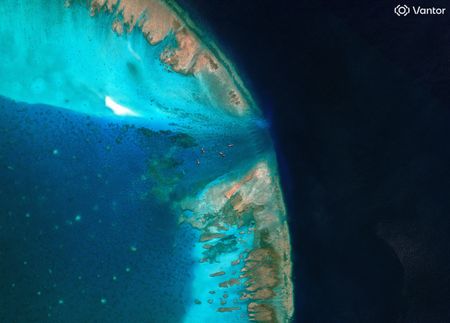

Recent satellite imagery reveals China has installed floating barriers and positioned vessels to restrict access to Scarborough Shoal, one of the most contested areas in the South China Sea, according to exclusive photographs obtained by Reuters.
The disputed maritime location has become a flashpoint where diplomatic experts worry ongoing tensions between China and the Philippines could escalate into military confrontation.
Satellite photos captured on April 10 and 11 document four fishing vessels positioned at the shoal’s entrance, alongside what appears to be a Chinese military or coast guard ship. The April 11 image clearly shows a floating barrier stretched across the entrance.
Vantor, the satellite imaging company previously known as Maxar Technologies, confirmed a likely Chinese patrol vessel was visible just beyond the entrance on April 10.
China’s defense ministry has not responded to requests for comment regarding the vessel deployment or the timing of these operations.
The Scarborough Shoal represents a historically productive fishing area located completely within the Philippines’ exclusive economic zone, though China maintains territorial claims over the region.
In 2023, China’s approval of a national nature reserve at the location drew sharp criticism from Philippine security officials, who described the action as a “clear pretext for occupation.”
Philippine coast guard spokesperson Jay Tarriela confirmed to Reuters on Wednesday that Chinese authorities had positioned a 352-meter (1,150-foot) floating barrier at the entrance during April 10 and 11.
“Six Chinese maritime militia vessels were observed within the shoal, while three others were spotted outside, seemingly obstructing the entrance to BDM,” Tarriela stated, using the Philippine designation Bajo de Masinloc. China refers to the area as Huangyan Island.
Though Philippine coast guard forces have previously cut through such barriers, Tarriela noted the Chinese appear to have withdrawn the most recent obstruction since the weekend. However, Philippine Navy patrols continue in the area.
“According to our assessment in the past, they consistently exhibit suspicion whenever they monitor a group of Filipino fishing boats,” Tarriela explained.
Philippine Navy spokesperson Roy Trinidad reported Tuesday that ten Chinese coast guard ships were documented at the shoal between April 5 and April 12.
While both nations maintain competing territorial claims, no formal sovereignty has been established, leaving the shoal under Beijing’s effective control despite continued Philippine fishing operations.
In January, Philippine and United States military forces conducted joint naval operations at the shoal, marking their eleventh such collaborative exercise as treaty partners.
Military cooperation between the two allies has intensified under Philippine President Ferdinand Marcos Jr., who has strengthened ties with Washington in response to China’s expanding South China Sea presence.
Thousands of American and Philippine troops are scheduled to begin major joint exercises across the Philippine islands this month, including operations in Zambales province, located approximately 120 nautical miles from Scarborough Shoal.
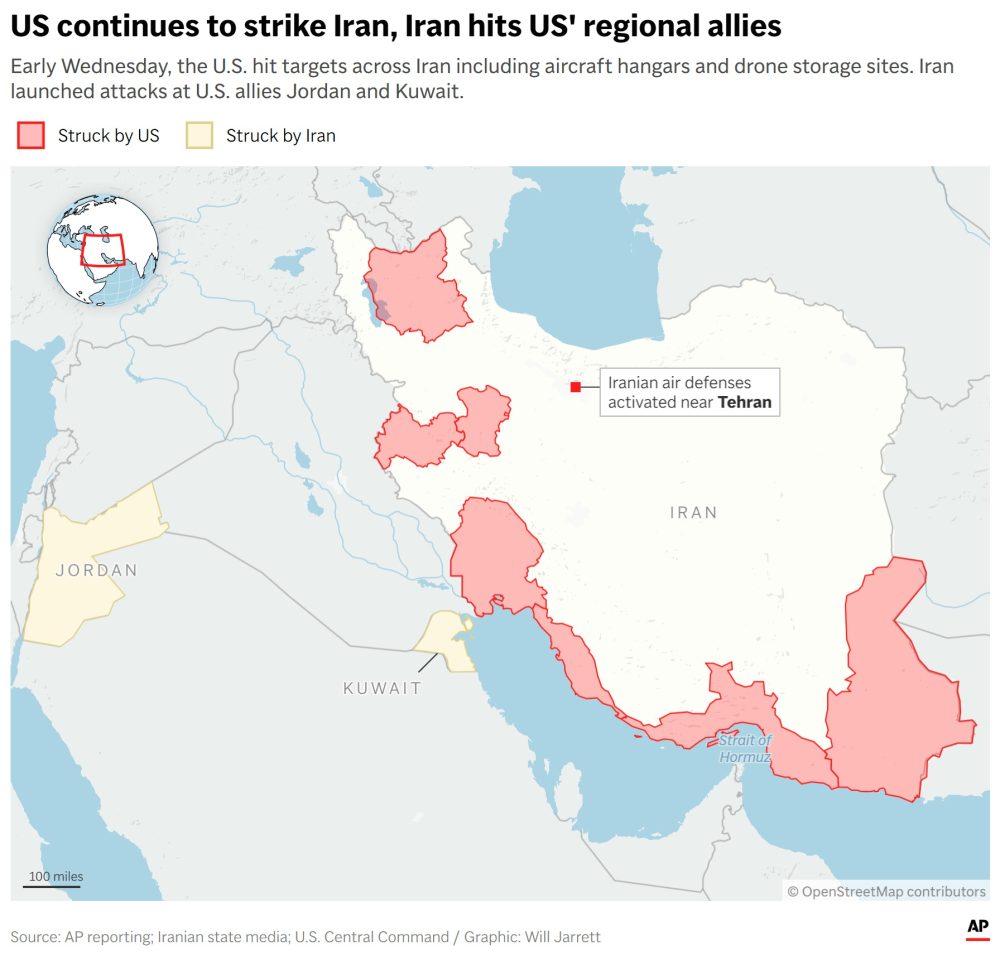
Diplomatic sources indicate these military exercises and broader regional tensions are under close scrutiny, with concerns that China might exploit perceptions of American distraction due to Middle East conflicts and efforts to maintain shipping access through the Strait of Hormuz.
China has maintained a continuous presence of coast guard vessels and fishing boats at the shoal since taking control in 2012 following a confrontation with Philippine forces.
Manila has accused Chinese maritime militia of operating fishing vessels at the shoal and other disputed South China Sea locations, though Beijing has never confirmed these allegations.
A significant 2016 decision by the Permanent Court of Arbitration supported Manila’s position on various South China Sea disputes, though determining Scarborough Shoal sovereignty fell outside the court’s jurisdiction.
The tribunal determined Beijing’s blockade violated international law, noting the area served as traditional fishing waters for multiple nations, including China, the Philippines, and Vietnam.