
WASHINGTON — The Trump administration is preparing to escalate its approach against Iran through intensified economic pressure rather than continued military strikes, should ongoing negotiations fail to produce results before next week’s ceasefire deadline.
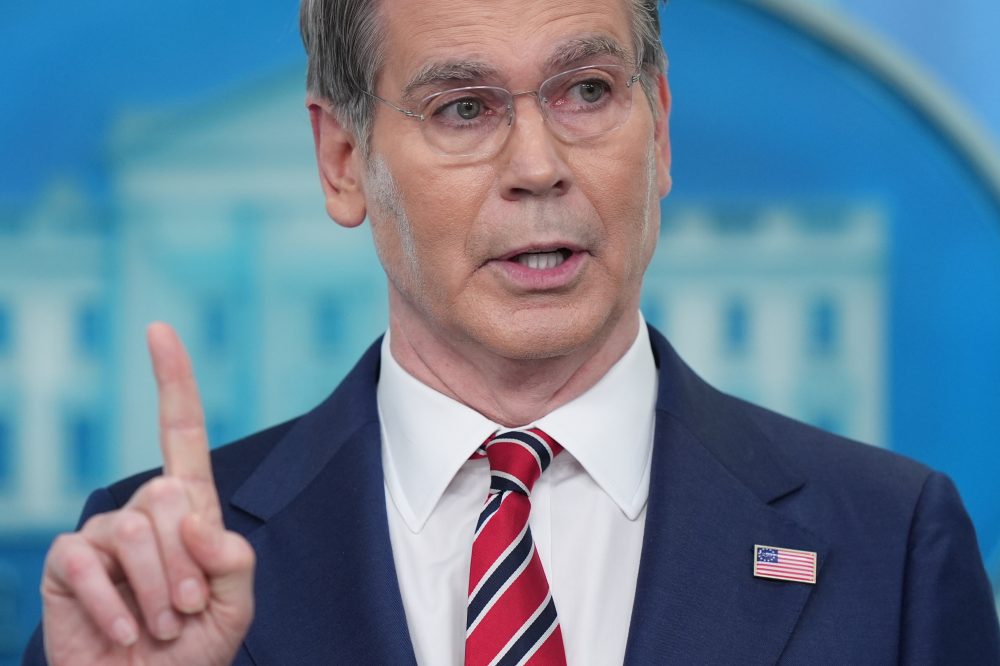
During a Wednesday White House press briefing, Treasury Secretary Scott Bessent announced plans to intensify financial pressure on Tehran, describing the upcoming measures as the “financial equivalent” of military bombardment.
The strategy involves expanding secondary sanctions to target nations conducting business with Iranian-controlled entities, people, and vessels — a move that could affect both allied countries like the United Arab Emirates and rival nations such as China.
“We have informed companies and nations that those purchasing Iranian oil or holding Iranian funds in their banking systems will face secondary sanctions, which represents a severe action,” Bessent stated. “Iran should understand this will serve as the financial equivalent of the kinetic operations we have witnessed.”
This announcement followed Tuesday’s Treasury Department correspondence to banking institutions across China, Hong Kong, the UAE, and Oman, warning of potential secondary sanctions for Iranian business dealings and alleging these nations permit illicit Iranian financial activities through their institutions.
According to a source familiar with the administration’s strategy who spoke anonymously due to lack of authorization for public comment, this economic approach remains available for President Donald Trump to compel Iran toward accepting American proposals regarding nuclear program limitations.
Internal discussions suggest that while Iranian leadership believes they can endure current pressures, inability to compensate supporters could force Tehran into negotiations.
Administration officials identify additional economic targets that could increase pressure on Iran, particularly bonyads — charitable organizations controlling substantial portions of Iran’s economy.
Bessent revealed that two Chinese financial institutions have received warnings regarding Iranian money handling, with Trump scheduled to meet Chinese President Xi Jinping in Beijing next month.
The Treasury Secretary also noted Iran’s regional neighbors now show willingness to freeze Iranian assets due to Iran’s wartime aggression.
Sanctions attorney Daniel Pickard cautioned that secondary sanctions implementation might trigger “diplomatic and economic blowback” from allies, potentially undermining coalition-building efforts against Tehran.
“Many trading partners have voiced opposition to the Iranian conflict,” Pickard explained. “Economic sanctions professionals generally agree that broader participation increases effectiveness chances.”
Wednesday brought new sanctions against an oil smuggling operation linked to deceased Iranian security official Ali Shamkhani, a former Supreme Leader advisor. The sanctions target numerous individuals, companies, and ships secretly moving Iranian and Russian oil through shell companies, many UAE-based.
“Treasury will persist in disrupting Iran’s illegal smuggling and terrorist proxy networks,” Bessent declared. “Financial institutions should recognize Treasury’s commitment to utilizing all available tools, including secondary sanctions, against Tehran’s terrorist activity supporters.”
Trump administration representatives express increasing confidence that the ceasefire and Strait of Hormuz shipping blockade have created favorable momentum.
Iran has sustained billions in infrastructure damage from bombardments — particularly affecting its oil sector, central to the nation’s isolated economy — requiring years for restoration.
Vice President JD Vance stated Tuesday that Trump “seeks a comprehensive agreement, not minor concessions.”
“That represents his offer,” Vance explained. “Commit to nuclear weapon abandonment, and we will enable Iranian prosperity.”
Deputy Chief of Staff Stephen Miller provided a sharper assessment, suggesting Trump executed a “checkmate move” through strait blockade implementation.
“Should Iran select the path toward a globally beneficial agreement, that serves everyone’s interests,” Miller said during Tuesday’s Fox News appearance. “If Iran chooses economic strangulation through blockade, the world will move beyond Iran. Alternative energy pathways and supply chains will emerge. Other regional and global nations — especially America — will fuel the world while Iran becomes irrelevant.”
Some Republicans support increased Tehran pressure through any available means.
“I would endorse anything,” said Senator Thom Tillis, R-N.C. “Whatever proposals the administration develops, I support comprehensive approaches. Greater pressure proves beneficial.”
Others expressed skepticism, noting Tehran already faces extensive economic penalties with minimal behavioral impact.
“Sanctions alone may prove insufficient. Current sanctions are quite substantial,” said Senator Mike Rounds, R-S.D., who serves on Banking and Armed Services Committees. “I remain pessimistic about resolution without regime change.”
Trita Parsi, Quincy Institute executive vice president and Trump war critic, argues Trump faced political and strategic constraints before announcing the ceasefire. However, Parsi suggests Trump may have shifted dynamics, creating conditions where “Iran appears to need agreement more than the United States.”
“The current opening provides Tehran opportunity to transform battlefield advantages into enduring strategic benefits,” Parsi wrote in recent analysis. “Allowing this window to close would sacrifice not only incremental progress but possibilities for economic and geopolitical repositioning. Conversely, the United States, having secured a tentative exit through ceasefire, faces less immediate stakes.”