
The United States military has launched a sophisticated mine-clearing mission in the Strait of Hormuz, deploying cutting-edge technology including underwater drones and explosive-carrying robots to address Iran’s disruption of critical shipping lanes.
The operation comes as America works to secure the vital waterway after Iran’s interference with maritime traffic severely impacted worldwide energy deliveries following US and Israeli military actions against Iran in late February.
Military officials announced over the weekend that the mine-removal mission had begun, with two naval vessels navigating through the strait. Additional resources, including unmanned underwater craft, are expected to join the effort in upcoming days, though specific equipment details remain limited.
According to previous Reuters reporting, Iran had positioned approximately twelve mines throughout the Strait of Hormuz recently, though the exact locations of these devices have not been disclosed publicly.
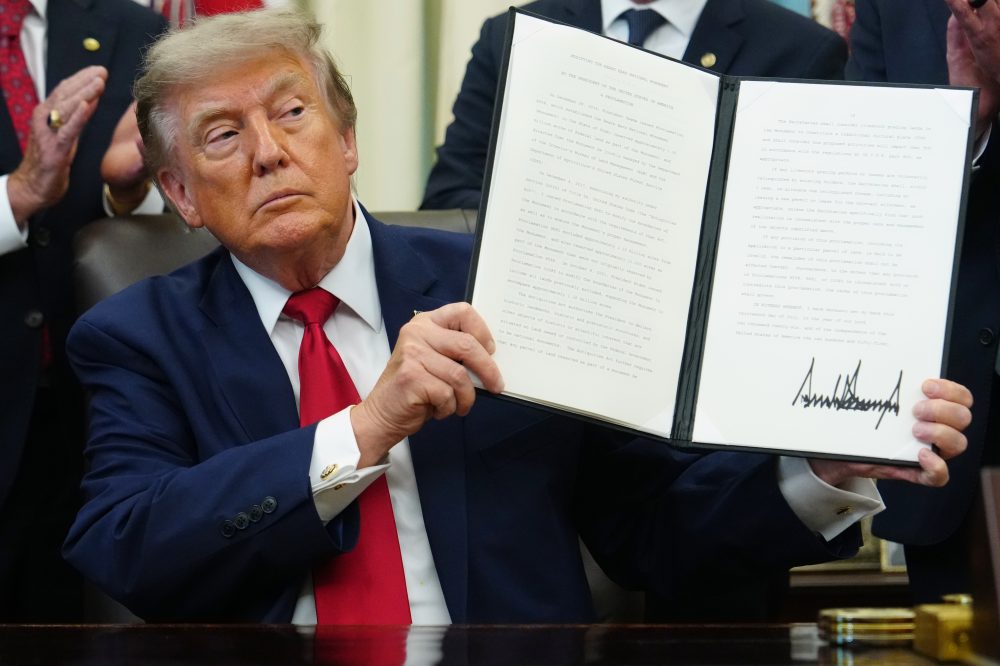
President Donald Trump stated during the weekend that Iranian mine-deployment vessels had all been destroyed, though defense experts warn that Tehran might introduce additional explosive devices.
The effectiveness of mine warfare stems from the devices being inexpensive to deploy while requiring costly removal efforts, explained Jon Pentreath, a former British navy rear admiral now working as a consultant. “Even the threat of a minefield is enough to stop ships, especially commercial ships,” Pentreath noted.
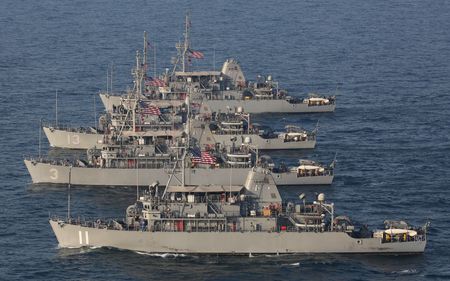
The Navy has modernized its mine-clearing approach significantly from traditional methods. Previously, personnel-operated minesweeping vessels would directly enter dangerous areas, using sonar systems for detection and mechanical equipment towed behind ships to eliminate explosives, sometimes with human diver support. Most of this older fleet has been decommissioned.
Current operations utilize lighter vessels called littoral combat ships, equipped with advanced mine-detection technology including semi-independent surface and underwater drones, plus remote-controlled robots that allow crews to maintain safe distances from minefields. Three such ships are currently deployed.
A senior US official reported in late March that two of these vessels were receiving maintenance in Singapore. At that time, American mine-clearing resources in the Middle East consisted of unmanned underwater craft, four traditional Avenger-class ships, helicopters, and diving teams.
Neither the US Navy nor Central Command provided additional information about current mine-clearing capabilities in the region when contacted.
Intelligence suggests Iran possesses various types of maritime explosive devices, according to former naval personnel and defense specialists. These range from bottom mines that rest on ocean floors and detonate when ships pass overhead, to tethered mines anchored but floating near the surface, drifting mines that move freely with currents, and limpet mines that attach directly to vessel hulls.
The American mission will likely involve searching for mines using unmanned surface and underwater vehicles equipped with detection sensors. When mine-like objects are identified, information is transmitted to crews operating safely outside the minefield for device identification and neutralization planning.
Current Navy detection capabilities include sonar-equipped unmanned surface and underwater vehicles, plus helicopters for spotting near-surface mines, former naval officials report.
For mine destruction, the Navy can deploy systems like the Archerfish, a torpedo-shaped remote-controlled device measuring approximately two meters in length. This expendable unit carries explosive charges and transmits video footage to operators through cable connections, costing tens of thousands of dollars according to manufacturer BAE Systems.
Alternative methods include unmanned boats pulling mine-sweeping equipment that triggers detonations or collects devices, said Bryan Clark, a retired US naval officer and Hudson Institute senior fellow. Human divers are also occasionally deployed, particularly for intelligence collection purposes.
Clark estimates that clearing the strait could require two to three weeks, with potential Iranian attacks on mine-clearing personnel possibly extending the timeline and increasing dangers. Consequently, the US military may deploy protective measures including ships and airborne drones to safeguard crews and equipment.
“Finding and destroying mines is very time consuming,” stated US Admiral Daryl Caudle, chief of naval operations, in March. This extended timeframe leaves mine-clearing operations “vulnerable,” he added.
Technological developments aim to accelerate mine clearance, particularly through improved detection sensors, specialists report.
French defense company Thales claims its newest sonar technology can examine suspected mines from three different perspectives in a single pass, replacing a process that traditionally required multiple sweeps.
Artificial intelligence improvements also enable enhanced data processing aboard unmanned vessels.
The long-term goal involves deploying coordinated unmanned systems capable of searching, identifying, and destroying mines in a streamlined process rather than multiple separate steps.
“That doesn’t exist today,” explained Mark Bock, a retired US Navy captain now serving as vice president of business development for Thales’ US Navy operations. “But it is what all nations are trying to achieve now.”