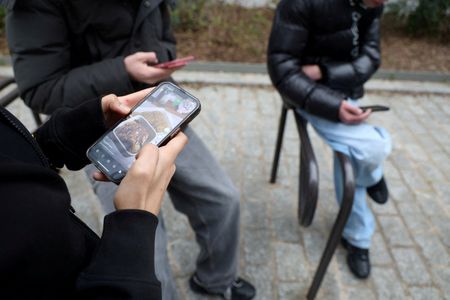

French President Emmanuel Macron delivered a direct message to high school students on Thursday, encouraging them to put down their devices and pick up books while advocating for comprehensive social media restrictions for young people.
Speaking to students in Villers-Cotterets, France, Macron proposed implementing a complete social media prohibition for anyone under 15 years old, along with establishing monthly ‘offline days’ where everyone would disconnect from screens.
“We left you in this jungle and it robbed you of your attention,” Macron said to the high school audience, referring to the current lack of social media regulations. “We need to slow down and help you become adults, and above all citizens.”
“That’s why what we want to do is say that before 15 years old, no more social media. And we’d like, one day a month, to have an offline day … to show it’s possible,” the French leader explained, suggesting these screen-free periods could include reading aloud, theater performances, or other activities.
France joins a growing movement of European countries examining social media restrictions following Australia’s pioneering ban on social platforms for children implemented last year. Rising concerns about the effects of social media on youth mental health and safety have prompted policy discussions across the continent.
Currently, French lawmakers are debating legislation to establish the under-15 ban, though the process faces complications. While the lower legislative chamber approved a complete prohibition, senators prefer targeting only platforms deemed dangerous to children. This disagreement may prevent Macron from achieving his goal of having new rules ready for September’s school year start.
At least twelve European nations, including Britain and Norway outside the EU, have either passed or are considering laws establishing minimum age requirements for social media use, typically ranging from 13 to 16 years old. The European Union is also developing an age verification application.
Later Thursday, Macron planned to lead a video conference with fellow EU leaders to coordinate regional approaches. Officials said the meeting would focus on establishing a ‘digital majority’ concept in Europe, restricting access for children below specific ages while requiring age verification systems.
Student reactions in Villers-Cotterets revealed divided opinions about the proposed restrictions.
Fifteen-year-old Sharonn Tsimi Meyong expressed opposition, stating, “I don’t agree, younger ones will feel left out.” Fellow 15-year-old Fabien Andronic also disagreed, arguing that monitoring screen usage should remain a parental responsibility. “I like social networks, we learn a lot there,” he said.
However, Manel Zerouali, also 15, supported protecting younger children through the ban. “On social network there is cyberbullying,” she emphasized.
Despite their varying views on the policy itself, all students agreed that most young people would likely find methods to circumvent any ban. Australia has experienced a significant increase in virtual private network (VPN) downloads since implementing its social media restrictions, as users attempt to access blocked platforms.
Meanwhile in Britain, Prime Minister Keir Starmer addressed social media company executives Thursday, demanding they accept responsibility for protecting children on their platforms and provide genuine safeguards rather than minor adjustments.
“Right now, social media is putting our children at risk,” Starmer told representatives from Meta, Snap, Google, TikTok and X at the meeting’s opening, requesting concrete action plans from the companies.
Britain is currently conducting consultations through next month regarding potential restrictions on children’s social media access, including possible bans for those under 16, usage curfews, application time limits, and restrictions on what officials describe as addictive design elements.