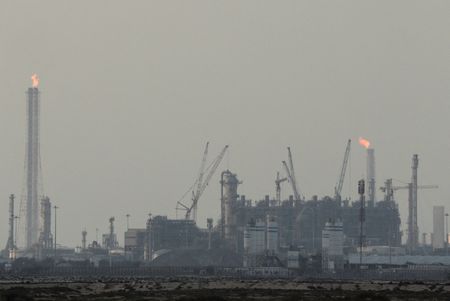

Energy research company Rystad Energy released findings Monday showing that reconstruction of war-damaged energy infrastructure throughout the Middle East region may require as much as $58 billion in funding.
The Norwegian-based firm’s latest analysis represents a dramatic jump from their earlier $25 billion assessment released three weeks prior, indicating more extensive destruction than initially calculated following the April 8 ceasefire agreement between the United States and Iran.
Oil and gas installations are expected to account for approximately $50 billion of the total reconstruction bill, according to the research.
“Repair work does not create new capacity. It redirects existing capacity, and that redirection will be felt in project delays and into inflation far beyond the Middle East,” stated Karan Satwani, a senior analyst with Rystad.
Satwani emphasized the broader implications, noting: “The $58 billion bill is the headline, but the knock-on effects on energy investment timelines globally may prove just as significant.”
The energy consultancy predicts actual reconstruction spending will likely settle around $46 billion, with refining operations and petrochemical plants representing the largest portion due to their sophisticated nature and severity of destruction sustained.
Additional infrastructure including industrial facilities, electrical generation plants, and water desalination systems could contribute another $3 billion to $8 billion in repair expenses, the study indicated.
Recovery schedules are beginning to vary significantly between different facilities and nations, highlighting disparities in local rebuilding capabilities and supply chain accessibility, Rystad researchers noted.
Iran confronts the most extensive damage across its territory, with reconstruction expenses potentially totaling $19 billion for gas processing plants, refineries and export terminals.
Meanwhile, Qatar’s damage is more localized but presents greater technical challenges, especially at the Ras Laffan industrial complex, where repair efforts may interfere with existing liquefied natural gas expansion work.
Engineering services and construction activities will represent the majority of expenditures, though equipment procurement delays will likely determine how quickly facilities return to operation, according to the analysis.
The research firm identified obtaining necessary equipment and skilled workers as the primary obstacles facing reconstruction efforts.