
On April 15, Sudan marked a grim milestone as its devastating civil war entered its fourth year, creating what United Nations officials describe as the planet’s most severe humanitarian disaster, even as global attention remains focused elsewhere.
THE WARRING FACTIONS
The conflict involves Sudan’s national military, commanded by General Abdel Fattah al-Burhan, battling against the Rapid Support Forces paramilitary organization under General Mohamed Hamdan Dagalo’s leadership.
These two commanders previously collaborated in 2019 to remove longtime dictator Omar al-Bashir from power, with Burhan subsequently assuming leadership of the country. However, after executing a military takeover that disrupted Sudan’s struggling democratic transition, the generals became adversaries over disagreements regarding new transition plans and military integration.
When hostilities began on April 15, 2023, the conflict rapidly expanded to include numerous local militia groups supporting both sides, along with international actors.
According to UN investigators, US congressional members, and Sudan’s military, the United Arab Emirates has supplied crucial assistance to the RSF through neighboring countries, though the Gulf nation rejects these allegations.
Sudan’s army receives backing from various regional nations including Egypt, Turkey, Saudi Arabia, and Qatar in different capacities.
CURRENT BATTLEFIELD SITUATION
The RSF established firm control over the expansive Darfur region last year, their traditional stronghold in Sudan’s western territory, and promptly began establishing an alternative government structure. The military retains authority over the country’s eastern regions.
Combat currently focuses on the central Kordofan region, along with a recently opened RSF offensive near Sudan’s southeastern border with Ethiopia.
Unmanned aircraft operations have replaced ground battles as the dominant warfare method, enabling the RSF to counter the army’s former aerial superiority. Similar to the artillery strikes and bombardments that characterized earlier conflict phases, drone attacks have increased civilian casualties, killing at least 700 non-combatants this year according to UN data.
CIVILIAN SUFFERING
The warfare has created catastrophic consequences for Sudan’s population, with UN estimates indicating nearly three-quarters require emergency assistance.
Starvation conditions or famine risks have been declared throughout battle zones nationwide, frequently worsened by supply blockades and administrative obstacles imposed by fighting factions.
Illnesses such as dengue fever have spread rapidly as Sudan’s medical infrastructure has collapsed across many regions.
During the war, the RSF has conducted systematic ethnic killings that UN investigators later characterized as displaying genocide characteristics, with recent incidents occurring in North Darfur’s al-Fashir.
Ongoing violence and insufficient funding have prevented accurate death toll calculations. Sudan’s health ministry reported to Reuters documenting 11,209 fatalities across most Sudanese states, though experts believe total excess deaths since fighting started number in the hundreds of thousands.
Despite enormous needs, the UN’s 2026 Sudan aid request has received only 17% of required funding, coinciding with reduced US foreign assistance, European donor budget cuts, and Gulf nations prioritizing direct bilateral aid.
Relief organizations report reducing services while Sudanese community support networks, including the Nobel Peace Prize-nominated Emergency Response Rooms, attempt to address gaps.
However, Islamic Relief released research this week revealing over 40% of local community kitchens operated by these organizations have closed due to inadequate support.
PEACE EFFORTS
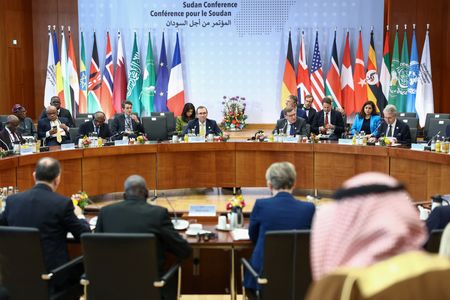
Although the conflict has gained attention from international leaders, including US President Donald Trump, few resolution attempts have demonstrated success, with competing regional interests hampering diplomatic efforts.
The United States has coordinated a partnership including Egypt, Saudi Arabia, and the United Arab Emirates, which presented initial ceasefire proposals to both parties last year.
As battlefield conditions have evolved, both the army and RSF have alternately accepted and rejected mediation attempts, with no reduction in fighting anticipated.