
ISLAMABAD — A brief 15-second video clip has thrust Pakistan’s influential military commander back into international focus.
The footage, shared by Iran’s Foreign Minister Abbas Araghchi, captures Field Marshal Asim Munir stepping off an aircraft in military dress and receiving a warm embrace from the Iranian official. The Pakistani leader had journeyed to the heart of regional tensions in an attempt to reduce hostilities and organize additional diplomatic discussions between Tehran and Washington.
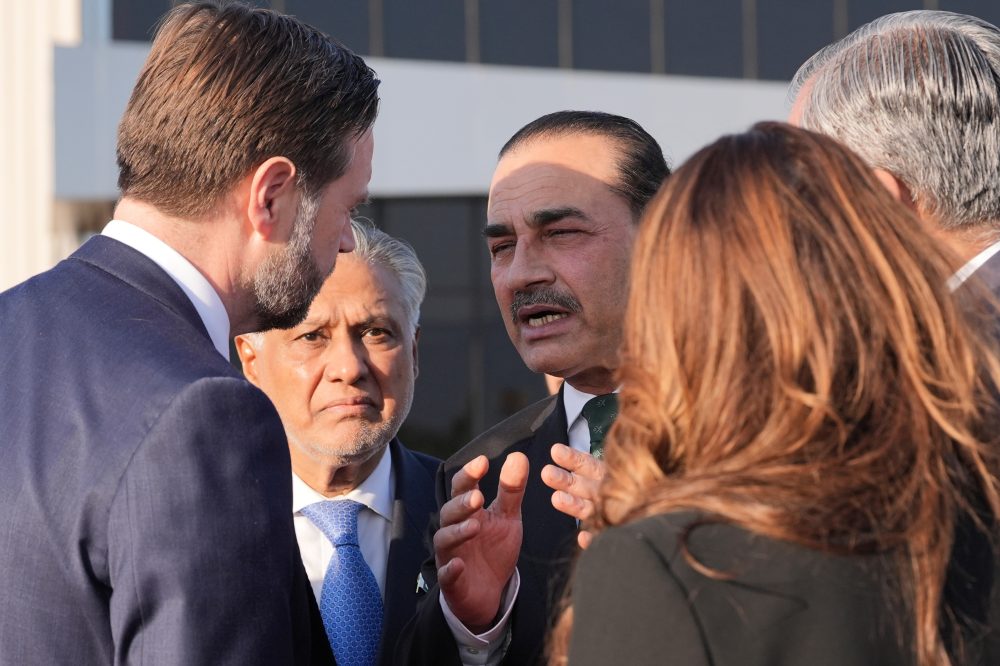
While Pakistan serves as the primary intermediary between Iran and the United States, much attention has focused on Prime Minister Shehbaz Sharif and Foreign Minister Ishaq Dar, partly due to their social media posts and public statements regarding their diplomatic work. However, the military chief has emerged as another crucial player in these efforts.
Following Pakistan’s announcement several weeks ago about its mediation role, Sharif assigned Munir to conduct private communications with both American and Iranian political and military officials to help calm the expanding regional tensions, Pakistani sources report.
While specific information about the army chief’s activities and meetings remains limited beyond publicly released photographs, initial diplomatic efforts appear successful. Pakistan successfully persuaded both U.S. and Iranian representatives to participate in uncommon direct discussions in Islamabad last week.
Although these talks yielded no formal accord, communication pathways have stayed active, with Munir viewed as having provided essential support, according to officials who requested anonymity due to lack of authorization to speak publicly.
Within days of concluding the initial discussions, Pakistan continued outreach to both parties, and each side agreed to consider additional talks. To persuade Iran, Munir traveled to Tehran on Wednesday.
“Delighted to welcome Field Marshal Munir to Iran,” Araghchi wrote on his X social media account, accompanying the video of the Pakistani military leader.
Charles Lyons-Jones, a research fellow at the Lowy Institute, observed that while Sharif and Foreign Minister Dar “may well appear to be prominent figures in the U.S.-Iran peace talks, but make no mistake, Asim Munir is the man taking the decisions.”
Munir, a significant figure domestically and internationally, achieved the position of Pakistan’s most powerful military leader in December when the government appointed him as both army staff chief and defense forces commander. Earlier, he received promotion to field marshal, becoming only the second military officer in Pakistani history to earn this distinction.
“Field Marshal Munir is easily the most powerful Pakistani leader since Pervez Musharraf, giving him complete authority over military appointments, civilian government decision-making and the military’s sprawling business empire,” Lyons-Jones noted.
Born in 1968 into a lower-middle-class household, Munir was raised in Rawalpindi and entered military service in 1986 in Pakistan-controlled Kashmir, a contested territory disputed by both Pakistan and India. His service took him throughout the country and included time in Saudi Arabia as a colonel through a long-established program where Pakistani forces assist in training Saudi military personnel. During this period, he acquired Arabic language skills and gained understanding of regional culture and politics, colleagues report.
Munir subsequently occupied multiple senior roles and stands as the only army chief to have led both Military Intelligence and the Inter-Services Intelligence (ISI), Pakistan’s primary intelligence organization.
U.S. President Donald Trump has referred to Munir as “my favorite field marshal,” highlighting the significance he attributes to their relationship.
“The relationship Munir built with Trump has made Pakistan uniquely qualified to mediate peace talks between the United States and Iran,” Lyons-Jones explained. “It is, indeed, the only country in the region that enjoys strong ties to Iran, the Gulf nations and the United States.”
Munir assumed a significant position during last year’s four-day conflict between India and Pakistan, which raised concerns about potential nuclear confrontation, before Trump announced he helped facilitate a ceasefire. Associates report that Munir played a central role in determining Pakistan’s responses to regional crises.
When Iran conducted strikes within Pakistan’s southwestern Balochistan province earlier this year, targeting what it characterized as rebel locations, officials indicate Munir supported a measured response that included Pakistan’s retaliatory strikes against militant bases across the border.
Likewise, after Indian strikes within Pakistan last year, following an attack on tourists in Indian-controlled Kashmir, Munir collaborated with senior military leadership on Pakistan’s response, according to Syed Mohammad Ali, a friend of Munir. Pakistani officials said these included coordinated deployment of air power, missiles and drones.
He employed a comparable strategy along the Afghanistan border, where the nations clashed over support for militant groups targeting Pakistan.
Those familiar with Munir consider him someone who welcomes difficult assignments. He also earns respect for his Quranic knowledge and is called “hafiz,” meaning someone who has memorized the holy book.
“He understands Islam, he understands the Quran, and he believes in what it teaches,” Ali stated. “His concepts are very clear: he does what others fear to do.” Ali characterized Munir as a careful decision-maker. “He thinks many times before taking a decision, and once he decides, he pursues it with full dedication, leaving the outcome to God.”
His associates noted that Munir’s Tehran visit also demonstrates Iranian leadership’s trust in him, observing that senior Iranian officials — operating under increased security concerns following U.S. and Israeli strikes — appeared publicly to receive him despite risks of revealing their whereabouts.