
BUDAPEST, Hungary (AP) — Opposition leader Péter Magyar announced Wednesday that Hungary’s president has confirmed his new administration could assume control during the opening week of May, marking a swift transition that would conclude Viktor Orbán’s 16-year tenure as Prime Minister.
After Magyar’s center-right Tisza party secured an overwhelming two-thirds parliamentary majority in Sunday’s electoral contest, the opposition leader has advocated for an expedited power transfer. Hungarian legislation mandates that the new parliament’s opening session, which will select the next prime minister, must convene by May 12th.
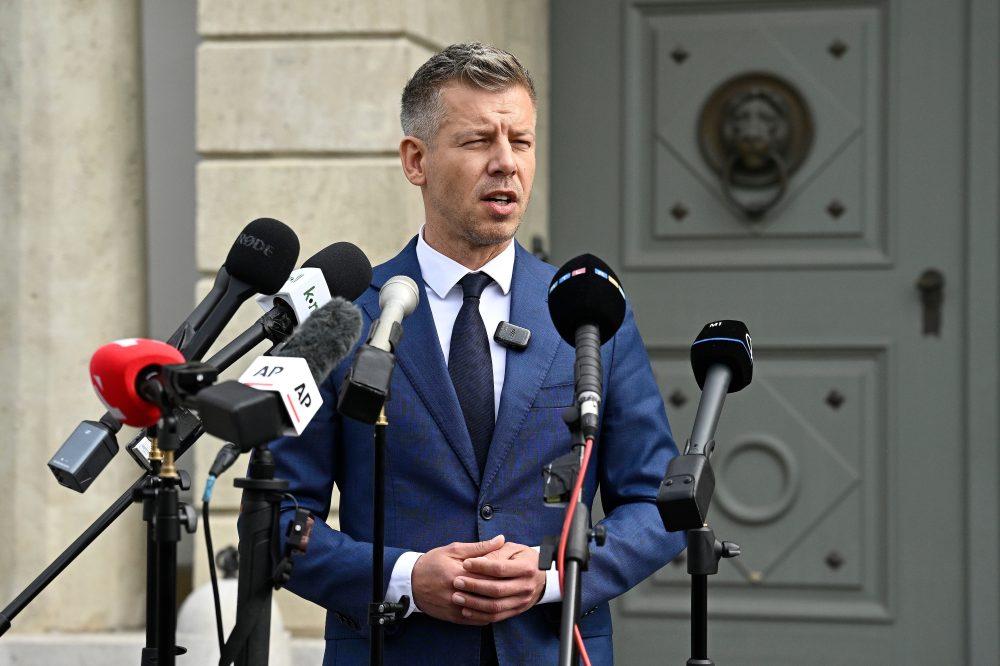
After a closed-door discussion with President Tamás Sulyok on Wednesday, Magyar addressed media outside Budapest’s presidential palace, stating that Sulyok confirmed Magyar would receive the presidential nomination for prime minister, with the inaugural session likely scheduled for May 6th or 7th.
“(The president) thinks, and I think everyone thinks, that it’s in the interests of the Hungarian nation that after such an overwhelming mandate from the voters, a change in government and a change of regime should happen as quickly as possible,” Magyar said.
Magyar has pledged to implement sweeping reforms across Hungary’s governmental framework, including establishing independent ministries for health, environmental protection and education that were absent during Orbán’s administration.
During his first broadcast appearance on Hungary’s state television in nearly two years Wednesday morning, Magyar announced his incoming government would halt the network’s news operations — which has operated as Orbán’s Fidesz party propaganda outlet for years — until establishing “conditions are established that are independent, objective, and impartial.”
“One of the key elements of our program is that this factory of lies will come to end once the Tisza government is formed,” he told the host.
Magyar has urged Orbán’s administration to function solely in a caretaker capacity during its remaining weeks, avoiding decisions that might jeopardize Hungary’s national interests or obstruct the incoming government’s agenda.
He revealed asking the president, who was chosen by Orbán’s parliamentary majority, to step down following the new government’s formation, with Sulyok indicating he would “consider” the request.
“I repeated to him that he is unworthy of embodying the unity of the Hungarian nation, and unfit to be the guardian of the law,” Magyar said, adding that if Sulyok does not resign, his new government will make constitutional changes to remove him “along with all the other puppets that the Orbán system has installed.”
With Tisza achieving a supermajority controlling two-thirds of parliamentary seats, the incoming government will possess authority to modify the constitution and reverse numerous Orbán-era policies.