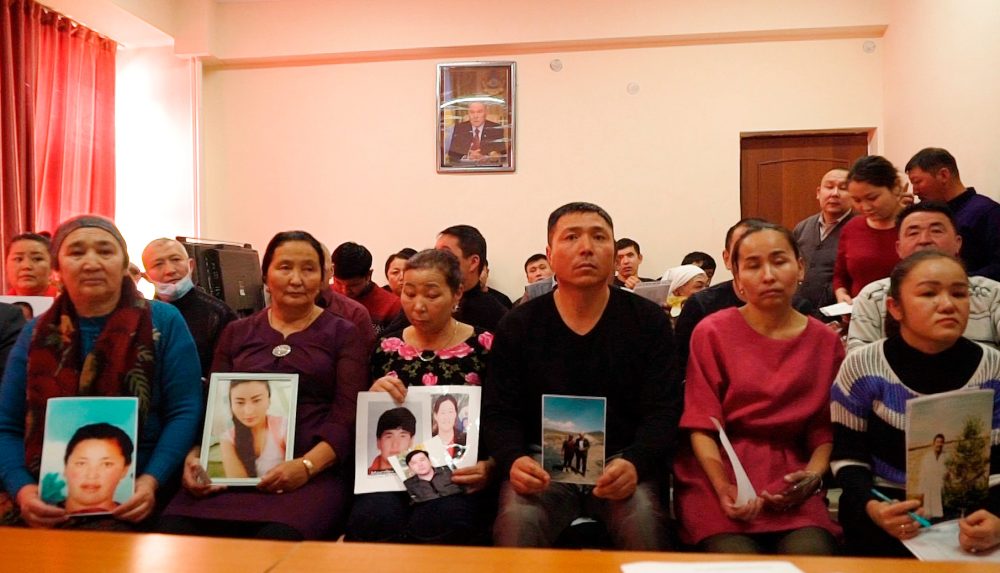

A Kazakhstan court has handed down sentences to 19 activists who demonstrated against China’s harsh treatment of Muslims in the Xinjiang region, marking what human rights experts describe as an extraordinary effort by Kazakhstan to suppress dissent on behalf of Beijing.
The 19 Kazakh citizens staged their demonstration near the Chinese border in November, where they destroyed Chinese flags and images of President Xi Jinping while demanding freedom for a Kazakh citizen being held in Xinjiang.
Eleven demonstrators received five-year prison terms on charges of “inciting discord,” while eight others face travel and movement limitations. Attorney Shinquat Baizhan, who represents the group, verified the punishments that local news outlets also covered.
While Kazakhs who criticize China’s Xinjiang policies have historically encountered government pressure, advocacy organizations note this marks the first instance of such a substantial number of Xinjiang protesters being incarcerated in Kazakhstan.
“This is unprecedented,” stated Yalkun Uluyol, who researches China for Human Rights Watch. “It signals that Kazakhstan is willing to sacrifice freedom of its people to maintain good relations with Beijing.”
Beginning in 2017, Chinese authorities implemented a severe suppression campaign in Xinjiang, forcing over one million Uyghurs, Kazakhs, and other primarily Muslim groups into detention facilities and re-education centers. While many detainees have been freed, the area continues under heavy surveillance with significant restrictions on religious and cultural expression.
The Xinjiang situation has consistently created tension in Kazakhstan, a Central Asian nation of 20 million that depends heavily on Chinese trade. Kazakhstan’s government initiated criminal proceedings against the protesters following a formal complaint from China’s consulate in Almaty, the country’s largest city, according to Uluyol.
The diplomatic communication, which The Associated Press reviewed, described the demonstration as “an open provocation against the national dignity of the People’s Republic of China and an insult to the Chinese Communist Party and the Chinese people.”
China’s Foreign Ministry characterized the sentencing as an “internal affair” and commended Kazakhstan as a “friendly neighbor” that understands “China’s policies on governing Xinjiang.”
Kazakhstan’s Foreign Ministry did not provide a response when contacted for comment.
The convicted activists belonged to Atajurt, a group that champions the rights of Chinese-born Kazakhs experiencing persecution in China. More than one million ethnic Kazakhs live in Xinjiang, with thousands having been detained and many others still facing travel restrictions.
Atajurt has endured ongoing pressure from Kazakhstan’s authoritarian government, which shows little patience for opposition voices. Officials detained the organization’s founder, Serikzhan Bilash, in 2019, freeing him into exile only after he agreed to cease political involvement.
However, the Kazakh government had previously shown some tolerance for the group’s work, recognizing widespread public support in Kazakhstan for Chinese-born Kazakhs.
This tolerance appears to be ending, Uluyol observed, as Kazakhstan strengthens ties with China and shows decreasing acceptance of groups challenging Beijing’s policies.
Bilash warned that the arrests will have far-reaching consequences. His organization provided financial assistance to families of Xinjiang detainees, wrote advocacy letters to embassies and the United Nations, and recorded hundreds of testimonies from people searching for missing relatives.
“The world will lose more than just a human rights organization; it will lose the biggest window into the humanitarian disaster in neighboring Xinjiang,” said Bilash, who now lives in exile in the United States.