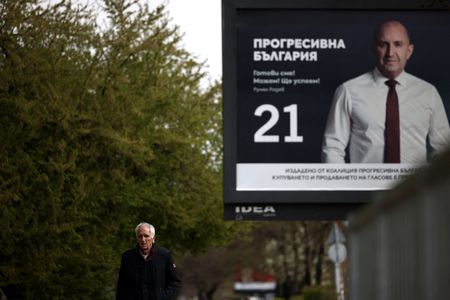

In Bulgaria’s rural Haskovo province, cattle farmer Nikolay Vasiliev displays an election poster outside his property featuring Rumen Radev, the nation’s former president who resigned in January to pursue a parliamentary seat. Vasiliev represents many Bulgarian voters frustrated with years of government corruption that has stifled economic growth and blocked business expansion.
“I see a leader who can make this drastic change and provide security for people,” Vasiliev explained during a farm interview. “The time has come for us to fundamentally solve the problems in the country.”
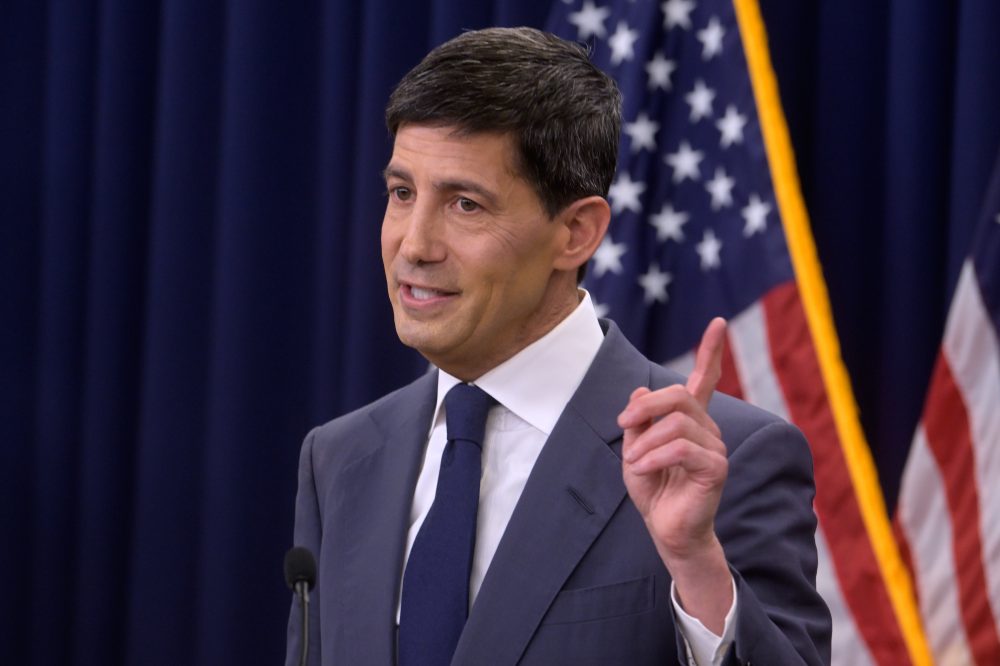
Radev, a former military pilot with pro-Moscow sympathies, currently tops polling data as Bulgaria prepares for its eighth election in five years. The Black Sea nation of 6.5 million citizens will vote Sunday amid ongoing political turmoil that has prevented stable coalition governments from taking root.
The candidate has gained traction among older rural populations who view him as capable of dismantling what he describes as an “oligarchy” of entrenched corrupt officials. During a recent campaign event, Radev vowed to eliminate “the local feudal lords and strongmen who are suffocating entire regions of Bulgaria.”
Bulgaria ranks 84th globally on Transparency International’s 2025 Corruption Perceptions Index, matching Hungary as the European Union’s lowest-scoring member nation. Corruption experts note that graft permeates everything from government contracting to municipal elections throughout the country.
A Radev administration could dramatically alter Bulgaria’s international relationships, which have traditionally aligned with Brussels. The country recently adopted the euro currency and signed a security pact with Ukraine – decisions Radev publicly opposes.
“The coalition-makers introduced the euro in Bulgaria without asking you. And now, when you pay your bills, always remember which politicians promised you that you would be in the ‘club of the rich’,” Radev stated Wednesday, capitalizing on public anger over increased living costs.
Following Hungarian Prime Minister Viktor Orban’s electoral defeat, Radev positions himself as potentially the EU’s sole remaining leader advocating for improved Russian relations despite the ongoing Ukraine conflict.
“We are the only member state of the European Union that is both Slavic and Eastern Orthodox,” Radev told journalist Martin Karbovski. “We can be a very important link in this whole mechanism…to restore relations with Russia.”
Current polling shows Radev’s Progressive Bulgaria party capturing approximately 30% support, maintaining a 10-point advantage over the largest opposition party, GERB, though falling short of an outright majority. Campaign finance records indicate Progressive Bulgaria has collected over 650,000 euros in private donations, representing 67% of all contributions reported.
Coalition building appears inevitable, which could moderate Radev’s pro-Russian positions. The pro-European We Continue the Change – Democratic Bulgaria alliance, polling around 12%, shares Radev’s reform agenda and represents a potential partnership.
Radev has rejected any alliance with GERB, led by former Prime Minister Boyko Borissov, or the Movement for Rights and Freedoms party, whose leader Delyan Peevski faces U.S. and British sanctions for corruption.
“All indications point towards…coalition-building,” observed Tihomir Bezlov, senior fellow at Sofia’s Centre for the Study of Democracy, though he questioned any coalition’s longevity.
Electoral officials expect voter participation to exceed 50% as the interim government implements anti-corruption measures including vote-buying enforcement and EU assistance combating online disinformation from suspected Russian sources. Radev dismisses these efforts as vote manipulation tactics.
“No one from outside can come and tell us who and what to vote for. That is decided here, by us Bulgarians,” he declared. Russian officials have denied election interference allegations.
Since communism ended in 1989 and EU membership began in 2007, Bulgaria has experienced significant development. The nation now boasts the EU’s lowest unemployment rate, improved life expectancy, and enhanced economic stability through eurozone membership.
Sofia’s renovated downtown features thriving restaurants and well-maintained parks where residents gather during spring evenings, while mountain ski resorts draw European tourists each winter.
However, rural areas like Haskovo suffer from chronic underinvestment and youth migration, leaving deteriorating infrastructure and struggling agricultural communities.
Farmer Vasiliev rejects characterizations of Radev as pro-Russian, focusing instead on leadership character.
“The first word that comes to mind when I think of a leader is ‘dignified’,” he explained. “To be a dignified leader, you must be a dignified person.”