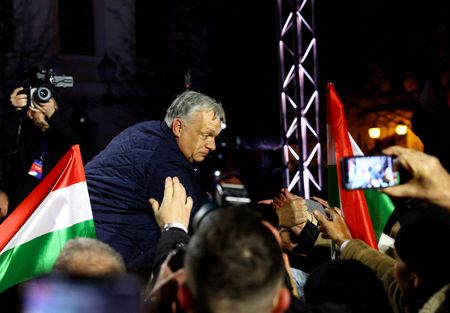

BUDAPEST – Viktor Orban’s unexpected electoral loss has sparked unprecedented internal criticism within his Fidesz party, marking the first time since 2010 that loyalists have openly questioned the Hungarian Prime Minister’s political future.
The conservative leader acknowledged defeat Sunday evening after center-right challenger Peter Magyar achieved an unexpected constitutional majority victory. This decisive win positions Magyar to potentially reverse many of Orban’s controversial judicial and legal system changes when he assumes the premiership next month.
Though Orban has remained largely silent about his intentions moving forward, any indication he might step away from Fidesz leadership could dramatically alter Hungary’s political landscape. His office declined to provide comment when contacted.
PARTY LEADERSHIP IN QUESTION
The electoral outcome has created uncertainty within Fidesz ahead of their scheduled April 28 party meeting, where members plan to analyze their significant loss, according to Andras Cser-Palkovics, the Fidesz mayor of Orban’s hometown Szekesfehervar.
Speaking to YouTube channel Partizan on Wednesday evening, Cser-Palkovics stated: “I think (Orban) does not have to resign at the moment. He should wait for the national caucus and then start assessing (the election result). Then we should have a leadership election soon in any case.” He predicted this leadership contest would occur during late summer or early fall.
These remarks highlight the difficult situation confronting Fidesz: determining the future role of a dominant Hungarian political figure who secured four consecutive electoral victories but apparently failed to recognize changing voter preferences across generations.
“We should have new faces in national politics. I think we need an entirely new presidency,” Cser-Palkovics explained, though he acknowledged uncertainty about who might best position Fidesz for future campaigns.
However, other party members like Janos Pocs have expressed continued support for Orban, telling news website 24.hu that he remains the optimal choice to reinvigorate Fidesz and guide a party that still maintains backing from approximately 2.4 million voters.
YOUNGER VOTERS SEEK CHANGE
Zoltan Novak from the Centre for Fair Political Analysis identified two crucial elements that will determine Orban’s political survival: confidence in his capacity to rebuild Fidesz, and the potential impact of Magyar’s anti-corruption campaign on the party’s standing.
Pre-election polling revealed strong appetite for change among younger demographics, while Orban’s support base consisted primarily of older voters – a trend that could present ongoing challenges in coming years.
“Whether Fidesz is able to engage voters below 65 will be decisive in the next four years,” Novak explained. “If it cannot expand to younger voter groups, its fate will be sealed.”
Magyar’s campaign promise to establish prime ministerial term limits, which could prevent Orban from seeking future office, adds another layer of complexity to the situation.
The overwhelming margin by which Magyar’s Tisza party – established just two years ago – defeated Orban represented a “huge slap in the face” for Fidesz, according to Eurasia Group analyst Orsolya Raczova, explaining the unusual public criticism directed at Orban.
“I do not think Orban would want to leave for the time being, but he will need to shore up his legitimacy if he wants to stay on,” Raczova observed. “I do not think Fidesz is finished, but it definitely needs a rethink and a strategic change.”