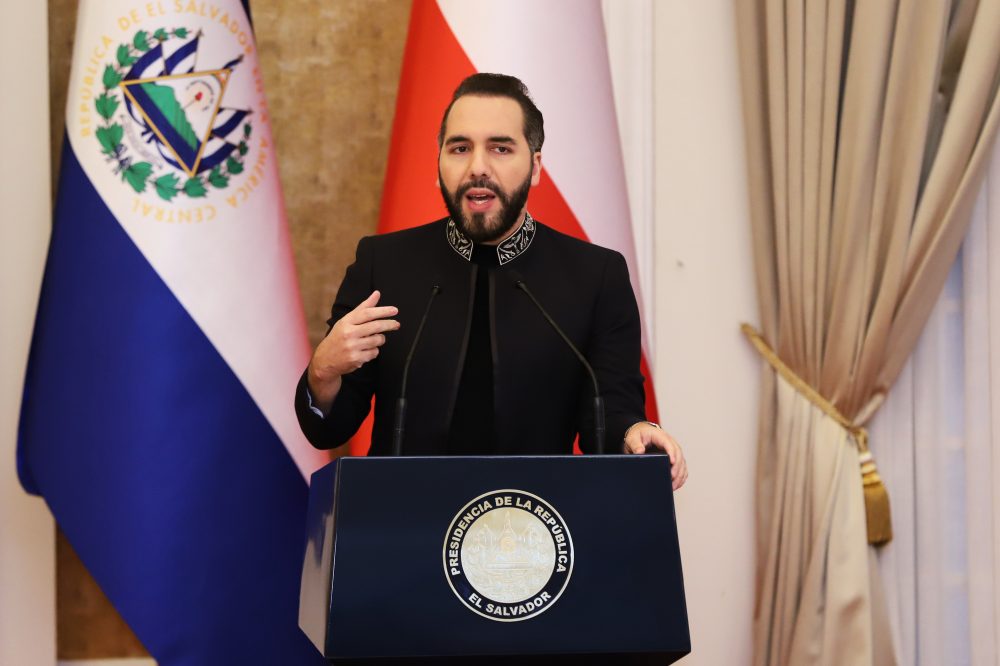

SAN SALVADOR (AP) — President Nayib Bukele of El Salvador enacted controversial constitutional changes on Wednesday that authorize lifetime imprisonment for individuals beginning at age 12, marking another aggressive step in the populist leader’s hardline approach to crime.
Bukele’s political party, which holds control of the Legislative Assembly, approved the legislation last month. The new law targets those found guilty of murder, femicide, sexual assault, and gang involvement, either as primary offenders or accomplices. Bukele’s administration championed the measure.
El Salvador previously capped prison terms at 60 years for adults, with shorter maximums for juvenile offenders. The new regulations, set to begin April 26, will establish specialized criminal courts for these cases. The law includes provisions for mandatory sentence reviews after several decades, with timing based on the defendant’s age and crime severity.
Opponents view these changes as another extreme action in Bukele’s anti-gang campaign, which has lasted more than four years.
After a spike in gang-related violence during 2022, Bukele declared what was initially described as a temporary emergency state. This emergency status has become permanent in the Central American country through repeated extensions. Constitutional protections were suspended, leading to the incarceration of over 1% of El Salvador’s citizens, frequently based on unclear accusations with minimal proof. Mass court proceedings have become common, and defense attorneys often cannot locate their clients within the prison system.
During one mass proceeding last year, suspected gang affiliates received sentences spanning hundreds of years.
Bukele administration officials have previously declared that detained gang members “will never return” to the streets.
The government’s crackdown has resulted in approximately 91,650 arrests throughout El Salvador. Bukele has stated that fewer than 10% of these individuals have been freed.
While these actions have drawn criticism for human rights violations and wrongful imprisonment, they have also dramatically reduced murder rates in a nation previously plagued by gang terror, boosting Bukele’s public approval ratings.
The right-wing leader, who maintains ties with U.S. President Donald Trump, faces harsh criticism for eroding governmental oversight and damaging El Salvador’s vulnerable democratic institutions.
These sentencing modifications represent the newest addition to numerous constitutional changes forced through by Bukele and his supporters. The administration previously enacted one of its most controversial reforms last year, removing presidential term restrictions and creating a pathway for Bukele to maintain power without limitation.
Strengthened by his relationship with U.S. President Donald Trump, the government has also targeted opponents, arresting critics and activists while increasingly forcing media professionals and opposition figures to choose between leaving the country or facing imprisonment.
Human rights organizations have recorded instances of wrongful detention spanning multiple years, with one group filing a formal complaint with the Inter-American Commission on Human Rights. The complaint alleges that most individuals imprisoned during the emergency state were detained without proper justification, claims that Bukele disputes.