
NEW YORK (AP) — Mathematician Masood Masjoody was known for publicly accusing those he viewed as enemies. When he posted on social media last autumn that two Iranian-born activists were planning his murder, few people paid attention.
The academic vanished in early February. Police in British Columbia discovered his remains by mid-March and filed first-degree murder charges against the same two individuals Masjoody had identified as threats.
The news shocked Iranians living abroad, especially those who oppose both the current Iranian government and efforts to install the former monarchy’s heir as the country’s future ruler. Shortly after Masjoody’s disappearance, 10 prominent diaspora voices—mostly critics of the monarchist cause or the ongoing conflict with Iran—received a threatening message on X.
“Soon you’ll have to find the corpses of many,” the message warned.
The Farsi-language post, accompanied by a knife emoji, originated from a now-deleted account bearing the name SAVAK, referencing the monarchy’s notorious secret police that once suppressed opposition.
This incident has intensified existing fractures within a diaspora split over the current war and potential future leadership should Iran’s government collapse. Those who received threats point fingers at the influential movement supporting the exiled crown prince who endorses the U.S. and Israeli-led military campaign. The two murder suspects had expressed opposition to Iran’s current regime while supporting monarchist causes in their online activity.
Followers of Reza Pahlavi, whose father was overthrown in the 1979 Islamic Revolution, reject responsibility for such intimidation and claim Iranian government operatives are impersonating activists online. Tehran has an established record of pursuing dissidents internationally.
Peace advocates and Pahlavi opponents describe an atmosphere of intimidation that has prompted some to contact law enforcement and modify their daily habits.
Nik Kowsar, among those targeted in the threatening post, explained he regularly receives hostile social media messages and blocks accounts to avoid harassment.
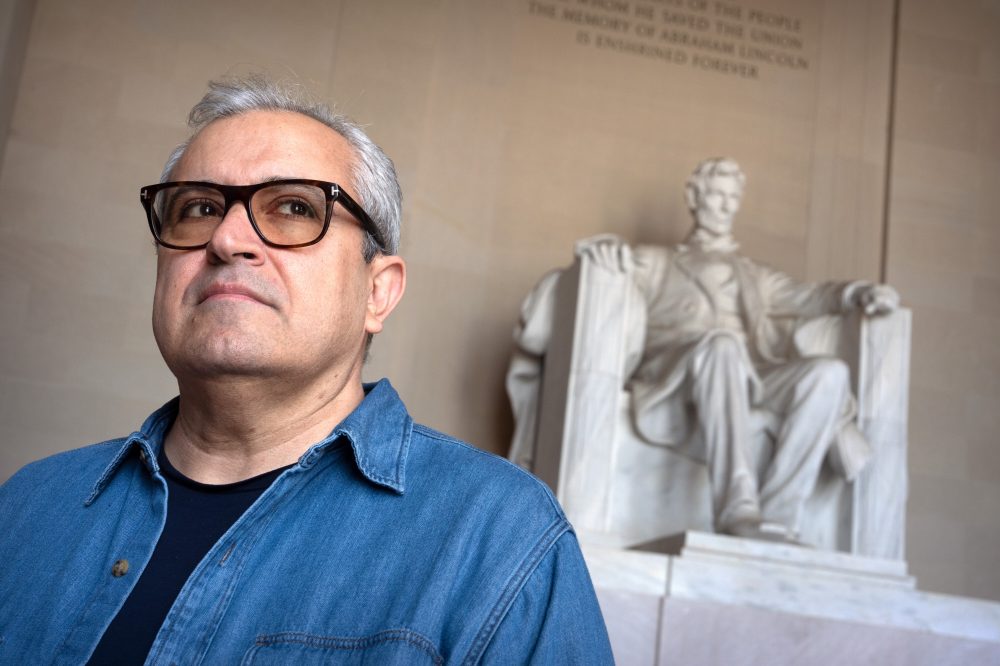
“But this one gave me chills,” said Kowsar, who faced imprisonment in Iran in 2000 for creating a cartoon mocking a senior cleric and currently resides in Washington, D.C. Previously serving as an unpaid advisor to Pahlavi, he has transformed into a sharp critic, alleging monarchists aim to substitute one authoritarian system for another.
Additional Iranian activists have received comparable threats since then.
Measuring Pahlavi’s actual support within Iran or among expatriates remains challenging.
His January call for demonstrations drew hundreds of thousands to the streets in the most significant protests in years. Authorities responded with brutal suppression, resulting in thousands of deaths and tens of thousands of arrests.
Pahlavi, a Maryland resident, claims readiness to take control and guide a democratic transformation following the theocracy’s fall. However, this possibility seems increasingly remote as Iran has survived weeks of military strikes and a naval embargo without signs of popular revolt since hostilities began.
The exile community has become more divided as the monarchist movement grows “radicalized, more entrenched and more coordinated,” according to Sahar Razavi, who directs the Iranian and Middle East Studies Center at California State University, Sacramento.
“They demand unity of voice and purity of politics and anyone who falls short of that is not just their rival but their enemy that has to be vanquished,” Razavi explained. Her center implemented additional security measures after she faced harassment for hosting a journalist some accused of supporting Iran’s government.
A representative for the National Union for Democracy in Iran, which maintains close ties to Pahlavi, stated the exiled prince has “consistently called for civility in public discourse” and the movement bears no responsibility for antagonism toward critics.
“The prince has, by any estimate, millions of followers. He cannot be reasonably held responsible for the comments of all of them,” policy director Andrew Ghalili wrote in an email. “Second, the Islamic Republic has a history of posing as opposition supporters online to discredit them.”
Two additional activists mentioned in the X message reported the threat to authorities and changed their routines for protection.
“With the latest threat after that Canadian Iranian activist disappeared, I’ll be honest with you, I freaked out,” said Alireza Nader, a Washington, D.C.-based security analyst. Nader, who previously supported Pahlavi but now openly criticizes him, said he currently avoids demonstrations and public gatherings.
Other diaspora activists report receiving concerning threats as well.
Chicago-based activist Ali Tarokh received a March phone call from a number belonging to a fellow Iranian immigrant. Tarokh said the caller labeled him an Iranian government agent and threatened to “go after” him. He contacted police and requested a judge issue a restraining order against the caller.
Tarokh has criticized war supporters, highlighting the conflict’s impact on ordinary Iranians, and continues participating in peace demonstrations despite the intimidation.
“It doesn’t matter if you tell them, ‘I agree with you, the regime has to go, but I disagree with your approach.’ There is zero tolerance,” said Tarokh, who was imprisoned for student activism in Iran and received U.S. political asylum 12 years ago.
The National Iranian American Council, which promotes U.S. diplomatic engagement with Iran, has also experienced increased threats.
Staff members received a January email warning they would be “responsible for all loss of lives” if they continued with an anti-war forum in Cambridge, Massachusetts. Organizers alerted law enforcement before transitioning the event online, said Etan Mabourakh, NIAC’s organizing manager.
A subsequent message targeting the organization’s president threatened to “leave your body in the water” unless panel speakers condemned Iranian leadership.
Some threat recipients attribute hostile online rhetoric to Pahlavi supporters. However, with Iran, Israel, the U.S., and various opposition factions seeking to promote specific narratives about the war and diaspora politics, determining the authenticity of online accounts proves difficult.
“I have to believe that a lot of the things that we see online are not created by authentic users. But that’s not very comforting when we see people we know in real life sharing or repeating them,” said Amy Malek, a William & Mary professor researching the Iranian diaspora.
Kowsar revealed that days before Masjoody’s disappearance, they discussed a harassment lawsuit the mathematician was pursuing against Pahlavi supporters.
Masjoody had filed over six lawsuits since 2014, with a Canadian judge labeling him a “vexatious litigant” last year. Defendants in his final case included one person later charged with his murder, plus Pahlavi himself. In court documents filed last fall, Pahlavi stated he was unfamiliar with Masjoody and disputed the accusations.
Kambiz Ghafouri, another recipient of the X message, said he had long worried about retaliation from Iran’s government despite living in Finland for two decades. Threats seemingly originating from within the diaspora have intensified those concerns.
“Our lives were like hell every day in Iran,” he said.
“But recently, especially after the death of Masood, who was my friend, we feel unsafe here.”