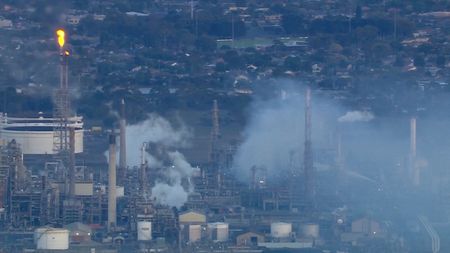

A major blaze at Australia’s biggest oil refinery has disrupted gasoline production Thursday, compounding fuel supply challenges as the nation grapples with shortages stemming from Middle East warfare that has destabilized global energy markets.
Fire officials reported the flames that erupted Wednesday evening at Viva Energy’s facility, which processes 120,000 barrels daily, were contained by midday Thursday at 12:00 p.m. local time.
The timing couldn’t be worse for Australia, which relies on foreign sources for four-fifths of its fuel requirements and has been scrambling to secure alternative supplies after Middle Eastern conflicts disrupted traditional sources and pushed energy costs higher globally.
“This is not a positive development, but obviously there’s a long way to go in terms of working out just what the impact is,” Energy Minister Chris Bowen stated during an interview with Channel Nine.
The Viva Energy facility provides more than half the fuel consumed in Victoria, Australia’s second-largest state by population, and handles one-tenth of the nation’s overall fuel demand.
Company officials indicated that gasoline and aviation fuel production would face disruptions, though they plan to satisfy demand through imported supplies.
While the facility continues producing jet fuel and diesel, output has been reduced as a safety precaution, Bowen explained.
“I would expect we’d see a price hike depending on the scale of the damage, and secondly, it reinforces the challenges we have in terms of sovereign and resilient capabilities here,” stated John Coyne, an analyst with the Australian Strategic Policy Institute.
The refinery emergency coincides with Prime Minister Anthony Albanese’s visit to Kuala Lumpur Thursday, where he’s meeting with Malaysian leader Anwar Ibrahim to negotiate fuel supply agreements, following similar diplomatic missions to Singapore and Brunei.
While Malaysia and Brunei possess crude oil and refined product capabilities, their ability to boost output remains limited, Coyne noted.
The refinery, situated roughly one hour from Melbourne, reported no injuries from the incident. Officials have not yet determined what sparked the fire or assessed the full extent of damage.
Since the Middle Eastern conflict began nearly seven weeks ago, supply concerns have triggered panic purchasing that doubled fuel demand in certain regions, despite government assurances that adequate supplies remain available.
Last month, Albanese implemented emergency relief measures, cutting fuel taxes in half and suspending heavy vehicle road charges for three months to help families manage rising costs driven by the overseas conflict.
“It’s going to be a very bumpy and expensive few months,” warned Tennant Reed, who oversees climate and energy issues for the Australian Industry Group.
In March, government officials committed to backing a portion of fuel purchases made by refiners and suppliers.
“We’ll continue to work with the company to do what we can to make sure that anything that is offline is brought online as soon as possible,” Albanese told reporters during a press conference in Putrajaya, Malaysia’s administrative center.
Reed explained the government could seek additional market supplies to offset production losses at Viva’s plant, though cargo deliveries would require several weeks.
Viva Energy CEO Scott Wyatt informed reporters that the company’s immediate priority involves fully extinguishing the blaze that damaged two facility units before evaluating damage and safely resuming normal operations.
“All the other units are still operating and still in production but they are at minimum rates to maintain safety across the site,” he explained.
“We’ll only start increasing production again once we’re confident that we can do that safely.”
Trading of Viva’s stock has been suspended pending an official assessment of the fire’s impact.