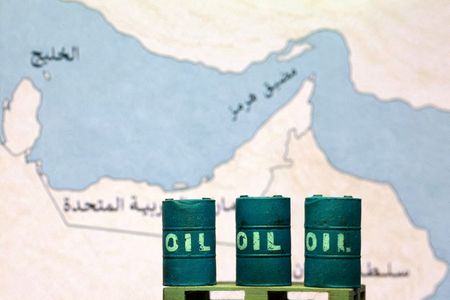

Iran is working to strengthen its control over the strategically vital Strait of Hormuz by implementing toll charges for ships seeking safe transit, working alongside the country’s Islamic Revolutionary Guard Corps.
The waterway serves as a crucial link between the Gulf and the Gulf of Oman, running through territorial waters controlled by both Iran and Oman. This shipping corridor ranks among the planet’s most critical energy transport routes, with roughly one-fifth of global oil shipments passing through its waters.
Stretching approximately 104 miles in length, the strait’s width changes throughout its course. At the most constricted section, vessels navigate through 2-mile-wide channels for incoming and outgoing traffic, with a 2-mile separation zone between them.
Following military strikes by U.S. and Israeli forces against Iran, the nation has essentially blocked the strait and insisted on toll collection rights as a condition for ceasing hostilities. Current details about any actual toll payments remain unclear.
International maritime passage through the strait falls under the United Nations Convention on the Law of the Sea, commonly called UNCLOS, which was established in 1982 and became effective in 1994.
Under Article 38 of this treaty, ships maintain rights to unrestricted “transit passage” through more than 100 global straits, including Hormuz.
The agreement permits nations adjacent to straits to control passage within their “territorial sea” extending 12 nautical miles from their coastline, while still allowing “innocent passage.”
Passage qualifies as innocent when it doesn’t threaten a nation’s peace, stability, or security. Activities like military operations, significant pollution, espionage, and fishing are prohibited. This innocent passage principle played a central role in a 1949 International Court of Justice ruling regarding the Corfu Channel between Albanian and Greek waters.
Around 170 nations plus the European Union have approved UNCLOS. However, both Iran and the United States remain non-signatories. This creates uncertainty about whether the treaty’s maritime navigation freedoms have evolved into standard international law or only apply to countries that have ratified it.
Legal scholars generally consider UNCLOS to have achieved or be widely recognized as customary international law. Some countries that haven’t ratified may claim exemption by maintaining persistent and consistent opposition. Iran contends it has voiced such objections, while the United States challenges Iran’s authority to impose tolls.
No official enforcement mechanism exists for UNCLOS. Both the International Tribunal for the Law of the Sea in Hamburg, Germany, created by the treaty, and the International Court of Justice in The Hague, Netherlands, can issue decisions but lack enforcement power.
Nations and businesses possess alternative methods to counter toll implementation.
A cooperative state or group of states might attempt treaty enforcement. The UN Security Council could adopt a resolution condemning the tolls.
Shipping companies have the option to reroute cargo away from the Strait of Hormuz and have already begun this practice. Countries might expand sanctions targeting financial dealings that potentially benefit Iran’s government by penalizing companies that agree to pay the tolls.