
FRANKFURT, Germany (AP) — American naval forces have launched a maritime blockade targeting Iran, marking the most recent intensification in ongoing tensions that have disrupted crucial energy shipments at the Strait of Hormuz.
According to Admiral Brad Cooper, who leads U.S. Central Command, the naval operation that began Monday “has been fully implemented.” In a Wednesday announcement, Cooper stated: “U.S. forces have completely halted economic trade going in and out of Iran by sea.” This action could severely impact Iran’s economic stability.
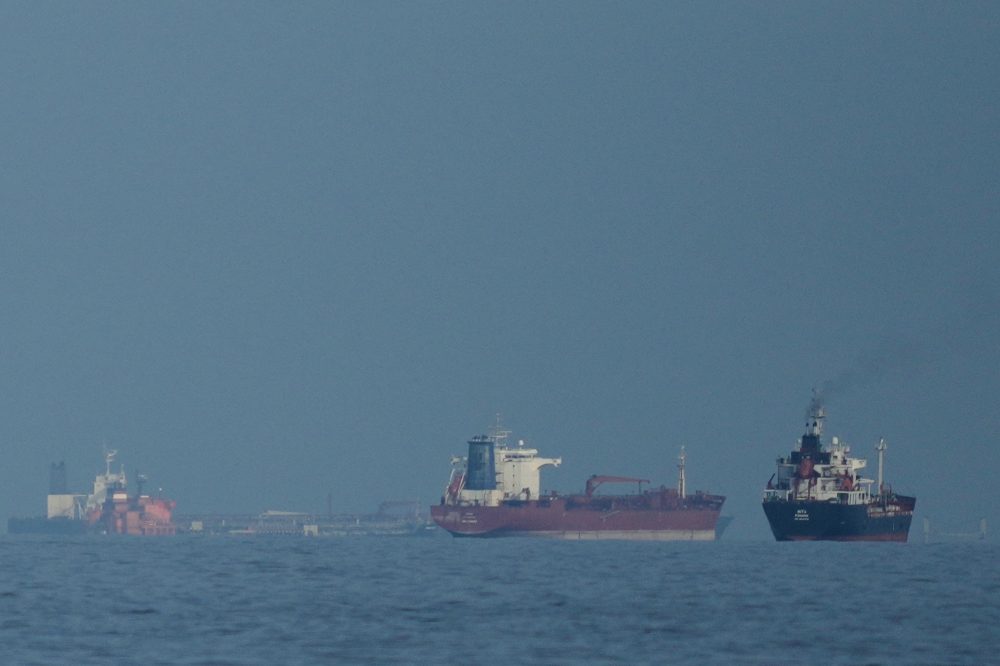
Maritime tracking companies report that vessels connected to Iran or under sanctions have departed the Gulf via the Strait but subsequently stopped their journeys or reversed course. The already dangerous shipping environment has become more complex due to interference with or falsification of positioning systems.
Naval officials are enforcing the blockade “impartially against all vessels of all nations entering or leaving coastal areas or ports in Iran.” Ships not bound for Iranian facilities maintain their navigational freedoms, Central Command confirmed.
A U.S. military source, speaking anonymously about sensitive operations, revealed to The Associated Press that American forces are conducting the blockade in the Gulf of Oman past the strait. The approach involves monitoring ships as they depart Iranian facilities and pass through the Strait of Hormuz before intercepting and compelling them to return.
The source explained that military personnel use multiple methods beyond the standard AIS tracking beacons required on all commercial vessels to identify ships originating from Iranian ports, though specific details remain classified for security purposes.
In its Wednesday statement, U.S. Central Command reported that no ships successfully evaded American naval forces during the blockade’s initial 48-hour period targeting vessels entering and departing Iranian ports.
Central Command confirmed that nine ships have followed U.S. military instructions to reverse direction and head back toward Iranian ports or coastal waters. Navy vessels are informing merchant ships that boarding and forceful compliance measures are authorized.
Ana Subasic, a trade risk analyst with Kpler data firm, noted that Tuesday’s first complete blockade day saw only eight vessels navigate the strait, most having Iranian connections or facing sanctions. Despite current ceasefire conditions, she described the operational environment as “extremely high risk.”
“Most of the vessels have appeared to halt or have reduced movement after clearing the strait,” Subasic explained, “which tells us that the effect of the blockade is starting to show up because most of these vessels that have crossed have some kind of history with carrying Iranian-origin sanctioned cargo.”
She cited the Rich Starry tanker, carrying methanol and under sanctions, which exited the Persian Gulf through the strait before stopping, executing a U-turn, and returning through the passage.
Windward, a maritime intelligence company, observed vessel actions “indicating a fragmented and uneven response to the blockade” as sanctioned and false-flagged ships remained operational, with some crossing the strait while others delayed or changed course.
Iran had previously blocked the Strait by threatening shipping attacks, disrupting 20% of global daily oil consumption, driving petroleum prices upward, and prompting concerns about increased inflation and economic downturns in major economies.
Ships faced attacks from aerial and underwater drones plus unidentified projectiles, resulting in 11 crew member deaths. Though these assaults have decreased, navigation risks have caused ship traffic to decline by over 90%.
Some restricted oil reaches markets from Gulf-producing countries through pipelines to the Red Sea and Gulf of Oman. However, these alternative routes cannot compensate for the Strait’s effective closure.
Iran has begun screening and charging fees from the limited vessels attempting passage. Ships must provide comprehensive cargo and crew details to the paramilitary Islamic Revolutionary Guards Corps and pay $1 per barrel of oil or fuel products for passage approval, according to Kpler.
American and Israeli ships face prohibition while some Iranian, Indian, and Chinese vessels have successfully transited. India has used diplomatic channels to secure its ships’ release.
The White House has called for Iran to reopen the strait.
The coastal blockade creates significant economic pressure on Iran, particularly affecting its petroleum sector. Without export capabilities, available storage will reach capacity, forcing well shutdowns that prove difficult to restart. Iran also relies on gasoline imports due to insufficient refinery capacity for processing its crude oil into fuel.
The U.S. naval blockade’s conditions have made it challenging for observers to assess shipping traffic status. Maritime notices indicate enforcement occurs in the Gulf of Oman and Arabian Sea rather than at the Strait of Hormuz itself, meaning passage through the strait doesn’t guarantee avoiding the blockade.
A grace period allowed ships to depart Iranian ports until 1400 GMT Monday. “Humanitarian shipments including food and medical supplies essential for the survival of the civilian populations” receive passage permission following inspections.
This humanitarian provision aligns with international naval warfare law, which allows blockades while prohibiting those designed solely to starve civilians, according to U.S. Naval War College legal guidance cited by maritime historian Sal Mercogliano, who operates a shipping-focused YouTube channel.
“Neutral” vessels may pass with possible inspections, though “neutral” status remains undefined. Lloyd’s List Intelligence maritime data firm stated the U.S. action “has plunged shipowners into fresh uncertainty around enforcement.”
These conditions mean ships from Iranian ports can be observed passing the Strait while still risking interception further away, unless they departed before the grace period ended.
Container ships approaching Iranian ports might receive clearance if carrying food supplies or face restrictions if transporting other goods.
Additionally, ships can transmit false AIS system information used for collision avoidance or disable these systems entirely.
Iran’s joint military command leader warned Wednesday that Iran would completely halt exports and imports throughout the Persian Gulf region, Sea of Oman, and Red Sea unless the U.S. ends its Iranian port blockade.
“Iran will act with strength to defend its national sovereignty and its interests,” stated Ali Abdollahi. He characterized the U.S. blockade as “a prelude to violating the ceasefire.”