
BEIRUT — For the first time in decades, Lebanon and Israel have commenced face-to-face diplomatic discussions this week, triggered by the recent conflict between Israel and Hezbollah, the Iranian-supported militant organization based in Lebanon. The negotiations have generated both optimism and criticism from various quarters.
Government representatives have worked to manage public expectations regarding potential outcomes from these discussions, yet the mere occurrence of such talks marks a notable diplomatic development.
The relationship between these two nations has remained tense and frequently antagonistic since Israel’s establishment in 1948. Similar to most Arab nations, Lebanon maintains no official diplomatic ties with Israel, and Lebanese legislation from 1955 prohibits its citizens from engaging with Israelis, though enforcement of this statute varies.
The current diplomatic initiative stems from events that began March 2, when Hezbollah launched missiles across the Israeli border two days after the U.S. and Israel initiated military action against Iran. Israel retaliated with extensive aerial bombardments and a ground offensive.
Lebanon’s present administration, which assumed office in early 2025 with a reform agenda including the disarmament of non-governmental military groups, expressed frustration with Hezbollah’s decision to join the conflict. The government subsequently outlawed the organization’s armed activities, expelled Iran’s ambassador, and prohibited the Iranian Revolutionary Guard from operating in the country.
President Joseph Aoun proposed face-to-face negotiations with Israel in return for ending hostilities. Initially, neither Israel nor the United States responded to this offer. French President Emmanuel Macron supported Aoun’s initiative, but these appeals were also ignored.
The situation shifted following the announcement of a ceasefire between Iran and the United States, facilitated by Pakistan.
Iran insisted that any permanent ceasefire must encompass Lebanon as well. While Pakistan indicated this was part of the arrangement, Israel rejected Lebanon’s inclusion in the ceasefire agreement, with Washington subsequently taking the same position.
The Lebanese government expressed concerns about being used as leverage in Iranian negotiations and sought to establish a separate diplomatic channel for addressing the Lebanese conflict.
Hezbollah and its allies argued that given Lebanon’s vulnerable position, Beirut should depend on Tehran’s negotiating power rather than engaging directly with Israel during active hostilities. The organization criticized the government for providing “free concessions” to an adversarial nation.
Following Israel’s execution of more than 100 airstrikes across Lebanon, including attacks in central Beirut’s most populated districts that resulted in over 350 deaths, Prime Minister Benjamin Netanyahu announced on April 8 his agreement to direct discussions with Lebanon.
The formal negotiations began Tuesday when Lebanon and Israel’s U.S. ambassadors conducted an in-person preparatory session in Washington.
Both nations are approaching these discussions with vastly different perspectives, leading many Lebanese to worry that Beirut lacks sufficient bargaining power.
Lebanon seeks to follow the Pakistan talks model, establishing a truce before pursuing permanent ceasefire negotiations. Israel has rejected any ceasefire proposal, although it has suspended attacks on Beirut since last Wednesday following Washington’s request.
Beyond seeking a ceasefire, Lebanon demands Israeli military withdrawal from southern Lebanon, release of Lebanese detainees in Israeli custody, return of displaced populations, and reconstruction assistance. Lebanon has also advocated for increased international military funding to enable deployment throughout the country and establish complete territorial sovereignty.
Israel has characterized these discussions as peace negotiations primarily centered on dismantling Hezbollah. Israeli Ambassador to the U.S. Yechiel Leiter praised what he described as shared views on eliminating Hezbollah’s influence from Lebanon, expressing encouragement from a “wonderful exchange.”
Lebanese Ambassador Nada Hamadeh Mouawad described the meeting as “constructive” in a written press statement.
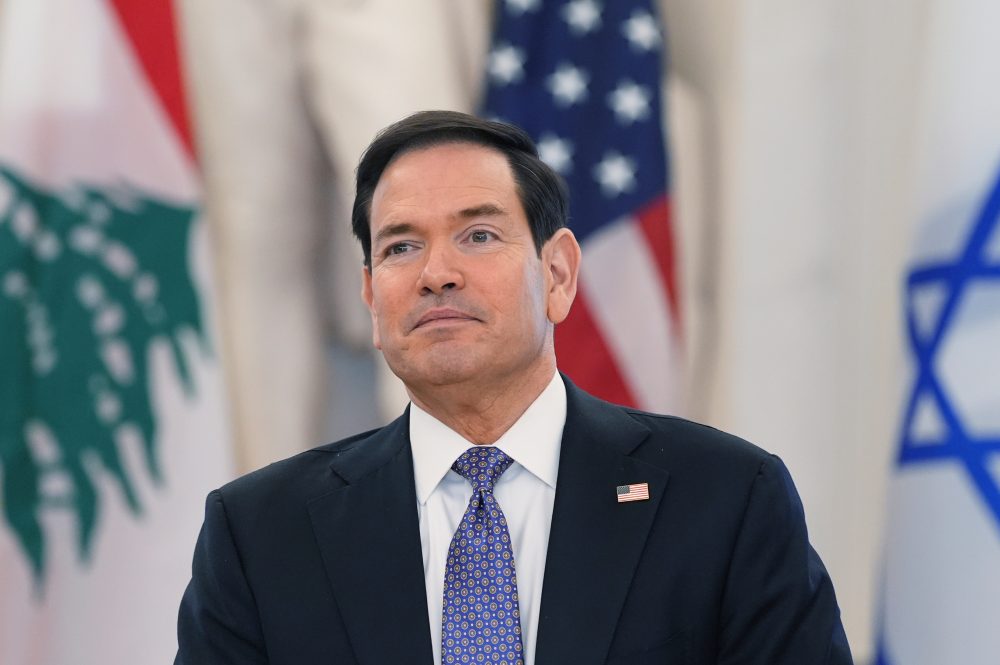
During Tuesday’s Washington meeting — a procedural session focused on logistics rather than substantive issues — the Lebanese and Israeli ambassadors sat across from each other while Secretary of State Marco Rubio and other U.S. officials positioned themselves between the parties. The session concluded without achieving a ceasefire. Both delegations confirmed that formal negotiations would continue without specifying a timeline.
“This is a process, not an event,” Rubio stated. “This is more than just one day. This will take time.”
Historical diplomatic efforts between these countries have frequently stalled or produced agreements that were never completely executed or subsequently canceled.
Indirect negotiations in 1949 produced a non-aggression agreement that lasted until 1967, when Israel withdrew from all previous armistice agreements following the six-day war with multiple Arab nations.
During Lebanon’s civil war in 1982, after Israel’s invasion targeting the Palestinian Liberation Organization, Lebanon’s government engaged in direct talks with Israel. The countries signed an agreement in May 1983 requiring Lebanese recognition of Israel, Israeli withdrawal from Lebanon, and establishment of a southern Lebanon security zone.
Internal conflicts and civil war escalation caused the agreement to collapse, with the Lebanese government formally canceling it one year later.
In 1993, Lebanon joined several Arab countries in direct peace negotiations with Israel preceding the Oslo peace agreement between Israel and the Palestinians. The Lebanese negotiations did not continue beyond that point.
Following U.S.-mediated indirect negotiations in 2022, Israel and Lebanon reached agreement on their disputed maritime boundary as a step toward resolving land border disputes. The agreement was promoted as reducing armed conflict risks.
However, after the October 7, 2023 Hamas-led attack in southern Israel triggered the Gaza war, Hezbollah began cross-border missile attacks as a “support front” for Palestinians. The resulting low-intensity conflict escalated into full-scale war in September 2024.
Lebanon pursued indirect negotiations with Israel for a ceasefire in that conflict, again with Washington’s mediation. The resulting agreement, which included Hezbollah disarmament measures and Israeli withdrawal from southern Lebanon, was never fully implemented. Lebanon now seeks to return to that agreement’s terms.