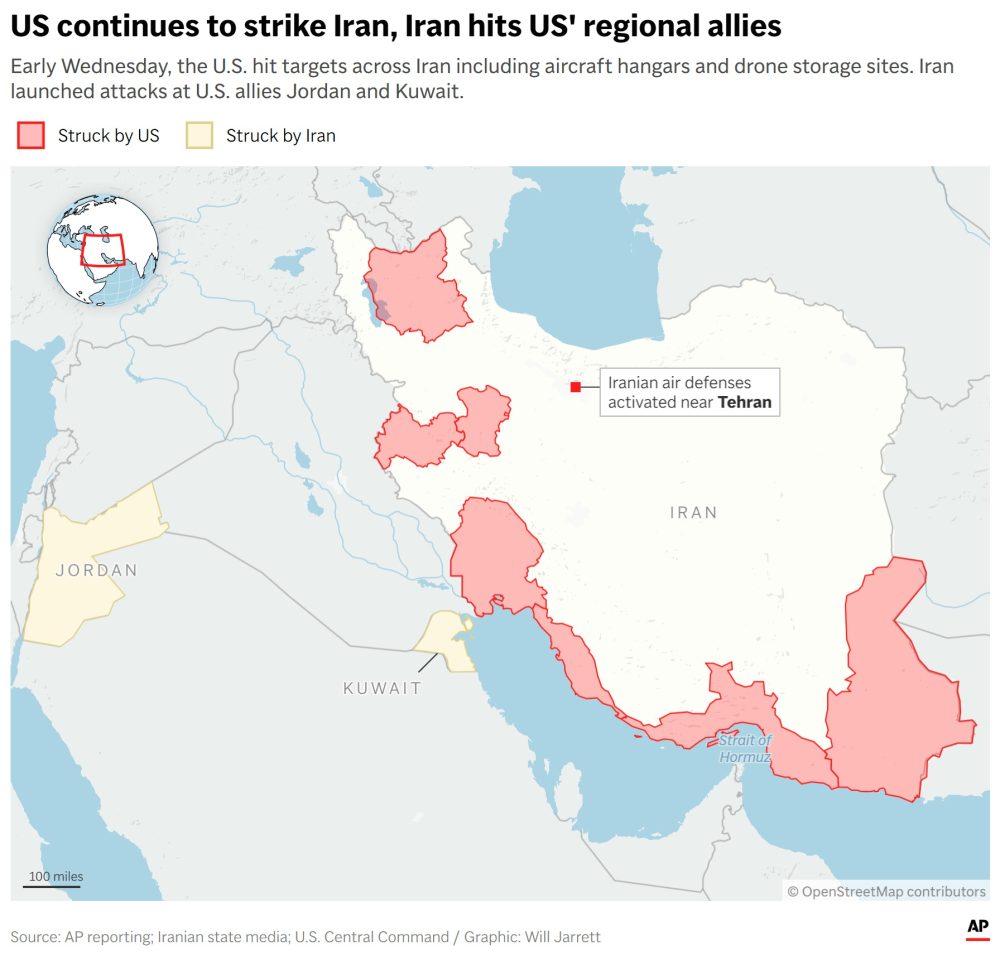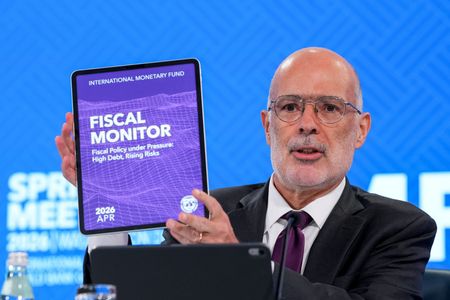

WASHINGTON – Middle East warfare is placing additional pressure on an already strained worldwide financial landscape, as elevated interest rates and climbing energy costs prompt developing nations to seek economic assistance, according to a Wednesday report from the International Monetary Fund’s latest Fiscal Monitor.
Rodrigo Valdes, who recently took over as the IMF’s fiscal affairs director, advised nations to avoid implementing fuel subsidies to assist citizens with oil shortages and corresponding energy price increases. He recommended targeted, short-term direct cash payments that allow higher prices to remain visible and prevent artificially inflated demand.
“We don’t have oil. We don’t have energy. Energy needs to be more expensive for everybody, so that the adjustment happens and we consume less,” Valdes explained during a Reuters interview.
On Tuesday, the IMF reduced its economic growth projections due to conflict-related energy price jumps and supply chain interruptions, warning that the worldwide economy could face recession if hostilities expand and oil remains above $100 per barrel until 2027.
“You can pass through (higher energy prices) and then you can do other things to help,” Valdes explained. “It’s a global shock and if countries suppress the price signal, the global price will be higher … It’s very important to give price signals so demand can adjust.”
Era Dabla-Norris, serving as deputy fiscal affairs director, noted during a press briefing that governmental responses have shown more restraint compared to the energy price crisis following Russia’s 2022 Ukraine invasion.
“Countries are not necessarily coming out in full force with huge packages,” Dabla-Norris stated. “In an environment … where fiscal space is much more constrained and governments are facing many different trade-offs, not just in the near term, but also over the medium term, choosing a sort of more disciplined way of cushioning the impact is what we are advocating.”
Valdes explained that export restriction implementations, energy infrastructure damage levels, and other nations’ abilities to increase oil production will shape the conflict’s consequences and necessary policy responses.
After current pressures subside, he emphasized the importance of nations maintaining focus on longer-term fiscal challenges as public debt continues growing due to expanded permanent spending on social programs or decreased tax revenues, especially among major economies.
The IMF’s recommendation was straightforward: “Rebuild fiscal buffers once conditions stabilize and do so without delay.”
Worldwide government debt hit 93.9% of gross domestic product in 2025, climbing nearly two percentage points from the previous year’s 92%, and projections show it reaching 100% of GDP by 2029, one year sooner than previously anticipated, the IMF’s latest Fiscal Monitor revealed.
This would represent the heaviest government debt load since World War Two’s aftermath, the report indicated. Government debt is projected to continue rising and could reach 102.3% of GDP by 2031. Under the IMF’s worst-case economic scenario, it could hit 121% of GDP within three years, Valdes warned.
Interest payments have also climbed dramatically, reaching nearly 3% of GDP in 2025, compared to 2% four years earlier, the IMF reported.
Valdes highlighted emerging concerns, including debt market restructuring that expands roles for investors like hedge funds, whom he described as “less firm hands to hold debt for the long run.” Debt duration has also shortened, meaning short-term interest rates affect debt dynamics more rapidly.
Additional challenges include increased security expenses, energy and climate transition costs, and growing interest payments while revenues haven’t maintained pace, the IMF noted in an accompanying blog post.
Trade and financial fragmentation could further weaken growth and increase borrowing costs, while political instability may undermine reforms and tax collection. Sudden market changes, including artificial intelligence stock fluctuations, could rapidly tighten financial conditions.
Valdes stressed that countries must begin fiscal consolidation efforts once immediate crises are resolved.
“There are some countries that are taking this seriously but in many others we don’t see yet a plan that is spelled out,” he said, noting that even nations with existing plans require additional work.
“We’re not at a crisis point … but the more you delay the measures, the steeper will be the effort that you need, and the higher the risk of having a disorderly consolidation later.”