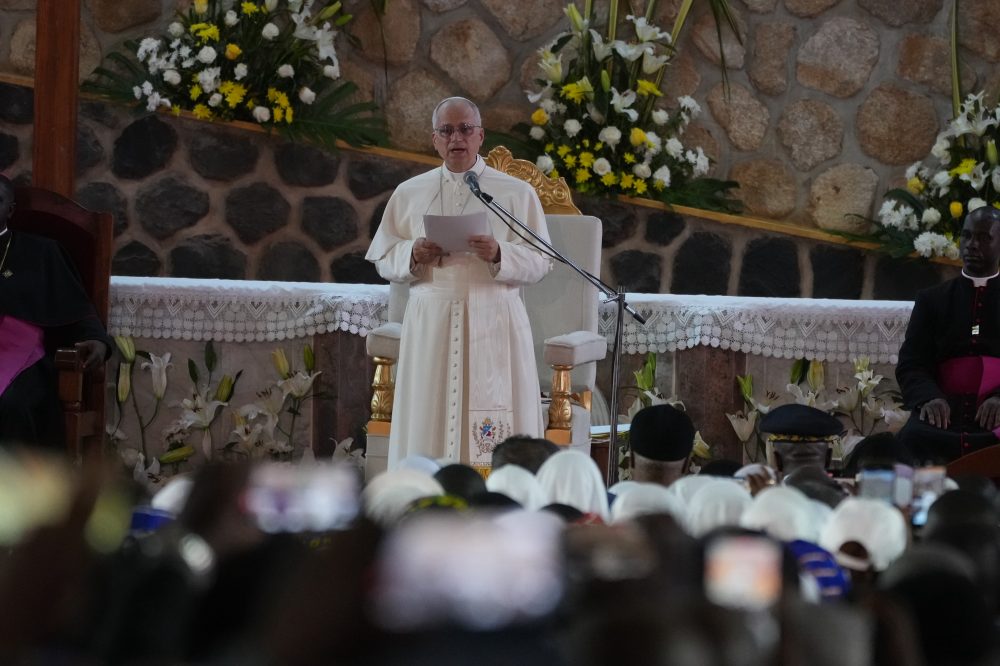

Pope Leo XIV touched down Thursday in Bamenda, located in Cameroon’s northwest region, where he will oversee peace discussions aimed at resolving a brutal separatist conflict that has taken thousands of lives over nearly ten years.
The pontiff’s visit represents one component of his four-country African tour, designed to spotlight interfaith efforts working to resolve the ongoing crisis and provide support to countless trauma survivors.
Fighting has escalated in recent years as government troops battle separatist armed groups seeking independence from Cameroon, a nation divided into eight French-speaking territories and two English-speaking areas.
The western territories of Cameroon have endured continuous warfare since English-speaking rebels initiated an uprising in 2017, aiming to split from the French-speaking majority and create their own nation. This devastating conflict has resulted in more than 6,000 deaths while forcing over 600,000 people from their homes.
The roots of this crisis trace back to World War I’s conclusion, when colonial powers divided Cameroon between British and French administration. Upon gaining independence in 1960-1961, these separate territories merged into a federal system, with French-speaking areas representing approximately 80% of both land mass and population.
Today’s English-speaking minority comprises roughly 20% of Cameroon’s 30 million citizens, who claim systematic discrimination by the French-majority administration under President Paul Biya’s leadership. Biya has governed for more than four decades and currently holds the distinction as the globe’s eldest head of state.
The situation reached a boiling point in 2016 when government officials tried to mandate French language use in schools and courtrooms within English-speaking territories, sparking demonstrations that security personnel brutally suppressed.
Multiple separatist organizations drive the insurgency, with most leadership operating from foreign countries after being banned by Cameroon’s government.
Security experts suggest this overseas presence may hinder domestic peace initiatives, as these leaders can easily secure funding and direct their supporters fighting Cameroonian military forces from abroad.
Norwegian authorities filed charges against Lucas Ayaba Cho, who commands the Ambazonia Defense Forces and plays a central role in the conflict, accusing him of encouraging crimes against humanity in September 2024. Cho has disputed these allegations.
This past December, an American federal jury found two people guilty of conspiring to supply money and equipment to separatist combatants.
Belgian law enforcement detained four individuals in March during investigations targeting Belgian citizens suspected of leading separatist activities and fundraising operations.
While Cameroon’s leadership has implemented various measures to combat the violence, a lasting resolution remains elusive.
National discussions held in 2019 resulted in special administrative status for the northwest and southwest regions, along with recommendations regarding governance, judicial systems, and educational policy. However, many of these suggestions remain unimplemented. Critics have also questioned a disarmament and reintegration initiative for lacking openness and having minimal impact.
Colbert Gwain Fulai, a civil society advocate from Bamenda, explained that government officials initially dismissed the conflict as disturbances caused by “a few misguided” groups in English-speaking areas.
According to Fulai, authorities continue to reject claims of marginalization and primarily treat the situation as requiring military rather than political solutions.
Meanwhile, separatist leadership appears “determined to double down, wagering on the absence of sustained peace efforts,” according to last year’s Crisis Group analysis. Some have established partnerships with Nigerian separatists who similarly aim to establish their own independent nation.
Local residents and community leaders have responded to the pope’s arrival and peace conference with mixed emotions of optimism and skepticism, partly because such government-separatist peace gatherings rarely occur, with the most recent major meeting taking place in 2022.
Lucas Asu, representing the Ambazonia Governing Council separatist organization, stated their dedication to resolving the conflict peacefully through negotiations while claiming government officials avoid meaningful discussions.
Cameroonian government representatives have not yet responded to requests for statements.
Morine Ngum, a mother of three whose spouse died fighting as a separatist in 2022, believes genuine progress must originate with government action.
“I see them (the government) using this crisis as an advantage. It brings them more profit. They just want to use this pope coming to cover up things,” Ngum said.