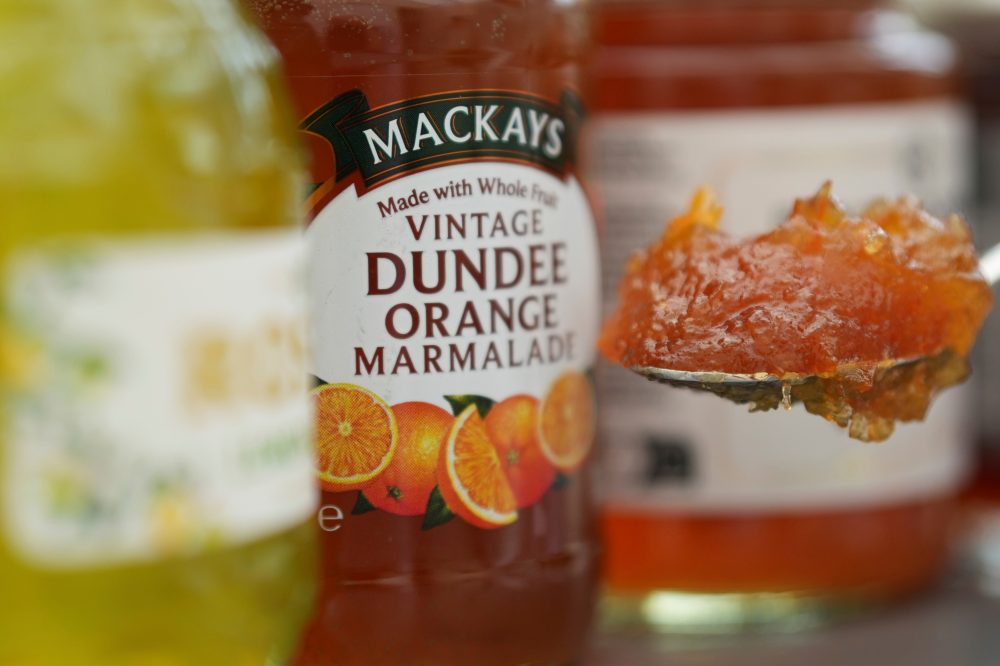

LONDON — A heated discussion about marmalade definitions has emerged in the British Parliament as legislators worry about potential changes to labeling rules for the popular citrus breakfast spread.
Members of the House of Commons voiced their concerns Wednesday following news reports suggesting that Prime Minister Keir Starmer’s efforts to strengthen relationships with the European Union might force alterations to how the traditional orange preserve is marketed.
Beyond its role as a morning meal favorite, marmalade holds cultural significance in Britain through its connection to Paddington Bear and the late Queen Elizabeth II, who famously appeared with the fictional character in a humorous video during her 2022 Platinum Jubilee celebration.
News outlets have reported that the fruit spread — typically crafted from orange juice and peel — may require new “citrus marmalade” labels as part of a food trade agreement with European nations.
“What would Paddington think!” declared the Daily Mail in an earlier report. Conservative Party representative Priti Patel criticized the administration for “attacking the great British marmalade.”
This controversy represents another example of what critics call “euromyths” — tales about European regulatory overreach that frequently capture British media attention — though containing some factual basis.
The European Union has modified a regulation — originally requested by Britain during its membership — that restricted the marmalade designation to citrus-based products only. Other fruit spreads required jam labeling, even though several European nations use marmalade for all fruit preserves. In Germany, “marmelade” serves as the standard term for jam.
Following Brexit, EU officials decided member countries could apply the marmalade label to non-citrus spreads, provided the specific fruit type appears on packaging.
Britain’s plan to harmonize its food regulations with European standards to improve post-Brexit commerce has created this labeling dilemma.
Democratic Unionist Party representative Jim Shannon complained in Parliament about “EU labeling interfering with our produce.”
British government officials note that marmalade currently sold domestically typically carries “orange marmalade” or “Seville orange marmalade” labels and already meets European requirements.
Food Security Minister Angela Eagle acknowledged “a small change to our marmalade description rules” but emphasized “the real-world impact would be minimal and consumers are unlikely to notice any difference.”
Liberal Democrat representative Tessa Munt, who requested Wednesday’s parliamentary discussion, focused on preserving this “distinctly British product’s” authenticity.
She called on officials to guarantee that “only citrus fruits can precede the world marmalade on labels.”
“I have seen strawberry marmalade and all sorts of pear marmalade” at premium grocery stores, she stated. “This is rubbish. There’s no such thing.”